As an affiliate, we may earn a commission from qualifying purchases. We get commissions for purchases made through links on this website from Amazon and other third parties.
Yes, you can collect rainwater for garden use, but roof runoff is non-potable water. That means it has not been treated or tested as drinking water. For a vegetable garden, the safest choice is to use potable tap or well water when you can, especially on plants where water may touch the part you eat.
The CDC recommends using treated tap water or bottled water, when possible, for watering plants you plan to eat. Roof runoff can pick up bird droppings, dirt, germs, metals, and chemicals before it reaches your barrel.
If you do use rain-barrel water on vegetables, you can lower the risk by choosing a suitable roof, keeping the barrel clean, and putting the water directly on the soil instead of spraying it over the plants.
Why Rain Barrel Water Needs Extra Care Around Vegetables
Rain falling through the air is only one part of the system. Before water reaches your barrel, it usually runs across:
- Roofing material
- Flashing
- Gutters
- Downspouts
- Leaves and other debris
- Bird or animal droppings
The water can pick up germs such as bacteria as well as chemicals from these surfaces. You cannot tell whether these contaminants are present just by looking at the water.
The CDC notes that rainwater can contain germs and chemicals even when it looks clean. It specifically recommends limiting uses where people could swallow the water.
This does not mean every barrel of roof water is highly contaminated. It means you should not assume the water is clean enough for food crops simply because it came from rain.
Which Vegetable Plants Are Better Candidates?
If you choose to use rain-barrel water in an edible garden, plants where the harvested food stays well above the soil are easier to water without getting runoff on the edible part.
Examples include:
- Tomatoes grown on supports
- Peppers
- Eggplants
- Trellised cucumbers
- Pole beans
Apply the water directly to the soil around the roots.
Be more cautious with crops where roof runoff can easily touch the food you will eat. These include:
- Lettuce
- Spinach
- Kale
- Other leafy greens
- Herbs
- Strawberries near the ground
- Carrots
- Radishes
- Beets and other root crops
University of Minnesota Extension recommends that rain-barrel water not touch any edible portion of a plant. It notes that soil-level watering can reduce direct contact on crops such as trellised tomatoes and cucumbers.
For leafy greens, herbs, and other crops that are hard to water without splashing the edible parts, potable water is the simpler choice.
Water the Soil, Not the Vegetables
The way you apply the water matters.
Avoid using a sprinkler that sprays rain-barrel water over the entire vegetable garden. Instead, deliver the water close to the soil.
You can use:
- A watering can aimed at the base of each plant
- A hose running slowly at soil level
- A low-pressure drip system
- A soaker system that works at the pressure available from your barrel
This reduces contact between roof runoff and the parts of the plant you plan to eat. University extension guidance commonly recommends soil-level irrigation when rain-barrel water is used around edible crops.
Try to avoid splashing soil onto the plant as well.
Watch the Pressure With Drip Irrigation
A basic rain barrel creates much less pressure than a household faucet.
The higher the water surface sits above your irrigation line, the more pressure gravity provides. This difference in height is sometimes called head height.
A normal drip system made for household water pressure may not work well from a rain barrel. Some emitters may barely flow.
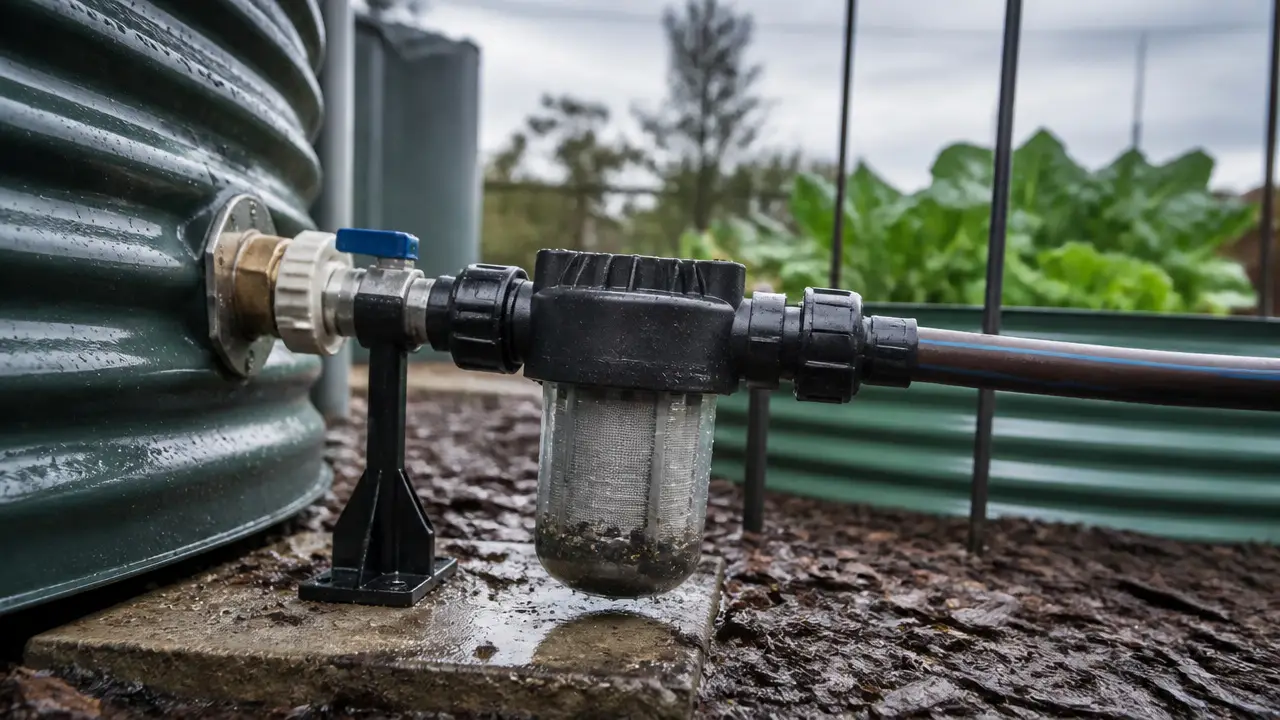
If you connect drip irrigation to a barrel, look for a system designed to work at low gravity pressure. A small screen or filter ahead of the drip line can also help keep bits of leaves and sediment from clogging emitters.
Do not assume a pump is required. Many small gardens can be watered directly from the barrel if the layout and irrigation parts are suitable.
Check What Your Roof Is Made From
Not every roof is a good collection surface for vegetable-garden water.
Roof runoff may contain materials released from the roof, gutters, flashing, coatings, or other parts of the drainage system.
Be especially cautious with runoff from:
- Old or deteriorating roofing
- Treated wood shingles or shakes
- Copper roofing or large copper surfaces
- Roofs with zinc moss-control strips
- Old painted gutters or surfaces that may contain lead
- Tar-and-gravel roofing
- Asbestos-containing roofing
- Roofs recently treated with pesticides, moss killers, or other chemicals
Penn State Extension advises against using runoff from several of these roof types on edible plants because contaminants can enter the collected water.
If you do not know what materials are in an older roof or drainage system, using that barrel for flowers, shrubs, trees, or lawn is the more cautious choice.
A First-Flush Diverter Can Improve Collected Water
The beginning of a rainstorm often washes accumulated dirt and debris from the roof.
A first-flush diverter is a device that sends this first portion of runoff somewhere other than your storage barrel. After the initial runoff is diverted, later water enters the barrel.
The CDC recommends considering a first-flush diverter because the first runoff can contain more dirt, germs, and chemicals. The amount that should be diverted depends partly on the collection area.
A first-flush diverter can improve the water entering the barrel, but it does not make roof runoff potable or guarantee that the remaining water is free from contaminants.
Keep the Rain Barrel Covered and Clean
A barrel that collects reasonably clean water can still develop problems if it is poorly maintained.
Use a secure lid and screen openings where water enters. Screening helps keep out leaves, insects, and mosquitoes.
Also:
- Remove sediment and debris when it builds up.
- Clean inlet screens regularly.
- Keep gutters reasonably clear.
- Check the barrel for algae and foul odors.
- Make sure animals cannot enter the barrel.
- Repair damaged screens and covers.
- Use the stored water regularly instead of leaving old water sitting indefinitely.
Study using rainwater for plants to evaluate this choice in the broader collection layout.
The CDC recommends keeping rainwater collection systems clean and periodically emptying rain barrels. It also recommends screening openings or emptying barrels frequently enough to reduce mosquito breeding.
Do not reach into or climb inside a large cistern or tank. Tanks can create confined-space hazards that require specialized equipment and training.
Wash Harvested Vegetables With Potable Water
Rain-barrel water should not be your final rinse for food.
Wash vegetables and fruit with potable water before eating or preparing them. Potable means water considered suitable for drinking.
The CDC specifically recommends treated tap water or bottled water rather than collected rainwater for rinsing fruits and vegetables.
Washing produce is a sensible final precaution, but it does not make every type of contaminated irrigation water acceptable. Preventing questionable water from touching the edible portion in the first place is better.
Do You Need to Test Rain Barrel Water?
Testing can provide useful information, but one test does not prove that a rain barrel will remain safe throughout the season.
Water quality can change after:
- A long dry period
- Heavy bird activity
- Roof repairs
- Changes to gutters or flashing
- Nearby construction
- Wildfire smoke or heavy air pollution
- Chemical use on the roof
- Long storage periods
Some university guidance recommends laboratory testing if roof runoff will be used on edible crops. Possible concerns include bacteria such as E. coli and chemicals associated with the collection surface.
A single home test strip is not a complete safety check. Different contaminants require different laboratory methods.
If you rely heavily on collected rainwater for food production and have concerns about its quality, contact your local health department, agricultural extension office, or qualified water-testing laboratory about appropriate testing.
What About Adding Bleach or a Filter?
Do not assume adding a chemical or installing a basic filter makes rain-barrel water safe for food uses.
A sediment filter can remove particles. It does not necessarily remove disease-causing organisms, dissolved metals, or chemicals.
Likewise, disinfecting water may reduce certain germs but does not automatically remove chemical contaminants.
Treatment has to match the contaminants present. The CDC advises choosing treatment based on the specific germs or chemicals that need to be removed.
For a normal backyard vegetable garden, it is usually easier to reduce risk at the source: use a suitable collection surface, keep the system clean, avoid contact with edible plant parts, and use potable water when the crop makes that difficult.
When Rain Barrel Water Is Better Used Elsewhere
There is no need to force rain-barrel water into your vegetable garden.
It is well suited to many non-potable outdoor jobs, including watering:
- Flowers
- Shrubs
- Ornamental plants
- Trees
- Lawns
These uses avoid much of the concern about accidentally eating something that has been in contact with roof runoff.
If you have a mix of edible and ornamental plants, you can reserve your rain barrel for ornamentals and use your regular water supply on vegetables.
A Practical Setup for a Vegetable Garden
If you decide to use roof-collected rainwater around suitable vegetable plants, a simple setup looks like this:
- Collect runoff only from a roof and gutter system you consider suitable.
- Keep leaves and large debris out with screens.
- Consider a first-flush diverter.
- Keep the barrel covered and maintained.
- Run the outlet to a watering can or low-pressure irrigation line.
- Apply the water directly to the soil.
- Keep the water off edible leaves, fruit, and roots as much as practical.
- Use potable water for crops where avoiding edible portions is difficult.
- Wash harvested produce with potable water before eating it.
This approach does not turn collected rainwater into drinking water. It simply reduces unnecessary contact between untreated roof runoff and your food.
Frequently Asked Questions
Is rain barrel water safe for tomato plants?
It can be used more cautiously on established tomato plants if you apply it directly to the soil and keep it off the tomatoes, leaves, and stems. Potable water remains the safer choice for edible crops when available.
Can I use rain barrel water on lettuce?
It is better to use potable water. Lettuce grows close to the soil, and the leaves you irrigate are also the part you eat. That makes it difficult to keep untreated roof runoff away from the edible portion.
Can I use a sprinkler with rain barrel water?
Avoid overhead sprinklers on vegetable crops. They can spread rain-barrel water over leaves, fruit, and other edible surfaces. Soil-level watering is the better approach.
Does a first-flush diverter make rainwater safe for vegetables?
No. A first-flush diverter sends away the first, often dirtier runoff from the roof. It may improve collected-water quality, but it does not guarantee that the remaining water is free of germs or chemicals.
Can I wash vegetables with rain barrel water?
No. Use potable water for washing produce. The CDC recommends treated tap water or bottled water rather than collected rainwater for rinsing fruits and vegetables.
Does filtering rain barrel water make it safe for vegetable plants?
Not necessarily. A simple filter may remove leaves and sediment without removing bacteria, viruses, dissolved metals, or chemicals. Treatment needs to address the specific contaminants present.
Can I drink water from my rain barrel if it looks clean?
Do not assume so. Clear rainwater can still contain germs and chemicals. Drinking-water use requires suitable collection, treatment, regular testing, maintenance, and compliance with applicable local requirements.