As an affiliate, we may earn a commission from qualifying purchases. We get commissions for purchases made through links on this website from Amazon and other third parties.
Water should not sit on a normal flat roof for long periods. Most flat roofs are actually low-slope roofs designed to move rain toward drains, scuppers, or gutters.
A shallow puddle that remains for a few hours after rain may not mean the roof has failed. But water that is still standing 24 to 48 hours after the rain has stopped deserves attention. Roofing guidance commonly uses about 48 hours as the point where standing water is considered ponding water. That is a warning threshold, not a recommended amount of time to leave water on the roof.
Deep water, growing puddles, roof sagging, or water entering the building should be checked sooner.
Why Water Should Drain From a Flat Roof
A "flat" roof should normally have some slope. The slope may be hard to see from the ground, but it helps move water toward drainage points.
Standing water creates several problems.
It adds weight
Water is heavy. One inch of water spread over one square foot weighs about 5.2 pounds.
That means:
- 1 inch over 100 square feet adds about 520 pounds.
- 2 inches over 100 square feet adds about 1,040 pounds.
- A large pond can place thousands of pounds on a roof.
The exact risk depends on the roof structure and how the load is spread.
One serious problem is called ponding instability. The water bends the roof downward, creating a deeper low spot. More water then collects in that spot, adding more weight and causing more bending. In severe cases, this cycle can damage or even overload the structure.
It keeps the roofing wet
Roof membranes are meant to handle rain, but long-term ponding can make small defects more important.
Water may find its way into:
- open seams
- damaged flashing
- cracked membrane areas
- poorly sealed penetrations
- damaged drain connections
A roof that does not leak during a short rain may leak when water stays over the same weak point for many hours.
It can collect dirt and organic material
Ponding areas catch leaves, dust, seeds, bird waste, and other debris. When the water eventually evaporates, much of that material stays behind.
Over time, this can make drainage worse and encourage biological growth.
Is 48 Hours of Standing Water Okay?
Not exactly.
The 48-hour figure is commonly used to identify a ponding problem, but it should not be treated as permission to leave water sitting for two days.
Some building and roofing guidance has used drainage within 48 hours as a definition of "positive drainage." However, roofing specialists have also pointed out that a properly draining roof should shed water much sooner whenever practical.
A useful way to think about it is:
| What you see | What it may mean |
|---|---|
| Thin puddles shortly after rain | May be normal while the roof finishes draining |
| Small puddles several hours later | Watch whether they continue shrinking |
| Water still present after 24 hours of dry weather | Check drainage and monitor the area |
| Water still present around 48 hours later | Treat it as a ponding issue that should be inspected |
| Deep or rapidly growing pond | Get professional help sooner |
| Sagging, cracking, ceiling movement, or major leaks | Keep people away and get qualified help promptly |
Weather matters. Water will evaporate more slowly during cool, humid, or cloudy conditions, so time alone does not tell you everything.
Depth, area, drainage, and changes in the roof shape matter too.
Common Reasons Water Sits on a Flat Roof
Blocked drains or scuppers
Leaves, dirt, roofing debris, and plant material can restrict drainage.
A scupper is an opening through the side or parapet of a roof that lets water drain away.
Even a partly blocked outlet can cause water to back up during heavy rain.
Low spots in the roof
Roof decks and insulation can settle or deflect over time. Water then collects in depressions instead of reaching the drain.
Low spots can also be created during construction if the roof slope does not lead cleanly toward the drainage points.
A drain that is too high
If the surrounding roof surface is lower than the drain opening, a shallow pool may remain even when the drain itself works correctly.
Roof structure movement
Wood, steel, and other framing materials can bend under loads. Long-term movement can change the original roof slope enough to create new ponding areas. IIBEC notes that roof deflection can contribute to sustained ponding even when a roof was originally built with slope.
Too little drainage capacity
A roof may also collect water when its drains, gutters, downpipes, or scuppers cannot move rainfall away fast enough.
Drainage sizing is a building-design issue. Do not assume that adding a small drain or downpipe will solve the problem without checking where the water will go.
What to Do If Water Is Sitting on Your Roof
First, look at the roof from a safe location if possible.
Do not climb onto a wet roof simply to investigate a puddle. Wet roofing can be slippery, and low-slope roofs still have serious fall hazards. OSHA specifically warns that rain and damp conditions increase fall risk during roof work.
From a safe location, note:
- how large the pond is
- roughly how deep it appears
- how long it remains after rain stops
- whether drains or gutters appear blocked
- whether the pond is getting larger over time
- whether you see leaks inside
- whether the roof or ceiling appears to sag
Evaluate rainwater storage life in a barrel to assess cleaning access for sediment and odor control.
Photographs taken from the same safe location after several storms can help show whether the problem is changing.
If a drain or gutter can be safely cleared without going onto the roof, removing obvious debris may restore drainage. Otherwise, have a roofing professional inspect it.
When Standing Water Needs Faster Attention
Do not wait for the 48-hour mark if something looks structurally wrong.
Arrange a professional inspection sooner if:
- water is several inches deep
- a very large roof area is flooded
- the roof appears to sag
- ponding suddenly appeared where it did not happen before
- ceiling materials below the pond are bowing or cracking
- water is entering electrical areas
- drains remain blocked during heavy rain
- the roof makes unusual cracking or movement sounds
If structural movement is suspected, a roofing contractor may not be enough. A qualified structural engineer may need to determine whether the deck and framing can safely carry the accumulated water.
Avoid walking underneath an area that appears seriously deflected.
How Ponding Water Is Usually Corrected
The correct repair depends on why the water is collecting.
A roofing professional may recommend:
Clearing or repairing drainage
Blocked or damaged drains, gutters, downpipes, and scuppers may need cleaning or repair.
Correcting the roof slope
Tapered insulation is sometimes used during reroofing to create better drainage toward outlets.
Adding drainage points
Some roofs need another drain or scupper near a recurring low spot. Drainage changes should account for rainfall, roof area, outlet capacity, overflow routes, and local requirements.
Repairing a sagging deck
If the roof structure itself has moved, covering the depression with more roofing material does not solve the underlying problem.
The deck or framing may need repair before the drainage problem can be corrected.
Do Not Use a Normal Flat Roof as a Water Storage Area
A standard roof should not be intentionally dammed so rain can be stored on it.
Water storage creates significant structural loads. Roofs designed to temporarily hold stormwater, sometimes called blue roofs, are engineered systems with controlled drainage and structural requirements. They are different from an ordinary flat roof with accidental ponding.
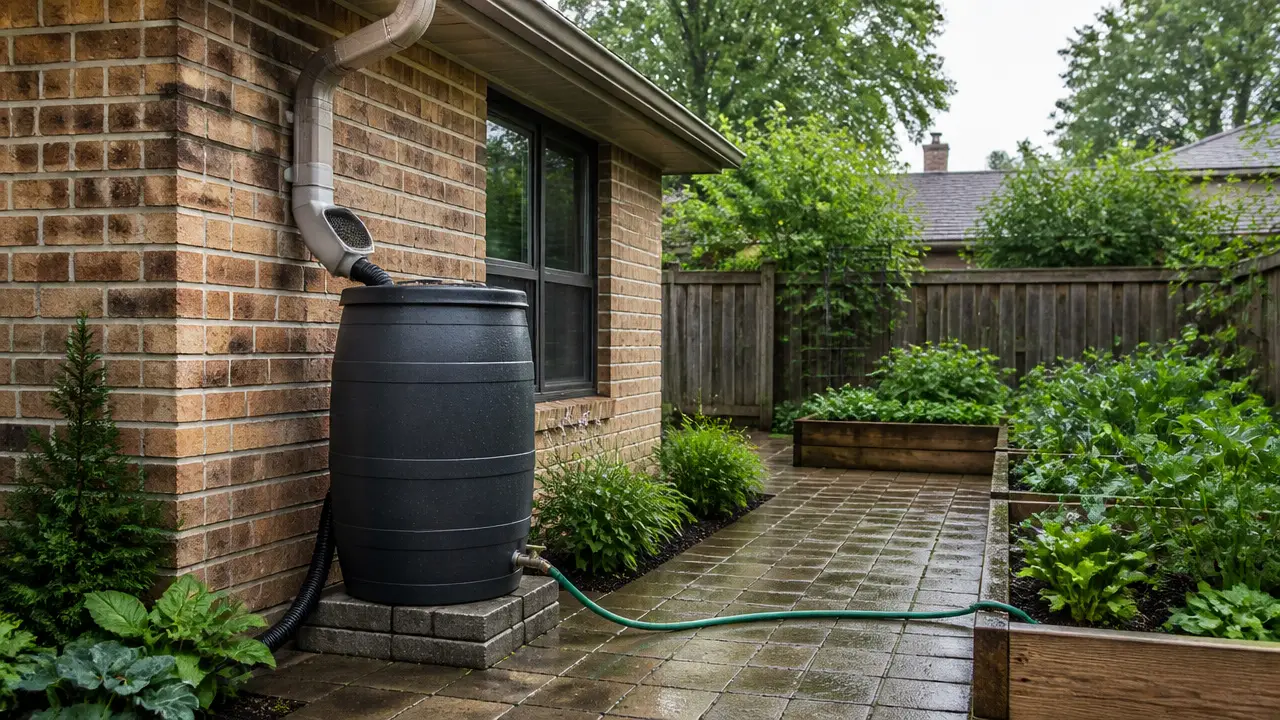
For rainwater harvesting, it is usually better to move runoff promptly from the roof through gutters or drains and into a suitable rain barrel, IBC tote, or cistern.
The storage container can then be sized and maintained for the intended use.
What If You Want to Harvest the Water?
Standing roof water should not be considered clean simply because it came from rain.
While sitting on the roof, water can contact:
- bird and animal waste
- dust
- leaves and pollen
- roofing materials
- insects
- algae or other biological growth
A normal rainwater harvesting system is designed to move water off the collection surface rather than store it there.
For garden or other non-potable uses, the system may include debris screening and a first-flush device, which diverts some of the initial roof runoff carrying accumulated dirt.
Non-potable means water that is not intended for drinking.
If roof runoff is being considered for drinking, the decision needs to cover the entire system: suitable roof and collection materials, prefiltration, treatment, protected storage, maintenance, current laboratory testing, and applicable local requirements. Standing water on the roof should never be assumed safe to drink.
Frequently Asked Questions
How long is too long for water to stand on a flat roof?
Water remaining for about 48 hours after rain is commonly considered ponding water. You do not need to wait that long if the water is deep, increasing, leaking into the building, or causing visible sagging.
Is a little standing water normal on a flat roof?
Small, shallow puddles may remain for a short time after rain, especially around minor surface irregularities. They should shrink as the roof drains and dries. Recurring ponds that remain for a day or two should be investigated.
Will standing water make a flat roof leak?
Not always, but it can expose weaknesses. Water sitting over damaged seams, flashing, drains, or membrane defects has more time to enter the roof assembly.
Can standing water collapse a roof?
Large amounts of water can place a major load on a roof. In some situations, roof deflection allows even more water to collect, increasing the load further. Deep ponding or visible structural movement needs prompt professional attention.
Should I pump standing water off my roof?
Do not go onto a wet roof with a pump unless the work has been evaluated and can be done safely. A flooded or sagging roof may also have structural problems. For significant ponding, a qualified roofing professional should determine the safest way to remove the water and correct the drainage problem.
Can I drill a drain hole to stop the ponding?
No. Drilling through a roof without a properly designed drain assembly can create leaks and may damage structural, electrical, or other building components. New drains need proper flashing, waterproofing, discharge piping, and drainage capacity.
Can I collect flat-roof pond water in a rain barrel?
A better setup moves fresh runoff directly from the roof drainage system into storage rather than allowing it to pond first. Any collected roof runoff should be managed according to its intended use and should not automatically be treated as drinking water.