As an affiliate, we may earn a commission from qualifying purchases. We get commissions for purchases made through links on this website from Amazon and other third parties.
For drinking water, the healthiest storage container is not defined by one material alone. The best choice is a clean container made and labeled for drinking-water or food contact, with a tight lid and materials suitable for long-term water contact.
For small amounts of water, glass and food-contact stainless steel are good choices. For larger storage, a purpose-built potable-water tank made from suitable plastic, stainless steel, or another approved material is usually more practical. What matters most is that the whole container is intended for potable water, including its liner, lid, fittings, seals, and coatings.
A safe container also cannot make unsafe water safe. This is especially important with stored rainwater.
What Makes a Water Storage Container Healthy?
A good drinking-water container should do four basic things:
- Avoid adding harmful chemicals to the water.
- Keep dirt, insects, animals, and other contamination out.
- Be easy enough to clean and inspect.
- Be suitable for the temperature and length of storage.
For larger tanks and permanent systems, look for clear documentation that the tank and water-contact parts are suitable for potable water. Potable simply means water intended to be safe for drinking.
One useful certification to look for is NSF/ANSI/CAN 61. It covers health effects from materials and components that contact drinking water. It can apply to tanks, coatings, pipes, fittings, valves, and other parts. However, the standard mainly addresses substances that may enter the water from those materials. It does not mean the stored water is free of germs or otherwise safe to drink.
Best Water Storage Materials
There is no single material that wins in every situation.
Glass
Glass is a good choice for storing small amounts of drinking water.
Its main advantage is that it is stable and does not normally add much to plain water. It is also easy to see whether the inside is clean.
Its weaknesses are practical:
- It breaks.
- Large glass containers become very heavy.
- Sunlight can reach the water through clear glass.
- It is poorly suited to large rainwater systems.
For water kept on a kitchen counter or in a refrigerator, glass can make sense. It is much less practical for emergency storage, outdoor tanks, or hundreds of gallons of rainwater.
CDC guidance for emergency water storage actually favors durable, unbreakable containers rather than glass.
Stainless Steel
Stainless steel can be an excellent drinking-water storage material when the container is designed for that purpose.
It is strong, blocks light, and can last a long time. It also avoids many of the concerns people have about plastic.
But "stainless steel" alone is not enough information. The inside surface, welds, fittings, seals, and any coatings also contact the water. A decorative metal drum or unknown industrial tank should not automatically be treated as a drinking-water tank.
Choose a container whose manufacturer specifically says it is suitable for drinking-water storage.
Food-Grade Plastic
Food-grade plastic is one of the most practical choices for storing larger amounts of water.
Many water jugs, barrels, and tanks are made from high-density polyethylene, often called HDPE. Properly made containers can be lightweight, durable, and much easier to handle than glass or steel.
The important word is properly.
Do not assume that every plastic barrel or tank is safe because it looks like a water container. Confirm that the finished container is intended for water or food contact. FDA regulates materials that come into contact with food based partly on the material and its intended conditions of use.
CDC recommends using food-grade water storage containers when filling your own emergency water supply and advises contacting the manufacturer when you are unsure whether a container is suitable.
Concrete and Lined Tanks
Concrete cisterns can store very large amounts of water, but they are more complicated than a barrel or small tank.
The concrete, coatings, sealants, penetrations, pipes, and repairs can all affect water quality. Some certified drinking-water systems use concrete or protective coatings, but that does not mean any homemade concrete tank is appropriate for potable water.
For drinking-water systems, use materials and coatings specifically intended for that application. NSF/ANSI/CAN 61 includes requirements for some protective coatings and other drinking-water system materials.
Large concrete cisterns also involve structural, access, and cleaning issues that can move the project beyond simple DIY work.
Which Material Is Best?
For most people, the choice looks like this:
| Situation | Practical choice |
|---|---|
| Refrigerator or countertop water | Glass or drinking-water-rated stainless steel |
| Portable drinking water | Purpose-made food-grade plastic or stainless steel |
| Emergency water supply | Durable food-grade water containers |
| Large household water storage | Potable-water-rated tank |
| Rainwater for garden use | Suitable covered rainwater tank or barrel |
| Rainwater intended for drinking | Potable-water-compatible storage as one part of a complete treatment system |
The material matters, but intended use and certification matter more.
A properly made potable-water plastic tank can be a safer choice than an unknown stainless steel drum. Likewise, a purpose-built plastic water jug is preferable to an old glass container that cannot be properly sealed.
Containers You Should Avoid for Drinking Water
Some containers are poor choices regardless of how thoroughly they seem to have been washed.
Containers That Held Chemicals
Never use a container that previously held pesticides, fuel, solvents, bleach, or other toxic chemicals for drinking water.
Residues can remain in seams, plastic, gaskets, or other surfaces. Washing does not reliably turn these containers into drinking-water containers.
CDC specifically warns against using containers that previously held toxic chemicals.
Used IBC Totes With an Unknown History
IBC totes are popular because they hold a lot of water, but their previous use matters.
A tote that once carried an unknown industrial product should not become a drinking-water tank simply because it has been rinsed.
If an IBC tote will contact water intended for drinking, its history and suitability need to be clearly documented. A new tote specifically intended for potable-water use removes much of that uncertainty.
For non-potable irrigation water, requirements may be different.
Trash Cans and General-Purpose Storage Bins
A container that can physically hold water is not automatically intended for water storage.
General-purpose bins, construction containers, and trash cans may use materials, colorants, additives, or manufacturing processes that were never meant for prolonged contact with drinking water.
Use a purpose-built water container instead.
Open Barrels or Tanks
Even a safe material becomes a poor water-storage system if the tank is open.
Reviewing practical considerations for it better to store water in glass or plastic helps compare this decision within the complete collection path.
A drinking-water container should have a secure cover. Open storage can allow in:
- Dust
- Insects
- Animal waste
- Leaves
- Small animals
- Other debris
A tight lid also reduces accidental contamination when people handle the water.
Does BPA-Free Mean a Container Is Safe?
Not necessarily.
"BPA-free" only tells you something about one chemical. It does not tell you whether the complete container is designed for drinking water.
FDA currently states that its available information supports the safety of approved BPA uses in food containers and packaging.
Rather than using BPA claims as the main test, look for a container designed for potable water or food contact and use it according to its intended conditions.
That also means avoiding temperatures the container was not designed to handle.
Keep Stored Water Cool and Away From Sunlight
Container material is only part of safe storage.
Heat and sunlight can create problems even when you start with a suitable tank.
For large outdoor water tanks, blocking light is especially useful because sunlight can support algae growth when nutrients are present. A covered or opaque tank also protects the water from direct sunlight.
Keep drinking-water containers in a cool location when practical. Follow the manufacturer's temperature limits rather than assuming a plastic or lined tank can handle hot water.
A Healthy Container Still Needs Cleaning
Starting with a potable-water container does not remove the need for sanitation.
For containers that you fill yourself, CDC recommends washing the container and sanitizing it before storing emergency drinking water. It also recommends replacing self-filled emergency water every six months.
For tanks in regular use, the maintenance schedule depends on the system. Watch for sediment, biofilm, damaged seals, insects, odors, or contamination entering through vents and openings.
Cleaning also needs to be physically safe. Do not climb inside a cistern or large tank unless appropriate confined-space procedures are in place. Large-tank entry can be dangerous and may require trained professionals.
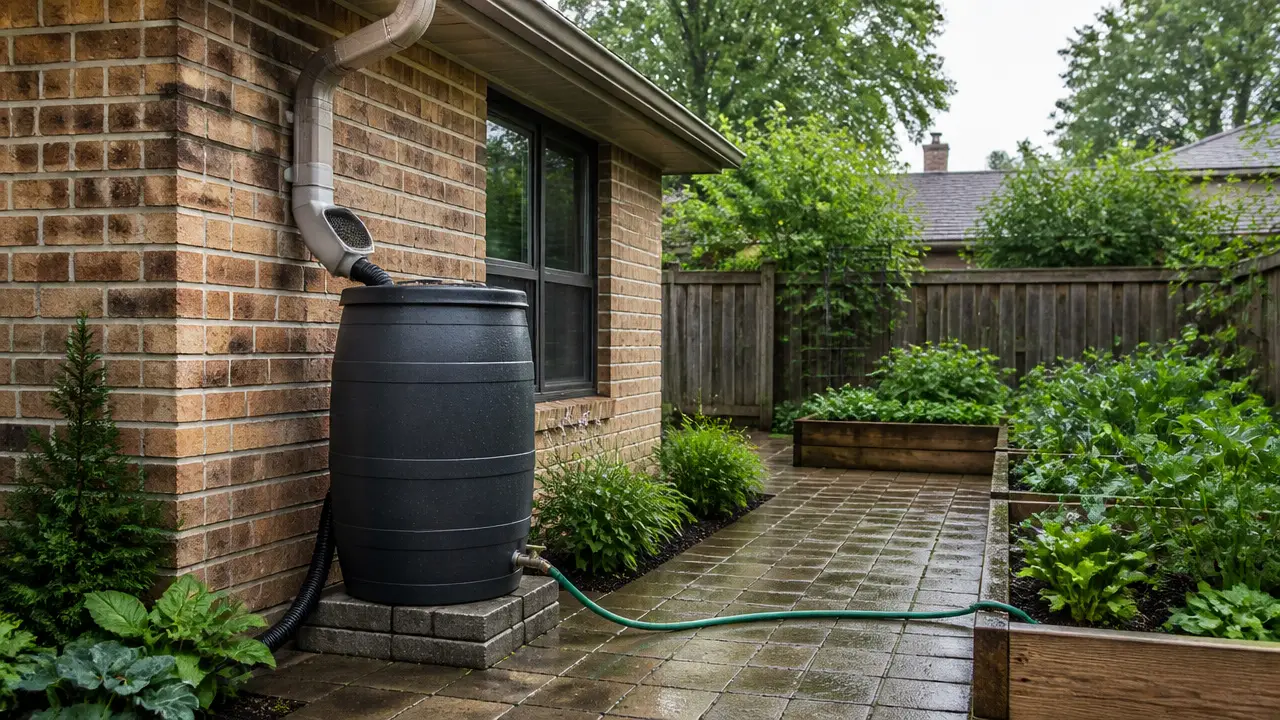
What About Storing Rainwater?
Rainwater changes the answer because the container is only one part of the water-quality problem.
Roof runoff can collect:
- Bird and animal waste
- Dust
- Leaves
- Air pollution
- Roofing chemicals
- Metals from roofs, flashing, or gutters
- Microorganisms
CDC states that collected rainwater is not necessarily safe to drink and can contain germs and chemicals even when it looks clean.
A suitable tank helps prevent additional contamination, but it cannot remove contamination already in the water.
For rainwater intended only for garden irrigation, the treatment requirements may be fairly simple. For rainwater intended for drinking, cooking, brushing teeth, or similar uses, think of the system as a complete chain:
roof → gutters → debris screening → first flush → storage → treatment → testing → point of use
A first-flush diverter sends away some of the first roof runoff from a storm. That early runoff often carries more dirt and contamination from the roof.
CDC recommends regular testing for germs and chemicals when rainwater is used for drinking, cooking, or bathing. It also advises checking with the local health department about appropriate testing and treatment.
A potable-water-rated tank does not make untreated roof runoff potable.
What to Look for When Buying a Drinking-Water Tank
Instead of choosing only by material, check the whole system.
Look for:
- A clear statement that the tank is intended for potable or drinking water.
- Documentation for water-contact materials.
- Appropriate certification when required or available.
- A tight, secure lid.
- Screened or protected vents where needed.
- Fittings suitable for potable water.
- A design that limits light entry.
- Access that allows safe inspection and cleaning.
- A drain or outlet arrangement that works with your system.
- A size and base that can safely support the stored water.
Remember that water is heavy. One U.S. gallon weighs about 8.3 pounds, so even a relatively small tank can place thousands of pounds on its foundation when full.
Large tanks need a properly prepared and structurally suitable base.
The Bottom Line
For drinking water, the healthiest container is a purpose-built potable-water container that is clean, sealed, correctly maintained, and used within its intended conditions.
Glass is a good option for small indoor quantities. Drinking-water-rated stainless steel is durable and blocks light. Food-grade plastic is usually the most practical material for portable and large-volume storage.
The label and intended use matter more than simply choosing "glass," "steel," or "plastic."
For collected rainwater, use a suitable storage tank but do not stop there. The safety of drinking rainwater depends on the entire collection and treatment system, regular maintenance, current water testing, and any applicable local health or plumbing requirements.
Frequently Asked Questions
Is glass the healthiest material for storing water?
Glass is a good material for small amounts of drinking water because it is stable and easy to clean. However, it can break and becomes impractical for large volumes. A properly made potable-water stainless steel or plastic container can also be suitable.
Is stainless steel better than plastic for storing drinking water?
Not automatically. Stainless steel is durable and blocks light, but the container still needs to be designed for drinking water. A certified or clearly rated potable-water plastic tank can be a better choice than an unknown metal container.
Is HDPE plastic safe for long-term water storage?
HDPE is commonly used for water containers, but the material name alone does not prove that a particular container is suitable. Choose an HDPE container specifically manufactured for food or potable-water storage and follow its temperature and use limits.
Can I store drinking water in an IBC tote?
Only if the tote and all water-contact parts are suitable for the intended water use. Avoid used totes with unknown contents or totes that previously held hazardous chemicals. For drinking water, a new, documented potable-water container is the safer approach.
Can I reuse a chemical barrel after washing it?
No. Do not use containers that previously held toxic chemicals such as pesticides or bleach for drinking-water storage. Chemical residues can remain even after cleaning.
How long can I keep water in a storage container?
For emergency water that you fill yourself, CDC recommends replacing the stored water every six months. Water in an active tank system follows a different maintenance pattern and needs protection from contamination, regular inspection, and appropriate treatment when required.
Is water stored in a potable tank automatically safe to drink?
No. A potable-water tank is designed to be suitable for contact with drinking water. It does not disinfect contaminated water. Rainwater, well water, or another untreated source may still need testing and treatment before drinking.