As an affiliate, we may earn a commission from qualifying purchases. We get commissions for purchases made through links on this website from Amazon and other third parties.
Yes. Flexible downspouts can work well when they are used for short, simple drainage runs and installed with enough slope to keep water moving. They are useful for directing roof runoff away from a foundation, connecting a downspout to a rain barrel, or reaching a nearby drain point.
Their main weakness is that the ridged tubing can trap leaves, grit, and standing water. They also crush, sag, and clog more easily than smooth rigid pipe. For longer runs, buried drainage, or high-flow roof drainage, rigid pipe is usually the better choice.
What Is a Flexible Downspout?
A flexible downspout is a bendable section of drainage tubing that attaches to the bottom of a roof downspout. Many versions expand like an accordion so you can adjust their length and direction.
They are commonly used to:
- Move runoff farther from a house.
- Route water around landscaping.
- Direct water toward a rain garden.
- Connect a downspout to a rain barrel or storage tank.
- Bridge a short gap between existing drainage parts.
Some are open-ended extensions. Others are designed to connect to fittings, underground drains, or rainwater collection systems.
When Flexible Downspouts Work Well
Flexible extensions are most useful when you need a simple way to change the direction of runoff.
Short above-ground runs
They work well for moving water a few feet away from a foundation, provided the ground slopes away from the house.
The tube should not dip into low spots. A sag can hold water and debris instead of letting everything drain freely.
Awkward angles
A flexible section can be helpful when a rigid elbow would not line up with a barrel, drain, or existing pipe.
This is especially useful in a rainwater system where the barrel or tank cannot sit directly under the downspout.
Temporary setups
Flexible tubing is convenient if you expect to move your rain barrel or change the drainage layout later.
It is easier to adjust than glued rigid pipe.
Where Flexible Downspouts Can Cause Problems
Flexible does not always mean better. The shape that makes these extensions easy to bend also creates several drainage problems.
The ridges catch debris
Accordion-style tubing has grooves inside it. Leaves, roof grit, seeds, and other debris can collect in those grooves.
A smooth pipe gives water and debris a clearer path.
If your gutter regularly carries leaves or granules from asphalt shingles, check flexible tubing often.
They can sag
A flexible extension may develop a low point if it lies on uneven soil.
Water can remain in that dip after a storm. Standing water can collect sediment and make clogs more likely.
In freezing climates, trapped water can also freeze inside the tubing.
They can be crushed
Thin flexible tubing can collapse if it is stepped on, driven over, buried without proper support, or pressed by heavy landscaping materials.
A partly crushed section can sharply reduce flow.
Connections may leak
Flexible extensions often rely on slip-fit or friction-fit connections.
If the connection is loose, water may spill beside the foundation instead of traveling through the extension.
Check the connection during a strong rain rather than assuming it is working because the pieces fit together.
Flexible Downspout vs. Rigid Pipe
The best choice depends on how far you need to move the water and how permanent the system will be.
| Situation | Flexible Downspout | Rigid Drain Pipe |
|---|---|---|
| Short surface extension | Good choice | Also works |
| Temporary layout | Very useful | Less convenient |
| Tight or unusual bend | Useful | Requires fittings |
| Long drainage run | Less suitable | Usually better |
| Underground installation | Often less suitable | Usually better |
| Heavy leaf or sediment load | More clog-prone | Easier to keep flowing |
| Permanent rainwater system | Sometimes useful | Usually more reliable |
| Easy adjustment | Excellent | Limited |
Rigid pipe generally moves water more efficiently because its inside surface is smoother.
That difference becomes more important as the run gets longer.
Do Flexible Downspouts Reduce Water Flow?
They can.
Water flowing through corrugated tubing encounters more resistance than water flowing through smooth pipe. The bends and ridges slow the water and can catch debris.
For a short extension carrying ordinary roof runoff, this may not matter much.
It becomes more important when:
- The roof drains a large area.
- Rainfall is intense.
- The tubing is long.
- The tube has several sharp bends.
- The outlet is nearly level with the inlet.
- Leaves or sediment are building up inside.
The downspout and extension should be able to carry runoff without backing water into the gutter.
Slope Matters More Than Flexibility
A flexible downspout needs a continuous downhill path.
Details about key facts about some alternatives to downspout extensions help compare the conveyance path from the roof surface into the tank.
Avoid routing it uphill or through deep dips.
For a surface extension, the main goal is simple: water should leave the downspout and continue moving away from the building without pooling.
Watch the system during rain. If water stays inside the extension after the storm ends, adjust the route or support the tubing so it drains completely.
Can You Use a Flexible Downspout With a Rain Barrel?
Yes. A flexible section can make it easier to line up a downspout with a rain barrel inlet.
However, the connection needs more thought than simply placing the tube through a hole.
Make sure:
- The tube fits the barrel inlet securely.
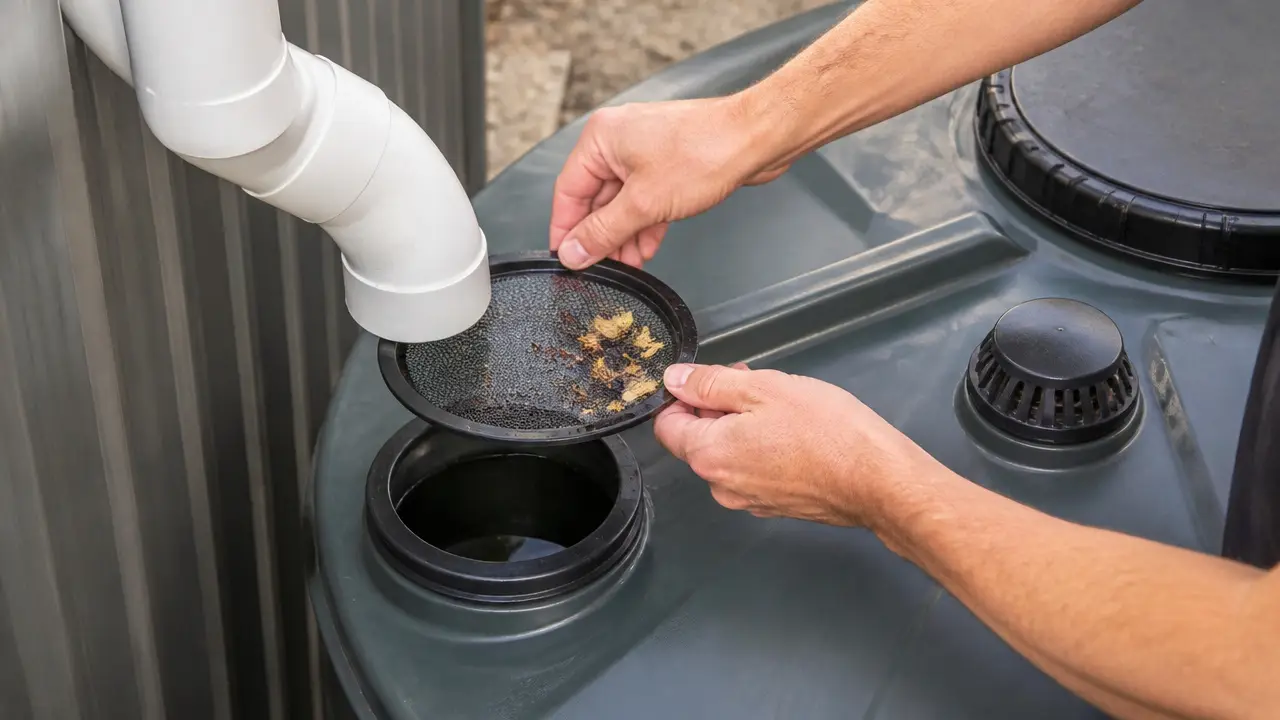
- The barrel has a screened inlet.
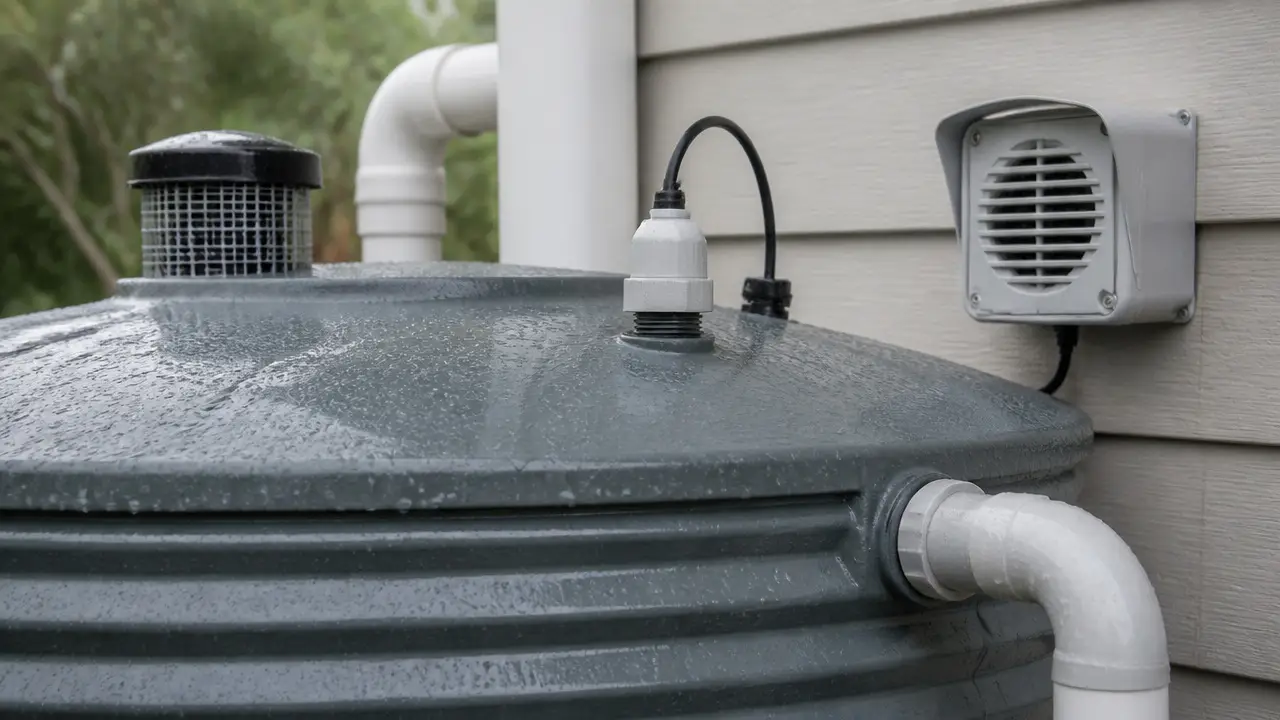
- The barrel has an overflow path.
- Overflow drains away from the foundation.
- Leaves and roof debris are kept out as much as practical.
- The flexible tubing does not sag and hold water.
A screen helps keep mosquitoes and larger debris out of stored water.
If the barrel uses a downspout diverter, follow the diverter's connection requirements rather than adding flexible tubing where it could interfere with proper overflow operation.
Collected roof runoff should normally be treated as non-potable water unless the entire collection and treatment system has been designed and managed for drinking-water use. Non-potable means water that is not intended for drinking.
Are Flexible Downspouts Good for IBC Totes and Cisterns?
They can be useful as short transition pieces, but they are usually not the best material for an entire permanent collection line.
Larger storage systems often benefit from rigid piping because it:
- Holds its shape.
- Is easier to support.
- Provides smoother flow.
- Can be connected more securely.
- Is easier to route with a predictable slope.
Flexible tubing can still help where a downspout does not line up perfectly with the main pipe.
For a large tank, also plan for overflow. A full tank can receive no more water, so incoming runoff needs a safe route away from the tank and nearby structures.
Can Flexible Downspouts Be Buried?
Some drainage tubing is made for underground use, but not every flexible downspout extension is.
Thin accordion-style extensions can be damaged by soil pressure, landscaping work, foot traffic, or vehicles.
If you need a permanent buried drainage line, smooth rigid drainage pipe is often easier to keep sloped and less likely to collapse.
Whatever pipe you use, the outlet must have somewhere for the water to go. Burying a pipe does not solve drainage if the far end is too high, blocked, or surrounded by saturated soil.
What About Freezing Weather?
Flexible tubing can be troublesome in freezing climates if water remains inside the grooves or low spots.
Repeated freezing can:
- Block the tube.
- Separate connections.
- Split weaker tubing.
- Redirect meltwater toward the building.
Before freezing weather, check that the extension drains fully.
Rain barrels and seasonal collection systems may also need winter preparation depending on their design and local climate.
How to Make a Flexible Downspout Work Better
A few installation choices make a large difference.
- Keep the run short when possible. Long corrugated runs create more resistance and more places for debris to collect.
- Maintain a downhill path. Do not allow the tube to sag between high points.
- Avoid unnecessary bends. Gentle curves usually drain better than tight turns.
- Secure the downspout connection. Confirm that heavy runoff cannot knock the extension loose.
- Protect the outlet. Keep grass, mulch, leaves, and soil from blocking it.
- Inspect it during rain. Look for leaks, backing up, pooling, or water escaping near the foundation.
- Clean it when needed. Disconnect the tube and remove accumulated sediment or debris if flow slows.
For permanent installations, replace troublesome flexible sections with smooth rigid pipe rather than repeatedly clearing the same clog.
When a Flexible Downspout Is Not Enough
A flexible extension can redirect water, but it cannot correct every drainage problem.
Consider a more complete drainage solution if:
- Water still pools against the foundation.
- Gutters overflow during normal storms.
- Several downspouts need to share one drain line.
- Water must travel a long distance.
- The line needs to be buried.
- The property has very little slope.
- The discharge area regularly becomes saturated.
Foundation drainage problems can involve grading, underground drainage, soil conditions, and building details. Persistent water entering a basement, crawl space, or foundation area deserves professional evaluation rather than simply adding a longer downspout hose.
Frequently Asked Questions
Are flexible downspout extensions worth using?
Yes. They are inexpensive, adjustable, and useful for short above-ground drainage runs. They are less suitable for long or permanent drainage systems because they can sag, clog, or get crushed.
How far should a flexible downspout extend from a house?
There is no single distance that works for every property. The important point is that the outlet releases water where the ground continues to carry it away from the foundation instead of letting it flow back toward the building.
Why is water sitting in my flexible downspout?
The tubing probably has a low spot, insufficient slope, or a blocked outlet. Reposition it so the entire run drains downhill and check for debris inside.
Can flexible downspouts handle heavy rain?
They can handle substantial runoff if they are correctly sized, kept clear, and installed with good slope. Long runs, sharp bends, clogs, or undersized connections can limit flow during intense rain.
Is corrugated pipe worse than smooth pipe?
Corrugated pipe has more internal resistance and more places for debris to collect. Smooth pipe is generally better for long, permanent, or high-flow drainage runs.
Can I connect a flexible downspout directly to a rain barrel?
Often, yes, but the inlet should be screened and secure. The barrel also needs an overflow that safely carries excess water away once the barrel is full.
Should I remove flexible downspouts for winter?
Not always. If the tubing drains completely and is designed for outdoor conditions, it may remain in place. Tubing that holds water is more vulnerable to freezing problems, so inspect and adjust it before cold weather.