
As an affiliate, we may earn a commission from qualifying purchases. We get commissions for purchases made through links on this website from Amazon and other third parties.
Best Overall
Best Long Reach
Best Simple Single
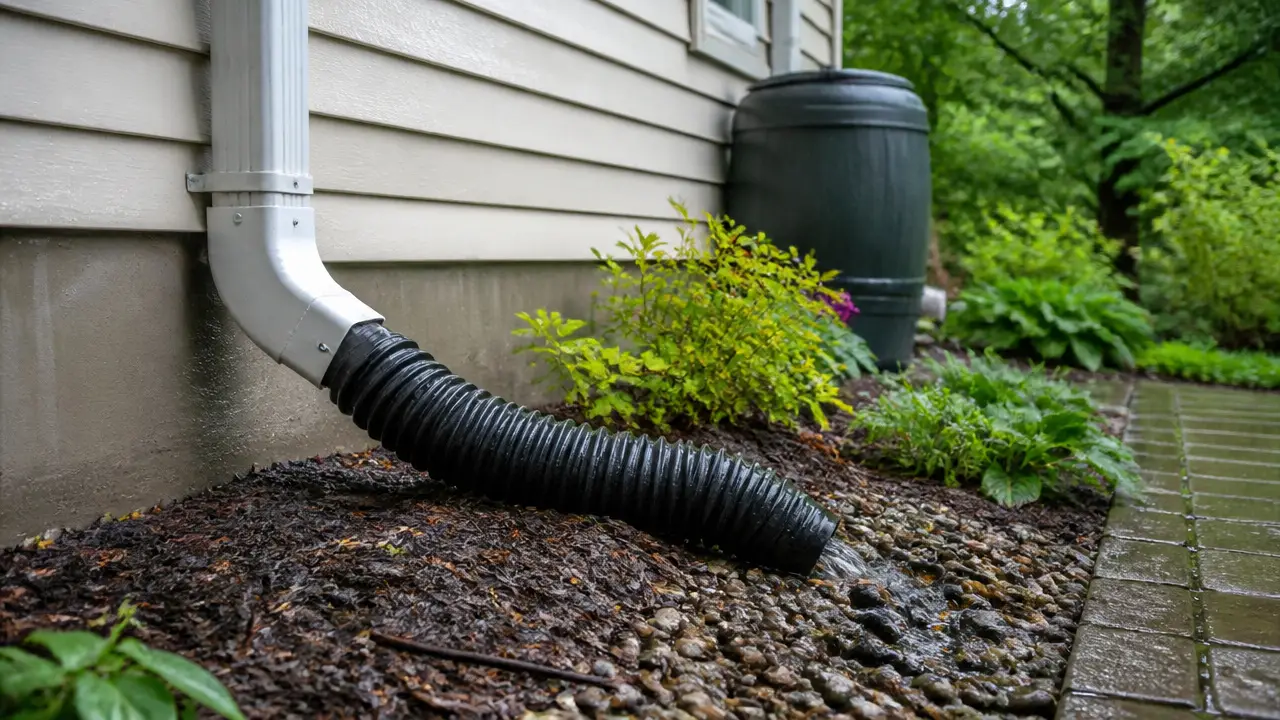
A flexible downspout extension is useful when the drain path needs to bend around a walkway, planter, foundation corner, or rainwater inlet. The best one is not simply the longest tube. It needs to fit the downspout, hold its position, drain downhill, and survive the sun and cold without cracking at the corrugations.
For rainwater harvesting, these extensions are best used as gravity-routing pieces rather than pressure pipe. Keep the path sloped so water does not sit in low folds. If the tube runs toward a barrel or tank, make sure the receiving inlet can handle the storm flow without backing water up against the downspout.
The four options here range from a 55-inch single extension to two-piece systems that can be joined for much longer reach. Durability is the biggest tradeoff across the category: repeated sun, freezing weather, yard equipment, and stretching can all shorten the life of flexible plastic.
Flexible Downspout Extensions at a Glance
| Product | Best For | Key Strength | Main Tradeoff |
|---|---|---|---|
| plusgutter 2-Pack | Most residential layouts | 21- to 68-inch extension range with multiple adapters | Cold-weather cracking has occurred over time |
| FEILAYDUN 2-Pack | Long routed runs | Two sections can combine to about 127 inches | Thinner than standard corrugated drain pipe |
| Amerimax Flex-A-Spout | Simple short diversion | Expands from 25 to 55 inches and fits common residential downspouts | Corrugations can crack with weather and repeated movement |
| Frost King Drain Away | Temporary lawn drainage | Unrolls under water flow for a long 12-foot path | Must be rolled back manually and the thin sleeve can split |
Best Overall: plusgutter Flexible Downspout Extensions
1 / 4
plusgutter Flexible Downspout Extensions

Length
21-68 in each
Pack
2
Downspout Fit
2x3, 3x3, 3x4 in adapters
The plusgutter set is the best all-around choice because each corrugated extension can stretch from about 21 to 68 inches and the package includes adapters for several common residential downspout sizes. That gives you enough flexibility to route around a corner or reach a nearby drainage point without immediately adding another pipe system.
The package includes two extensions, four adapters, and screws that help secure the connection at the downspout. Mechanical fastening matters when a hard storm sends a strong slug of water into a light flexible tube. A loose friction fit can pull away exactly when the extension is needed most.
The weakness is long-term weather exposure. The flexible pipe uses PE, while the included adapter materials are not consistently described, and cold-weather cracking has occurred after outdoor use. If you live where the tube freezes solid in winter, avoid moving it while brittle and inspect it before spring storms.
Why It Works
- Each section adjusts from a short bend to a 68-inch reach.
- Included adapters cover 2 x 3, 3 x 3, and 3 x 4-inch downspouts.
- Two tubes let you handle separate downspouts or build a longer route.
- Screws help keep the upper connection from washing loose.
What To Keep In Mind
- Flexible corrugations can crack after sun and winter exposure.
- Keep a continuous downhill slope so water does not remain trapped.
- Inspect screws and adapters after major storms.
- Do not treat the extension as pressure-rated rainwater plumbing.
Best Long Reach: FEILAYDUN Flexible Downspout Extensions
2 / 4
FEILAYDUN Flexible Downspout Extensions

Length
20-66 in each
Combined Reach
Up to 127 in
Pack
2
The FEILAYDUN set is the better option when one flexible section is not long enough. Each tube extends from about 20 to 66 inches, and the included connector can join the pair into a run of roughly 127 inches. That can bridge a wide planting bed or move discharge around a corner without installing rigid underground drain pipe.
Adapters are intended for 2 x 3, 3 x 3, and 3 x 4-inch residential downspouts. The adapter portions and flexible pipe use different plastic constructions, which is sensible because the connection needs stiffness while the tube needs to bend.
The main limitation is wall thickness. The tube is lighter and thinner than common corrugated landscape drain pipe, so it should not be expected to handle foot traffic, mower wheels, or burial. Water can also escape from side joints when the extension is poorly seated or laid without enough downhill pitch.
Why It Works
- Two sections can be joined for the longest reach in this group.
- Multiple adapters cover common rectangular downspout sizes.
- The flexible route can bend around landscaping and corners.
- The two-pack can also serve two separate downspouts.
What To Keep In Mind
- It is thinner than heavy landscape drainage pipe.
- Do not bury it or drive over it unless the maker specifically allows that use.
- Make sure joined sections remain sloped and fully seated.
- The adapters and flexible pipe use different plastics, so judge durability from the installed conditions rather than one polymer label.
Best Simple Single: Amerimax Flex-A-Spout
3 / 4
Amerimax Flex-A-Spout

Length
25-55 in
Weight
1.3 lb
Format
Single corrugated extension
The Amerimax Flex-A-Spout is the simplest choice when you only need to move water a few feet. It expands from about 25 to 55 inches and is designed for standard residential downspouts. The corrugated tube can bend around a foundation corner or angle toward a nearby rainwater inlet.
Its shorter length is useful because it is easier to keep properly sloped than a long flexible run. For a barrel placed close to the house, that can be enough to bridge the gap without building rigid elbows and pipe.
Durability is the main drawback. Cracks have developed along the corrugations after seasons of sun, heat, and flexing, and lawn trimmers can cut the tube easily. Stretch it gently rather than yanking the pleats to full length, and inspect bends where stress concentrates.
Why It Works
- The 25- to 55-inch range covers many short residential drainage jobs.
- Corrugations let the tube bend without separate elbows.
- A single-piece setup is easy to remove for mowing or seasonal storage.
- The product is widely shaped around residential downspout use.
What To Keep In Mind
- Corrugated seams can crack after weather exposure.
- Keep trimmers and mower wheels away from the tube.
- Avoid stretching it aggressively when the plastic is cold.
- Replace it if holes begin leaking water beside the foundation.
Best Temporary Lawn Drain: Frost King Drain Away
4 / 4
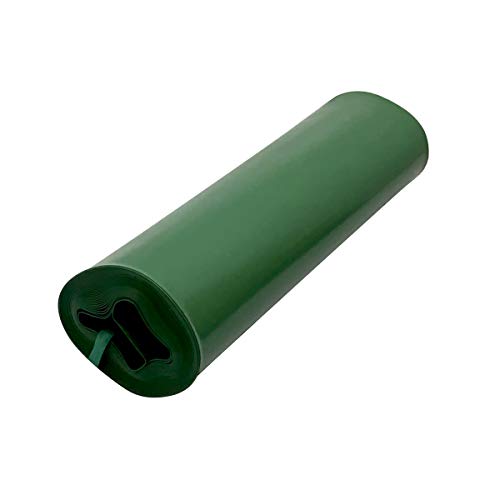
Frost King Drain Away Downspout Extender
Reach
Up to 12 ft
Action
Unrolls with water flow
Attachment
Standard downspout fit claim
The Frost King Drain Away takes a different approach. Instead of a corrugated tube that stays extended, it is a flexible sleeve designed to unroll as runoff enters. That gives you a long path across a lawn without leaving a rigid-looking extension stretched out all the time.
It can be useful when the goal is simply to move stormwater away from the foundation during rain. Afterward, however, it has to be rolled back manually. It should not be mistaken for an automatic retracting system.
The material is also lighter than the corrugated products. Splitting during installation, sun deterioration, and missing attachment hardware have all caused problems. This is better as a low-cost temporary drainage sleeve than as the permanent feed line to a rain barrel or tank.
Why It Works
- The 12-foot reach moves water farther across a lawn than the corrugated options.
- It stays compact when rolled up between storms.
- Tool-free installation can be simple when all attachment parts are present.
What To Keep In Mind
- It does not roll itself back up after the storm.
- The thin sleeve can split or weaken in sun exposure.
- Check that the attachment piece is included before installation.
- It is better for open discharge than for a precise tank connection.
How to Choose a Flexible Downspout Extension
Measure the Reach With a Downhill Path
Measure from the downspout outlet to the final discharge or tank inlet along the actual route, not in a straight line through landscaping. Leave enough length for bends, but do not create deep sags where water will remain after the storm.
If more than one extension is needed, use a proper connector and support the joint so it does not pull apart under flow.
Match the Downspout Adapter
Most residential downspouts are rectangular, often 2 x 3 or 3 x 4 inches. A flexible tube with the wrong adapter will leak at the wall or detach. Use the supplied adapter that matches the actual downspout and fasten it as directed.
A 3-inch outside diameter on the flexible tube does not mean it fits every 3-inch pipe system. Adapter geometry matters.
Protect the Tube From Yard Damage
Flexible extensions live in a hard place: sunlight, freezing temperatures, lawn equipment, foot traffic, and moving water all work against them. Route the tube where it is not constantly stepped on or hit by a string trimmer.
If the path crosses a walkway or needs burial, a rigid or buried drainage system is usually a better long-term solution.
Use It Carefully With Rainwater Storage
An extension can route runoff toward a rain barrel or tank, but the receiving opening must pass the same storm flow. A small screen that clogs can back water into the tube and force joints apart.
Keep the tank overflow independent and sized for excess water. The downspout path should still have a safe route when the storage container is full.
Frequently Asked Questions
How far should a downspout extension run from the house?
Run it far enough that discharged water does not immediately return toward the foundation. The exact distance depends on grading, soil, foundation design, and local drainage conditions.
Can flexible downspout extensions connect to rain barrels?
They can route gravity flow toward a barrel when the adapter and inlet fit correctly. Keep the run sloped and make sure the barrel inlet and overflow can handle storm flow.
Do corrugated downspout extensions hold water?
They can if the tube sags between high points. Shape the extension with a continuous downhill slope so the corrugations drain after rain.
Can flexible downspout extensions stay outside in winter?
Some can remain outdoors, but cold plastic can become brittle. Avoid moving a frozen extension and inspect it for cracks before spring use.
Should I bury a flexible downspout extension?
Light above-ground extensions are generally not a substitute for buried drainage pipe. Soil and traffic can crush them, and buried corrugations are harder to inspect for clogs or leaks.
Why is water leaking from the side of my extension?
Look for cracks, loose connectors, poorly seated adapters, or joints that are backing up because the tube is flat or uphill. Replace damaged tubing rather than routing foundation water through a leaking section.
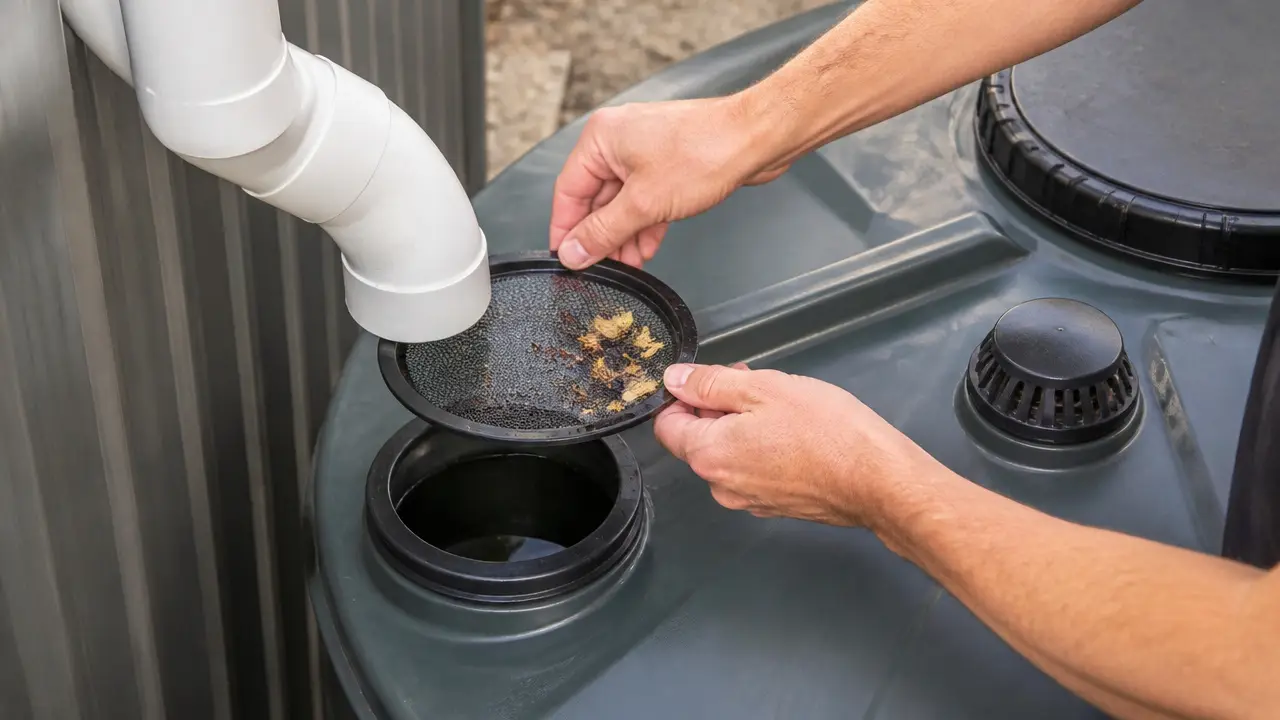
If the goal is to clean roof runoff before it travels farther, downspout filters add debris control at the vertical pipe. Gutter guards for rainwater harvesting reduce the leaf load before water enters the downspout. At the storage end, rainwater tank inlet screens provide a final coarse-debris barrier.