As an affiliate, we may earn a commission from qualifying purchases. We get commissions for purchases made through links on this website from Amazon and other third parties.
For most homes, downspouts should discharge at least 5 feet from the foundation onto ground that slopes away from the house. In wetter sites, homes with basements, flat yards, or soil that drains slowly, extending the discharge about 10 feet away can give water more room to soak in without returning toward the foundation.
EPA guidance uses 5 feet as a minimum in some residential water-management guidance and recommends longer drainage runs in situations where stronger moisture control is needed.
The distance alone is not enough. The outlet must also send water somewhere it can safely drain.
Why Downspout Distance Matters
A downspout can collect runoff from a large section of roof. During a heavy storm, that can mean a lot of water reaching one small area beside the house.
If the downspout ends right beside the wall, water can soak the soil around the foundation. This may contribute to:
- Damp basements or crawl spaces
- Water entering through foundation cracks
- Soil erosion
- Settlement around the foundation
- Muddy areas beside the house
- Water cycling back into foundation drains or sump systems
Moving the outlet farther away reduces how much roof runoff enters the soil directly beside the foundation.
The ground also matters. Water released 8 feet away but flowing downhill toward the house is still a drainage problem.
Is 5 Feet Far Enough?
Five feet is a useful minimum starting point for many homes when the ground clearly slopes away from the foundation.
EPA Indoor AirPlus guidance includes roof drainage that discharges at least 5 feet from the foundation on sloping finished grade.
Five feet may work well when:
- The yard slopes away from the house.
- The soil absorbs water reasonably well.
- Water does not pool at the outlet.
- The house has no history of basement or crawl-space moisture.
- The discharge area has enough room to spread the water.
Check the area during an actual rainstorm. You want water continuing away from the house instead of soaking into a depression and moving back toward it.
When 10 Feet Is Better
Moving water about 10 feet from the foundation provides a larger buffer and can be useful when drainage conditions are less favorable.
Consider a longer extension when you have:
- A basement
- A wet crawl space
- Nearly flat ground
- Clay or other slow-draining soil
- Previous foundation leaks
- Large roof sections draining into one downspout
- Frequent heavy rain
- Water collecting near the house
EPA moisture-control guidance recommends downspout leaders extending at least 10 feet from the foundation in its building moisture-control recommendations.
That does not mean every house requires a 10-foot extension. Site conditions matter. The goal is to move the water far enough that it keeps traveling away from the building.
The Ground Should Slope Away From the House
Downspout distance works together with grading.
Grading means the shape and slope of the ground around the house. Ideally, the soil near the foundation should slope outward so rain naturally moves away.
EPA moisture guidance describes a 5% slope as a useful drainage target. That equals about 6 inches of drop over 10 feet. Local requirements may differ.
For example, suppose your downspout extension ends 6 feet from the wall.
If that point is lower than the soil beside the foundation and water continues downhill from there, the setup may work well.
If the extension ends in a low spot where water forms a puddle, simply adding more pipe may not solve the problem. The outlet itself needs somewhere for the water to go.
Where Should a Downspout Empty?
A good discharge point lets water spread out or continue downhill without creating another problem.
Possible locations include:
- A lawn that slopes away from the house
- A landscaped drainage area
- A properly designed rain garden
- A swale
- An approved stormwater system
- A properly located dry well
- A rainwater harvesting system
A swale is a shallow low area shaped to carry or slow runoff.
Do not simply move water from your foundation to somewhere else where it causes trouble.
Avoid directing downspouts toward:
- A neighbor's property
- A neighboring foundation
- A driveway where water may freeze
- A sidewalk where runoff creates a hazard
- A septic drain field unless the system was specifically designed for that water
- A steep slope that can erode
- An area that already stays wet
Local stormwater or plumbing rules may also limit where downspouts can discharge.
Do Splash Blocks Move Water Far Enough?
A splash block helps keep water from digging a hole beneath the downspout. It can also point runoff away from the wall.
But a short splash block does not always move water far enough.
If the downspout ends only a foot or two from the foundation, much of the water can still soak into soil close to the house.
A longer above-ground extension is often a simple improvement. Make sure it has enough slope to drain and that its end does not sit in a low spot.
Above-Ground Downspout Extensions
Above-ground extensions are usually the simplest way to move runoff farther from a house.
They are easy to inspect because you can see whether they are:
- Connected
- Crushed
- Clogged
- Leaking
- Pointing in the right direction
Rigid extensions generally hold their slope better than long sections of flexible pipe.
Flexible extensions can still work, but make sure they do not sag and trap water. Standing water can collect debris and can freeze in cold climates.
Keep extensions where they will not become a trip hazard or get crushed by vehicles, lawn equipment, or foot traffic.
What About Buried Downspout Drainage?
A buried drainage pipe can move roof water farther from the house without leaving pipe across the lawn.
The pipe should carry water to a suitable discharge point rather than simply ending underground beside the foundation.
Use distance and lift limits for should the downspouts be extended from the house to assess collection design for forecast rain and debris loads.
EPA guidance describes underground catchment arrangements that discharge more than 10 feet from the foundation as one possible roof-water management method.
For buried runs, pay attention to:
- Pipe slope
- Pipe size
- Watertight joints near the foundation
- A cleanout or other way to deal with clogs
- The final outlet location
- Freezing conditions
- Roots and soil movement
Do not assume perforated drainage pipe is appropriate for the entire run. A pipe that releases roof water into the soil next to the foundation defeats the purpose of moving that water away.
Discharge distance should also prevent downspout runoff entering a neighboring yard and creating a drainage dispute.
EPA moisture-control guidance specifically recommends non-perforated leaders where the goal is carrying downspout water away from the building.
Downspouts Connected to Rain Barrels
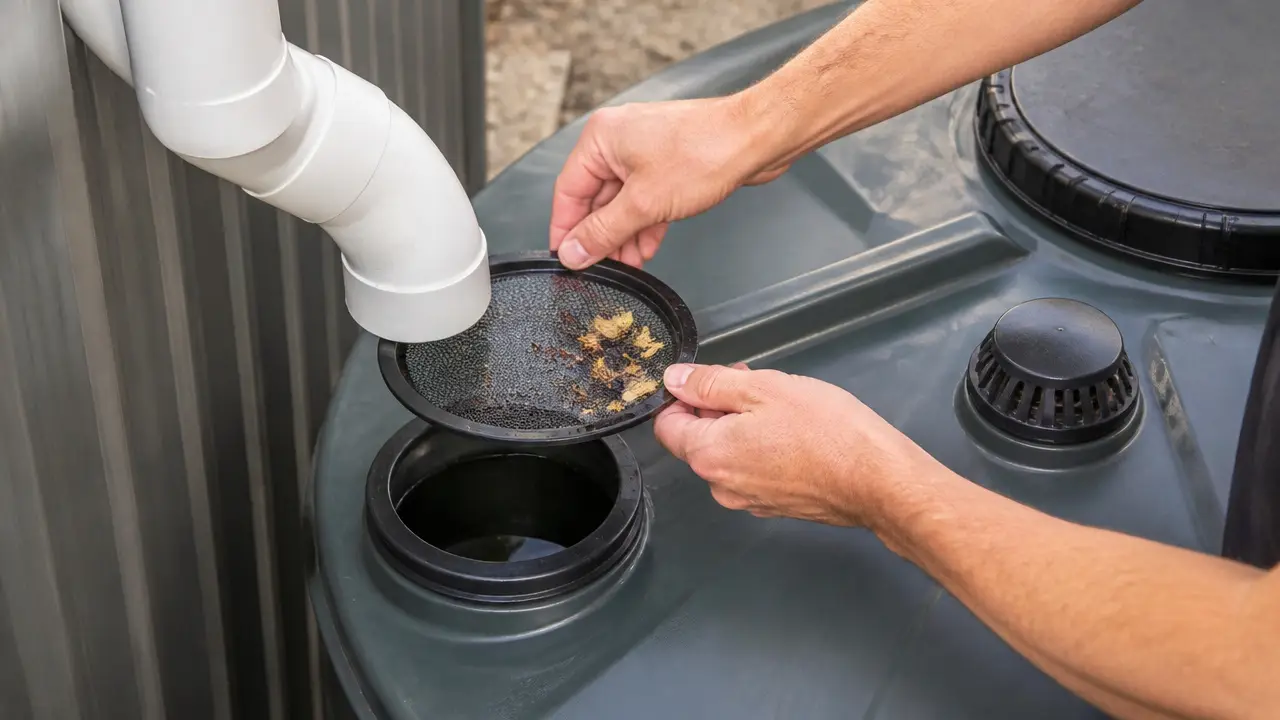
A rain barrel changes where the water goes, but it does not remove the need for safe drainage.
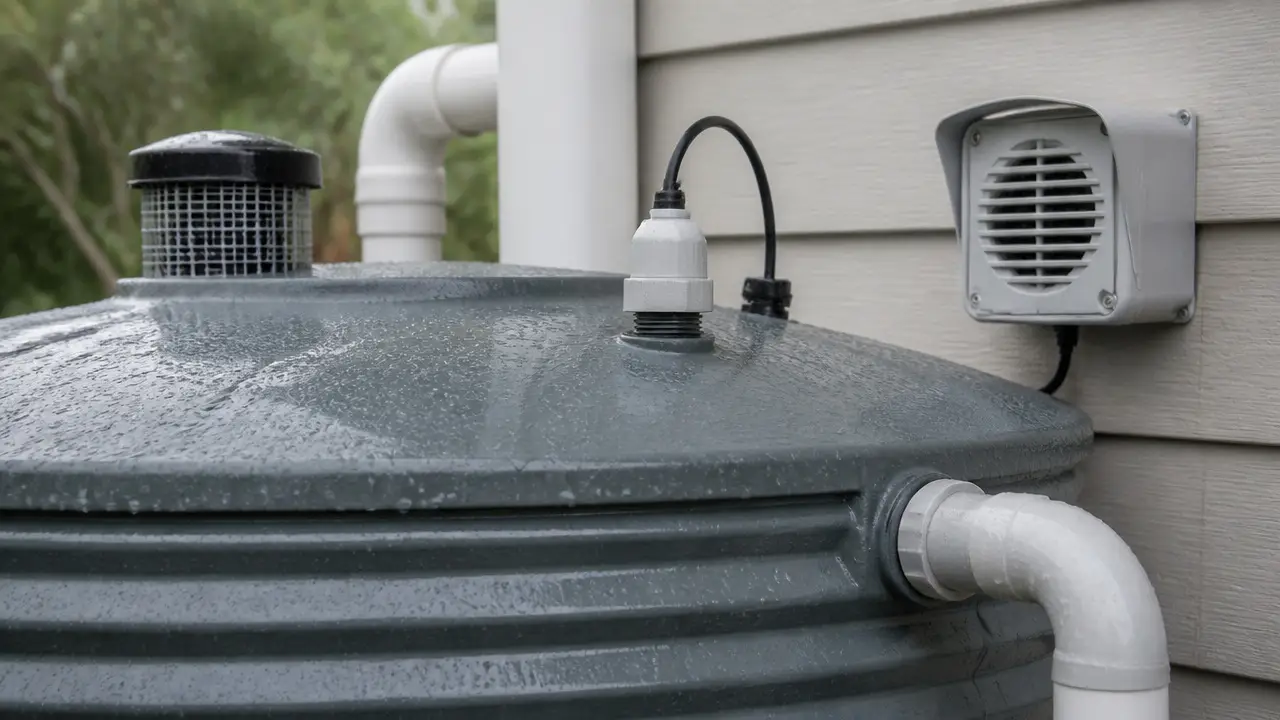
Once the barrel fills, additional roof runoff must leave through an overflow.
That overflow should be treated much like a downspout. Send it away from the foundation to a place that can safely accept the water.
This is especially important because the biggest overflow usually happens during the biggest storms, when the surrounding soil may already be wet.
Keep the barrel itself on a firm, level base. Water is heavy, so do not place a full barrel on an unstable stack of loose blocks or soft soil.
Cistern Overflow Needs the Same Planning
Larger rainwater storage systems need an overflow route too.
A cistern may collect runoff from hundreds or thousands of square feet of roof. Once the tank is full, the overflow can carry nearly all new incoming rainwater.
Route that overflow away from:
- The house foundation
- Tank foundations or pads
- Electrical equipment
- Septic areas
- Slopes vulnerable to erosion
The overflow outlet should also be large enough for the incoming flow the system may receive. Do not assume a small garden hose can safely handle overflow from a large roof collection system.
How to Check Your Downspout Drainage
The easiest test is to inspect the system during a steady rain.
Start at the downspout and follow the water.
Check that:
- The gutter is not overflowing.
- The downspout connections are not leaking.
- The extension carries water away from the foundation.
- The outlet is lower than the soil beside the house.
- Water continues moving away after leaving the extension.
- No large puddle forms beside the foundation.
- Water is not being redirected onto neighboring property or another structure.
Also look at the area after the rain stops.
Soft soil, sediment deposits, erosion channels, or standing water can show where drainage needs improvement.
Signs Your Downspouts Need to Drain Farther Away
The exact extension length matters less than what happens to the water.
Consider changing the drainage setup if you notice:
- Water pooling beside the foundation
- Damp basement walls after rain
- Crawl-space moisture
- Soil washing away near the house
- Mulch being carried toward the foundation
- Water entering window wells
- A sump pump running heavily whenever it rains
- Water flowing back toward the house after leaving the downspout
Extending the downspout may help, but recurring foundation water can also come from poor grading, failed foundation drainage, groundwater, cracks, or other problems.
Persistent water entry deserves a broader drainage inspection rather than simply adding more downspout pipe.
A Practical Starting Point
For a typical home, use this approach:
Aim for at least 5 feet from the foundation, and consider about 10 feet when the site is flat, wet, slow-draining, or has a basement or history of water problems.
Then check what happens at the end of the extension.
The best downspout setup is not the one with the longest pipe. It is the one that gets roof runoff away from the building and keeps it moving toward a safe drainage area.
Frequently Asked Questions
How far should a downspout extend from a foundation?
At least 5 feet is a useful starting point when the ground slopes away from the house. A longer run of about 10 feet may be better on flat or wet sites, around basements, or where soil drains slowly.
Is 3 feet far enough for a downspout?
Three feet may move water away from the wall, but it can still leave runoff close to the foundation. Extending it to at least about 5 feet is generally a better starting point where space allows.
Can a downspout drain directly onto the lawn?
Yes, if the lawn slopes away from the house and can accept the runoff without persistent pooling or erosion. Watch the area during heavy rain to see where the water actually travels.
Can I bury a downspout extension?
Yes. Buried pipe can carry roof runoff to a safe discharge point. It needs proper slope, suitable pipe, accessible maintenance points, and an outlet that does not send the water back toward the foundation.
Should a rain barrel overflow drain away from the house?
Yes. A full rain barrel cannot store additional runoff, so its overflow should send excess water away from the foundation to a safe drainage area.
Can a downspout empty into a French drain?
Sometimes, but the system must be designed for the volume of roof runoff and local soil conditions. A small gravel trench beside the foundation should not be used simply to dump roof water back into the soil next to the house.
What if I cannot extend my downspout 5 feet?
Look for another way to move the runoff away, such as properly designed buried solid pipe, a suitable drainage swale, rain garden, approved stormwater connection, or rainwater storage system with a safe overflow. Check local requirements before connecting roof drainage to municipal systems.