As an affiliate, we may earn a commission from qualifying purchases. We get commissions for purchases made through links on this website from Amazon and other third parties.
For most homes, extend downspouts so roof water discharges at least 5 feet away from the foundation. If you have a basement, flat ground, slow-draining soil, or a history of water near the house, extending the discharge 6 to 10 feet away can give the water more room to drain safely.
The distance alone is not enough. The water also needs somewhere to go. A 10-foot extension that empties into a low spot and sends water back toward the house will not solve the problem.
How Far Should Downspouts Extend From the House?
A good starting point is:
| Situation | Practical downspout distance |
|---|---|
| Typical home with good slope away from foundation | At least 5 feet |
| Basement or moisture problems | 6 to 10 feet may be better |
| Flat or poorly draining yard | Extend to a suitable drainage area, often farther than 5 feet |
| Underground catchment or drainage system | Often 10 feet or more from the foundation |
| Rain barrel or tank overflow | Carry overflow away from the foundation, generally at least 5 feet |
U.S. Department of Energy building guidance recommends carrying downspout water to sloping ground at least 5 feet from the foundation. It also describes underground catchment systems located at least 10 feet from the foundation.
These distances are useful starting points, not a guarantee that every yard will drain properly.
Why Downspouts Need to Carry Water Away
A roof can collect a large amount of water during one storm. Gutters concentrate that water into a few downspouts.
If a downspout ends right beside the house, that concentrated flow can soak the soil around the foundation.
That can contribute to:
- Damp basement or crawl-space walls
- Water entering cracks or joints
- Soil erosion near the foundation
- Settling in some soil conditions
- Moisture under the house
- Mud or standing water around the foundation
Moving the outlet several feet away gives the water a better chance to spread out or continue downhill instead of soaking the soil directly beside the house.
Five Feet Is a Starting Point, Not the Whole Answer
The most important question is not just:
How long is the extension?
It is:
Where does the water go after it leaves the extension?
Suppose you install a 6-foot extension. If your yard slopes toward the house, the water may run right back to the foundation.
The opposite can also happen. A 5-foot extension draining onto ground that continues to slope away may work very well.
Look at the complete drainage path during a hard rain.
Water should move:
roof → gutter → downspout → extension → safe drainage area
It should not circle back toward the house.
When You Should Extend Downspouts Farther
Going beyond 5 feet makes sense when the first discharge point still leaves water near the foundation.
Your House Has a Basement
Basements put part of the structure below ground, where wet soil can create ongoing moisture pressure against the walls.
Some stormwater programs use longer separation distances for houses with basements. For example, Portland's current downspout-disconnection guidance calls for roof runoff to discharge at least 6 feet from a basement in applicable installations.
If you regularly see wet soil or basement moisture after storms, moving the outlet farther away may help.
Your Yard Is Nearly Flat
A downspout extension does little good if the water reaches the end and forms a puddle.
You may need to carry it farther until you reach an area that naturally drains away.
You Have Heavy or Slow-Draining Soil
Clay-rich soil can absorb water slowly.
During heavy rain, the surface may become saturated before the water can soak in. A longer extension can move concentrated roof runoff to a larger drainage area.
Water Is Already Collecting Beside the Foundation
Standing water is a clear sign that the current discharge point is not working well.
Do not simply keep adding short extensions without checking the yard's slope. Find a discharge location where the water can actually continue away.
The Ground Slopes Toward Your House
This is a grading problem as much as a downspout problem.
A longer extension may bypass the low area, but poor grading around the house may still need to be corrected.
The Ground Should Slope Away From the House
Downspouts work best when the surrounding grade also carries water away.
The end of the extension should discharge onto ground that continues downhill or spreads the water without allowing it to return toward the foundation.
Check your yard during rain rather than relying only on how it looks when dry.
Watch for:
- Water flowing back toward the house
- Puddles near foundation walls
- Channels forming in soil or mulch
- Overflow from landscape beds
- Water crossing sidewalks
- Water entering a neighbor's property
A splash block can reduce erosion where the water exits, but it cannot fix poor grading.
Should You Use a 10-Foot Downspout Extension?
You can, and in some yards it is a useful solution.
Ten feet is especially reasonable if a shorter extension still leaves water in poorly drained soil near the house.
But longer is not automatically better.
A 10-foot extension that:
- crosses a walkway,
- empties into a low spot,
- sends water toward another building, or
- creates standing water
may cause a different problem.
Choose the discharge point first. Then use enough pipe or extension to reach it.
Above-Ground vs. Buried Downspout Extensions
Both can work.
Above-Ground Extensions
Guidance on redirecting downspout runoff helps compare overflow and blockage protection for roof drainage.
These are simple and easy to inspect.
Common options include rigid extensions and flexible downspout tubing.
Advantages include:
- Easy installation
- Easy cleaning
- Easy inspection for clogs
- Easy removal or adjustment
The main drawback is that long extensions can interfere with mowing, walking, landscaping, or snow removal.
Buried Drain Pipe
A buried solid pipe can move water farther without leaving a pipe across the lawn.
The pipe should have a dependable outlet and enough slope for water to drain.
Do not assume burying the pipe makes the drainage problem disappear. A buried line that has no good outlet can remain full of water, collect debris, freeze in cold climates, or back up toward the downspout.
Use solid pipe where you are trying to transport roof water away. Perforated pipe releases water along its length and may put water back into soil you were trying to keep dry.
Major drainage work, deep excavation, or systems close to foundations may justify help from a qualified drainage or foundation professional.
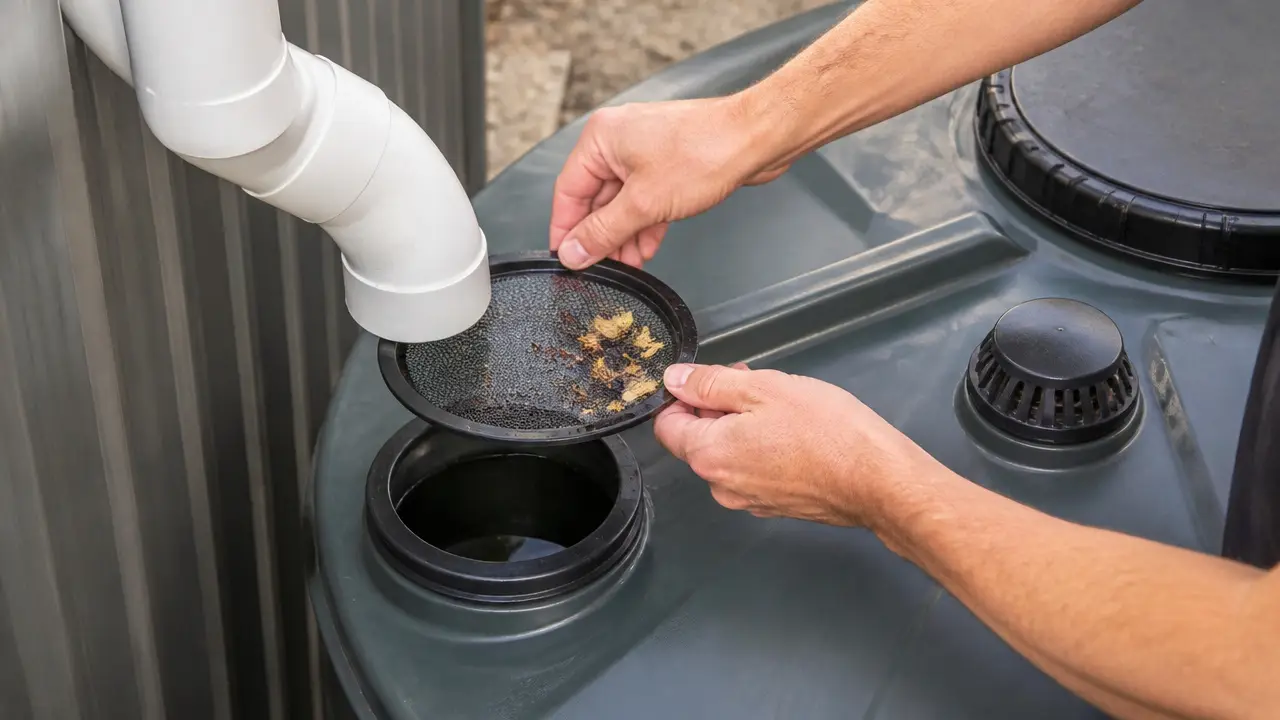
What About Rain Barrels?
A rain barrel changes where the downspout water goes, but it does not eliminate the need for drainage.
Once the barrel fills, additional rain needs an overflow path.
The overflow should carry water away from the foundation rather than dumping it beside the barrel.
DOE building guidance specifically notes that rainwater-harvesting systems should have drainage capable of handling overflow.
This matters because a small barrel can fill quickly during a strong storm. The overflow may then handle most of the roof runoff.
Treat the overflow almost like another downspout.
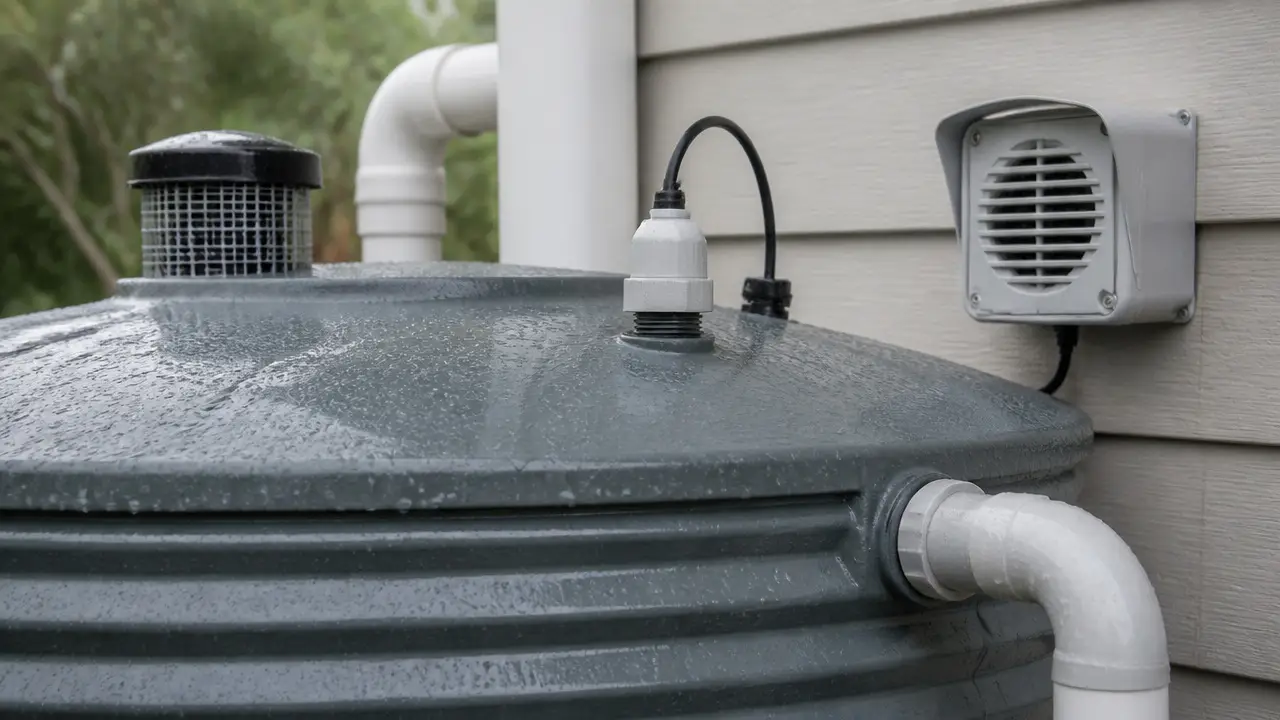
What About Larger Rainwater Tanks and Cisterns?
The same principle applies to larger storage systems.
A tank needs an overflow sized and located so excess water can leave safely when storage is full.
Do not direct the overflow toward:
- The house foundation
- Tank footings
- Retaining walls
- Neighboring property
- Septic areas
- Areas where water will cause erosion
A large tank may hold much more water than a rain barrel, but once it fills, roof runoff still needs a safe drainage route.
Don't Send the Water to Your Neighbor
Moving downspout water away from your foundation does not mean you can send it anywhere.
Avoid concentrating runoff onto neighboring property or toward nearby structures.
Local stormwater rules may also set minimum distances from property lines, sidewalks, buildings, or other features. These requirements vary by location.
If you are installing a permanent buried drainage system, dry well, rain garden, or other stormwater system, check current local requirements before choosing its location.
Check for Erosion at the Outlet
A downspout can release water quickly.
If the pipe ends on bare soil, that flow can wash out a small channel.
Depending on the site, you may need a:
- Splash block
- Gravel discharge area
- Suitable outlet fitting
- Wider vegetated area that can spread the flow
The goal is to slow and spread the water without creating a new puddle.
Don't Forget to Maintain the Extension
Even a well-designed extension needs occasional attention.
Check it after strong storms and when cleaning your gutters.
Look for:
- Leaves and debris
- Crushed flexible pipe
- Loose connections
- Sagging sections
- Standing water inside the pipe
- Soil erosion
- Outlet blockage
- Water flowing back toward the house
In freezing climates, pay particular attention to low spots where water remains in the line. Trapped water can freeze and block drainage.
A Simple Way to Choose the Right Distance
Start with at least 5 feet from the foundation, then inspect what happens to the water.
If the discharge point drains freely and the ground continues away from the house, that may be enough.
If water pools, returns toward the foundation, or stays close to basement walls, extend the line farther until you reach a better drainage location.
For many problem sites, that means something closer to 6 to 10 feet, but the correct distance depends on the yard rather than the extension alone.
The best downspout extension is long enough to reach a place where roof runoff can safely continue away from the building.
Frequently Asked Questions
Is 3 feet far enough for a downspout extension?
Three feet may move water away from the wall, but it is shorter than the 5-foot separation commonly recommended in building guidance. If possible, carry the water at least 5 feet away and make sure the ground continues to drain away from the house.
Is 5 feet far enough away from the foundation?
For many homes, yes. Five feet is a useful minimum starting point when the outlet drains onto ground that slopes away. Poor drainage, basements, flat yards, or wet soil may require a longer run.
Can a downspout extension be too long?
Length itself is usually not the main problem. Long extensions can become difficult to maintain, sag, clog, or create trip hazards. The pipe also needs enough slope to drain properly.
Should downspouts drain onto grass?
They can if the grassed area can accept the water without pooling, eroding, or sending it back toward the house. Avoid concentrating large amounts of roof runoff into a small low spot.
Should I bury my downspout extensions?
You can bury them if you need to move water farther across the yard. Use a properly planned drainage route with a reliable outlet. A buried pipe without enough slope or a good discharge point can create backups and maintenance problems.
How far should a rain barrel overflow be from the house?
Treat the overflow like a downspout. A practical target is to discharge it at least 5 feet from the foundation where the water can continue away safely. Local drainage requirements can differ.
What should I do if water still pools after extending the downspout?
Check the yard's slope and the outlet location. You may need a longer extension or a different drainage solution. Persistent foundation water, major grading problems, or drainage that requires substantial excavation should be evaluated by a qualified professional.