As an affiliate, we may earn a commission from qualifying purchases. We get commissions for purchases made through links on this website from Amazon and other third parties.
A flexible downspout extension usually attaches by sliding one end over the bottom of the existing downspout and securing it with a snug friction fit, a clamp, or a few short sheet-metal screws.
The main goal is simple: make a connection that stays on during heavy rain while keeping the extension pointed far enough away from the foundation.
Check the Downspout Size First
Before attaching the extension, check the size and shape of your downspout.
Common residential downspouts are rectangular. Flexible extensions often have an adapter end that can fit more than one downspout size.
The extension should:
- Fit over or around the end of the downspout.
- Stay firmly attached when you pull on it lightly.
- Allow water to move without creating a major restriction.
- Match the shape closely enough that water does not spray from the connection.
Do not force an extension onto a downspout that is clearly too large. Crushing or sharply bending the adapter can reduce flow.
If the downspout ends very close to the ground, you may need to shorten it before adding the extension. Cutting metal downspouts is a more involved job, so make sure the new outlet height will still let water drain downhill.
How to Attach a Flexible Downspout Extension
1. Remove the Old Downspout Outlet if Needed
Some downspouts end with a rigid elbow that points toward the ground.
You can often connect the flexible extension directly to that elbow. However, the extension may drain better if the existing outlet already points generally in the direction you want the water to travel.
Remove loose or damaged pieces before installing the new extension.
2. Clean the End of the Downspout
Brush away leaves, mud, grit, and old sealant.
A clean surface helps the extension fit more securely.
This is also a good time to look inside the bottom of the downspout for clogs. A flexible extension will not solve an overflowing gutter if the downspout itself is blocked.
3. Fit the Extension Over the Downspout
Place the adapter end of the flexible extension over the bottom of the downspout or elbow.
Push it on far enough that it cannot easily slip off.
Some extensions have a molded adapter that can be trimmed or adjusted for different downspout sizes. Follow the markings on the extension rather than cutting away more material than needed.
Make sure the flexible tube is not pinched where it meets the downspout.
4. Secure the Connection
A tight-fitting extension may stay in place without extra hardware. In many installations, however, securing it is worthwhile.
Common methods include:
- A suitable clamp around the connection.
- Short exterior-grade sheet-metal screws.
- A manufacturer-provided clip or fastening system.
If using screws, use short screws that only need to pass through the overlapping materials. Long screws sticking far into the downspout can catch leaves and debris.
Usually, two or three evenly spaced fasteners are enough to keep an adapter from twisting or pulling loose. The exact fastening method depends on the materials and extension design.
Do not rely on ordinary indoor tape as the main connection. Sun, water, dirt, and temperature changes can cause it to loosen.
5. Extend the Hose Away From the House
Pull the flexible section outward in the direction you want the water to travel.
Keep the extension as straight as practical.
Sharp bends can slow water and trap debris. A low spot can also hold water after a storm.
The outlet should discharge where the ground carries water safely away from the building rather than back toward the foundation.
How far away it needs to reach depends on the slope, soil, drainage system, and building. Simply adding a long extension does not help if it empties into an area that slopes back toward the house.
6. Keep the Outlet Open
Do not bury the end under mulch, soil, or landscaping material.
The opening needs enough space to release water during a heavy storm.
If you use a splash block, place it so the extension empties onto the block and the block directs water away.
For an underground drainage system, use fittings intended for that type of pipe instead of pushing a flexible extension loosely into a buried pipe.
Test the Extension With Water
After installation, run water into the gutter with a garden hose or check the system during the next moderate rain.
Watch the entire connection.
Look for:
- Water leaking heavily around the adapter.
- The extension pulling away from the downspout.
- Water backing up in the tube.
- Kinks or crushed sections.
- Water pooling near the foundation.
- The outlet washing away soil.
A small amount of seepage at a non-watertight downspout joint may not matter. Water spraying from the connection or flowing toward the house does.
Should the Extension Go Over or Inside the Downspout?
In most cases, the extension or its adapter should fit around the outside of the downspout outlet.
This arrangement helps water move from the smaller upstream section into the downstream extension without hitting an exposed edge.
Guidance on practical steps for preventing the gutter downspouts from clogging helps assess runoff controls suited to local storms and contamination.
An inside connection can sometimes create a lip that catches debris or allows water to escape around the joint.
The correct arrangement ultimately depends on the design of your particular adapter.
Do You Need Screws?
Not always.
A flexible extension with a very tight adapter may stay attached by friction alone. Fasteners are more useful when:
- Heavy rain creates strong flow.
- The extension gets moved during mowing.
- Wind shifts it.
- The adapter is slightly loose.
- Children, pets, or landscaping work may pull on it.
A removable clamp can be useful if you regularly take the extension off for cleaning.
Avoid Stretching It Too Far
Flexible downspout tubing is designed to expand, but stretching it to its maximum length can make it easier to pull loose.
If you need to move water much farther across the property, rigid drain pipe may be a better choice.
Rigid pipe generally holds its slope better and has a smoother interior. Flexible corrugated pipe is convenient, but its ridges can collect sediment and small debris.
Give the Extension a Downhill Path
Water moves through a basic downspout extension mainly by gravity.
The outlet should therefore be lower than the point where the extension attaches.
Avoid routing the hose:
- Uphill.
- Through deep low spots.
- Under objects that crush it.
- Around several sharp turns.
- Across areas where vehicles will drive over it.
A flexible extension that repeatedly fills with standing water may collect sediment, insects, and organic material.
In freezing climates, trapped water can also freeze and block the tube.
Using a Flexible Extension With a Rain Barrel
A standard downspout extension is normally intended to move runoff away from a building. It is not automatically a good rain-barrel connector.
If you are directing roof runoff into a rain barrel, use a proper downspout diverter or inlet arrangement that matches the gutter system and barrel.
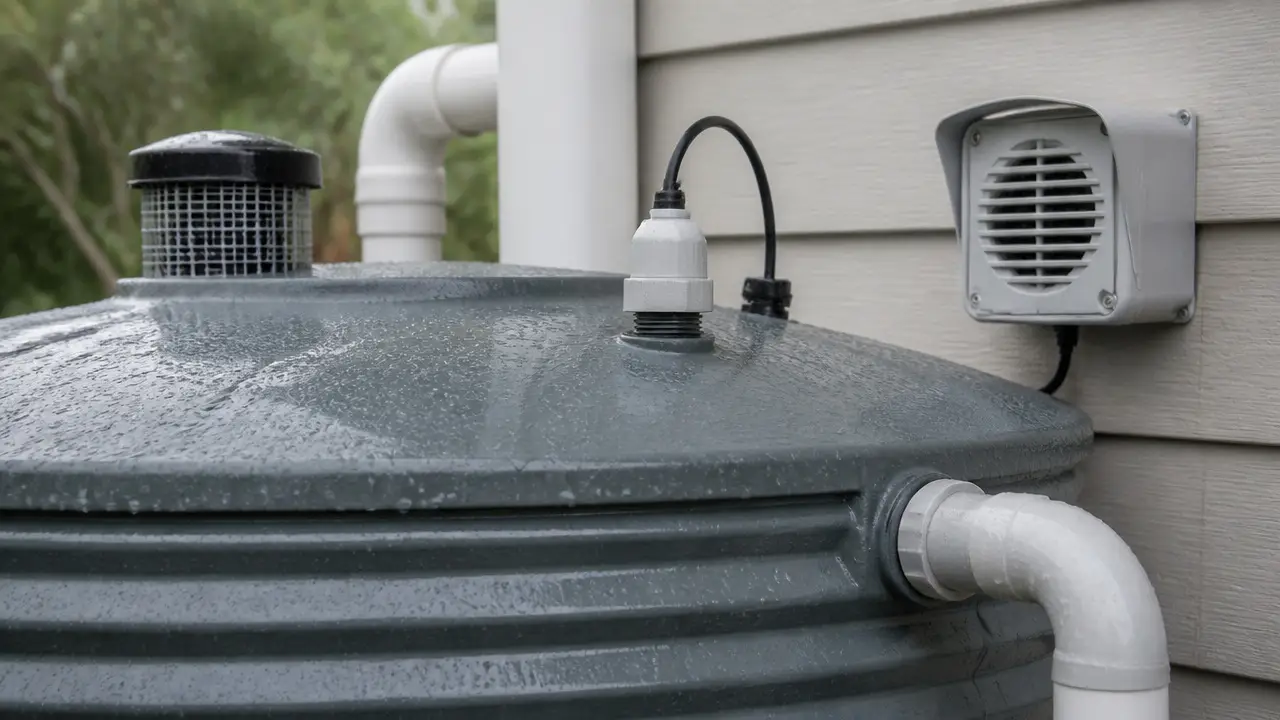
A rainwater collection setup also needs a safe way to handle overflow.
When the barrel is full, excess water should be carried away without flooding the foundation. An overflow hose or pipe should be large enough for expected flow and should discharge to a suitable drainage area.
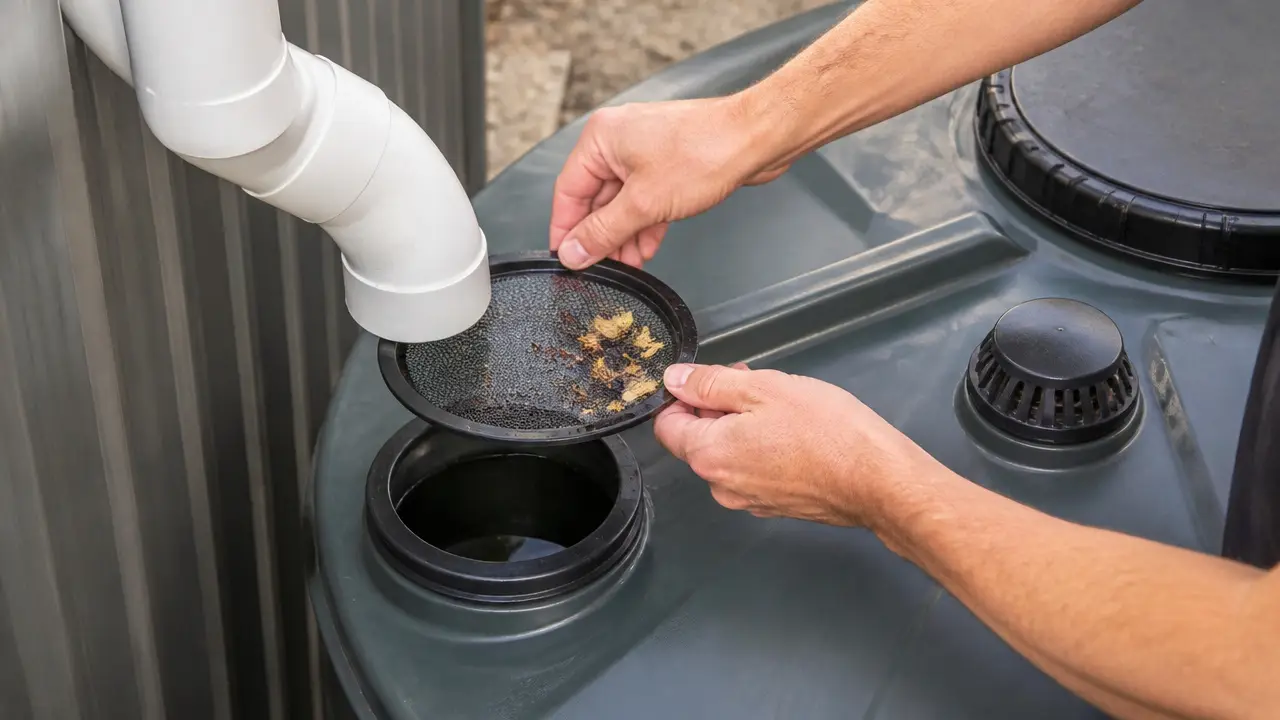
Screens can help keep leaves and mosquitoes out of stored water, but collected roof runoff should still be treated as non-potable unless a complete drinking-water system has been designed, maintained, and verified for that use.
Check the Extension as Part of Gutter Maintenance
Flexible extensions can move, clog, or crack over time.
Check them when you clean the gutters and after major storms.
Look for:
- Loose adapters.
- Missing screws or clamps.
- Cracked plastic.
- Crushed sections.
- Leaves inside the tube.
- Soil erosion around the outlet.
- Standing water.
- New landscaping blocking the discharge path.
Also check the joint after lawn work. Flexible extensions are easy to knock out of position with a mower or trimmer.
When a Downspout Extension Is Not Enough
An extension works well when the yard already has a suitable place for runoff.
It may not solve drainage problems caused by:
- Ground sloping toward the house.
- Poorly draining soil.
- Large roof areas concentrated into one downspout.
- Clogged underground drains.
- Water entering a basement or crawlspace.
- Erosion around the foundation.
- Neighboring properties or retaining walls affecting drainage.
Those problems may require grading, additional downspouts, a properly designed drainage system, or professional assessment.
Do not send runoff onto neighboring property, across sidewalks, or into areas where local rules prohibit discharge.
Frequently Asked Questions
Can I attach a flexible downspout extension without screws?
Yes. Some extensions fit tightly enough to stay attached by friction. A clamp or short screws can make the connection more secure if the extension tends to move or come loose.
How far should a downspout extension reach from the house?
It should carry water to an area where the ground continues to drain away from the foundation. There is no single distance that works for every property because soil, slope, rainfall, and drainage conditions differ.
Can I tape a downspout extension on?
Tape may work as a temporary repair, but it is usually not the best main fastener outdoors. A proper adapter, clamp, clip, or short exterior-grade screws generally makes a more dependable connection.
Can I connect two flexible downspout extensions together?
Some extension systems are designed to connect together. Make sure the joint is secure and does not create a narrow point that restricts flow. For long drainage runs, rigid drain pipe may work better.
Should I bury a flexible downspout extension?
Most above-ground flexible extensions are better left accessible unless they are specifically intended for burial. Underground drainage should use suitable drain pipe, fittings, slope, and an appropriate outlet.
Why does water stay inside my flexible downspout extension?
The extension probably has a low spot, an uphill section, or a blocked outlet. Reposition it so it has a continuous path downhill and check it for debris.
Can a flexible extension handle heavy rain?
It can if it is properly sized, open, and securely attached. A kinked, crushed, undersized, or clogged extension can restrict flow. If gutters frequently overflow during heavy rain, inspect the whole gutter and downspout system rather than assuming the extension is the only problem.