As an affiliate, we may earn a commission from qualifying purchases. We get commissions for purchases made through links on this website from Amazon and other third parties.
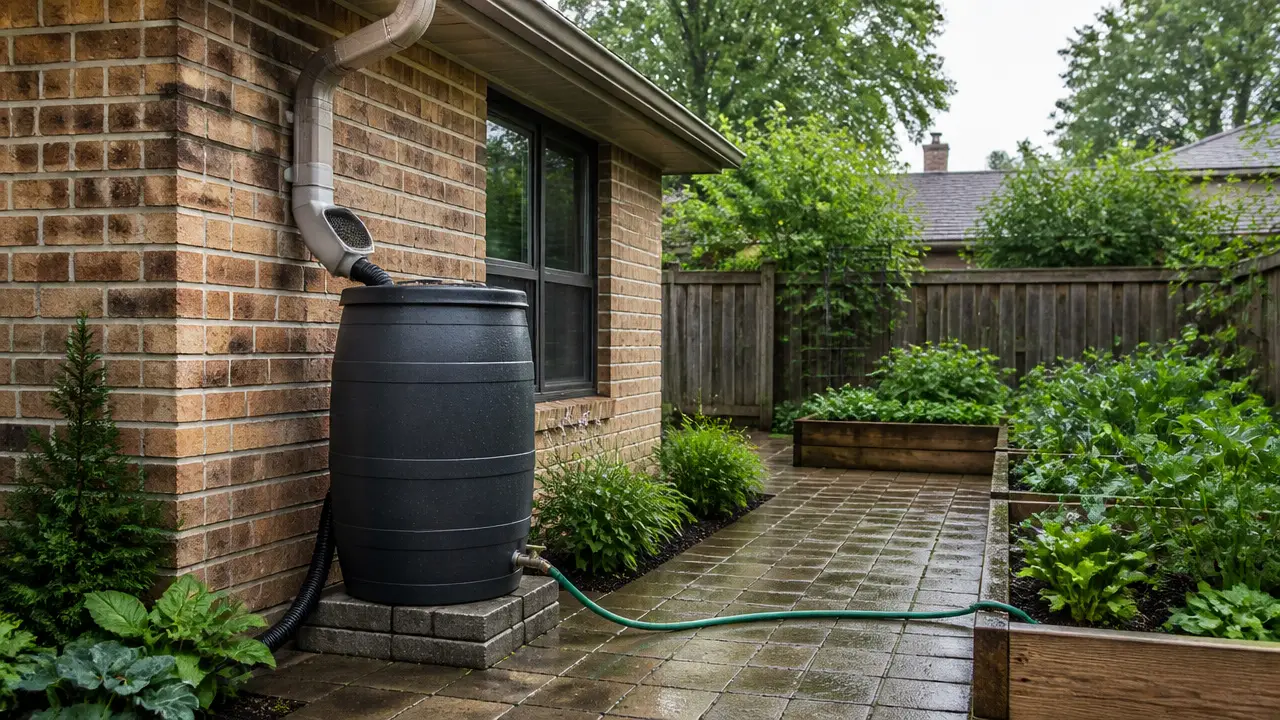
You do not always need to elevate a rain barrel, but raising it can make the system easier to use. Elevation gives you more room under the spigot and increases the small amount of water pressure created by gravity.
The important part is supporting the barrel safely. A full rain barrel is very heavy, so any stand must be level, stable, and strong enough for the total load.
Why Elevate a Rain Barrel?
There are two main reasons to raise a rain barrel:
- To fit a watering can or bucket under the outlet
- To improve gravity-fed water flow
If the barrel sits directly on the ground, its spigot may be only a few inches above the surface. That can make filling a container awkward.
A raised barrel also creates more head height. Head height is the vertical distance between the water level in the barrel and the point where the water comes out.
More head height means slightly more pressure.
However, a rain barrel raised a foot or two still produces much less pressure than a normal household water supply.
How Much Should You Elevate a Rain Barrel?
For many basic setups, raising the barrel about 12 to 24 inches is enough to make the outlet easier to reach and improve gravity flow.
There is usually little reason to build an unusually tall stand just to increase pressure. Taller stands become harder to make stable, while the pressure gain remains modest.
As a general rule, about 2.31 feet of water height creates 1 psi of pressure.
That means a barrel raised only 2 feet does not suddenly provide normal garden-hose pressure. The water level inside the barrel also matters.
As the barrel empties, the pressure decreases.
You May Not Need a Stand
Leaving a rain barrel close to ground level can work well when:
- You use a pump to move the water.
- The outlet already has enough clearance.
- Water only needs to travel a short distance downhill.
- The barrel drains into a low garden area.
- You can place the barrel on a suitable existing platform.
A low installation can also be easier to stabilize.
If gravity flow already does what you need, raising the barrel higher may provide little practical benefit.
Elevation Helps With Gravity-Fed Watering
A raised barrel can work well for simple gravity watering.
For example, you may be able to run water through a short hose to plants that are lower than the barrel.
Keep expectations reasonable. Gravity-fed systems work best when:
- The hose is fairly short.
- The hose does not climb significantly uphill.
- The outlet and hose are not unusually restrictive.
- The barrel contains plenty of water.
- The watering device can operate at very low pressure.
Some irrigation equipment needs more pressure than a typical rain barrel can provide.
Before connecting drip irrigation, timers, sprinklers, or other devices, check their required operating pressure and flow rate.
Flow rate means how much water moves through the system during a set amount of time, such as gallons per minute.
Elevation may improve flow, but it cannot make an unsuitable high-pressure device work reliably.
A Full Rain Barrel Is Very Heavy
Weight is the main reason to be cautious about elevating a rain barrel.
Water weighs about 8.34 pounds per U.S. gallon.
The water in a 55-gallon barrel alone weighs about:
55 × 8.34 = 459 pounds
The barrel, fittings, stand, and any attached equipment add more weight.
Larger storage containers can weigh thousands of pounds when full.
The base should therefore be:
- Firm
- Level
- Resistant to settling
- Large enough to support the entire stand
- Suitable for wet conditions
Avoid balancing a barrel on loose blocks, uneven soil, damaged lumber, or a narrow improvised platform.
A shifting stand can damage fittings or allow the barrel to tip.
Use a Stable, Load-Bearing Stand
A rain barrel stand should support the weight across a broad area.
Common approaches may include properly installed concrete blocks, masonry, or a purpose-built structural platform. The right choice depends on barrel size, ground conditions, and stand height.
Whatever you use, the barrel should sit fully supported rather than hanging over the edges.
Check the stand periodically. Soil can settle, wood can deteriorate, and freeze-thaw cycles can move supports.
If you are placing a large tank or elevated storage system on a deck, balcony, porch, or other building structure, do not assume it can carry the load. Have the structure evaluated when necessary.
Keep the Barrel Secure
Evaluating practical considerations for rain barrels be elevated helps compare maintenance access for controlling sediment and odors.
Elevation can make tipping more serious.
A tall barrel has a changing center of gravity as water enters and leaves it. Wind, uneven ground, accidental bumps, or soft soil can also affect stability.
Follow the barrel manufacturer's installation instructions when available. Use any recommended anchoring or restraint system.
Do not place an elevated barrel where a fall could injure someone or damage important equipment.
Make Sure the Downspout Still Works
Raising the barrel changes where the inlet sits.
Make sure your downspout or rainwater diverter can still reach the barrel correctly without creating an awkward uphill section or poorly supported connection.
Also consider the overflow.
Once the barrel fills, excess rainwater needs a controlled path away from the barrel and building foundation. Raising the barrel should not cause the overflow hose to kink or drain toward the house.
Elevation Does Not Increase Storage Capacity
A stand changes pressure and accessibility, but it does not change how much rainwater the barrel holds.
If you frequently run out of water, raising the barrel is not the solution. You may need more storage capacity or additional barrels, assuming your roof and rainfall can supply them.
Likewise, elevation does not improve water quality. Keeping debris out, using suitable screening, managing overflow, and cleaning the system are separate parts of rainwater harvesting.
What If You Want More Water Pressure?
If you need pressure similar to a conventional outdoor faucet, raising a rain barrel a foot or two usually will not be enough.
A suitable water pump may be a better option.
Pump selection depends on factors such as:
- Required flow
- Required pressure
- Vertical lift
- Hose or pipe length
- Power supply
- Connection sizes
- Intended irrigation equipment
- Protection against running dry
Do not assume that any small pump will work with any rain barrel or irrigation system.
For basic watering cans and short gravity hoses, however, a pump may add unnecessary complexity.
Consider Freezing Conditions
If your area experiences freezing weather, elevation does not protect the barrel from freeze damage.
Water trapped in barrels, valves, hoses, and fittings can freeze and expand. Follow the barrel manufacturer's winterization instructions and adapt the system to your climate.
An elevated stand should also remain stable when the soil freezes, thaws, or becomes saturated.
So, Should You Elevate Your Rain Barrel?
Elevate your rain barrel when you want better clearance under the spigot or a little more gravity-fed pressure.
A height of roughly 12 to 24 inches is practical for many small residential barrels, provided the stand and ground can safely support the full weight.
Do not raise a barrel higher simply because more height sounds better. Stability matters more than squeezing a little extra pressure from the system.
If you need substantial pressure for irrigation, look at the requirements of the watering system first. A properly selected pump may make more sense than a very tall barrel stand.
Frequently Asked Questions
Can a rain barrel sit directly on the ground?
Yes. A rain barrel can sit near ground level if it has a firm, level base and you do not need additional clearance or gravity pressure. Make sure the outlet and overflow remain usable.
How high should a rain barrel be off the ground?
About 12 to 24 inches is useful for many household rain barrels. It can provide room for a watering can and improve gravity flow without requiring an excessively tall stand.
Does raising a rain barrel increase water pressure?
Yes, but only modestly. Greater vertical distance between the water level and outlet creates more gravity pressure. About 2.31 feet of water height equals approximately 1 psi.
Can I put a rain barrel on concrete blocks?
Concrete or masonry blocks can be part of a suitable support system if they are installed on a firm, level base and arranged to support the load safely. Avoid unstable stacks or arrangements that leave the barrel poorly supported.
Will an elevated rain barrel run a sprinkler?
Usually not without additional pressure. Many sprinklers require more pressure and flow than a small gravity-fed rain barrel provides. Check the sprinkler's operating requirements before planning the system.
Do I need to elevate a rain barrel if I use a pump?
Usually not for pressure. The pump provides the pressure instead. You may still raise the barrel slightly if you need better access to the outlet or fittings.
Does the barrel lose pressure as it empties?
Yes. Gravity pressure depends partly on the height of the water surface above the outlet. As the water level drops, available pressure decreases.