As an affiliate, we may earn a commission from qualifying purchases. We get commissions for purchases made through links on this website from Amazon and other third parties.
Choosing the right rainwater pre-filter starts with four things: what debris reaches your system, how much water must pass through, where the filter will sit, and how you plan to use the stored water.
For most rain barrels and cisterns, the best pre-filter is not the finest filter you can find. It is a filter that catches leaves, twigs, insects, roof grit, and other larger debris without slowing the incoming rainwater so much that it backs up or overflows.
A pre-filter also needs to be easy to inspect and clean. A filter that works well but clogs after every storm can become more trouble than it is worth.
What Does a Rainwater Pre-Filter Do?
A pre-filter removes debris before it reaches the storage tank or other parts of the system.
Depending on the setup, it may catch:
- Leaves and twigs
- Pine needles
- Seeds and flower parts
- Insects
- Roof grit
- Moss and plant material
- Larger dirt particles
Keeping this material out of the tank helps reduce sediment buildup and makes later cleaning easier. EPA guidance also notes that pre-filtration before a rain barrel or cistern can help remove solids and debris.
A pre-filter does not make rainwater safe to drink. Roof runoff may contain germs, animal waste, dust, metals, and chemicals from roofing and collection materials. CDC guidance says rainwater is not necessarily safe to drink without suitable treatment and recommends testing rainwater used for drinking, cooking, or bathing.
Start With the Water's Intended Use
The simplest way to narrow your choices is to work backward from what you want the water to do.
Garden watering from a rain barrel
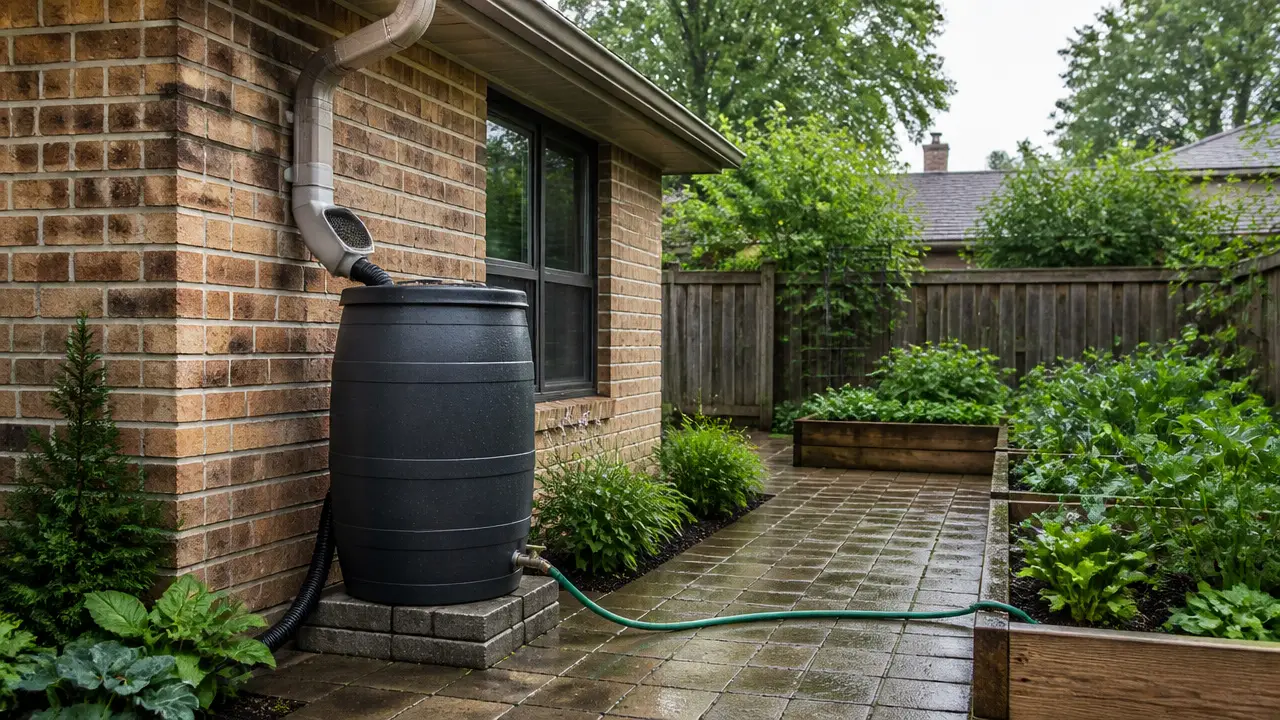
A basic screen or basket at the tank inlet may be enough when the main goal is keeping leaves, mosquitoes, and large debris out.
You may need another filter downstream if you use:
- Small irrigation emitters
- Spray nozzles
- A pump with a small inlet
- Equipment that can clog easily
The tank pre-filter protects the storage system. The downstream filter protects the irrigation equipment. They do different jobs.
Larger cisterns
A cistern connected to a large roof usually handles much more water during a storm. Here, flow capacity becomes just as important as debris removal.
A tiny fine screen may look effective, but it can become a bottleneck during heavy rain. The filter needs enough open area to accept the water coming from the connected gutters and downspouts.
Indoor non-potable use
Rainwater used for toilet flushing, laundry, or other indoor uses may need more treatment than garden water. The exact system depends on the intended use and local plumbing requirements.
Pre-filtration is normally only the first stage. Additional sediment filtration, treatment, controls, backflow protection, and separate piping may be required.
Drinking water
Do not choose a drinking-water system by starting with a pre-filter and assuming you can add one treatment device later.
Drinking-water use is a whole-system decision. It can involve the collection surface, first-flush control, protected storage, filtration, disinfection, water testing, maintenance, and local health or plumbing requirements.
CDC recommends regular testing for germs and chemicals when rainwater is used for drinking, cooking, or bathing. Different filters also remove different contaminants, so a micron number alone does not establish that water is potable.
Match the Filter to the Debris
Look at what actually lands on your roof and enters your gutters.
A house surrounded by large trees has different needs from an open metal-roofed shed.
| Common problem | Useful pre-filter approach |
|---|---|
| Large leaves and twigs | Coarse gutter or downspout screening |
| Pine needles and seeds | Finer screen with plenty of surface area |
| Mixed roof debris | Downspout or tank inlet filter |
| Large amounts of debris | Self-shedding or easy-clean filter design |
| Fine settled grit | Secondary sediment filtration may be needed |
| Mosquito access | Screened tank openings and inlets |
The goal is usually to remove the biggest material as early as practical.
For example, keeping leaves out of the downspout is easier than letting them travel into the tank and trying to remove them later.
CDC specifically recommends screening rainwater-system openings to help keep debris and mosquitoes out.
Do Not Automatically Choose the Finest Screen
A smaller opening catches smaller particles, but it also clogs more easily.
That tradeoff matters during rain.
Imagine a clean screen that accepts water easily at the start of a storm. Leaves, pollen, grit, and plant material begin covering it. Its usable open area shrinks. Water can then back up in the gutter or spill around the filter instead of reaching the tank.
For that reason, a slightly coarser filter with a large surface area can sometimes work better than a very fine, small filter.
Your goal is not to capture every tiny particle before the tank. It is to remove enough debris to protect storage and downstream equipment while allowing the required flow.
Fine sediment can often be dealt with later through settling and properly selected downstream filtration.
Check Flow Capacity
The filter must be able to handle the runoff reaching it during rain.
That depends mainly on:
- Roof area draining to the filter
- Rainfall intensity
- Number of downspouts
- Gutter and pipe size
- Number of filters
- Filter surface area
- How quickly the filter clogs
A filter serving one small downspout has a much easier job than one receiving runoff from several roof sections.
Do not rely only on the pipe connection size. A filter may connect to a large pipe but still have a relatively small screen area.
Look for the manufacturer's stated operating or maximum flow information and make sure it fits your drainage design. If your location experiences intense storms, the system should also have a safe way for excess water to bypass or overflow without damaging the building or tank.
Make Sure the Connections Fit
A good filter is not useful if connecting it requires a collection of poorly fitted adapters.
Check the entire path:
gutter → downspout → pre-filter → pipe → tank inlet
Compare:
- Downspout dimensions
- Pipe diameter
- Filter inlet size
- Filter outlet size
- Tank inlet fitting
- Available installation space
Some systems use round pipe while the building has rectangular downspouts. That may require a proper transition fitting.
Avoid reducing the water path sharply just before the storage tank unless the system has been designed for that restriction.
Think About Where the Filter Will Go
Placement affects both performance and maintenance.
Gutter-level screens
These stop debris early, which can be useful around trees.
However, roof-level equipment can be difficult or unsafe to clean. If routine maintenance requires climbing onto a roof or working from an unstable ladder, a more accessible filtering arrangement may be better.
Downspout filters
These are often easier to reach. They can remove debris before water reaches the storage tank.
Make sure there is enough vertical space for the filter and any required pipe connections.
Tank inlet baskets or screens
These are simple and easy to understand. Water enters through a removable screen or basket before reaching the tank.
They can work well when the tank inlet is accessible. They also need enough surface area so debris does not block the entire inlet during a storm.
A Pre-Filter Is Not a First-Flush Diverter
These two parts are often confused.
A pre-filter physically catches debris.
A first-flush diverter sends away some of the first runoff from a rain event.
Review rainwater filtration methods to interpret the maintenance response that the measured values warrant.
The first water coming from a roof may carry accumulated dust, droppings, pollen, and other contamination. CDC recommends considering a first-flush diverter because the first runoff can carry more dirt, germs, and chemicals from the collection surface.
One device does not automatically replace the other.
A typical system might work like this:
roof → gutters → coarse debris control → first flush → pre-filter → tank
The exact order can vary with the design, but the important point is that screening and first-flush diversion solve different problems.
Understand Micron Ratings Before Using Them
You may see filters described by their micron rating.
A micron is one-thousandth of a millimeter. It is used to describe very small particles and filter openings.
Micron ratings matter most when you move into finer downstream filtration. They are usually less useful when choosing a basic leaf or tank-inlet screen.
Also check whether a filter rating is described as nominal or absolute.
An absolute rating gives a more defined maximum pore size. A nominal rating is less exact and may allow some larger particles through. CDC notes this distinction when discussing drinking-water filters.
Do not choose a micron rating simply because a smaller number sounds cleaner. Fine filtration increases resistance and usually requires more maintenance.
Protect Pumps Without Restricting Them
If your system includes a pump, check the pump manufacturer's requirements before adding filters to the suction side.
A heavily restricted suction line can cause poor pump performance and may contribute to pump problems.
Often, the better strategy is to keep large debris out of the tank, draw water from a suitable location inside the tank, and place finer filtration where the pump and treatment system are designed to handle it.
Check:
- Required inlet pipe size
- Allowed suction lift
- Required inlet strainer
- Minimum available flow
- Filter pressure limits
- Acceptable pressure loss
Do not assume that a very fine filter installed immediately before a pump is better protection.
Consider Gravity-Fed Systems Carefully
Gravity systems have limited pressure.
The pressure comes from head height, which means the vertical distance between the water surface and the outlet or equipment being supplied.
When only a small amount of head height is available, a restrictive filter can reduce flow noticeably.
This matters with:
- Elevated rain barrels
- Gravity-fed garden hoses
- Drip irrigation
- Cabin water systems
- Tanks feeding lower garden areas
If the system already has weak flow, adding a very fine filter can make it worse.
Choose filters that match both the required cleanliness and the available pressure.
Make Maintenance Part of the Choice
A pre-filter will eventually collect debris. That is its job.
Before choosing one, ask:
- Can I see when it is dirty?
- Can I reach it from the ground?
- Can I remove the screen without tools?
- Where does the debris go when I clean it?
- Can water bypass safely if the screen clogs?
- Will cleaning spill dirty water beside the foundation?
- Can the filter be opened without draining the tank?
A filter that is easy to maintain is more likely to stay useful.
Inspect it more often during seasons with heavy leaves, pollen, seeds, or storms. There is no single cleaning schedule that works for every roof. Clean according to actual debris buildup and the manufacturer's instructions.
Plan for Freezing Weather
A filter that holds water can be vulnerable to freezing.
In a freezing climate, consider whether the filter, housing, drain lines, and exposed piping can be emptied or protected according to the equipment manufacturer's instructions.
Do not assume that insulation alone guarantees freeze protection.
Seasonal systems may need to be drained or taken out of service before freezing conditions arrive. Permanent systems may require a more carefully designed freeze-protection plan.
Watch for These Common Mistakes
Choosing by opening size alone
Screen size matters, but so do surface area, flow, accessibility, and clogging.
Putting all filtration in one device
It is often easier to remove material in stages: large debris first, finer particles later if needed.
Ignoring overflow
Filters can clog. The system needs a safe path for water when incoming flow exceeds filter or tank capacity.
Making the filter hard to reach
If cleaning requires difficult roof access, routine maintenance may be skipped.
Confusing filtration with water treatment
A debris screen does not remove all germs or dissolved chemicals. Even much finer filters remove only the contaminants they are designed and verified to remove.
Forgetting the rest of the collection system
Clean gutters, protected tank openings, suitable storage, first-flush control where appropriate, and regular maintenance all affect stored-water quality. A better pre-filter cannot compensate for a poorly maintained system.
A Simple Way to Choose
For most rainwater systems, work through the choice in this order:
- Decide what the water will be used for. Garden irrigation usually needs less treatment than indoor or drinking-water use.
- Identify the debris coming from the roof. Look for leaves, needles, seeds, grit, insects, and other material.
- Remove large debris early. Use gutter, downspout, or inlet screening where it can be maintained safely.
- Check required flow. Make sure the filter can handle runoff from the roof area connected to it.
- Check every connection. Match the filter to the downspout, pipe, and tank inlet.
- Choose an accessible location. You should be able to inspect and clean it without unsafe roof access.
- Add finer filtration only when the end use requires it. Protect irrigation equipment, pumps, or treatment equipment with filters suited to those components.
- Keep drinking-water treatment separate from basic pre-filter selection. Rainwater intended for drinking requires a complete treatment and testing plan, not just a finer screen.
For a simple garden rain barrel, this may mean nothing more complicated than good debris screening and a protected tank inlet. A large pumped cistern or household reuse system may need several filtration stages designed around its required flow and water use.
Frequently Asked Questions
What size pre-filter should I use for rainwater?
There is no single screen or micron size that is right for every rainwater system. Choose an opening size that catches the debris you need to stop without restricting storm flow excessively. Large leaves can be removed with coarse screening, while fine sediment is often handled farther downstream.
Should the pre-filter go before or after the first-flush diverter?
Both arrangements can exist. Coarse screening is often useful before the first-flush device so leaves and twigs do not clog it. Additional filtering can then be placed before the tank. Follow the design requirements of the specific first-flush and filter components you are using.
Is a pre-filter necessary for a rain barrel?
A screened inlet is strongly recommended. It helps keep leaves, insects, and other debris out of the barrel and can help prevent mosquitoes from reaching the stored water.
Can I use a very fine sediment filter before the storage tank?
Usually, finer is not automatically better. Very fine filters can clog rapidly when exposed directly to roof runoff and may restrict flow during storms. It is often more practical to remove coarse debris before storage and use fine sediment filtration later when the intended use requires it.
Does a first-flush diverter replace a pre-filter?
No. A first-flush diverter sends away some early roof runoff, while a pre-filter catches physical debris. A well-designed system may use both.
Can a pre-filter make rainwater safe to drink?
No. A pre-filter removes certain physical debris but does not establish that the water is free from harmful germs or chemicals. Drinking-water use requires suitable collection, treatment, testing, maintenance, and compliance with applicable local requirements. CDC recommends regularly testing rainwater used for drinking, cooking, or bathing.
How often should I clean a rainwater pre-filter?
Clean it when debris begins reducing its open area or water flow, and follow the manufacturer's maintenance instructions. Systems beneath trees or in areas with heavy pollen and leaf fall may need inspection much more often than systems with little nearby vegetation.