As an affiliate, we may earn a commission from qualifying purchases. We get commissions for purchases made through links on this website from Amazon and other third parties.
A rain barrel does not leak because the container itself is watertight and every opening is sealed with the right fitting, gasket, and connection. Most leaks happen around the spigot, overflow outlet, lid, or a crack in the barrel rather than through the barrel wall itself.
A properly installed rain barrel can hold water for long periods, but the seals and fittings still need occasional inspection.
What Keeps a Rain Barrel Watertight?
A rain barrel usually depends on four things:
- A sound, watertight container
- Properly sized holes
- Fittings made for water tanks or barrels
- Rubber gaskets or other suitable seals around those fittings
The barrel wall should not have cracks, deep damage, or weakened plastic. Any hole added for a spigot or overflow pipe must also be sealed correctly.
Simply pushing a faucet through a drilled hole is usually not enough.
How the Spigot Stays Sealed
The spigot is one of the most common places for a rain barrel to leak.
A good installation often uses a bulkhead fitting or another fitting designed to pass through the wall of a tank.
A bulkhead fitting is a connector that clamps onto both sides of the barrel wall. It normally includes a rubber gasket that gets compressed against the barrel.
The basic arrangement is:
barrel wall → gasket → fitting → retaining nut
The gasket forms the water seal. The nut holds the fitting firmly against the barrel.
Some rain barrels use specially designed threaded spigots instead. These can also work when installed according to the fitting manufacturer's instructions.
Do not assume that extra tightening will stop a leak. Overtightening can deform the gasket, damage threads, or crack thin plastic.
Why the Bottom Fitting Needs a Good Seal
Water pressure is greater near the bottom of a full barrel than near the top. That makes the lower spigot especially important.
A poorly sealed fitting may appear dry when the barrel contains only a little water. Once the barrel fills, the added pressure can reveal the leak.
For that reason, test a new installation gradually rather than filling the barrel completely and walking away.
Watch the fitting as the water level rises.
The Overflow Connection Must Be Watertight Too
A rain barrel needs somewhere for excess water to go after it becomes full.
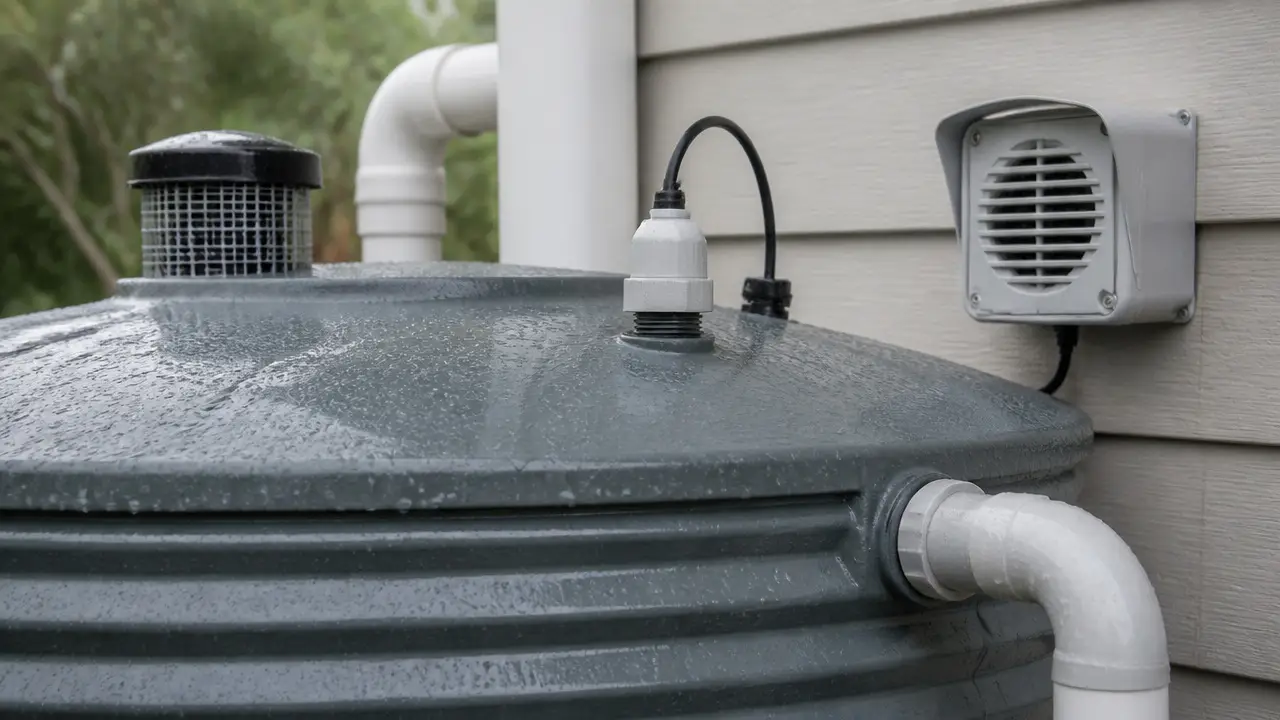
An overflow outlet is normally installed near the top of the barrel. It may connect to a hose or pipe that carries extra water away from the house.
The overflow fitting should be sealed just like the spigot.
It should also be large enough and arranged so water can leave without backing up around the lid or downspout connection.
An undersized or blocked overflow can make water escape from places that normally stay dry. That can look like a barrel leak even when the barrel itself is fine.
Route overflow water to a suitable drainage location and away from areas where it could contribute to foundation or erosion problems.
Does the Lid Have to Be Completely Watertight?
Not always.
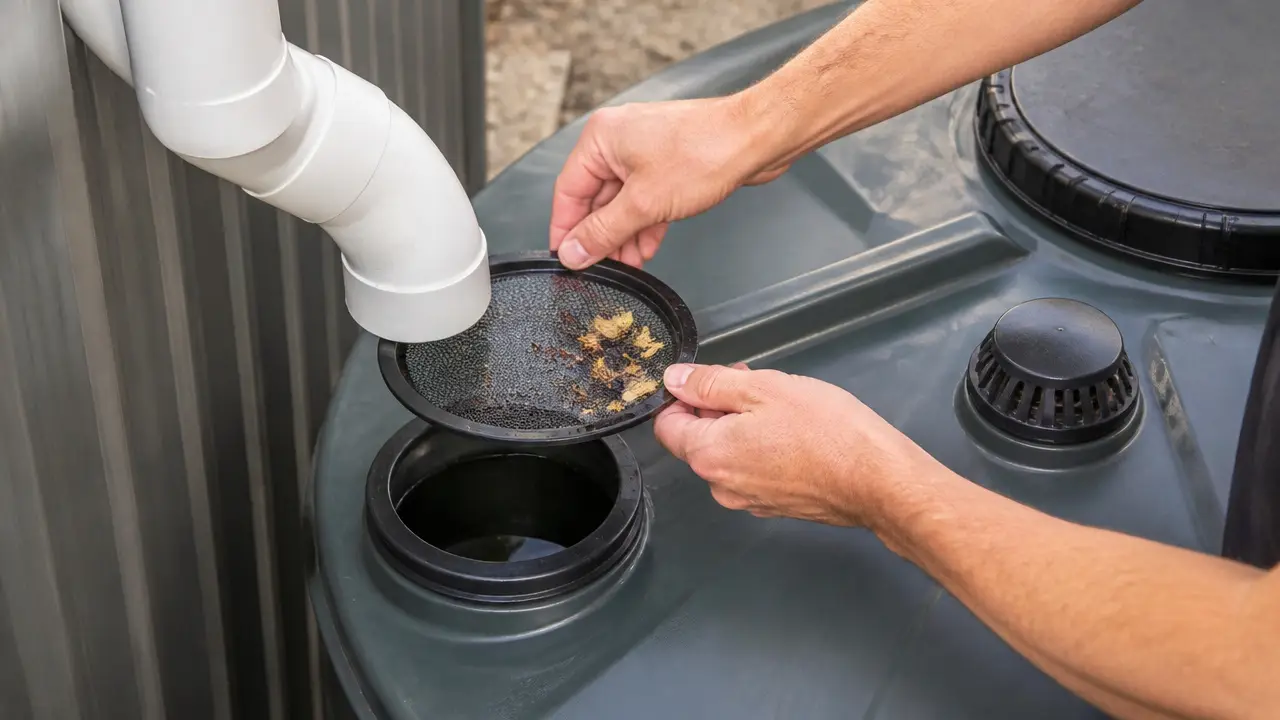
Many rain barrels have a covered or screened inlet rather than a pressure-tight lid. Rainwater enters from the downspout, while a screen helps keep out leaves, larger debris, and mosquitoes.
The important part is that normal rainfall does not cause water to spill uncontrollably around the lid.
A rain barrel is generally not designed like a sealed pressure tank. Water should be able to enter and overflow through the intended paths.
Why Thread Tape Alone May Not Stop a Leak
Thread seal tape can help seal some threaded pipe connections, but it does not normally replace the gasket that seals a fitting against the barrel wall.
These are two different leak paths.
The gasket seals:
fitting to barrel
Thread sealant may help seal:
threaded fitting to threaded fitting
Using large amounts of tape or sealant around a poorly fitting hole usually does not solve the underlying problem.
The Hole Size Matters
A fitting works best when the hole matches the size specified for that fitting.
If the hole is too small, forcing the fitting into place can damage the barrel or gasket.
If the hole is too large, the gasket may not have enough surface to seal against.
Drill carefully and remove rough plastic edges before installing the fitting. Sharp burrs can prevent the gasket from sitting flat.
Why Curved Barrels Can Be Harder to Seal
Understanding practical steps for stoping a barrel from leaking helps assess overflow capacity and ventilation for long-term storage.
Many rain barrels have rounded walls.
A large fitting installed on a strongly curved section may not sit flat against the plastic. The gasket may compress unevenly, creating a small leak path.
Whenever possible, install fittings on a reasonably flat or gently curved section of the barrel.
This becomes especially important with larger bulkhead fittings.
Common Reasons a Rain Barrel Starts Leaking
A barrel that was once dry can develop leaks later.
Common causes include:
- Loose fittings
- A shifted or worn gasket
- Cracked plastic around a fitting
- Freeze damage
- UV-damaged or brittle plastic
- A hose pulling sideways on the spigot
- A blocked overflow
- Damaged pipe threads
- Dirt trapped beneath a gasket
Inspect the exact source before trying to repair it.
Water can run along the outside of a barrel before dripping, so the wet spot you notice may not be where the leak begins.
Can You Fix a Leaking Rain Barrel?
Often, yes.
If the leak is around a fitting, empty the barrel below that fitting before working on it. Then inspect the gasket, barrel surface, threads, and fitting.
A gasket that is crooked or damaged may need to be repositioned or replaced. A loose fitting may need careful tightening.
If the plastic itself is cracked, the repair becomes less predictable. Small repairs may work in some situations, but a crack near a heavily loaded fitting can continue spreading.
Replacing a badly damaged barrel is often more reliable than repeatedly patching it.
Do not enter a cistern, tank, or other enclosed water-storage vessel to make repairs. Confined spaces can be dangerous and require specialized procedures.
Protect the Barrel From Freezing
Freezing water expands.
If a rain barrel remains full during freezing weather, that expansion can crack the barrel, damage the spigot, or push fittings out of position.
The correct winter setup depends on the barrel design and climate. In areas with sustained freezing weather, many systems are drained and disconnected or otherwise winterized before hard freezes.
Do not assume a plastic barrel is freeze-proof unless its manufacturer specifically provides instructions for freezing conditions.
Make Sure the Barrel Has Good Support
Water weighs about 8.3 pounds per U.S. gallon. That means even a relatively small barrel can put hundreds of pounds on its base when full.
Place the barrel on a firm, level, stable surface that can support the filled weight.
If the barrel tilts, fittings can be stressed and hoses can pull sideways on connections. Uneven support can also put unnecessary stress on the barrel itself.
Be especially careful with raised platforms. They must be capable of safely supporting the full barrel and should not be improvised from unstable materials.
A Simple Leak Check
After installing or repairing a barrel:
- Make sure the barrel is stable and level.
- Add a small amount of water.
- Check the spigot and lower fittings.
- Add more water gradually.
- Inspect each fitting again as the water level rises.
- Fill high enough to test the overflow.
- Check beneath and around the barrel for slow drips.
A dry paper towel wiped around a fitting can make a very small leak easier to spot.
Frequently Asked Questions
Why is my rain barrel leaking around the spigot?
The gasket may be loose, crooked, damaged, or installed against an uneven surface. The hole may also be too large, or the barrel could be cracked around the fitting. Empty the barrel below the spigot before inspecting it.
Do I need silicone around a rain barrel spigot?
Not necessarily. A properly installed tank fitting usually relies mainly on its gasket for the seal. Sealants should only be used when they are appropriate for the fitting and barrel material. They should not be used to hide a badly sized hole or damaged fitting.
Should a rain barrel be completely sealed?
It should be watertight where it stores water, but it normally should not be an airtight pressure vessel. It needs an inlet and a controlled overflow path.
Why does my barrel only leak when it is full?
A full barrel places more water pressure on fittings near the bottom. Filling the barrel can also activate the overflow system. Either condition may expose a poor seal that was not noticeable at a lower water level.
Can a cracked plastic rain barrel be repaired?
Some small cracks can sometimes be repaired with methods compatible with the barrel material, but repairs may not last if the plastic is brittle or the crack is near a stressed fitting. Severe or spreading cracks are a good reason to replace the barrel.
Can freezing make a rain barrel leak?
Yes. Water expands when it freezes and can crack the barrel, damage valves, or move fittings. Follow appropriate winterizing instructions for your barrel and local climate.
How tight should a rain barrel fitting be?
It should be tight enough to compress the gasket evenly and stop water from passing through. More force is not always better. Overtightening can distort the gasket or damage the barrel.