As an affiliate, we may earn a commission from qualifying purchases. We get commissions for purchases made through links on this website from Amazon and other third parties.
A water pump can run continuously if it is designed for continuous duty and has enough water for cooling and lubrication. Some pumps can operate for many hours or even around the clock. Others should run only for short cycles before they need time to cool.
The safe run time depends more on the pump's duty rating, water supply, cooling method, pressure, and operating conditions than on horsepower alone.
What Determines How Long a Water Pump Can Run?
A pump does not have one universal maximum run time. Two pumps with the same horsepower may have very different limits.
The main factors are:
- Whether the motor is rated for continuous duty
- Whether water is always reaching the pump
- How the motor is cooled
- Whether the pump is operating within its intended flow and pressure range
- Water temperature
- Ambient air temperature
- Voltage and electrical supply
- Condition of the pump and motor
- Whether the discharge line is open or restricted
The manufacturer's duty rating is the best place to start.
What Does Continuous Duty Mean?
A continuous-duty pump is designed to operate for long periods without needing regular cooling breaks, provided it stays within its rated operating conditions.
That does not mean the pump can safely run under any condition.
A continuous-duty pump can still overheat or fail if it:
- Runs dry
- Has a clogged intake
- Pumps against a closed valve
- Operates outside its recommended flow range
- Receives low or unstable voltage
- Has blocked cooling passages
- Pumps water that is too hot for its design
Continuous duty describes the motor's intended operating cycle, not immunity from damage.
How Long Can Common Water Pumps Run?
There is no reliable runtime that applies to every pump, but the pump type gives you an idea of what to expect.
Submersible Pumps
Many submersible pumps are well suited to long operating periods because the surrounding water helps cool the motor.
A properly selected submersible pump may run continuously if:
- It remains adequately submerged
- Water can move around the motor as required
- The well, tank, or cistern supplies water fast enough
- The pump stays within its rated flow and pressure range
Running a submersible pump without enough water can quickly cause overheating or damage.
Transfer Pumps
Transfer pumps vary widely.
Some are built for extended or continuous operation. Smaller portable models may have limited duty cycles.
If you use a transfer pump to move rainwater between IBC totes or cisterns, check the motor rating before planning a long transfer.
Also make sure the source tank cannot empty while the pump is running.
Irrigation Pumps
An irrigation pump may run for several hours during a watering cycle if it was designed for that use.
Long runtime itself is not necessarily a problem.
A pump that normally runs for 30 minutes but suddenly runs for several hours, however, may indicate:
- A broken irrigation line
- An open valve
- A leaking fitting
- A failed pressure switch
- Loss of prime
- Insufficient water supply
Unexpected runtime deserves investigation.
Well Pumps
Well pumps may be capable of long runs, but the well must produce enough water to keep supplying the pump.
The greater concern in many household well systems is short cycling rather than long steady operation.
Short cycling means the pump repeatedly turns on and off within a short period. Frequent starts can create more motor heat and wear than one longer operating cycle.
Rain Barrel Pumps
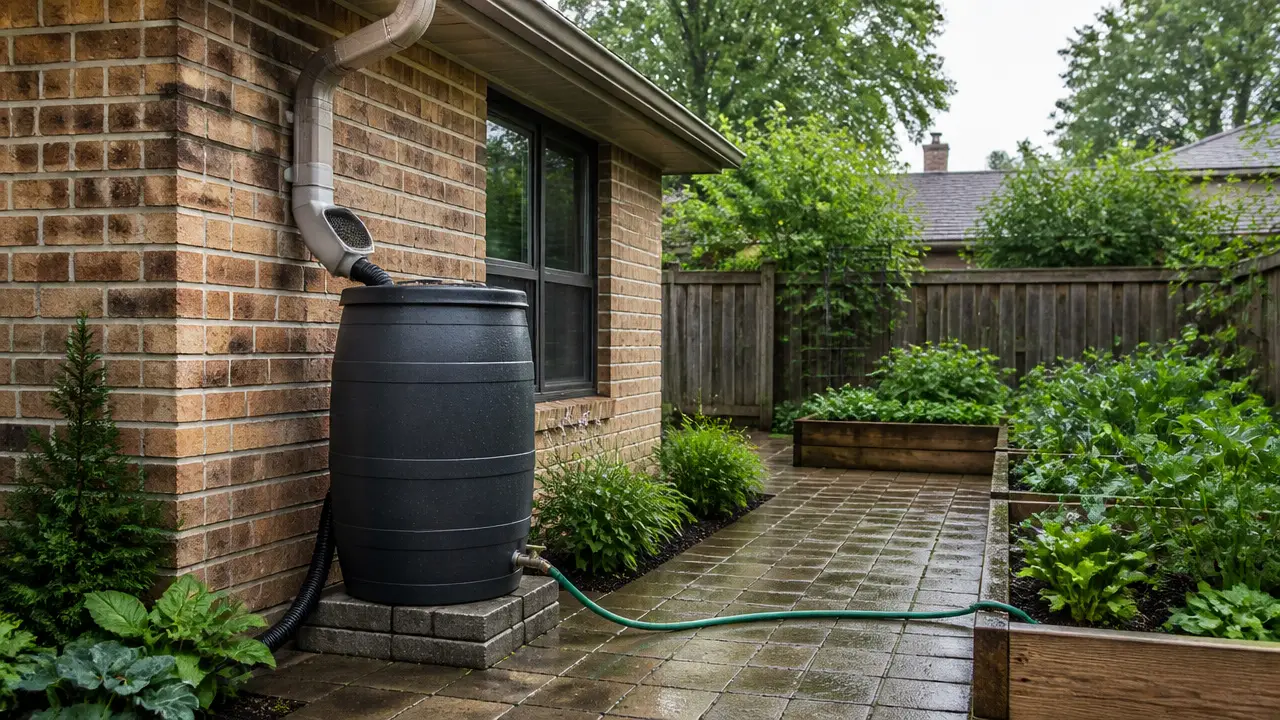
Small rain barrel pumps usually have less water available around them than pumps installed in large cisterns.
The tank can empty quickly.
A pump connected to a rain barrel should ideally have dry-run protection or another way to stop the pump before the water level becomes too low.
Is It Bad for a Water Pump to Run All Day?
Not necessarily.
If the pump is rated for continuous duty and operating normally, an all-day run may be acceptable.
For example, a properly sized pump moving water from a large cistern through an irrigation system could run for an extended period.
It becomes concerning when a pump that normally stops continues running unexpectedly.
Possible causes include:
| Symptom | Possible problem |
|---|---|
| Pump runs but little water comes out | Low water supply, blockage, loss of prime, or worn pump |
| Pump runs but cannot reach pressure | Leak, open outlet, undersized pump, or pressure-system problem |
| Pump becomes unusually hot | Cooling, electrical, flow, or mechanical problem |
| Pump turns on and off rapidly | Pressure tank, pressure switch, leak, or control problem |
| Pump sounds different than normal | Air, cavitation, debris, worn bearings, or low water |
| Water source empties during operation | Pump flow exceeds available supply |
Do not assume continuous operation is normal simply because the motor is still running.
Running Dry Is Often a Bigger Risk Than Long Runtime
Many water pumps depend on the water they move for cooling, lubrication, or both.
Dry running means the pump operates without enough water passing through it.
Depending on the pump design, dry running can damage:
- Seals
- Impellers
- Bearings
- Motor components
- Plastic pump parts
A rainwater system is especially vulnerable because storage tanks naturally rise and fall with rainfall and water use.
If a pump may empty the tank, consider a system with suitable dry-run protection, a low-water float switch, or another control recommended for that pump.
Watch the Pump's Flow Rate and the Water Supply
A pump cannot continuously move more water than the source continuously provides.
Details about common problems with submersible water pumps help compare signs that pressure trouble begins on the suction side.
Suppose a cistern feeds a pump at 10 gallons per minute, but water is entering the cistern at only 3 gallons per minute.
The stored water level will keep falling even though the pump appears to be working normally.
This matters with:
- Shallow wells
- Rain barrels
- IBC totes
- Small cisterns
- Slow-refilling tanks
The pump's flow rate is the amount of water it moves over time, usually stated in gallons per minute or liters per minute.
Compare that flow with both your storage volume and the rate at which the source can recover.
Pressure Also Affects Continuous Operation
A pump works harder as it must overcome more resistance.
That resistance can come from:
- Vertical lift
- Long pipes
- Small-diameter pipes
- Filters
- Valves
- Fittings
- Irrigation emitters
- Pressure tanks
- Elevated discharge points
The vertical distance a pump must lift water contributes to its head height.
A pump operating near the edge of its allowable head or pressure range may deliver less water and may not operate as efficiently as it would closer to its intended operating point.
Do not judge whether a pump is suitable based only on horsepower.
A Pump Should Not Normally Run Against a Closed Outlet
Running a pump while the discharge is closed can be harmful to some pump types.
The water inside the pump may heat up while very little or no water moves through it.
Pressure systems usually use switches, controllers, bypass systems, or other controls to prevent improper operation.
If your pump keeps running after all faucets or irrigation zones are closed, investigate the cause rather than simply allowing it to continue.
Continuous Running Can Be Better Than Rapid Cycling
A common misconception is that frequent stopping automatically protects a pump.
For many motors, starting creates considerable electrical and mechanical stress.
A pump that runs steadily for a reasonable period may experience less wear than one that starts and stops every minute.
Repeated short cycles may indicate:
- An undersized pressure tank
- Incorrect pressure settings
- A waterlogged pressure tank
- A leak
- A faulty check valve
- A control problem
The correct solution is to fix the cause, not simply limit every pump cycle to a few minutes.
Signs You Should Shut the Pump Down
Stop using the pump and investigate if you notice:
- Burning smells
- Smoke
- Tripped breakers
- Unusually hot wiring or electrical connections
- Severe vibration
- Grinding or screeching
- Sudden loss of water flow
- Repeated loss of prime
- Water leaking from the motor or electrical areas
- A submersible pump running with insufficient water
Disconnect power before inspecting accessible electrical or mechanical components.
Electrical repairs, damaged wiring, pressure-control problems, and submerged electrical equipment should be handled conservatively. Use a qualified electrician, pump technician, or well professional when the work goes beyond normal user maintenance.
How to Tell Whether Your Pump Can Run Continuously
Check the pump label and manual for terms such as:
- Continuous duty
- Intermittent duty
- Maximum water temperature
- Minimum water level
- Maximum head
- Maximum pressure
- Recommended operating range
- Dry-run limitations
- Required cooling conditions
Do not assume that a larger motor means unlimited runtime.
A smaller continuous-duty pump may be better suited to long operation than a larger pump designed for intermittent use.
Continuous Operation in a Rainwater System
For a rainwater harvesting system, think about the whole path the water takes:
Storage tank → pump intake → pump → filters or controls → pipe → intended use
Before allowing long pump runs, make sure:
- The tank contains enough usable water.
- The pump intake cannot easily pull in sediment from the tank bottom.
- The pump has adequate protection against running dry.
- Pipe size is suitable for the required flow.
- Filters are not badly clogged.
- The pump can handle the required lift and pressure.
- Electrical wiring and controls are suitable for the motor.
- The pump's duty rating allows the expected runtime.
For garden irrigation or tank-to-tank transfer, a long steady run can be perfectly normal when all of these conditions are met.
Frequently Asked Questions
Can a water pump run for 24 hours straight?
Some continuous-duty pumps can run for 24 hours or longer when operated within their rated conditions. Do not assume this is safe for every pump. Check the manufacturer's duty rating and cooling requirements.
How long should I let a water pump cool down?
There is no universal cooling period. Intermittent-duty pumps should be operated according to their specified duty cycle. If the motor has overheated, identify the cause rather than repeatedly running it until it becomes hot.
Will a pump burn out if it runs continuously?
A properly designed continuous-duty pump should not burn out simply because it runs for a long time. It can still be damaged by dry running, restricted flow, incorrect voltage, excessive temperature, mechanical problems, or operating outside its rated range.
Why won't my water pump stop running?
Possible causes include a leak, open valve, failed pressure switch, low water supply, loss of prime, blocked intake, damaged check valve, or a pump that cannot reach the required pressure. Unexpected continuous operation should be investigated.
Is it better for a pump to run continuously or cycle on and off?
Reasonably long cycles are often preferable to rapid cycling. Frequent motor starts can increase heat and wear. The proper cycle length depends on the pump and system design.
Can a submersible pump run continuously?
Many submersible pumps are designed for long or continuous operation, but they must have adequate water for cooling and must be installed according to their operating requirements.
Can I continuously run a pump from a rainwater tank?
Yes, if the pump is rated for it and the tank contains enough water. A low-water cutoff or dry-run protection is useful because a rainwater tank can be pumped empty before you notice the falling water level.