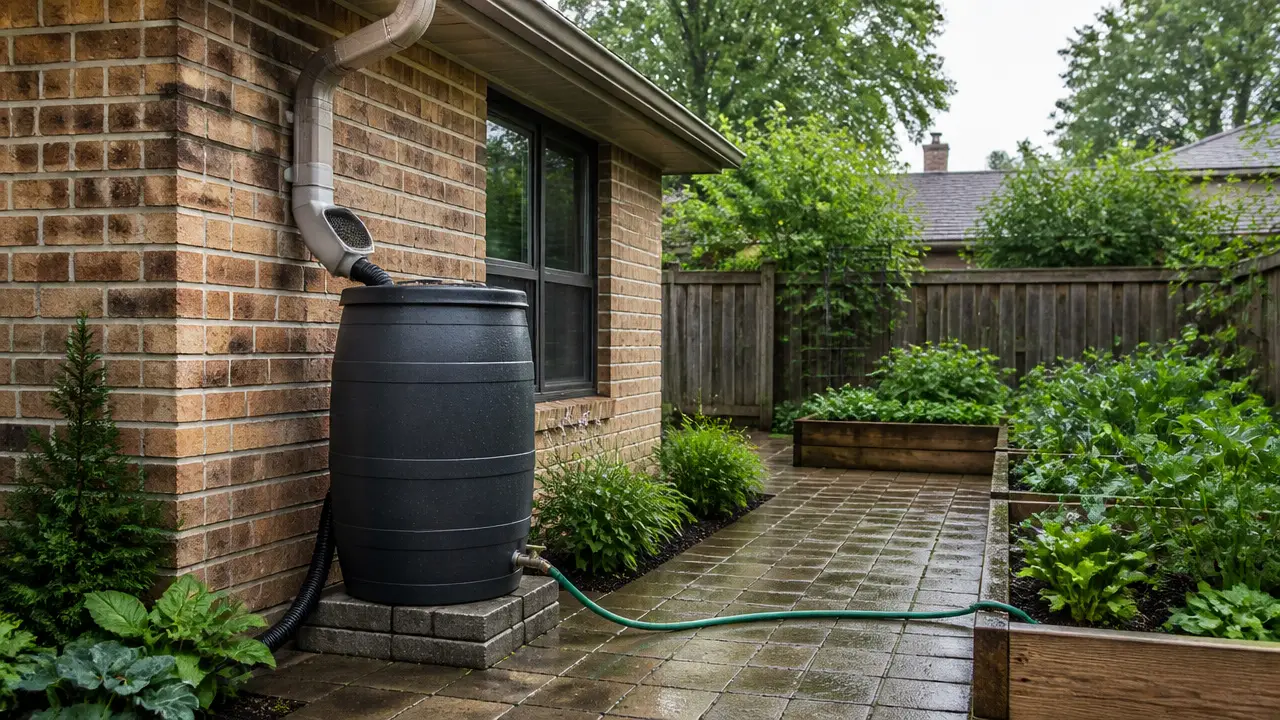
As an affiliate, we may earn a commission from qualifying purchases. We get commissions for purchases made through links on this website from Amazon and other third parties.
Rainwater can sit in a barrel for several days without being unusual, but there is no single expiration date. For a basic rain barrel used for garden watering, it is better to use the water regularly rather than leave it standing for weeks.
The longer rainwater sits, the more chance there is for mosquito problems, algae, odors, sediment buildup, and declining water quality. A tightly covered, opaque, well-maintained storage tank can hold rainwater much longer than an open or poorly screened barrel.
Most important, stored roof runoff should be treated as non-potable water, meaning water that is not intended for drinking, unless it is part of a properly designed drinking-water system with suitable treatment, maintenance, testing, and any required local approvals.
How Long Should You Keep Rainwater in a Barrel?
For a typical backyard rain barrel, a practical goal is to use the collected water within several days when possible.
The U.S. Environmental Protection Agency recommends preventing standing water from becoming mosquito habitat and advises regularly using rain barrel water. Mosquito control becomes especially important when water remains undisturbed for longer periods.
That does not mean rainwater suddenly becomes unusable after a certain number of days. Storage time depends on several conditions:
- Whether the barrel is sealed against insects
- Whether sunlight reaches the water
- How much roof debris entered the barrel
- Outdoor temperature
- How clean the gutters and barrel are
- Whether sediment has collected on the bottom
- What you plan to use the water for
Water stored for ornamental plants has different requirements from water intended for household use.
What Happens When Rainwater Sits Too Long?
Stored rainwater does not stay exactly the same. Several things can change over time.
Mosquitoes can become a problem
An uncovered rain barrel provides standing water where mosquitoes may reproduce.
A good rain barrel should have fine screening over openings and should not have gaps around the inlet, lid, or overflow that allow mosquitoes inside.
Simply putting a loose lid on the barrel may not be enough. Mosquitoes can enter through surprisingly small openings.
If you cannot keep the barrel securely screened, using or emptying the water regularly becomes especially important.
Algae may grow
Algae needs light.
A clear or translucent barrel sitting in the sun is much more likely to develop algae than an opaque barrel that blocks light. Green or slippery growth inside the tank is a sign that light is reaching the stored water.
Painting or otherwise covering a suitable translucent storage container can reduce light exposure, but any coating should be appropriate for the container and intended use.
Sediment collects on the bottom
Roof runoff can carry:
- Dust
- Pollen
- Small leaves
- Bird or animal droppings
- Roofing particles
- Insect debris
- Other airborne material
Screens remove larger debris, but they do not remove everything.
Fine material eventually settles on the bottom. Over time, this layer can become a source of odor and make the barrel harder to clean.
The water may start to smell
Water that has been sitting with a large amount of organic debris can develop an unpleasant odor.
A rotten or swamp-like smell often points to decomposing leaves, pollen, or other organic material in the barrel. Low oxygen conditions near accumulated sediment can make the problem worse.
An odor does not tell you exactly which contaminants are present. Likewise, water that looks and smells fine is not proof that it is safe to drink.
A Sealed Cistern Is Different From a Basic Rain Barrel
A well-designed cistern may store rainwater much longer than a simple backyard barrel.
The difference is not just tank size.
Long-term storage works better when the system controls what gets into the tank. A larger rainwater system may include:
- Gutter screens or leaf guards
- A prefilter
- A first-flush device
- An opaque, sealed storage tank
- Screened inlet and overflow openings
- Sediment management
- A pump or properly positioned outlet
- Treatment appropriate for the final water use
A first flush diverts some of the initial roof runoff at the start of a rain event. That first runoff can carry a larger share of dust, droppings, and loose debris from the roof.
Even with these features, stored rainwater still requires maintenance.
Can You Use Old Rainwater on Plants?
Rainwater that has been stored for a while may still be useful for many outdoor jobs, especially watering ornamental plants.
Before using older water, check the barrel.
Look for:
- Mosquito larvae
- Heavy algae
- Strong odors
- Large amounts of decomposing debris
- Unusual discoloration
- Dead animals or obvious contamination
Roof runoff can contain microorganisms and chemicals picked up from roofs, gutters, animals, and the surrounding environment. EPA guidance notes that these contaminants should be considered when rain barrel water is used around edible plants.
For a vegetable garden, directing water to the soil around the roots is generally a more cautious approach than spraying stored roof runoff over leaves, fruits, or vegetables that will be eaten.
Wash produce using water that is suitable for that purpose.
Can You Drink Rainwater That Has Been Sitting in a Barrel?
Do not assume that stored rainwater is safe to drink simply because it looks clear.
Rain can pick up contamination while passing across a roof and through gutters. Storage can introduce additional problems if insects, rodents, sediment, or other material can enter the tank.
A basic screen or sediment filter does not make the water potable.
Potable means suitable for drinking.
Drinking-water rainwater systems require a whole-system approach. Depending on the system and local requirements, that may involve appropriate collection materials, first-flush management, prefiltration, treatment, disinfection, regular maintenance, and current laboratory testing.
A single filter, UV unit, test strip, or water-quality meter cannot by itself establish that roof runoff is safe to drink.
If you are planning to use collected rainwater for drinking or other household uses where people may ingest it, get guidance appropriate to your location and system.
How to Keep Rainwater Usable Longer
Good storage conditions matter more than simply counting days.
Keep the barrel covered
Explore usable life of rain-barrel water to understand vessel construction compatible with the expected water use.
Use a secure lid and screen every opening that could allow mosquitoes, rodents, or debris inside.
Remember the overflow opening. It is easy to screen the inlet while leaving the overflow unprotected.
Block sunlight
Choose an opaque barrel or tank when possible.
Keeping sunlight out helps limit algae growth and also reduces heating compared with a clear container in direct sun.
Keep gutters clean
Less material entering the barrel means less material decomposing inside it.
Check gutters, downspouts, screens, and prefilters regularly, especially after storms or periods when trees are dropping leaves or pollen.
Use the water regularly
A rain barrel works best as moving storage rather than forgotten storage.
Using water between rain events also creates space for the next storm.
Keep the barrel itself clean
Sediment will eventually build up even in a screened system.
Periodically empty the barrel and inspect the bottom. Clean accumulated sediment and organic material using methods suitable for the barrel material and intended water use.
Keep insects out instead of relying on stagnant water
Do not assume that water is safe from mosquitoes because it has only been stored for a short time.
A properly screened barrel is a better control than depending only on frequent emptying.
Hot Weather Can Shorten Useful Storage Time
Warm water encourages biological activity.
A barrel sitting in hot sun may develop odor and algae problems faster than an opaque tank kept cooler and protected from direct light.
During warm weather, pay closer attention to:
- Screens
- Mosquito activity
- Smell
- Algae
- Debris
- How quickly you cycle through the water
Regular use becomes even more useful during the hottest part of the year.
What About Rainwater Stored Over Winter?
Freezing creates a different problem.
Water expands when it freezes. A full barrel, hose, valve, or fitting can be damaged if trapped water freezes.
In freezing climates, many basic rain barrels are drained and disconnected before sustained freezing weather. The exact winter setup depends on the barrel, plumbing, climate, and manufacturer instructions.
Large cistern systems may use different freeze-protection designs. Avoid assuming that insulation alone will protect exposed plumbing or a full above-ground tank.
When Should You Empty the Barrel?
Consider draining and cleaning a rain barrel when you find:
- A strong persistent odor
- Thick algae
- Heavy sediment
- Mosquito larvae
- Animal contamination
- Large amounts of decomposing material
- A long period of neglected storage
- Contamination from an unusual roof event
Also inspect the collection system after roof work, gutter repairs, pesticide application near the collection surface, wildfire ash, or other events that could change what enters the tank.
If you are uncertain whether stored water is appropriate for a particular use, choose a lower-risk use or dispose of the water safely rather than assuming appearance alone proves its quality.
The Bottom Line
There is no universal number of days after which rainwater in a barrel becomes unusable.
For a simple garden rain barrel, use the water within several days when practical and cycle the barrel regularly. Keeping the barrel opaque, covered, screened, and clean matters just as much as storage time.
A properly designed cistern can store rainwater for much longer, but longer storage requires better control of insects, debris, light, sediment, and water quality.
For drinking, do not rely on storage time as a safety test. Roof-collected rainwater requires a properly designed treatment and testing plan before it should be considered potable.
Frequently Asked Questions
Can rainwater sit in a barrel for a month?
It can physically remain in a barrel for a month, but that does not mean its quality will remain unchanged. In a basic rain barrel, long storage increases the importance of mosquito protection, light control, cleanliness, and sediment management. Regularly using the water is usually better.
Does rainwater go bad in a rain barrel?
Rainwater does not have a simple expiration date. However, stored water can develop algae, odors, mosquito problems, sediment, and microbial contamination. How quickly this happens depends heavily on the barrel and collection system.
How often should I empty my rain barrel?
There is no fixed schedule that fits every system. Use the water regularly between storms and inspect the barrel for sediment, algae, odors, and insects. Empty and clean it when buildup becomes significant and as part of your normal seasonal maintenance.
Is rain barrel water safe for vegetable gardens?
Roof runoff may contain microorganisms and other contaminants. If using it in a vegetable garden, a more cautious method is to apply the water to the soil rather than spraying edible portions of the plant. Use water suitable for food washing when cleaning harvested produce.
Can I drink rain barrel water if I filter it?
Do not assume so. A basic filter may remove sediment but cannot establish that roof runoff is safe to drink. Potable rainwater requires suitable collection, treatment, maintenance, current testing, and compliance with applicable local requirements.
Does a lid stop mosquitoes from getting into a rain barrel?
A secure lid helps, but every opening matters. The inlet, overflow, vents, and other gaps should also be protected with appropriate screening so mosquitoes cannot reach the water.
Is green rainwater in a barrel safe to use?
Green water usually indicates algae growth. For a garden barrel, it is a sign to check whether sunlight is reaching the water and whether the barrel needs cleaning. Color alone cannot determine whether the water is safe for a particular use.