As an affiliate, we may earn a commission from qualifying purchases. We get commissions for purchases made through links on this website from Amazon and other third parties.
A new sediment filter usually needs only a short flush. In most home systems, running water for about 5 to 10 minutes, or until the water runs clear and free of air, is enough.
The exact time matters less than what comes out of the faucet. A new sediment cartridge may release trapped air, small loose particles, or manufacturing dust when water first passes through it.
How Long Should You Flush a New Sediment Filter?
For a typical whole-house sediment filter, use this basic approach:
- Turn the water supply back on slowly.
- Check the filter housing and connections for leaks.
- Open a cold-water faucet or other suitable downstream outlet.
- Let the water run for several minutes.
- Continue until the flow is steady and the water looks clear.
A 5- to 10-minute flush is a reasonable starting point for many sediment cartridges. Some systems clear faster. Larger housings, long plumbing runs, or systems with a lot of trapped air may take longer.
If the filter manufacturer gives a specific flushing procedure, follow that instead.
Why Flush a Sediment Filter After Changing It?
A sediment filter catches physical debris such as:
- Sand
- Silt
- Rust flakes
- Pipe scale
- Dirt and other suspended particles
A new cartridge can also contain a small amount of loose material from manufacturing or handling. Flushing carries that material out before you return the plumbing system to normal use.
Changing the filter also introduces air into the housing. That air must move through the plumbing. You may hear sputtering or see cloudy-looking water while this happens.
Cloudiness caused by tiny air bubbles usually disappears after the water sits for a short time.
How to Flush a Whole-House Sediment Filter
Before restoring normal water use, make sure the filter housing is properly assembled.
1. Make Sure the Housing Is Sealed
Check that:
- The cartridge is seated correctly.
- The housing is tightened properly.
- The O-ring is clean and correctly positioned.
- Any drain or pressure-relief parts are closed as required.
Do not overtighten a plastic housing. Excess force can damage the housing, cap, or threads.
2. Restore Water Pressure Slowly
Open the supply valve gradually rather than suddenly sending full pressure into an empty housing.
This gives trapped air a chance to escape and reduces the sudden pressure change on the filter housing and plumbing.
If your housing has an air-release or pressure-relief button, use it according to the manufacturer's instructions.
3. Open a Cold-Water Outlet
Choose a cold-water faucet downstream of the filter.
Cold water is generally the better choice because it sends freshly filtered water directly through the plumbing without involving the water heater.
Remove a faucet aerator if you are concerned that loose sediment could clog its small screen.
4. Run the Water Until It Is Clear
Let the water flow until:
- Sputtering stops.
- Air has mostly cleared.
- The water looks normal.
- No visible particles are coming out.
- Flow becomes steady.
For many systems, this takes around 5 to 10 minutes.
There is usually no benefit to running hundreds of gallons through a basic sediment cartridge unless the manufacturer specifically requires it or the water still contains visible debris.
What If the Water Is Cloudy After Changing the Filter?
Cloudy water immediately after a filter change is often caused by trapped air.
Fill a clear glass and leave it on the counter for a few minutes. If the water clears from the bottom upward, tiny air bubbles are probably the cause.
Continue flushing until the plumbing stops sputtering.
If the cloudiness does not settle out, or the water has an unusual color, odor, or visible debris, investigate further rather than assuming it is only air.
What If You Still See Sediment?
A small amount of material immediately after installation can come from the housing or plumbing. It should normally clear during flushing.
Persistent sediment may point to another problem, such as:
- A cartridge installed incorrectly
- The wrong filter size
- Water bypassing the cartridge
- A damaged cartridge
- Debris already sitting in downstream pipes
- Heavy sediment entering faster than the filter can handle
- A damaged or improperly assembled filter housing
Check that the cartridge matches the housing length and diameter.
Examine expected timing for to run water after replacing a filter to interpret what the reading establishes without overstating certainty.
Also check the cartridge's micron rating. A micron rating describes the approximate size of particles a filter is designed to capture. A smaller micron number generally means finer filtration, although filter construction and rating methods also matter.
Should You Flush Every Sediment Filter the Same Way?
Not necessarily.
Sediment filters come in several forms, including:
- Spun polypropylene cartridges
- Pleated cartridges
- String-wound cartridges
- Reusable screen filters
- Spin-down sediment separators
A disposable cartridge inside a whole-house housing may only need a short flush.
A reusable screen or spin-down filter may have a separate flushing valve and its own cleaning procedure.
Always use the instructions for your filter type when available.
Do Not Confuse Sediment Filters With Carbon Filters
Sediment cartridges usually need much less flushing than activated carbon filters.
A new carbon cartridge can release fine black carbon particles and may require a longer flush. Some manufacturers specify a certain amount of water or flushing time.
If your replacement cartridge combines sediment filtration with activated carbon, use the manufacturer's flushing directions rather than assuming a short sediment-filter flush is enough.
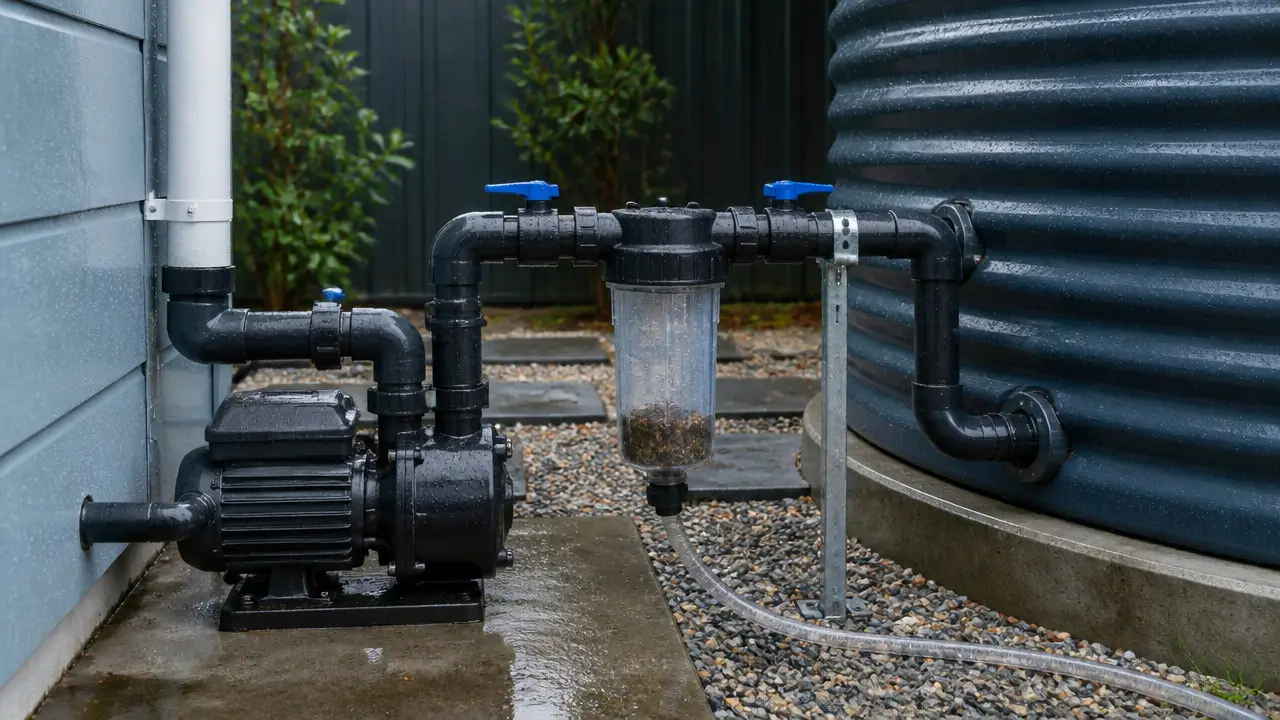
What About Sediment Filters on Rainwater Systems?
The same basic flushing idea applies, but a rainwater system may have several treatment stages.
A sediment filter only removes certain suspended particles. It does not by itself make collected rainwater safe to drink.
For non-potable uses such as garden irrigation, the main concerns after a filter change are usually good flow, correct cartridge installation, and preventing leaks or bypass.
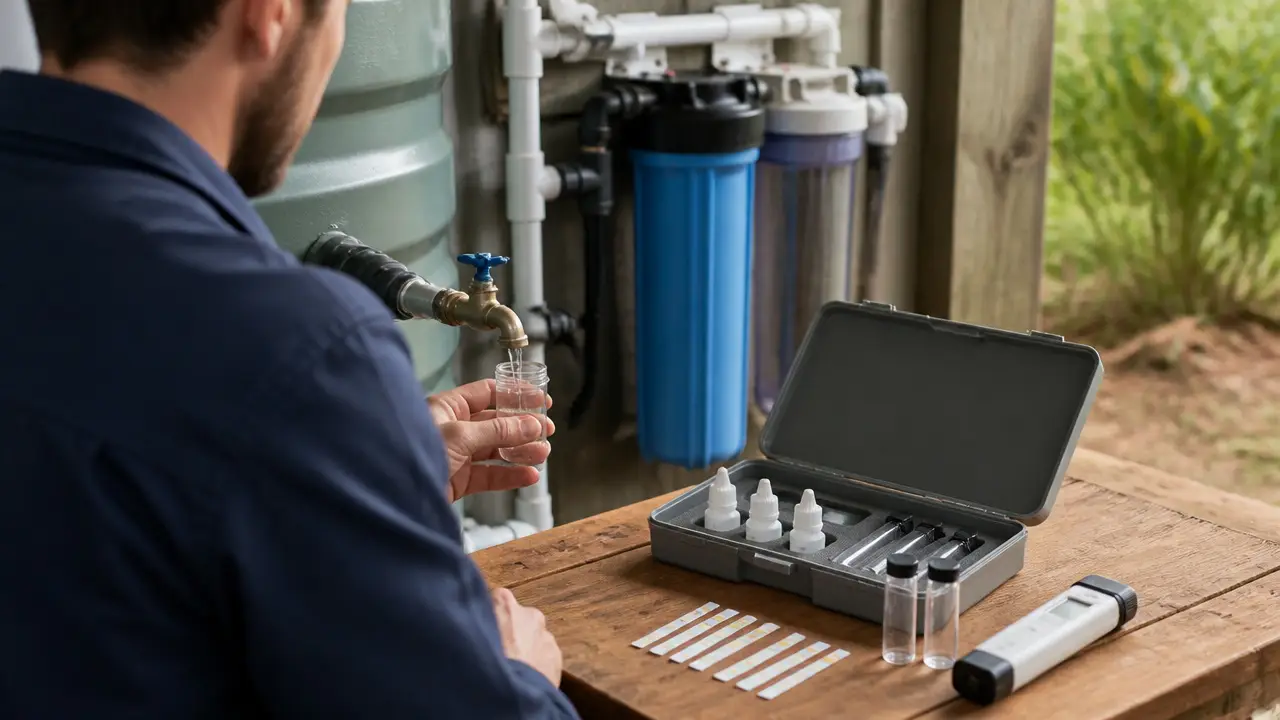
For drinking-water use, filtration should be part of a complete system that considers the collection surface, storage tank, prefiltration, treatment stages, maintenance, current laboratory testing, and applicable local requirements.
Check for Leaks After Flushing
Stay near the filter housing when you first restore pressure.
Look around:
- The housing threads
- O-ring seal
- Pressure-relief button
- Inlet and outlet fittings
- Drain connections
A slow drip can become a much larger leak once the system remains pressurized.
If you cannot stop a leak without excessive tightening, shut off the water and inspect the O-ring, housing, threads, and fittings.
When Is the Filter Ready to Use?
A basic sediment filter is generally ready for normal service once:
- The housing is leak-free.
- Air has been purged.
- Water runs steadily.
- The water is clear.
- No loose filter material is appearing downstream.
You do not need to keep flushing simply because a certain number of minutes has not passed. Use the manufacturer's instructions and the condition of the water as your main guides.
Frequently Asked Questions
Is five minutes enough to flush a sediment filter?
Often, yes. Five minutes may be enough for a basic sediment cartridge if the water is already clear and the flow is steady. Continue longer if you still see particles or trapped air.
Can I drink the water immediately after changing a sediment filter?
A sediment filter change does not determine whether water is safe to drink. For a potable water system, follow the instructions for the entire treatment system and any applicable testing and maintenance requirements.
Why does my faucet sputter after changing the filter?
Air entered the filter housing when it was opened. The sputtering should decrease as water pushes that air through the plumbing.
Why is my water white or cloudy after a filter change?
Tiny air bubbles can make water look milky or white. If a glass of water clears after sitting for a few minutes, trapped air is a likely cause.
Should I run hot or cold water after changing the filter?
Use cold water for the initial flush unless your system manufacturer says otherwise. This clears the filter and cold-water plumbing without unnecessarily sending flushing water through the water heater.
Do sediment filters need to be soaked before installation?
Most common sediment cartridges are installed directly into the housing without soaking, but filter designs vary. Follow the instructions supplied with the cartridge.
What if the filter housing leaks after I replace the cartridge?
Shut off the water and relieve system pressure before opening the housing again. Check the O-ring for dirt, twisting, damage, or incorrect placement. Do not rely on excessive tightening to stop a leak.