As an affiliate, we may earn a commission from qualifying purchases. We get commissions for purchases made through links on this website from Amazon and other third parties.
Flushing can remove a lot of loose sediment, but it usually does not remove all sediment from a rainwater tank, pipe, filter housing, or water line.
How much it removes depends on where the sediment has settled, how fast the water moves, and whether the system has low spots where dirt can collect.
What Flushing Actually Removes
Flushing works best on sediment that is:
- Loose
- Recently deposited
- Sitting near a drain or outlet
- Light enough to move with flowing water
A strong flow of water can carry sand, dirt, rust particles, and other debris out of a pipe or tank.
The problem is that sediment does not always stay loose.
Over time, some material can pack together, stick to surfaces, or settle in places where normal flushing water does not reach.
Why Sediment Can Remain After Flushing
Sediment Settles Below the Outlet
Many rainwater tanks have an outlet several inches above the bottom.
This helps keep settled dirt from entering the water line, but it also means normal tank use may leave a layer of sediment below the outlet.
Opening a faucet or flushing the plumbing will not remove this material.
A low-level drain or dedicated cleaning outlet can remove more of it.
Tanks Have Dead Zones
Water does not move evenly across the bottom of a large tank.
Sediment may remain:
- In corners
- Around tank ribs
- Behind internal fittings
- Far from the drain
- In low areas of an uneven tank base
Even a large volume of flushing water may flow past these areas without carrying the sediment out.
Fine Material Can Stick to Surfaces
Very fine clay, organic material, algae residue, and biofilm can cling to tank walls and plumbing.
Biofilm is a thin layer of microorganisms and organic material that can form on wet surfaces.
Flushing alone may not remove firmly attached deposits.
Pipes Can Have Low Spots
Sediment can collect in sagging pipes, elbows, valves, and other low points.
A normal flush may remove some material while leaving heavier particles behind.
Does Flushing a Rainwater Tank Remove Bottom Sediment?
It can remove some of it, especially when the tank has a drain at or near the lowest point.
However, simply opening the tank outlet usually will not clean the entire tank floor.
For tanks designed around sediment management, a low drain can make periodic removal much easier.
Some systems also use calming inlets. These reduce turbulence when new rainwater enters the tank, allowing sediment to stay near the bottom instead of being stirred back into the stored water.
Does Flushing Pipes Remove Sediment?
Flushing pipes can be very effective when the sediment is loose.
The best results usually come from moving water through the line at a higher flow rate than normal use.
However, flushing may not remove:
- Hardened mineral deposits
- Heavy particles trapped in low spots
- Debris behind partly closed valves
- Deposits stuck inside fittings
- Biofilm attached to pipe walls
If sediment keeps appearing after repeated flushing, the system may have an ongoing source of contamination rather than just leftover dirt.
Does Flushing a Filter Remove Sediment?
That depends on the filter.
Disposable sediment cartridges are normally replaced rather than cleaned by flushing.
Guidance on household benefits of removing suspended particles helps interpret which component needs attention based on the measured change.
Some screen filters and reusable filters can be rinsed or backwashed.
Backwashing means sending water through a filter in the opposite direction from normal flow to carry trapped material away.
Follow the filter manufacturer's cleaning instructions. Flushing a filter that was not designed to be cleaned may damage it or fail to restore proper flow.
How to Get More Sediment Out of a Rainwater System
Start by preventing as much sediment as possible from entering storage.
Useful measures may include:
- Keeping gutters reasonably clean
- Using suitable inlet screening
- Using a first-flush device where appropriate
- Keeping tank openings covered
- Using a calming inlet
- Keeping the normal tank outlet above settled sediment
- Providing a low drain for periodic cleaning
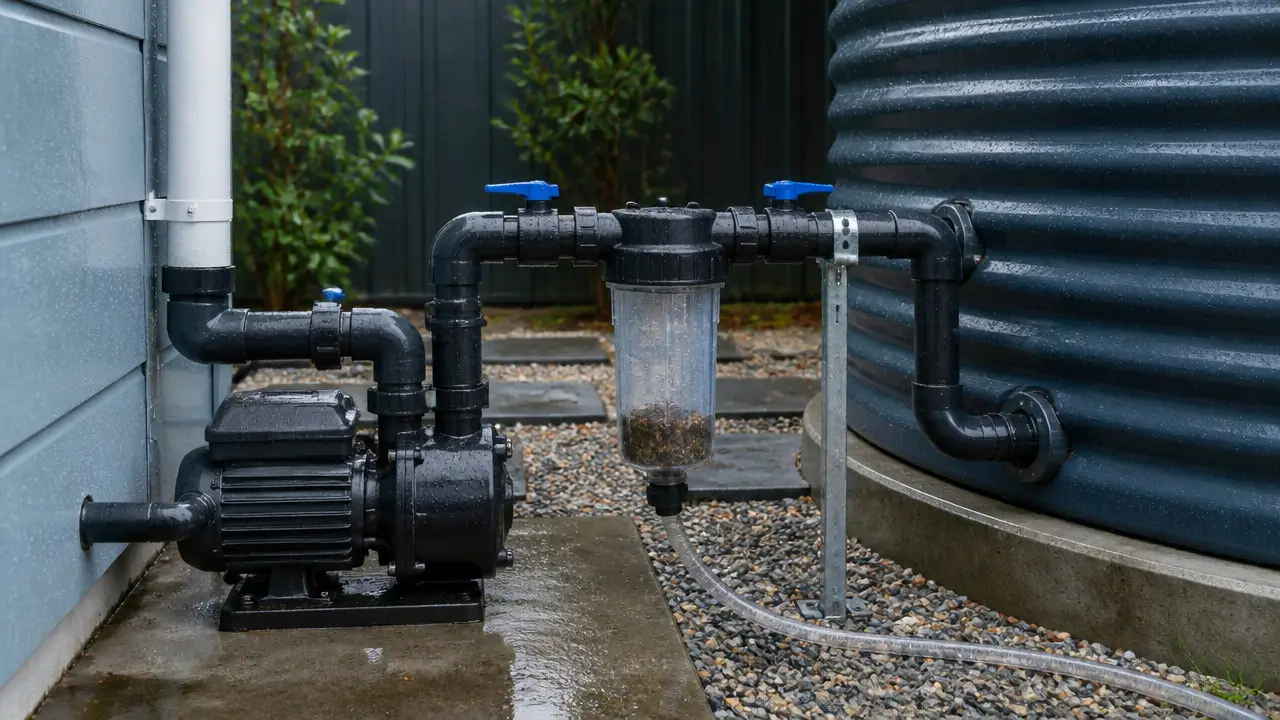
- Maintaining sediment filters downstream
A first-flush device diverts an initial portion of roof runoff so some dust, pollen, and debris from the roof does not immediately enter the storage tank.
It does not remove every contaminant, but it can reduce the sediment load reaching the tank.
When a Tank May Need More Than Flushing
A tank may need a more thorough cleaning if you see:
- A thick layer of settled material
- Persistent cloudy water
- Organic sludge
- Bad odors
- Debris that does not leave through the drain
- Sediment repeatedly reaching pumps or filters
Do not enter a rainwater tank or cistern to clean it. Tanks are confined spaces and can present serious hazards.
Use cleaning methods that can be performed safely from outside, or hire a qualified tank-cleaning service when internal cleaning is needed.
Flushing Does Not Make Rainwater Safe to Drink
Removing visible sediment is only one part of water treatment.
Flushing does not reliably remove microorganisms, dissolved chemicals, metals, or other contaminants that may be present in roof runoff.
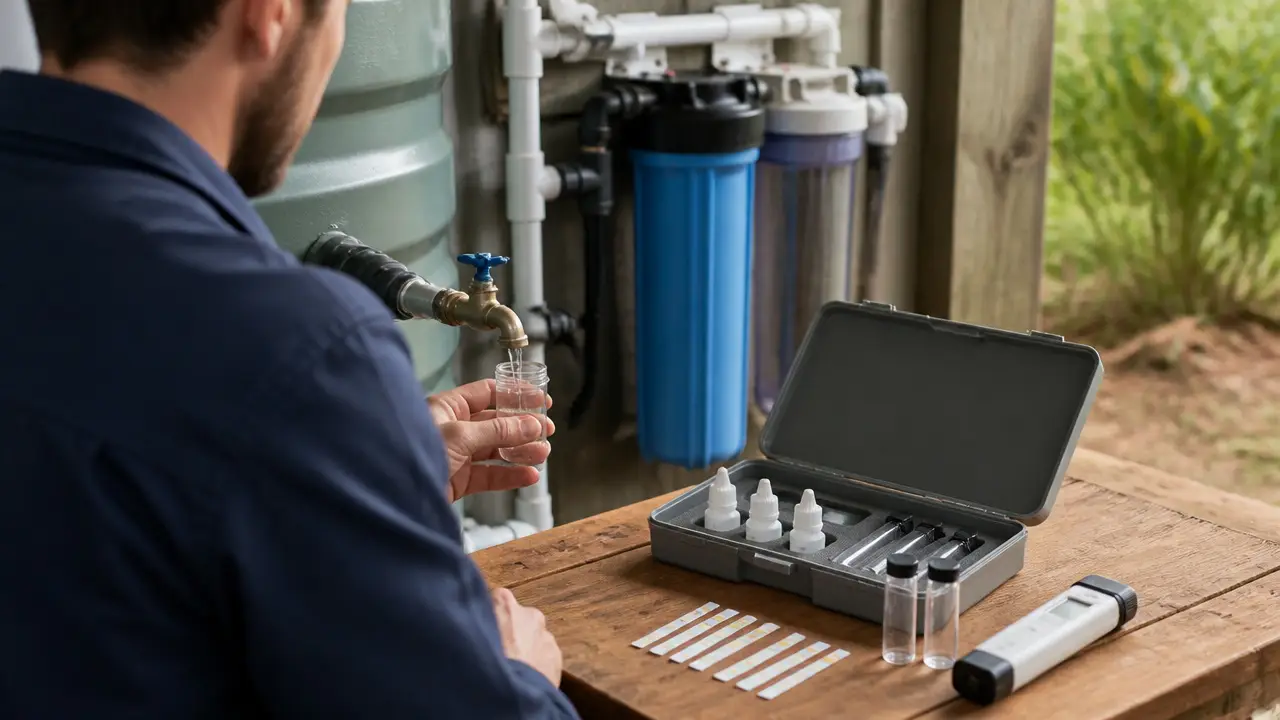
Water intended for drinking should be treated as a whole-system issue involving suitable collection, prefiltration, appropriate treatment, regular maintenance, current laboratory testing, and any applicable local requirements.
Clear-looking water is not proof that it is potable.
Potable means suitable for drinking.
The Practical Rule
Think of flushing as sediment removal, not complete cleaning.
It works well for loose material that water can reach and carry away. It works poorly on settled sludge, attached deposits, trapped debris, and contaminants dissolved in the water.
If sediment keeps returning, look for the source rather than continuing to flush the same material downstream.
Frequently Asked Questions
Will flushing a rainwater tank completely clean the bottom?
Usually not. It can remove loose sediment near a low drain, but material may remain in corners, low spots, and areas with little water movement.
How often should sediment be flushed from a rainwater tank?
There is no single schedule that fits every system. Check the tank periodically and clean or drain accumulated sediment when buildup becomes significant. Roof conditions, tree cover, screens, first-flush devices, and local dust levels all affect how quickly sediment collects.
Can I flush sediment through my water pump?
Avoid intentionally sending heavy sediment through a pump. Sand and grit can wear pump components and clog downstream equipment. Remove sediment before it reaches the pump whenever practical.
Why does sediment come back after I flush the pipes?
The tank may still contain settled material, or new sediment may be entering through the collection system. Pipe low spots and aging plumbing can also continue releasing particles.
Does a sediment filter eliminate the need to flush a tank?
No. A sediment filter protects downstream plumbing and equipment, but allowing large amounts of dirt to build up in the tank can shorten filter life and increase maintenance.
Can a hose flush sediment from the bottom of a tank?
A hose may loosen some deposits, but it may also stir sediment throughout the stored water. Tank design, access, drainage, and safety should be considered before attempting cleaning.
Is clear water sediment-free?
Not necessarily. Very small particles may remain suspended even when water looks clear, and dissolved substances are not visible at all.