As an affiliate, we may earn a commission from qualifying purchases. We get commissions for purchases made through links on this website from Amazon and other third parties.
A sediment filter does not reduce water hardness. It removes suspended particles such as sand, silt, rust, and dirt. Hardness comes mainly from dissolved calcium and magnesium, which pass through normal sediment filters with the water.
If hard water is causing scale, white deposits, or soap problems, you need a treatment method designed for dissolved minerals rather than particle removal.
What a Sediment Filter Removes
A sediment filter catches solid material floating in the water.
Depending on its design and micron rating, it may remove:
- Sand
- Silt
- Rust flakes
- Dirt
- Grit
- Small pieces of organic debris
A micron rating describes the approximate size of particles a filter can capture. A lower micron number generally means the filter catches smaller particles.
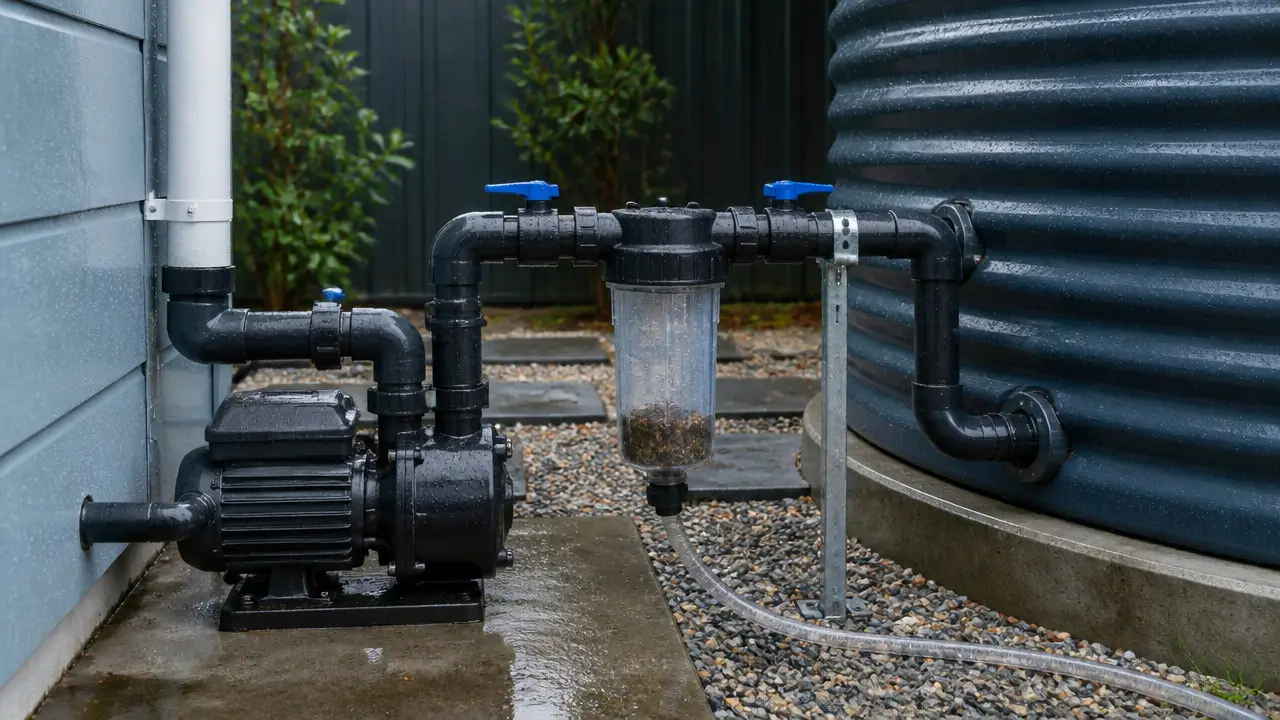
These filters are useful in rainwater systems because stored rainwater can carry fine roof debris, tank sediment, or particles that pass through screens and prefilters.
But sediment filtration does not remove substances that are dissolved in the water.
Why Hardness Passes Through a Sediment Filter
Water hardness mainly comes from dissolved calcium and magnesium.
These minerals are not floating around as visible grains that a normal filter can strain out. They are dissolved at the molecular or ionic level.
That means they can pass through sediment filters rated at:
- 100 microns
- 50 microns
- 20 microns
- 5 microns
- 1 micron
Installing a finer sediment cartridge may make the water look cleaner, but it does not make hard water soft.
This is an important distinction when planning a water-treatment system:
Sediment is a particle problem. Hardness is a dissolved-mineral problem.
Does Rainwater Normally Have Hardness?
Fresh rainwater usually starts with much less calcium and magnesium than groundwater.
However, collected rainwater can pick up minerals as it contacts:
- Roofing materials
- Concrete surfaces
- Masonry
- Dust
- Storage tanks
- Plumbing materials
Water stored in or flowing across cement-based materials can sometimes become noticeably more mineralized.
If a rainwater system is mixed with well water or another hard water source, its hardness can also increase.
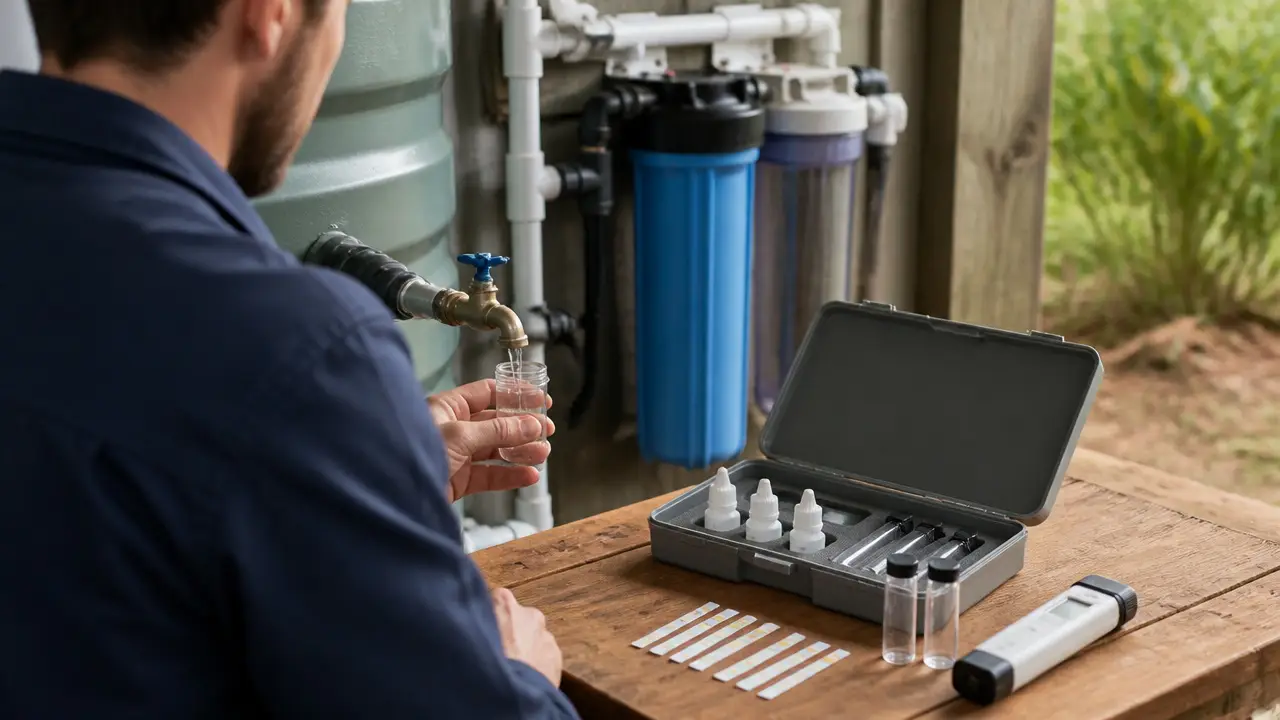
Do not assume water is soft simply because it originally fell as rain. Testing is the better way to know what is actually in the stored water.
How Can You Tell Whether the Problem Is Sediment or Hardness?
Sediment and hardness often cause different signs.
Signs of sediment
You may notice:
- Cloudy water
- Visible particles
- Grit at faucet aerators
- Sediment collecting in tanks
- Clogged irrigation emitters
- Dirty filter cartridges
A sediment filter can help with these problems.
Signs of hard water
You may notice:
- White crust around faucets
- Scale inside kettles
- Mineral buildup on fixtures
- Spots left after water dries
- Reduced soap lather
- Scale in water heaters or appliances
These symptoms point more toward dissolved minerals.
A sediment filter may protect equipment from grit, but it will not solve the mineral buildup itself.
What Actually Reduces Water Hardness?
Several treatment methods affect hardness, but they do not all work the same way.
Ion-exchange water softener
A traditional water softener removes much of the calcium and magnesium responsible for hardness and exchanges them for other ions, commonly sodium or potassium depending on the system.
This is the usual approach when the goal is to actually soften water throughout a household.
A softener normally requires:
- Suitable water pressure and flow
- A drain connection
- Regeneration
- Salt or another regenerant
- Periodic maintenance
Water quality should be checked before choosing or sizing one.
Reverse osmosis
Reverse osmosis, often called RO, can remove many dissolved minerals, including hardness minerals.
RO is usually used for smaller amounts of treated water rather than as a simple substitute for whole-house sediment filtration.
It also creates a reject-water stream and needs suitable pressure and regular membrane maintenance.
Scale-control systems
Some systems are designed to reduce the tendency of minerals to form hard scale rather than actually removing the hardness minerals.
Evaluating selecting a sediment filter helps understand the maintenance response that the measured values warrant.
These should not be confused with true water softening.
If a manufacturer describes equipment as a "salt-free softener," check whether it actually removes calcium and magnesium or merely changes how scale forms.
Should a Rainwater System Still Have a Sediment Filter?
Often, yes.
A sediment filter can be useful even though it does nothing for hardness.
For example, a rainwater system might use several separate stages:
- Roof screening keeps larger debris out.
- A first-flush device diverts some of the initial roof runoff where appropriate.
- Tank design helps debris settle.
- A sediment filter removes smaller suspended particles.
- Additional treatment is selected for the intended water use.
A first flush is a portion of early roof runoff that is diverted before water enters storage. It can help reduce some material washed from the collection surface, but it does not make the remaining water automatically safe to drink.
Each stage solves a different problem.
Trying to make one filter do everything usually leads to poor results.
What If Your Sediment Filter Develops White Deposits?
Hard-water minerals can sometimes leave scale on filter housings, plumbing, valves, or cartridges.
This can create the impression that the sediment filter is removing hardness.
It usually is not.
Minerals may form solid deposits after changes in temperature, pressure, or water chemistry. Once material becomes a solid particle, a sediment filter may catch some of it.
But dissolved calcium and magnesium still passing through the filter remain part of the water's hardness.
Can a Carbon Filter Reduce Hardness?
Standard activated carbon filters generally do not soften water either.
Carbon is mainly used to reduce certain tastes, odors, chlorine, and some organic compounds, depending on the type of filter and its specifications.
It should not be treated as a hardness-removal stage unless the treatment system specifically includes technology designed to remove hardness.
Do You Need to Treat Hardness in Rainwater?
Not always.
Treatment should match the intended use.
For garden irrigation, moderate hardness may not justify installing a water softener. Other water-quality factors may matter more for plants and irrigation equipment.
For toilets or outdoor cleaning, hardness may mainly be an equipment or scale concern.
For household appliances, showers, or hot-water systems, hardness can become more important because scale can build up over time.
If collected rainwater will be used for drinking, hardness is only one small part of water quality. Potable use requires a suitable collection system, appropriate treatment stages, current laboratory testing, routine maintenance, and compliance with applicable local requirements. A sediment filter or hardness test by itself cannot establish that roof runoff is safe to drink.
Sediment Filter vs. Water Softener
| Treatment | Sediment filter | Water softener |
|---|---|---|
| Sand and grit | Yes | Not its main purpose |
| Silt | Yes | Not its main purpose |
| Rust particles | Yes | Not its main purpose |
| Calcium hardness | No | Yes |
| Magnesium hardness | No | Yes |
| Makes cloudy water clearer | Often | Not its main purpose |
| Reduces scale from hardness | No | Yes |
| Requires regeneration salt | No | Usually |
In systems that need both treatments, sediment filtration can also help protect downstream equipment from dirt and grit.
Frequently Asked Questions
Will a 5-micron filter reduce water hardness?
No. A 5-micron sediment filter can catch small suspended particles, but dissolved calcium and magnesium pass through it.
Will a 1-micron sediment filter soften water?
No. Making the filter finer does not turn it into a water softener. Hardness minerals are dissolved in the water rather than suspended as particles.
Can hard water clog a sediment filter?
Hardness itself normally passes through the filter. However, mineral scale or precipitated minerals can sometimes form solid material that contributes to clogging.
Does a sediment filter prevent limescale?
Not by itself. Limescale is largely associated with dissolved hardness minerals. Removing dirt and grit does not remove those minerals.
Do I need a sediment filter before a water softener?
It depends on the water and equipment. If the supply contains sand, rust, silt, or other particles, upstream sediment filtration can help protect valves and treatment equipment. Follow the requirements of the specific system being installed.
Can reverse osmosis remove hardness?
Reverse osmosis can remove much of the dissolved calcium and magnesium reaching the membrane. Pretreatment may still be needed because excessive hardness and scale can reduce membrane performance.
Is rainwater naturally soft?
Rainwater generally begins with low mineral content, but collected water can pick up minerals from roofs, dust, tanks, concrete, plumbing, or mixed water sources. Testing is the best way to determine actual hardness.