As an affiliate, we may earn a commission from qualifying purchases. We get commissions for purchases made through links on this website from Amazon and other third parties.
For water to stay usable for six months, the most important things are the water source, container, cleanliness, storage conditions, and intended use. Drinking water needs much stricter handling than water stored for a garden or toilet flushing.
If you are storing water you may drink, start with safe drinking water and put it into clean, sanitized, food-grade containers with tight lids. Keep the containers cool, dark, and away from chemicals. The CDC recommends replacing home-filled stored drinking water every six months.
Rainwater is different. Six months in a tank does not make collected rainwater safe to drink. Roof runoff can carry microbes, animal waste, dirt, metals, and other contaminants. Drinking-water use requires an appropriate collection and treatment system, ongoing maintenance, and water-quality testing where appropriate.
Decide What the Stored Water Will Be Used For
Before choosing a container or treatment method, decide what you expect to do with the water.
Drinking, cooking, and brushing teeth
This is potable water, meaning water suitable for drinking.
For six-month drinking-water storage, use:
- Water that is already safe to drink
- Food-grade water containers
- Clean, sanitized containers and fittings
- Tight covers
- A cool, dark storage area
- A clear storage date on every container
- A six-month rotation schedule for home-filled water
Commercially bottled water can also be stored according to the manufacturer's expiration or best-use information. The CDC considers unopened commercially bottled water the safest and most reliable emergency water source.
Garden irrigation and other non-potable uses
Non-potable water is water that is not intended for drinking.
Rainwater can often be stored for months for uses such as:
- Watering gardens
- Drip irrigation
- Washing outdoor tools
- Other approved non-drinking uses
For these purposes, the main storage problems are usually sediment, algae, insects, odors, clogged outlets, and overflowing tanks.
Keep the tank covered and opaque, screen openings where appropriate, prevent sunlight from reaching the stored water, and remove accumulated sediment as part of routine maintenance.
How Much Water Is Six Months of Storage?
For emergency planning, the CDC recommends storing at least 1 gallon per person per day and suggests trying to keep a two-week supply where possible. That gallon is intended to cover drinking, cooking, brushing teeth, and other basic needs. Hot climates, illness, pregnancy, pets, and other circumstances can increase the amount needed.
Using that minimum planning figure, six months is a very large amount:
| People | Approximate water for 180 days |
|---|---|
| 1 | 180 gallons |
| 2 | 360 gallons |
| 4 | 720 gallons |
| 6 | 1,080 gallons |
These numbers are only a basic emergency-water estimate. They do not represent normal household water use.
A 720-gallon supply also weighs roughly 6,000 pounds before including the tank itself. Large tanks therefore need a suitable foundation and location. Do not place large water tanks on decks, floors, or other structures unless their load capacity has been properly evaluated.
Choose the Right Water Storage Container
For drinking water, use a container intended for food or drinking-water storage.
The CDC recommends food-grade water storage containers and warns against using containers that previously held toxic chemicals such as pesticides or bleach.
A good long-term container should have:
- A tight-fitting lid or cap
- Durable construction
- Materials suitable for the intended water use
- Openings that can be protected from dirt and pests
- A way to dispense water without repeatedly putting hands or dirty tools inside
Smaller containers are easier to move and rotate. Large tanks hold more water with fewer individual containers but become much harder to clean, drain, move, and inspect.
Do not reuse questionable containers
A barrel may look clean and still contain residues from its previous contents.
Do not use containers that once held:
- Fuel
- Pesticides
- Solvents
- Automotive chemicals
- Industrial chemicals
- Other toxic materials
Cleaning does not guarantee that chemical residues have been removed from unsuitable plastics or other container materials.
Clean and Sanitize Containers Before Filling Them
Cleaning removes dirt. Sanitizing reduces microbes on the container surfaces. You need both steps when preparing drinking-water containers.
The CDC recommends washing the container with soap and water, rinsing it thoroughly, and then sanitizing it before filling. Its current instructions use unscented household chlorine bleach containing 5% to 9% sodium hypochlorite.
For sanitizing an empty container, the CDC procedure is:
- Wash the container with soap and water.
- Rinse it completely.
- Mix 1 teaspoon of unscented 5%–9% household bleach with 1 quart of water.
- Add the solution to the container.
- Close it and shake it so the solution contacts all interior surfaces.
- Leave it in contact for at least 30 seconds.
- Pour the solution out.
- Let the container air-dry before filling.
This mixture is for sanitizing the empty container. It should not be confused with the different bleach quantities used when disinfecting questionable water.
Never mix bleach with ammonia or other cleaners.
Fill the Container With Safe Water
If the water may later be consumed, the simplest approach is to fill the sanitized container with water that is already considered safe to drink.
Avoid introducing contamination while filling it. Keep hoses, funnels, caps, hands, and fittings clean.
Fill the container and close it promptly.
Label it with:
Drinking Water- The fill date
- Any other information you need to identify the source
A label matters more than it may seem. Six months later, it can be difficult to remember which barrel contains drinking water, which contains rainwater, and when each one was filled.
Store Water in a Cool, Dark Location
Heat and light work against long-term water storage.
For home-filled drinking water, the CDC recommends a cool location, preferably around 50°F to 70°F, away from direct sunlight. Containers should also be kept away from substances such as gasoline and pesticides.
A good storage location is:
- Shaded
- Relatively cool
- Protected from freezing
- Protected from animals and pests
- Away from fuels and chemicals
- Accessible for inspection and rotation
Do not assume that an attached garage is automatically ideal. Garages may become extremely hot, freeze in winter, or contain gasoline, solvents, pesticides, and other chemicals.
Protect Large Tanks From Light and Contamination
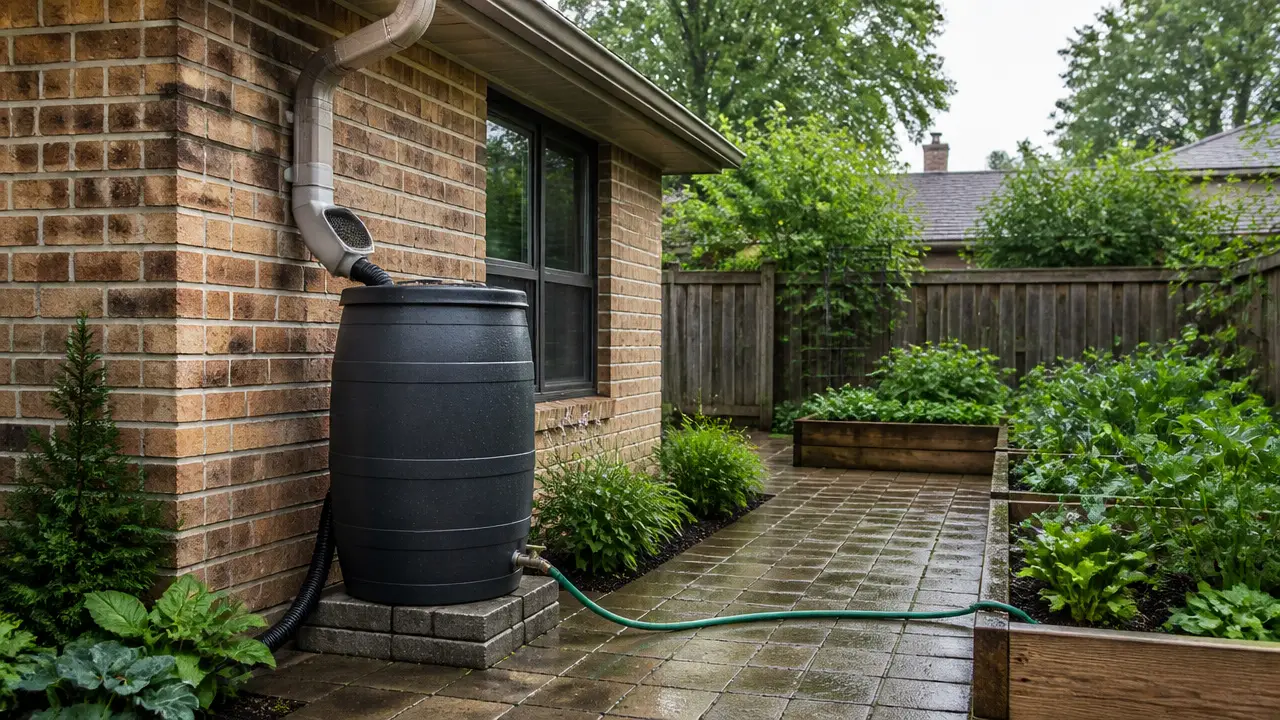
If you are storing rainwater in a cistern, IBC tote, or large tank, light control is especially important.
Sunlight can encourage algae growth. An opaque tank or effective light-blocking enclosure helps reduce that problem.
Also pay attention to every opening in the system, including:
- Tank lids
- Vents
- Overflows
- Downspout connections
- Pump lines
- Inspection openings
Openings can become entry points for insects, dirt, leaves, small animals, and other contaminants.
For rainwater systems, roof debris should also be kept out of the tank as much as practical. Gutters, screens, prefilters, and sometimes a first-flush diverter can help.
Evaluating keeping stored rainwater drinkable helps interpret the practical limits of the reported water-quality measurements.
A first-flush device diverts some of the initial runoff from a rainfall event instead of sending it into storage. This first runoff can carry a heavier load of roof debris and contaminants. A first-flush device can reduce contamination entering the tank, but it does not make the remaining rainwater automatically safe to drink.
Rotate Home-Filled Drinking Water at Six Months
If you fill your own containers with drinking water, the CDC recommends replacing that stored water every six months.
A simple system is to write the replacement month directly on each container.
For example, if you fill your supply in January:
- Mark it for rotation in July.
- Use the old water where suitable.
- Clean and sanitize the container again.
- Refill it with safe water.
- Add a new date.
Rotation gives you a regular opportunity to inspect the container, cap, seals, fittings, and storage area.
Inspect the Water Before Using It
Do not treat the six-month mark as proof that water is safe.
Check the container first.
Look for:
- A damaged or loose lid
- Leaks
- Cracks
- Signs that insects or animals entered
- Unexpected sediment
- Unusual color
- Strong or unusual odors
- Evidence that the container was exposed to chemicals or floodwater
If you suspect chemical contamination, boiling or chlorination will not make the water safe. The CDC advises using another water source when water may contain fuel, toxic chemicals, or radioactive materials.
Do You Need to Add Bleach Before Storing Tap Water?
Do not automatically add bleach to every container of safe tap water.
There is an important difference between:
- Sanitizing the storage container, and
- Disinfecting water that may contain harmful microbes.
If you are filling a properly sanitized container with safe municipal drinking water, follow the storage guidance from your water supplier or public-health authority rather than adding chemicals without a reason.
If drinking water becomes unsafe during an emergency, boiling is generally the CDC's preferred method for killing germs when boiling is possible. Current CDC and EPA guidance also provides specific chlorine-disinfection procedures when boiling is not possible.
Those emergency procedures depend on factors such as bleach concentration and water clarity. Do not estimate a bleach dose.
Can Rainwater Be Stored for Six Months?
Yes, rainwater can physically remain in a tank for six months or longer. Whether it remains suitable for its intended use is a different question.
For irrigation, long storage periods may be workable if the system controls:
- Sunlight
- Mosquito access
- Roof debris
- Sediment
- Tank contamination
- Overflow
- Freezing
- Stagnant plumbing
Water sitting for months may change in odor, appearance, and microbial quality.
For drinking, storage time is only one part of the problem. Roof-collected rainwater should not be treated as drinking water simply because it looks clear.
A drinking-water rainwater system may require suitable collection surfaces, debris control, prefiltration, treatment stages, protected storage, maintained plumbing, and current laboratory testing. Applicable local rules also matter.
Freezing Changes the Storage Plan
Water expands when it freezes.
A full barrel, IBC tote, filter housing, pipe, valve, or pump can be damaged if trapped water freezes.
In freezing climates, long-term storage may require:
- Moving smaller containers into protected space
- Draining exposed plumbing
- Protecting valves and pumps
- Leaving appropriate expansion space where the container design allows it
- Using a properly designed freeze-protection plan for permanent systems
Do not depend on improvised heaters or exposed electrical equipment around water. Larger powered systems should use equipment and electrical work appropriate for wet locations.
Avoid Contaminating the Water While Dispensing It
Stored water can start clean and become contaminated when you use it.
For smaller containers, avoid putting hands, cups, or dirty scoops into the water.
The CDC recommends using a clean dispensing device each time and avoiding contact with the inside of the container.
For larger tanks, a covered outlet or valve is usually easier to keep clean than repeatedly opening the top and dipping water out.
Clean the outlet as needed and keep the cap or valve protected from dirt.
A Practical Six-Month Storage Routine
For drinking water, a straightforward routine is:
- Decide how much water you actually need.
- Choose food-grade containers.
- Wash and sanitize them.
- Fill them with safe drinking water.
- Close them tightly.
- Label each container and record the fill date.
- Store them in a cool, dark, protected location.
- Inspect the containers periodically.
- Avoid contaminating the water when dispensing it.
- Replace home-filled drinking water after six months.
For rainwater used only for irrigation or another non-potable purpose, the priorities shift toward keeping debris, sunlight, animals, insects, and sediment out of the storage system.
The intended use should always determine how carefully the water must be collected, treated, stored, and tested.
Frequently Asked Questions
Does stored water go bad after six months?
Water itself does not have a simple spoilage date, but contamination can occur during filling, storage, or dispensing. The CDC recommends replacing drinking water that you fill yourself every six months. Commercially bottled water should be stored according to its labeling.
Can I store drinking water in an IBC tote for six months?
Potentially, but only if the tote and all water-contact materials are suitable for drinking-water storage and the tote has a known safe history. Do not use an IBC tote that previously contained toxic or unknown substances. Large containers are also harder to sanitize and inspect than smaller containers.
Should I leave an air gap at the top of a water container?
Follow the container manufacturer's instructions. Do not intentionally leave a large amount of empty space merely for routine room-temperature storage. In freezing conditions, however, expansion becomes a concern, and the container must be managed according to its design and freeze-protection requirements.
Is six-month-old rainwater safe to drink if it looks clear?
No. Appearance does not establish drinking-water safety. Clear rainwater can still contain microorganisms or chemical contaminants. Drinking-water use requires an appropriate whole-system approach rather than a visual check or one simple filter.
Does boiling make old stored water safe?
Boiling is effective against many disease-causing organisms and is the CDC's preferred emergency method for killing germs when safe bottled water is unavailable. It does not remove fuel, toxic chemicals, radioactive materials, or every other possible contaminant.
Where is the best place to keep stored drinking water?
Use a cool, dark location protected from sunlight, freezing, pests, and chemicals. The CDC recommends keeping home-filled emergency water around 50°F to 70°F when practical and away from substances such as gasoline and pesticides.
How much water would a family of four need for six months?
Using the CDC's minimum emergency planning amount of one gallon per person per day, four people would need about 720 gallons for 180 days. Actual requirements can be higher, especially in hot weather or when water is needed for more than basic drinking, cooking, and hygiene.