As an affiliate, we may earn a commission from qualifying purchases. We get commissions for purchases made through links on this website from Amazon and other third parties.
A spin-down filter is often worth it for a rainwater system when you need to catch sand, grit, rust flakes, roof debris, or other larger particles before they reach a pump, irrigation line, finer filter, or appliance.
It is most useful as a prefilter, not as a complete water-treatment system. A spin-down filter can reduce maintenance on equipment farther downstream, but it does not make rainwater safe to drink and it does not replace finer filtration or other treatment where those are needed.
What a Spin-Down Filter Does
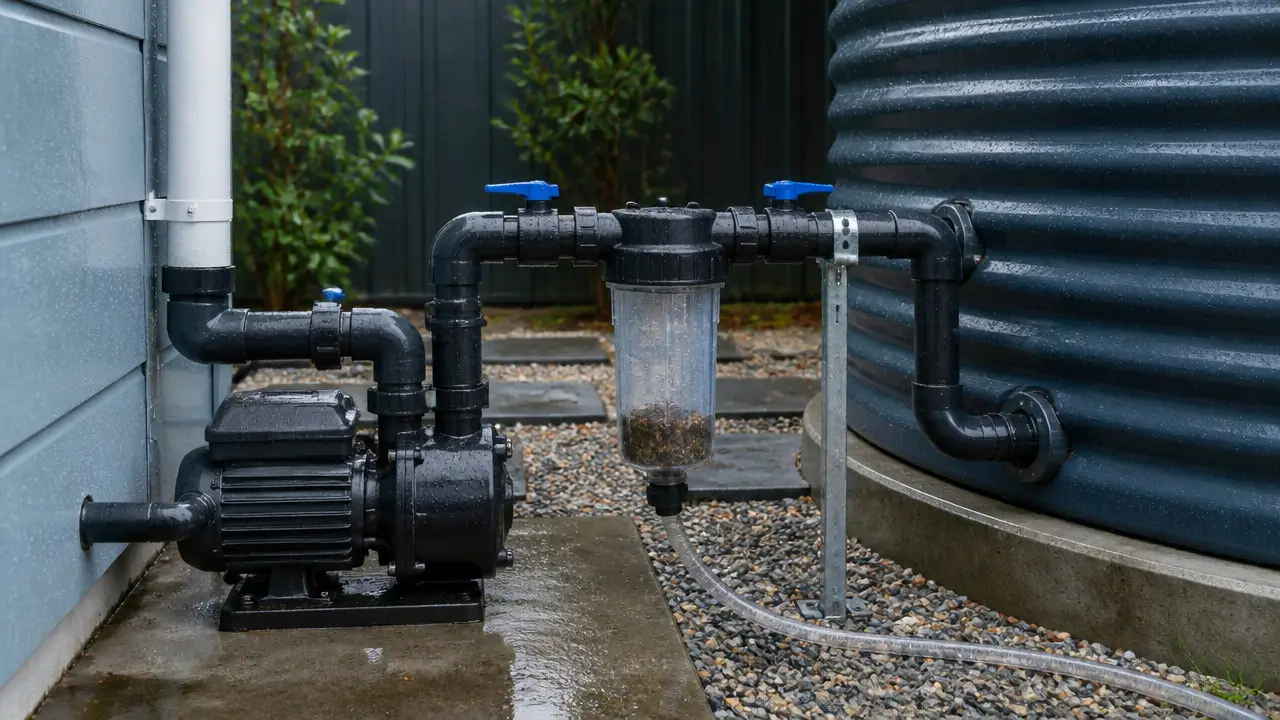
A spin-down filter is a reusable sediment filter. Water enters the housing and passes through a mesh screen. Larger particles stay inside the filter instead of continuing through the plumbing.
Many units have a clear bowl and a drain valve at the bottom. Opening the valve allows collected sediment to be flushed out without replacing the screen.
That makes a spin-down filter different from a disposable sediment cartridge. Instead of throwing away a dirty cartridge each time, you normally clean and reuse the screen.
A spin-down filter can catch material such as:
- Sand
- Grit
- Small leaves and organic debris
- Rust flakes
- Tank sediment
- Pipe scale
What it catches depends mainly on its micron rating. A micron is one-thousandth of a millimeter. A lower micron number means the openings are smaller and the filter can catch finer particles.
When a Spin-Down Filter Is Worth It
A spin-down filter makes the most sense when your water regularly contains visible sediment.
Before a Rainwater Pump
This is one of the better places to use one.
Sediment entering a pump can contribute to wear, clogged valves, and problems farther downstream. A spin-down filter placed in the correct part of the plumbing can remove larger particles before they reach sensitive equipment.
However, check the pump manufacturer's installation requirements. A filter that is too restrictive on the suction side can reduce water supply to the pump.
In some systems, filtration is better placed after the pump rather than directly on its inlet.
Before Drip Irrigation
Drip emitters have small openings that can clog easily.
A spin-down filter can remove larger particles from stored rainwater before they reach irrigation tubing. This can be especially useful with rain barrels, IBC totes, and cisterns where sediment settles on the bottom.
The spin-down filter still needs to match the filtration requirements of the emitters. Some drip systems require finer filtration than a coarse spin-down screen provides.
Before a Finer Sediment Filter
A spin-down unit can serve as the first filtration stage.
For example, a system might use:
rainwater tank → spin-down filter → finer cartridge filter → equipment
The spin-down filter removes the larger dirt first. That can help the finer cartridge last longer before it becomes clogged.
When Your Tank Collects Sediment
Even a well-designed rainwater system can accumulate some sediment over time.
Screens, gutter guards, and first-flush devices can reduce contamination entering storage, but they do not necessarily stop every small particle.
A spin-down filter gives you another place to remove suspended material before using the water.
When a Spin-Down Filter May Not Be Necessary
Not every rainwater system needs one.
A basic rain barrel used to fill watering cans may work perfectly well without a spin-down filter. If there is no pump, no drip irrigation, and no equipment with small passages, adding more plumbing may provide little benefit.
You may also get limited value from one if the real problem is large debris entering the tank. In that case, better gutter screens, inlet screening, or tank cleaning may solve the problem more effectively.
A spin-down filter should not become a substitute for fixing poor collection practices upstream.
Spin-Down Filter vs. Sediment Cartridge
Both remove particles, but they are useful in different ways.
| Feature | Spin-down filter | Sediment cartridge |
|---|---|---|
| Best for | Coarser sediment | Finer sediment |
| Reusable | Usually | Usually not |
| Cleaning | Flush or remove screen | Replace cartridge |
| Handles heavy dirt loads | Often well | Can clog quickly |
| Very fine filtration | Limited | Usually better |
| Ongoing replacement | Low | Regular cartridges needed |
They can also work together.
A spin-down filter can remove coarse sediment first, followed by a finer cartridge that catches smaller particles.
Choosing the Right Micron Rating
Do not automatically choose the smallest micron rating available.
A very fine screen can clog quickly when rainwater contains a lot of sediment. It may also reduce flow more than necessary.
The right rating depends on what you are protecting downstream.
For example, relatively coarse filtration may be useful for protecting pumps or removing obvious tank sediment. Drip irrigation equipment may require finer filtration based on the emitter manufacturer's specifications.
If another filter follows the spin-down unit, the spin-down screen can usually be coarser than the final filter.
Think of filtration in stages:
large debris → coarse sediment → fine sediment → any treatment needed for the intended use
Each stage has a different job.
Check the Flow Rate Before Installing One
A filter that cannot pass enough water can become a bottleneck.
This matters especially with pumps, irrigation zones, hose connections, and household reuse systems.
Look at:
- Pipe size
- Filter connection size
- Required system flow
- Filter flow capacity
- Pressure limits
- Pressure loss as the screen becomes dirty
A large pipe does not automatically mean a filter can pass the same amount of water without restriction.
If your pump needs a high flow rate, an undersized spin-down filter may reduce performance.
Installation Location Matters
The best location depends on your system.
For a gravity-fed rain barrel, the filter can often go downstream from the barrel outlet where it is easy to see and clean.
Review a suitable spin-down filter to understand the cleaning or replacement step justified by test evidence.
With a pumped cistern system, placement requires more thought.
Putting a restrictive filter on a pump's suction line can cause problems if the pump cannot receive enough water. Follow the pump manufacturer's requirements for suction plumbing, inlet size, and allowable filters.
After the pump, make sure the spin-down housing is rated for the pressure the system can produce.
Also leave enough space around the filter to:
- Open the drain valve
- Remove the screen
- Clean the bowl
- Inspect the connections
- Repair leaks
A filter that is difficult to reach often becomes a filter that does not get maintained.
Do You Still Need Tank Screens and First Flush?
Usually, yes.
A spin-down filter works better when larger contamination is stopped before it reaches the tank.
A well-planned rainwater system may include:
- Gutter or downspout screening
- Tank inlet screening
- A first-flush device where appropriate
- A protected storage tank
- A spin-down sediment filter
- Additional filtration based on the intended use
A first-flush device diverts some of the initial roof runoff at the start of a rain event. That first runoff can carry accumulated dust, debris, droppings, and other contaminants from the collection surface.
The spin-down filter and first flush do different jobs.
How Much Maintenance Does a Spin-Down Filter Need?
Maintenance depends heavily on how dirty your water is.
The clear housing makes inspection easier. If you can see sediment building up, flush it before the screen becomes badly clogged.
A simple maintenance routine may include:
- Inspecting the bowl regularly.
- Flushing collected sediment through the bottom valve.
- Watching for reduced flow.
- Removing and cleaning the screen when flushing is no longer enough.
- Inspecting seals and fittings for leaks.
- Following the manufacturer's cleaning instructions.
Do not assume opening the drain valve completely cleans the screen. Fine material can become stuck in the mesh and require manual cleaning.
Can a Spin-Down Filter Improve Water Pressure?
It does not increase pressure.
A clean, correctly sized filter should allow adequate flow with limited restriction. A clogged or undersized filter can do the opposite and cause a noticeable pressure drop.
If pressure falls over time, check the filter for sediment before assuming there is a pump problem.
Does a Spin-Down Filter Make Rainwater Drinkable?
No.
A spin-down filter is primarily a particle-removal device. It does not provide a complete assessment or treatment of microorganisms, dissolved chemicals, metals, or other possible contaminants.
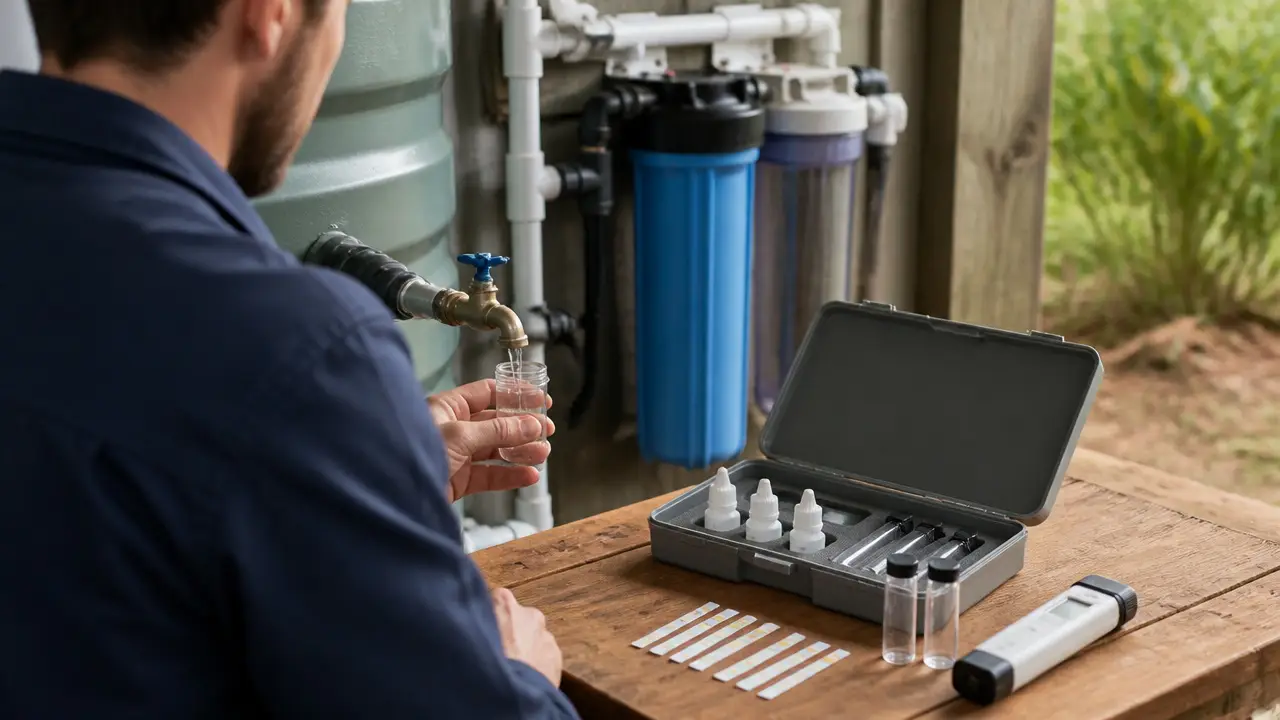
Water intended for drinking requires a whole-system approach. That can involve suitable collection surfaces, contamination control, prefiltration, appropriate treatment stages, current laboratory testing, routine maintenance, and compliance with applicable local requirements.
Do not rely on a spin-down filter alone for potable water.
Potable means water considered suitable for drinking. Non-potable water is water not intended for drinking, such as water used for many irrigation or outdoor cleaning applications.
Is a Spin-Down Filter Worth Adding to a Rain Barrel?
Sometimes.
If the barrel simply feeds a watering can or an unrestricted garden hose, a screen at the inlet and occasional barrel cleaning may be enough.
A spin-down filter becomes more useful when the barrel feeds:
- Drip irrigation
- A small pump
- Narrow valves
- Spray nozzles
- Another finer filter
Check whether gravity provides enough pressure. Every fitting and filter adds some resistance, so a very low-pressure rain barrel system can experience reduced flow through restrictive filters.
Is It Worth It for an IBC Tote or Cistern?
Often, yes, particularly when water is being pumped or sent through irrigation equipment.
Large storage tanks can collect fine sediment over time. Drawing water from slightly above the tank floor can reduce how much sediment enters the outlet, but it will not remove every suspended particle.
A spin-down filter provides an easy-to-service barrier between storage and the rest of the system.
It should still be combined with sensible tank maintenance rather than used as a way to avoid cleaning a badly contaminated tank.
The Bottom Line
A spin-down filter is worth it when sediment is likely to damage, clog, or shorten the life of equipment downstream.
It is especially useful before irrigation systems, pumps where appropriate, finer filters, and plumbing with small openings. Its reusable screen and simple flushing process make it practical for rainwater systems that regularly carry grit or tank sediment.
It is less useful for a very simple rain barrel system with no sensitive equipment.
Choose the filter based on the particle size you need to remove, required flow, pipe connections, operating pressure, and the equipment downstream. Treat it as a sediment-control stage, not as a complete water purifier.
Frequently Asked Questions
How often should I flush a spin-down filter?
Flush it when visible sediment accumulates or when flow begins to decrease. The required interval can range widely depending on how much sediment your rainwater system produces. Inspecting the clear bowl regularly is more useful than following an arbitrary schedule.
Should a spin-down filter go before or after a pump?
It depends on the pump and system design. A filter on the suction side must not restrict the pump's required inlet flow. Some systems are better filtered after the pump. Follow the pump manufacturer's plumbing requirements and make sure any downstream filter is rated for the system pressure.
What micron spin-down filter should I use for rainwater?
There is no single best micron rating for every system. Choose it according to the equipment you are protecting and any finer filtration that follows. A screen that is unnecessarily fine may clog quickly and restrict flow.
Can a spin-down filter stop algae?
It may catch pieces of algae large enough to be trapped by the screen, but it does not prevent algae growth in a rainwater tank. Limiting light entering the tank, maintaining screens and covers, and cleaning the storage system when needed are separate issues.
Can I use a spin-down filter for drip irrigation?
Yes, if its filtration level and flow capacity meet the requirements of your drip system. Small emitters can require finer filtration than some spin-down filters provide, so check the irrigation manufacturer's specifications.
Are spin-down filters better than cartridge filters?
Neither is always better. Spin-down filters are convenient for reusable coarse sediment removal. Cartridge filters are often better for finer particles. Using a spin-down filter ahead of a cartridge can be a useful two-stage setup.
Does a spin-down filter remove bacteria?
It should not be relied on for microbiological treatment. Its main purpose is sediment removal. Drinking-water treatment requires suitable treatment methods, testing, maintenance, and attention to the complete rainwater collection and storage system.