As an affiliate, we may earn a commission from qualifying purchases. We get commissions for purchases made through links on this website from Amazon and other third parties.
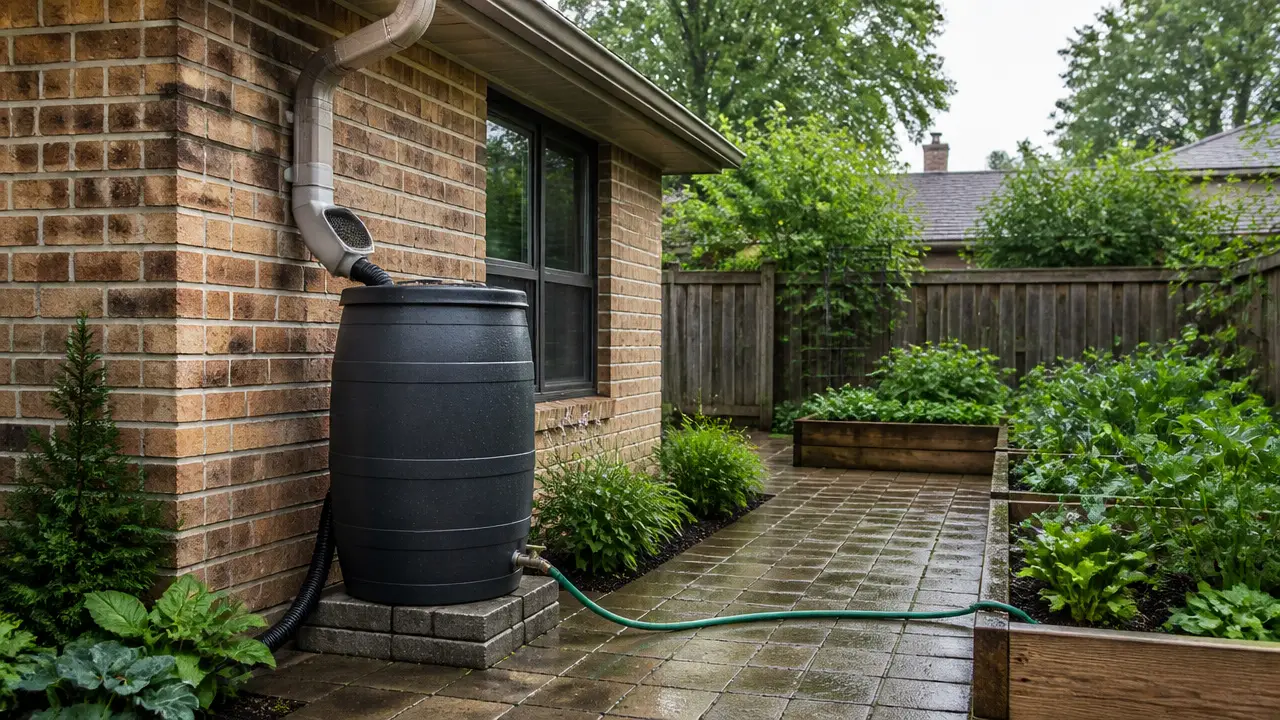
A water tank inlet is the opening or fitting where water enters a storage tank. In a rainwater harvesting system, the inlet usually connects the tank to a downpipe, collection pipe, or prefilter.
The inlet may look simple, but it affects how well the whole system works. It must be large enough for the incoming flow, sealed or screened correctly, and placed so water can enter without damaging the tank or letting insects and debris inside.
What Does a Water Tank Inlet Do?
The inlet gives collected water a controlled path into the tank.
In a basic rainwater system, the path may look like this:
Roof → gutter → downpipe → leaf screen or prefilter → tank inlet → storage tank
The inlet itself does not normally clean the water. Any leaf screens, first-flush devices, or filters are separate parts of the system.
A first-flush diverter is a device that sends the first portion of roof runoff away from the tank. This early runoff can carry more dust and debris from the roof.
The inlet's main jobs are to:
- direct water into the tank
- provide a secure pipe connection
- keep the opening protected from insects and larger debris
- handle the expected water flow
- help keep the tank closed to outside contamination
Some systems also use an inlet calming device inside the tank to reduce turbulence.
Where Is the Inlet Located?
Rainwater tank inlets are usually near the top of the tank.
This makes sense because the tank fills from the bottom upward while incoming water enters above the normal water level.
The exact location depends on the tank design.
Some tanks come with a molded inlet opening. Others have flat areas where an installer can add a fitting. Large cisterns may use inlet pipes installed through the tank wall or roof.
Do not drill a tank unless the tank manufacturer allows it. Cutting the wrong area can weaken the tank or cause leaks.
The inlet also needs to work with the tank's overflow.
The overflow is the outlet that allows excess water to leave once the tank is full. Its capacity should be able to handle incoming water without letting the tank become dangerously overfilled.
Common Types of Water Tank Inlets
There is no single inlet design for every tank.
Direct Pipe Inlet
A direct inlet connects a downpipe or supply pipe straight to the tank.
This is common on simple rain barrel and rainwater tank systems.
The connection may use:
- threaded fittings
- rubber seals
- flexible couplings
- pipe adapters
- tank fittings
The pipe and fitting sizes need to match.
Screened Inlet
A screened inlet includes mesh that keeps larger debris and insects from entering the tank.
Screening is especially useful for rainwater storage because open tank holes can allow mosquitoes and other pests inside.
A screen should not be treated as a water purification device. Fine contaminants and microorganisms can still pass through.
Screens also need cleaning. Leaves and debris can block them and cause water to back up during heavy rain.
Basket or Strainer Inlet
Some tank openings use a removable basket or strainer.
The basket catches leaves and other larger material before it enters the tank. It can usually be removed for cleaning.
A clogged basket can greatly reduce flow, so it should be inspected regularly.
Calmed Inlet
A calmed inlet carries incoming water toward the lower part of a tank and releases it more gently.
The goal is to reduce disturbance of sediment that may have settled at the bottom.
Calmed inlets are more common in larger or more carefully designed rainwater harvesting systems than in small rain barrels.
What Is a Tank Inlet Fitting?
A tank inlet fitting creates a secure connection where a pipe passes through the tank wall.
One common type is a bulkhead fitting.
A bulkhead fitting passes through a hole in the tank and uses seals and threaded parts to create a connection on both sides of the tank wall.
The fitting must match:
- the tank material
- the hole size
- the pipe size
- the type of pipe connection
- the manufacturer's installation requirements
A fitting that is almost the right size is not good enough. Poorly matched fittings can leak or damage the tank wall.
How Large Should a Water Tank Inlet Be?
The inlet must be large enough to handle the amount of water arriving from the roof or other source.
A small rain barrel fed by one downspout may need a different setup from a large cistern collecting water from an entire roof.
Important factors include:
- roof collection area
- rainfall intensity
- gutter and downpipe capacity
- number of pipes entering the tank
- filter capacity
- inlet pipe diameter
- overflow capacity
A large tank does not automatically need a large inlet just because the tank holds more water. The required inlet capacity depends mainly on how fast water can arrive.
For example, a large roof during a hard storm can send water toward the tank much faster than a small shed roof.
The entire flow path matters. Installing a large tank opening will not help much if a small pipe or clogged filter restricts the water before it reaches the tank.
Why Inlet Size and Flow Matter
An inlet that cannot accept water as quickly as it arrives may cause water to back up.
That can lead to:
- overflowing gutters
- water spilling around filters
- water escaping at pipe joints
- lost rainwater
- unwanted water near foundations or structures
The narrowest part of the system often limits the flow.
For example, a system might have a large tank inlet but a much smaller pipe upstream. In that case, the smaller pipe may still control how much water reaches the tank.
Filters and screens can also become major restrictions when dirty.
Should the Tank Inlet Be Screened?
For outdoor rainwater tanks, protected inlet openings are generally a good design feature.
Openings can allow:
- mosquitoes
- insects
- leaves
- rodents or other pests
- windblown debris
to enter the tank.
Use screening or other inlet protection suited to the system and local requirements.
The screen must still allow enough water to pass during rain. Very fine mesh may clog faster than coarse mesh.
Inspection is important because even a properly sized screen can become blocked by leaves, roof grit, pollen, or organic material.
The Inlet Is Not the Same as the Overflow
Details about practical steps for stoping a rainwater tank from overflowing help assess the storage-vessel configuration for the installation area.
The inlet and overflow perform different jobs.
| Part | Purpose |
|---|---|
| Inlet | Brings water into the tank |
| Overflow | Lets excess water leave a full tank |
| Outlet | Supplies stored water to a pump, tap, or irrigation line |
| Drain | Allows the tank to be emptied or cleaned |
A tank normally needs both a suitable inlet and a suitable overflow.
The overflow should send water somewhere that will not cause erosion, flooding, foundation problems, or other damage.
Do not assume a small overflow is safe because the inlet is small. System capacity should be considered as a whole.
The Inlet Is Not a Filter
A tank inlet may contain a screen or basket, but that does not mean it makes rainwater clean or safe to drink.
Different treatment stages do different jobs.
For example, a rainwater system might use:
- gutter protection
- a debris screen
- a first-flush device
- tank inlet screening
- storage
- additional filtration or treatment for the intended use
The necessary stages depend on what the water will be used for.
Water used for garden irrigation does not usually have the same treatment needs as water intended for drinking.
Roof-collected rainwater should not be assumed to be potable.
Potable means suitable for drinking.
Using rainwater for drinking requires a whole-system approach. Collection surfaces, contamination risks, prefiltration, treatment, storage conditions, current laboratory testing, maintenance, and local requirements all matter. A single inlet screen or filter cannot establish that the water is safe to drink.
What Should Connect to a Tank Inlet?
The exact connection depends on the system.
A typical rainwater tank inlet may receive water from:
- a roof downpipe
- a wet-system collection pipe
- a transfer pipe from another tank
- a prefilter
- a first-flush system
- another approved water source
The connection should not place unnecessary weight or force on the tank wall.
Long or heavy pipes may need their own support. The tank fitting should not be expected to carry the weight of an unsupported pipe run.
Flexible connections may also be useful where tank movement or ground movement is possible, but the connection method should be suitable for the tank and pipe materials.
Inlet Placement on Connected Tanks
Multiple tanks are sometimes connected to increase storage capacity.
Water can be distributed between tanks in several ways, so the best inlet arrangement depends on the plumbing design.
For example, tanks connected near their bottoms may gradually equalize their water levels. Other systems fill one tank first and then send water to another.
Do not assume that adding several tanks automatically gives each tank equal flow.
Pipe diameter, elevation, fitting size, tank position, and connection layout can all affect how water moves.
Common Water Tank Inlet Problems
Most inlet problems are caused by blockage, poor sizing, or bad connections.
Water Backs Up During Heavy Rain
Possible causes include:
- clogged screen
- blocked filter
- undersized pipe
- undersized inlet
- poor pipe slope
- restriction at an adapter or fitting
Start by checking accessible screens and filters.
Water Leaks Around the Inlet
Possible causes include:
- damaged gasket
- loose fitting
- incorrect hole size
- incompatible fitting
- cracked tank wall
- pipe movement pulling on the fitting
Do not keep tightening a plastic fitting in an attempt to stop every leak. Excessive force can damage fittings or the tank wall.
Leaves Build Up at the Opening
The upstream debris protection may be inadequate, or the inlet screen may simply need more frequent cleaning.
Removing debris before it reaches the tank is generally easier than removing it from inside the tank.
Mosquitoes Enter the Tank
Inspect all openings, not just the inlet.
Mosquitoes may enter through:
- damaged inlet screens
- overflow pipes
- vents
- loose lids
- unused openings
Protecting only the inlet may not solve the problem.
How to Maintain a Water Tank Inlet
Inlet maintenance is usually simple but important.
Inspect the inlet periodically and after storms that carry a lot of leaves or debris.
Check for:
- blocked mesh
- damaged screens
- loose fittings
- leaking seals
- cracked fittings
- pipe movement
- debris around strainers
- signs of insect access
Also inspect the upstream gutters, downpipes, filters, and first-flush components. A clean tank inlet cannot compensate for a badly clogged collection system.
Keep tank lids and access covers secured after inspection.
When a DIY Inlet Installation May Not Be Simple
Connecting a small rain barrel can be a straightforward project. Altering a large tank can be different.
Get qualified help when the job involves:
- cutting a tank where the manufacturer has not approved drilling
- large or buried cisterns
- excavation
- structural supports
- pressurized plumbing
- household plumbing connections
- electrical pumps or controls near water
- drinking-water systems
- uncertain local plumbing or rainwater rules
Large water tanks are also extremely heavy when full. Water weighs about 8.34 pounds per US gallon, or about 1 kilogram per liter. The tank needs a base and location suited to the filled load.
The inlet is only one small part of that larger system.
Frequently Asked Questions
What is the inlet on a water tank?
The inlet is the opening or fitting that allows water to enter the tank. In a rainwater system, it usually receives water from a downpipe, filter, or collection pipe.
Is a tank inlet the same as a tank outlet?
No. The inlet brings water into the tank. The outlet allows stored water to leave for irrigation, pumping, or another intended use.
Does a rainwater tank inlet need a screen?
Outdoor rainwater tank openings are generally better protected with suitable screening or another barrier against insects and debris. The screen must also allow enough water to pass and should be kept clean.
Can a water tank have more than one inlet?
Yes. Some tanks have several inlet openings or receive water from more than one collection line. The tank and plumbing must be designed to handle the combined flow.
Can I drill a new inlet hole in a plastic water tank?
Only if the tank manufacturer allows it and identifies a suitable location and fitting method. Drilling the wrong place can damage or weaken the tank.
How do I know if my tank inlet is too small?
Water backing up or spilling during heavy rain can be a sign of a restriction. Check the entire path, including screens, filters, pipes, adapters, and the inlet itself before assuming the inlet opening is the problem.
Does an inlet filter make rainwater safe to drink?
No. An inlet screen or filter may remove some debris, but it cannot establish that roof-collected rainwater is potable. Drinking-water use requires suitable collection, treatment, testing, maintenance, and compliance with applicable local requirements.