As an affiliate, we may earn a commission from qualifying purchases. We get commissions for purchases made through links on this website from Amazon and other third parties.
The water tanks that last the longest are usually well-built concrete, stainless steel, and fiberglass tanks. There is no single material that always lasts longest. Installation, water chemistry, sunlight, soil conditions, corrosion, and maintenance can matter as much as the tank material itself.
For a permanent large cistern, reinforced concrete can provide very long service when it is designed and installed correctly. Stainless steel can also last for decades when the correct metal grade is used for the water and environment. Fiberglass is another durable choice and has a long record in rainwater storage. Polyethylene tanks can also provide many years of service, but they depend more heavily on UV protection, proper support, and correct installation.
Which Water Tank Materials Last the Longest?
Here is a practical comparison.
| Tank material | Expected durability | Main strengths | Main things that shorten its life |
|---|---|---|---|
| Reinforced concrete | Very long | Strong, good for large and buried tanks, repairable | Cracking, movement, poor construction |
| Stainless steel | Very long | Corrosion resistant, strong, does not degrade from sunlight like plastic | Wrong steel grade, chloride exposure, poor welds |
| Fiberglass | Long | Corrosion resistant, lightweight compared with concrete | UV damage, damaged surface coating, impact |
| Polyethylene | Long with proper installation | No rust, lightweight, common for rainwater | UV exposure, poor base support, stress around fittings |
| Coated or galvanized steel | Moderate to long | Strong, available in large sizes | Corrosion, damaged coatings or liners |
| Wood | Variable | Can hold large volumes | Decay, leaks, maintenance needs |
These are general rankings rather than guaranteed lifespans. Even two tanks made from the same material can age very differently.
Concrete Tanks Are Often Among the Longest-Lasting
A properly designed reinforced concrete cistern is one of the strongest choices for a permanent rainwater system.
Concrete works especially well for:
- Large-capacity storage
- Underground cisterns
- Installations where the tank will remain in one location
- Systems where structural strength is important
Concrete does not suffer from ultraviolet, or UV, damage the way exposed plastic materials can. Its weight also helps underground tanks resist movement.
The main concern is cracking. Soil movement, poor reinforcement, poor construction, or an unsuitable foundation can eventually produce cracks and leaks. The Texas Water Development Board's rainwater harvesting guidance notes both the risk of cracking and the ability to repair concrete tanks.
Concrete tanks are therefore not automatically long-lived simply because they are concrete. Construction quality matters.
A badly built concrete cistern can leak early. A properly engineered one can remain useful for decades.
Concrete makes the most sense when permanence matters
Concrete is less attractive when you expect to move or change the system later. Once a large concrete cistern is installed, relocating it can be difficult.
For a simple garden system or small household rainwater setup, that extra strength may not be necessary.
Stainless Steel Can Last a Very Long Time
Stainless steel is another strong choice when long service life is the main goal.
Unlike ordinary steel, stainless steel contains alloys that help it resist corrosion. However, "stainless" does not mean that corrosion is impossible.
Its durability depends on factors such as:
- Stainless steel grade
- Water chemistry
- Salt or chloride exposure
- Quality of welds
- Contact with other metals
- Location of the tank
This matters near coastlines or anywhere the tank may be exposed to salty conditions.
Stainless steel is often attractive for above-ground storage because it combines structural strength with good corrosion resistance. It also does not rely on UV stabilizers to survive sunlight.
However, using stainless steel does not remove the need for inspection. Fittings, welds, seals, pipes, and connections can still fail before the tank shell does.
Fiberglass Tanks Can Last for Decades
Fiberglass tanks are made from reinforcing fibers held inside a resin material. You may also see them called FRP tanks, meaning fiber-reinforced plastic.
Fiberglass has several useful properties for long-term water storage:
- It does not rust.
- It can resist many types of water chemistry.
- It is lighter than concrete.
- Damage can sometimes be repaired.
- Some fiberglass tanks are made specifically for underground use.
The Texas rainwater harvesting manual notes that fiberglass tanks can last for decades without deterioration and can be repaired when needed.
The surface still needs protection. Long exposure to sunlight can damage some resin systems if the protective exterior layer is unsuitable or deteriorates.
If you are buying fiberglass for underground use, make sure the specific tank is designed for burial. Being made from fiberglass alone does not mean it can safely carry soil loads.
How Long Do Polyethylene Water Tanks Last?
Polyethylene, often called poly, is one of the most common materials for residential rainwater tanks.
Poly tanks are popular because they are:
- Lightweight
- Resistant to rust
- Easy to transport
- Available in many shapes and capacities
- Simple to connect to garden and irrigation systems
A good poly tank can provide long service, but installation has a major effect on its life.
The tank should be made for water storage and installed according to its manufacturer's support requirements. Uneven support can cause the tank body to flex as thousands of pounds of water move through it.
Sunlight is another concern. Outdoor polyethylene tanks normally use UV stabilizers to slow degradation from sunlight. An outdoor tank should be designed for outdoor exposure rather than being a general-purpose plastic container.
Some technical life-cycle studies have modeled HDPE water-storage components with service periods measured in decades, but that should not be treated as a guaranteed lifespan for every residential tank.
Watch the fittings as well as the tank
The tank wall may not be the first part to develop a problem.
Leaks often appear around:
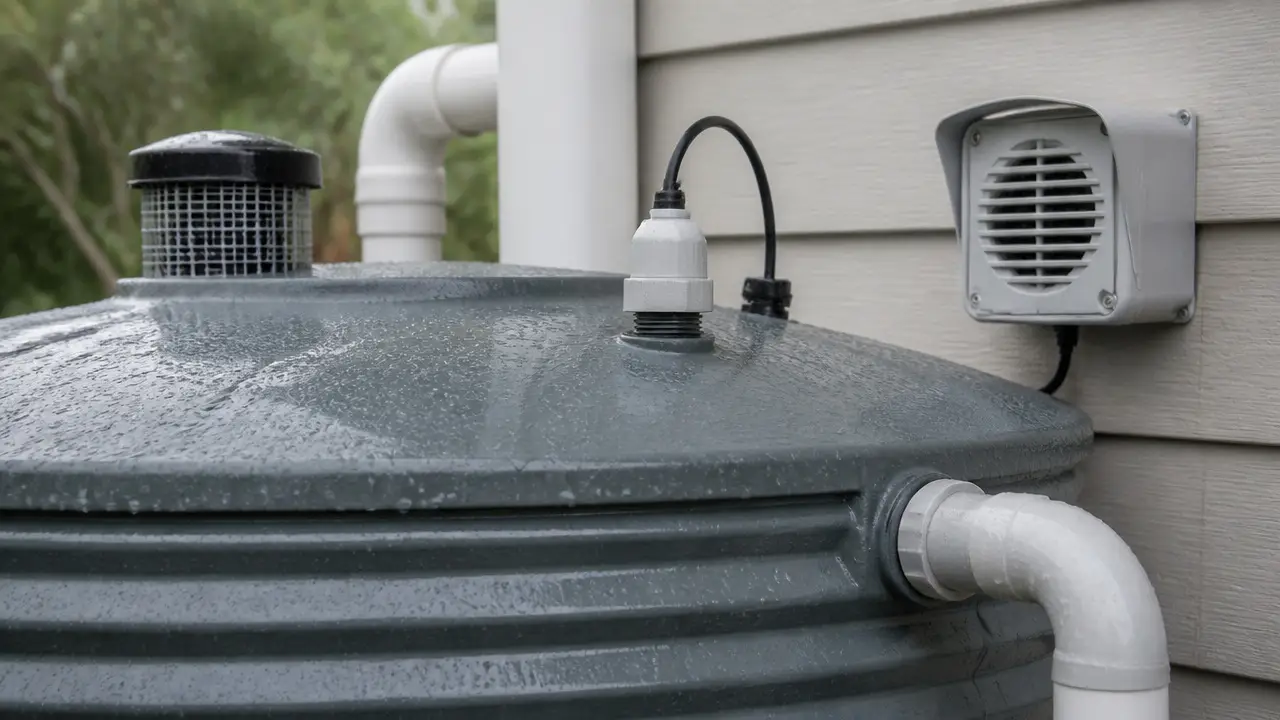
- Outlet fittings
- Bulkhead fittings
- Overflow connections
- Valves
- Pumps and suction pipes
A bulkhead fitting is a fitting that passes through the tank wall and creates a sealed pipe connection.
Putting heavy pipes, pumps, or valves directly onto an unsupported fitting can place extra stress on the tank wall. Supporting the plumbing separately helps reduce that load.
What About Galvanized and Coated Steel Tanks?
Steel tanks can last a long time, but corrosion protection is critical.
Common designs include:
- Galvanized steel
- Corrugated steel with a liner
- Coated steel
- Bolted steel tanks
Galvanizing adds a zinc coating that protects the underlying steel. Other systems isolate the water from the metal using an internal liner.
Once protective coatings or liners become damaged, corrosion can become a bigger concern.
The Philadelphia Water Department's cistern guidance specifically warns against non-galvanized steel and other materials prone to environmental corrosion or decay.
That does not mean all steel tanks have short lives. It means the protective system is part of the tank.
A steel shell with a liner should be thought of as a complete system. The liner, fasteners, roof, seals, and corrosion protection all need inspection.
The Tank Material Is Only Half the Story
Choosing a durable material helps, but several installation mistakes can shorten the life of almost any tank.
1. Poor foundation support
Water is heavy.
A full tank places a large load on its base. If the foundation settles unevenly, the tank can twist or concentrate loads in places it was not designed to carry them.
Poly and fiberglass tanks may deform. Concrete tanks may crack. Steel tanks may shift or strain connections.
Follow the tank manufacturer's foundation requirements rather than assuming gravel, soil, blocks, or a small concrete pad will work.
2. Using an above-ground tank underground
A tank that works perfectly beside a house may collapse when buried.
Buried tanks must withstand:
- Soil pressure
- Groundwater forces
- Loads from the surface
- Changes as the water level rises and falls
Only bury a tank that is specifically designed for that installation.
Alongside key facts about the typical lifespan of a water tank, evaluate vessel construction compatible with the expected water use.
Public rainwater guidance recognizes both concrete and purpose-built prefabricated tanks for subsurface cistern installations.
3. Too much sunlight
Sunlight matters most with plastic and some fiberglass materials.
Choose an outdoor-rated tank and follow any requirements for UV protection.
An opaque tank also helps limit light entering the stored water. Philadelphia's cistern guidance requires storage to be opaque or otherwise protected from light to limit algae growth.
4. Corrosion
Corrosion is mainly a concern for metal tanks, fittings, fasteners, and plumbing.
The environment matters. Salt exposure, water chemistry, damaged coatings, and contact between unsuitable metals can all change the corrosion rate.
5. Sediment buildup
Roof runoff carries dirt and organic material into the system.
Reducing that material before it reaches the tank makes maintenance easier. Useful components can include:
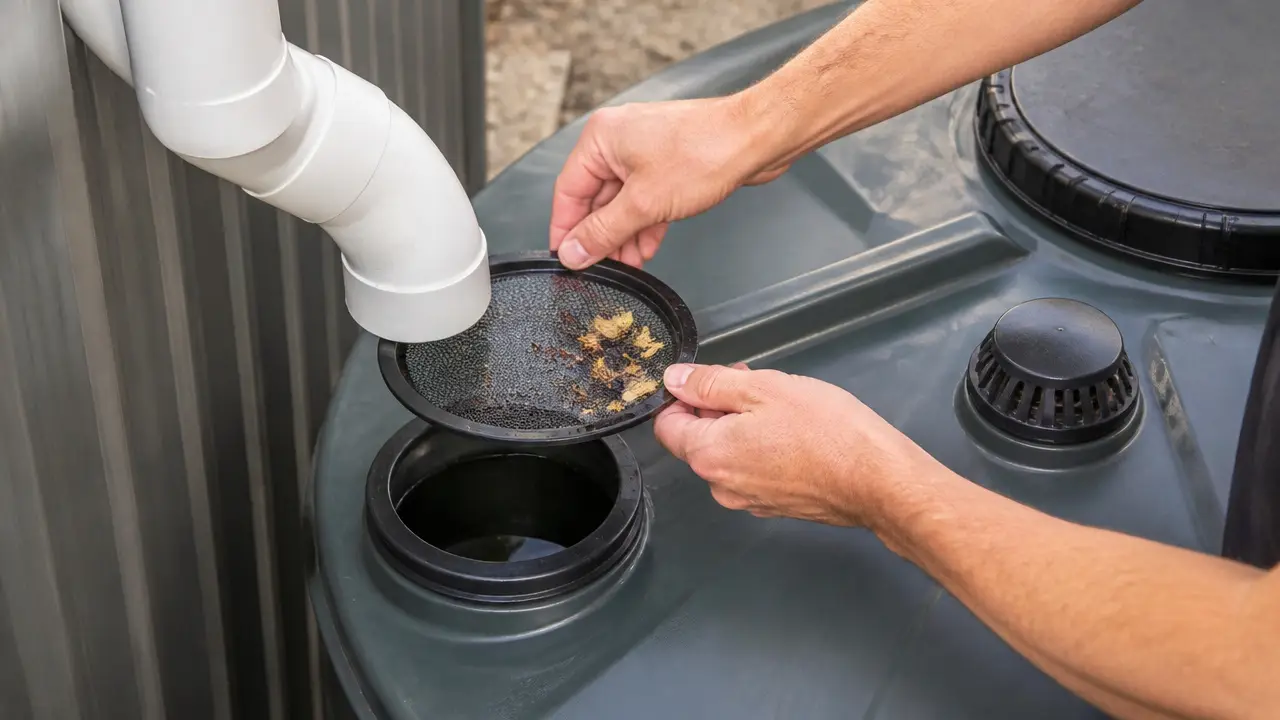
- Gutter screens
- Leaf screens
- Inlet screens
- First-flush diverters
A first-flush diverter sends the first portion of runoff from a storm away from the tank. That first runoff often carries more dirt and contamination from the roof.
The U.S. Department of Energy recommends regular inspection of rainwater storage tanks and maintenance of inlet filters and first-flush components.
Keeping sediment under control does not guarantee that the tank will last longer, but it can make inspection, cleaning, and water-quality management much easier.
Which Tank Should You Choose for Rainwater?
For most homeowners, the longest-lasting tank is not necessarily the best tank.
The better question is:
Which durable tank fits the location, capacity, water use, and installation conditions?
For a small or medium above-ground system
A quality outdoor-rated polyethylene tank is often practical.
It is easier to move and install than concrete and usually does not require the structural work associated with a large permanent cistern.
For a large permanent cistern
Concrete becomes more attractive.
It works especially well when substantial capacity or underground placement is needed and professional installation is practical.
For long-lasting above-ground storage
Stainless steel or well-made fiberglass can be strong choices.
Check that the tank material, fittings, and construction are suitable for the water being stored and the surrounding environment.
For underground storage
Start with the installation rating, not just the material.
Concrete and purpose-built underground fiberglass or plastic tanks can all work. The tank must be designed for the soil and loading conditions it will face.
Does a Drinking-Water Tank Need to Be Different?
If the rainwater will only supply ornamental garden irrigation, the requirements are very different from a system supplying drinking water.
Potable means suitable for drinking.
For potable use, choose a tank and all water-contact materials that are specifically suitable for that purpose and meet the applicable requirements where you live.
But a potable-rated tank does not make collected rainwater safe to drink.
Roof runoff can contain germs and chemicals from the air, roof, gutters, animals, piping, and storage system. The CDC advises regular testing when rainwater is used for drinking, cooking, or bathing and recommends choosing treatment based on the contaminants that are actually present.
Drinking-water use should be treated as a complete system involving suitable collection surfaces, debris control, prefiltration, treatment, current laboratory testing, maintenance, and local requirements.
How to Help Any Water Tank Last Longer
Regardless of material, a few decisions make a large difference.
- Install the tank on the foundation specified for it.
- Keep unsupported plumbing loads off the tank wall.
- Use flexible connections where the tank maker calls for them.
- Keep inlet screens and prefilters clean.
- Make sure the overflow can discharge freely.
- Prevent sunlight from entering the stored water.
- Check periodically for cracks, bulges, corrosion, damaged coatings, and leaks.
- Protect exposed plumbing from freezing where needed.
- Do not bury a tank unless it is rated for burial.
- Keep vehicles and other heavy loads away from buried tanks unless the installation is engineered for those loads.
The Department of Energy recommends routine inspection for tank cracks and leakage as part of rainwater harvesting system maintenance.
So, Which Water Tank Lasts the Longest?
For a permanent water-storage system, reinforced concrete, stainless steel, and fiberglass are generally among the longest-lasting choices.
There is no universal winner.
Concrete is especially suited to large permanent and underground cisterns. Stainless steel provides excellent durability for many above-ground installations when the correct grade is used. Fiberglass combines corrosion resistance with relatively low weight and can remain serviceable for decades. Polyethylene provides a simpler option for many residential rainwater systems and can also last a long time when properly supported and protected.
The best long-term choice is the tank that matches its actual environment. A correctly installed poly tank may outlast a poorly built concrete cistern, and a properly protected steel tank may outlast one exposed to severe corrosion.
Choose the tank based on where it will sit, whether it will be buried, how much water it will hold, what the water will be used for, and how easily you can inspect and maintain it.
Frequently Asked Questions
What type of water tank usually lasts the longest?
Reinforced concrete, stainless steel, and fiberglass are generally among the longest-lasting tank materials. The actual service life depends heavily on construction quality, installation, water chemistry, sunlight, corrosion, and maintenance.
Do concrete tanks last longer than plastic tanks?
Concrete can provide a very long service life, especially in large permanent installations. However, it can crack if the foundation moves or construction is poor. A properly installed polyethylene tank can also remain useful for many years.
How long does a polyethylene water tank last?
There is no dependable lifespan that applies to every polyethylene tank. UV exposure, wall thickness, resin quality, temperature, foundation support, fittings, and installation all affect its life. Follow the specific manufacturer's installation and inspection guidance.
Can stainless steel water tanks rust?
Yes. Stainless steel is highly corrosion resistant, but it is not completely immune to corrosion. The steel grade, water chemistry, chloride exposure, welding, and surrounding environment all matter.
Are fiberglass water tanks durable?
Yes. Fiberglass can be very durable and does not rust. Official rainwater guidance has noted that fiberglass tanks can last for decades. Surface damage, UV exposure, and unsuitable installation can still shorten their life.
Does burying a water tank make it last longer?
Not automatically. Burial protects a tank from sunlight and some weather, but it adds soil and groundwater loads. Only tanks specifically designed for underground installation should be buried.
Is a long-lasting tank automatically safe for drinking water?
No. Tank durability and drinking-water safety are separate issues. The tank and other water-contact materials must be suitable for potable use, and the rainwater system still requires appropriate collection, treatment, testing, and maintenance. The CDC notes that rainwater can contain harmful germs and chemicals even when it looks clean.