As an affiliate, we may earn a commission from qualifying purchases. We get commissions for purchases made through links on this website from Amazon and other third parties.
Outside faucet covers can help keep outdoor faucets from freezing, but they are not a complete freeze-protection system. They work best during short, moderate cold snaps when the faucet and nearby pipe already receive some warmth from the house.
A cover slows heat loss and blocks cold wind. It does not create heat. During long periods of severe cold, water inside the faucet or pipe can still freeze.
For better protection, disconnect hoses, drain exposed plumbing when possible, close an indoor shutoff valve if your system has one, and use the faucet cover as an extra layer rather than the only safeguard.
How Outside Faucet Covers Work
Most outdoor faucet covers are made from foam, insulated fabric, or a combination of insulating materials.
They fit over the faucet and form a barrier between the plumbing and cold outdoor air.
A cover can help in two ways:
- It slows the movement of heat away from the faucet.
- It reduces direct exposure to cold wind.
This matters because an outside faucet is often connected to plumbing that passes through a warmer wall or basement. A cover may help hold some of that heat around the faucet.
However, the amount of protection depends on the weather and the plumbing layout.
When Faucet Covers Are Most Useful
Faucet covers tend to be most helpful when temperatures dip below freezing for a limited time.
They may provide useful extra protection for:
- ordinary hose bibs on an exterior wall
- faucets connected to plumbing inside a heated building
- short overnight freezes
- windy conditions that increase heat loss
- faucets that cannot easily be drained
A snug cover is generally more useful than leaving the faucet fully exposed.
Still, think of the cover as insulation, not as a heater.
When a Faucet Cover May Not Be Enough
A cover becomes less reliable when freezing conditions last for many hours or several days.
Risk increases when:
- the pipe behind the faucet runs through an unheated crawlspace
- plumbing is inside a poorly insulated exterior wall
- temperatures remain well below freezing
- the building is vacant or unheated
- the faucet or pipe already contains trapped water
- cold air can enter around wall penetrations
In these conditions, insulating only the faucet does not address the rest of the plumbing.
The vulnerable section may actually be several inches or several feet behind the faucet.
Disconnect the Garden Hose First
Removing the hose is one of the most important steps before freezing weather.
Do not install a faucet cover over a faucet that still has a hose attached.
A connected hose can trap water inside the faucet. That trapped water may freeze and expand.
This is especially important with frost-free outdoor faucets.
A frost-free faucet is designed so its shutoff point sits farther inside the building, where temperatures are usually warmer. When you close the faucet, water in the outer section should drain.
But it can only drain properly if nothing blocks the outlet.
A hose, splitter, timer, spray nozzle, or irrigation connection may hold water in the faucet and defeat much of the frost-free design.
Remove these attachments before freezing weather unless the plumbing system was specifically designed to remain connected during winter.
What to Do Before a Freeze
For a typical outdoor faucet, a simple preparation routine works better than relying on the cover alone.
1. Remove hoses and accessories
Disconnect:
- garden hoses
- irrigation timers
- hose splitters
- spray nozzles
- pressure regulators
- quick-connect fittings
Drain the accessories before storing them if freezing could damage them.
2. Close the outdoor faucet
Make sure the valve is fully closed without forcing the handle.
3. Use an indoor shutoff valve if available
Some homes have a separate valve that controls the outdoor faucet.
If your plumbing was designed for seasonal shutdown, you may be able to close this valve and drain the pipe leading outside.
The exact procedure depends on the plumbing layout. Do not assume every outdoor faucet has a drainable shutoff arrangement.
4. Drain trapped water when the system allows it
If your outdoor line has a proper shutoff and drain valve, draining the exposed section greatly reduces freeze risk.
Water that is not in the pipe cannot freeze and expand inside it.
5. Install the faucet cover
Place the cover firmly against the wall.
Try to avoid large gaps that allow cold air to move freely around the faucet.
Follow the cover manufacturer's installation instructions, especially for straps, loops, or tension mechanisms.
Foam Covers vs. Insulated Fabric Covers
Both types can work.
Rigid foam covers usually form a shell around the faucet. Many use a hook or loop that attaches to the faucet and pulls the cover against the wall.
Fabric covers usually contain insulation inside a weather-resistant outer layer. They may fit unusual faucet shapes more easily.
The exact material matters less than whether the cover:
- completely surrounds the faucet
- stays securely attached
- fits tightly against the wall
- stays reasonably dry
- remains intact through the cold period
A loose cover that blows away during the night provides no protection.
Do Faucet Covers Prevent Frozen Pipes?
Not necessarily.
A faucet cover protects only a small area.
Regarding freeze protection for outdoor faucets, assess protection for exposed components in cold-weather service.
The pipe feeding the faucet may freeze somewhere else, including inside:
- an exterior wall
- a crawlspace
- a garage
- an unheated utility area
- a cabinet against an outside wall
If a pipe regularly freezes despite using a faucet cover, the problem may require better pipe insulation, air sealing, plumbing changes, or professional evaluation.
Repeated freezing should not be treated as a normal winter maintenance issue.
What About Frost-Free Outdoor Faucets?
Frost-free faucets can reduce freeze risk when they are installed correctly and used correctly.
Their shutoff valve sits farther inside the building than a standard hose bib. The section toward the outside is supposed to drain after the faucet is closed.
Several things can interfere with that drainage.
A connected hose is a common problem. Incorrect installation can also leave water sitting in the barrel of the faucet.
For example, some frost-free designs need a slight downward slope toward the outside so water can drain.
A faucet cover can still provide extra insulation, but it should not be used to compensate for a frost-free faucet that does not drain properly.
Can You Leave a Faucet Cover on All Winter?
Usually, yes, if the faucet will not be used and the cover is designed for outdoor exposure.
Check it occasionally.
Make sure it has not:
- fallen off
- become damaged
- filled with water
- pulled away from the wall
- been disturbed by animals or wind
If you use the faucet during winter, reinstall the cover afterward when freezing weather is possible.
Also remember to disconnect the hose again.
What If the Faucet Is Connected to a Rainwater System?
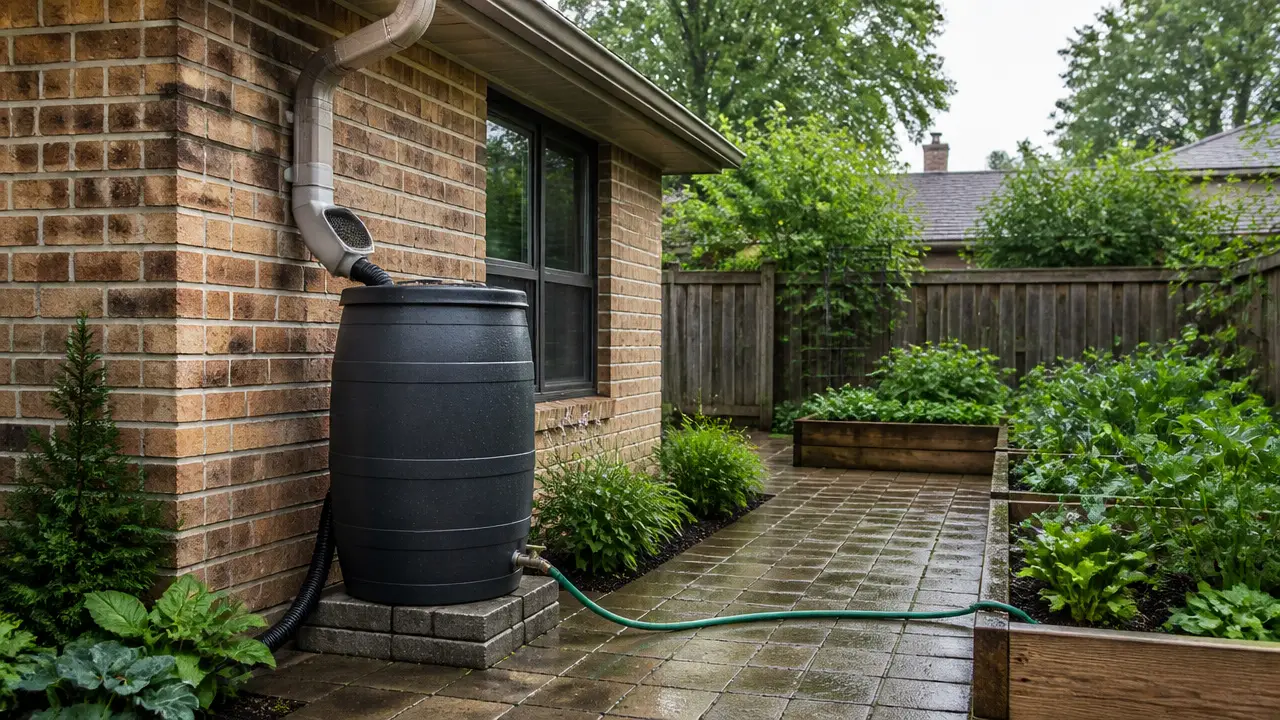
Outdoor faucets are often used with rain barrels, IBC totes, cisterns, pumps, or garden irrigation systems.
In those systems, protecting the faucet alone may leave many other parts exposed.
Water may remain inside:
- valves
- hoses
- pumps
- filters
- pressure regulators
- irrigation manifolds
- bulkhead fittings
- above-ground pipes
A bulkhead fitting is the fitting that passes through the wall of a tank and creates a connection point for plumbing.
Freezing water can damage valves, fittings, filter housings, pumps, and storage tanks as well as faucets.
If a rainwater system is not designed to operate through freezing weather, winter preparation may involve draining exposed plumbing and protecting equipment according to its manufacturer's instructions.
Large tanks are a separate issue. Whether a tank must be drained depends on its design, material, fill level, local climate, and installation. Do not assume that placing insulation around the outlet makes the entire system freeze-safe.
Should You Drip an Outside Faucet?
Do not automatically leave an outdoor faucet dripping simply because freezing weather is expected.
Keeping water moving can sometimes reduce freezing in certain household plumbing situations, but outdoor faucets are often designed to be shut off and drained instead.
Leaving an outside faucet running can also create ice around the building and may not protect upstream plumbing.
If your home has a known freeze problem and you are considering continuous water flow as a precaution, follow guidance appropriate to your specific plumbing system or have a plumber inspect it.
Signs an Outdoor Faucet May Have Frozen
A frozen faucet may produce little or no water when you open it.
Other possible signs include:
- unusually low flow
- visible frost on plumbing
- a cracked faucet body
- water appearing inside the wall after thawing
- damp drywall or flooring
- unexpected water sounds
A frozen pipe does not always leak while it is frozen. A split can become obvious only after the ice melts and normal water pressure returns.
If you suspect a pipe has cracked, shut off the appropriate water supply if you can do so safely and contact a plumber.
Avoid using open flames or other high-heat methods to thaw plumbing.
Are Faucet Covers Worth Using?
For most homes in climates that occasionally freeze, they are a simple additional layer of protection.
Their main limitation is important to understand: they slow heat loss rather than stop freezing indefinitely.
A good winter approach is usually:
- Disconnect hoses and accessories.
- Shut off and drain the outdoor line if your plumbing provides that option.
- Make sure frost-free faucets can drain correctly.
- Protect vulnerable indoor or crawlspace piping.
- Add a properly fitted outdoor faucet cover.
That combination is much more dependable than expecting a foam or fabric cover to protect water-filled plumbing through every winter condition.
Frequently Asked Questions
At what temperature should I cover outside faucets?
Install covers before temperatures are expected to remain at or below freezing. Do not wait until the faucet has already frozen. The amount of protection needed depends on how cold it gets, how long the freeze lasts, and where the pipe runs.
Do foam faucet covers actually make a difference?
Yes. Foam slows heat loss and can help keep the faucet warmer than it would be when fully exposed. It cannot guarantee that the faucet or connected pipe will stay above freezing during prolonged severe cold.
Can I put a faucet cover over a garden hose?
You should normally disconnect the hose first. A hose can trap water inside the faucet and prevent proper drainage, particularly with frost-free faucets.
Do frost-free faucets need covers?
They may not require a cover in every climate, but a cover can provide additional protection. Correct installation and proper drainage are more important. Always remove hoses and attachments before freezing weather unless your system is specifically designed otherwise.
Can pipes still freeze with a faucet cover installed?
Yes. The pipe may freeze inside a wall, crawlspace, garage, or another unheated location. A cover only insulates the faucet and the small area immediately around it.
Should I shut off the water to my outside faucet in winter?
If your plumbing has a dedicated indoor shutoff and is designed to be drained for winter, shutting it off and draining the outdoor section can provide much better protection. Plumbing layouts vary, so use the procedure appropriate for your home.
Can I use a faucet cover on a rain barrel or cistern outlet?
It may provide limited insulation around the valve, but it will not protect the entire rainwater system. Exposed valves, filters, pumps, hoses, and pipes may also need to be drained or otherwise protected from freezing.