As an affiliate, we may earn a commission from qualifying purchases. We get commissions for purchases made through links on this website from Amazon and other third parties.
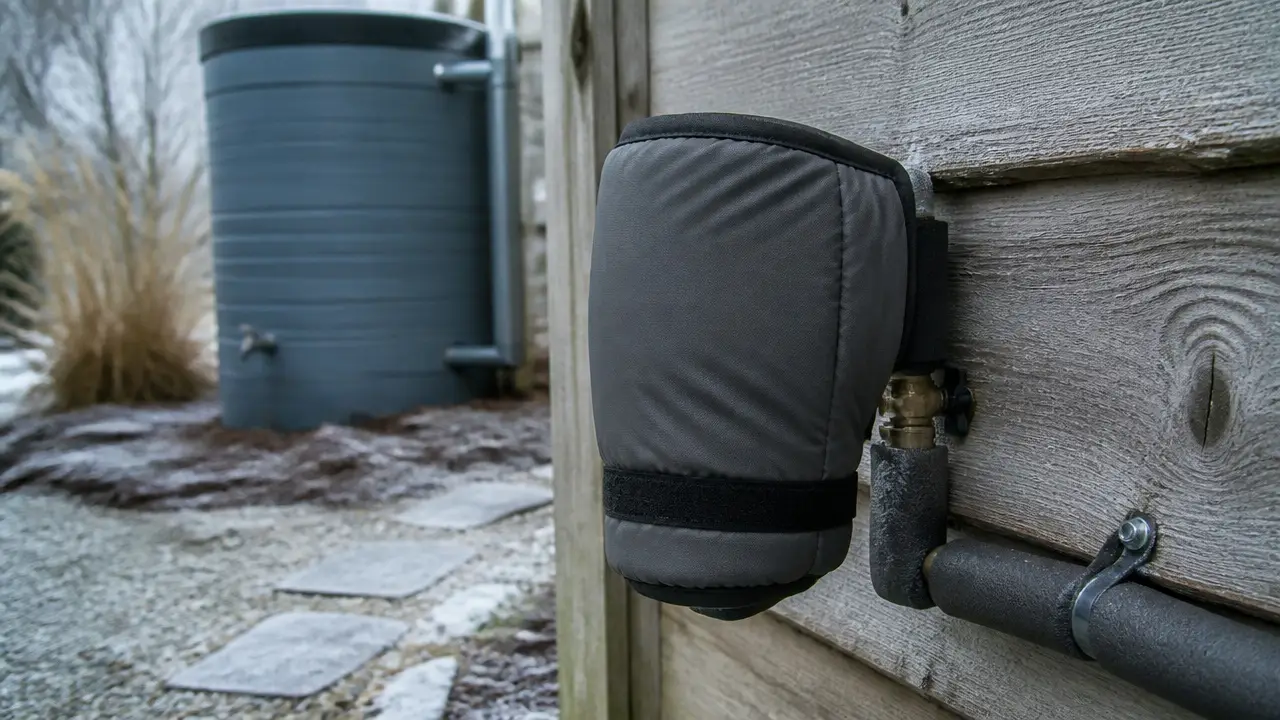
Outdoor faucets are easy to protect with simple homemade covers. The main goal is to slow heat loss and block cold wind around the faucet and pipe opening.
A homemade cover can help during light or short freezes. It should not be your only freeze protection in very cold weather, especially if the faucet or supply pipe is exposed.
Simple Homemade Outdoor Faucet Covers
1. Use a Foam Cup or Plastic Container
A large foam cup, food container, or small plastic tub can make a basic faucet cover.
You will need:
- A container large enough to fit over the faucet
- An old towel, rag, or foam for insulation
- Tape, cord, or a reusable strap
Wrap the faucet loosely with insulation. Place the container over it, then secure the container so wind cannot pull it off.
Try to cover the point where the faucet enters the wall as well as the faucet itself.
Avoid wrapping so tightly that you bend the handle, vacuum breaker, or other parts.
2. Make a Cover From an Old Towel and Plastic Bag
This is one of the easiest temporary methods.
Wrap a dry towel or several rags around the faucet. Place a sturdy plastic bag over the insulation and secure it near the wall.
The towel provides most of the insulation. The outer plastic layer helps keep the towel dry and reduces wind passing through it.
Do not rely on a wet towel. Wet insulation loses much of its usefulness and can freeze into a solid mass around the faucet.
3. Use a Small Bucket
A small bucket can work well for large faucets, hose bib assemblies, and wall-mounted valves.
Place insulation around the faucet first. Then fit the bucket over the entire assembly.
Possible insulation materials include:
- Dry towels
- Old fleece
- Foam packaging
- Fiberglass insulation enclosed so fibers cannot spread
- Bubble wrap used in several layers
Secure the bucket to the wall, pipe, or another suitable anchor without putting pressure on the faucet.
Turn the bucket opening toward the wall so rain has less chance of reaching the insulation.
4. Make a Foam Board Box
Rigid foam board can make a more durable DIY faucet cover.
Cut several pieces to form a small box that fits over the faucet. Tape the seams and leave one side removable so you can access the faucet.
The box should cover both the faucet and the wall penetration around the pipe.
This approach can work well when you need to protect several faucets every winter because the covers can be stored and reused.
Do not screw the cover into plumbing pipes or hidden wall areas unless you know exactly what is behind the surface.
5. Use Bubble Wrap
Bubble wrap is useful when you need a quick insulating layer.
Wrap several layers around the faucet, including the pipe close to the wall. Then add a waterproof outer cover such as a plastic bag or container.
Bubble wrap works by trapping small pockets of air. One thin layer will usually provide much less protection than several loose layers.
Leave enough room around handles and fittings to avoid stressing them.
6. Repurpose an Insulated Cooler Bag
Small insulated lunch bags or cooler bags can make convenient reusable faucet covers.
Place the bag over the faucet and close or tie it around the base.
This works best when the bag:
- Completely covers the faucet
- Reaches the wall
- Stays dry
- Can be secured against wind
Do not use a bag that presses heavily against a fragile vacuum breaker or plastic fitting.
7. Make a Cover From an Old Pool Noodle
Foam pool noodles can be cut and fitted around exposed pipe sections.
Split the noodle lengthwise and place it around the pipe. Use tape or reusable ties to hold it in position.
A pool noodle usually works better for the pipe leading to a faucet than for covering the entire faucet body. Combine it with a container or insulated bag if the valve itself also needs protection.
8. Reuse Foam Packaging
Foam packaging from appliances, electronics, or deliveries can be shaped into an effective insulating shell.
Cut or arrange pieces around the faucet and place a weather-resistant container over them.
Avoid materials that absorb large amounts of water or crumble when exposed outdoors.
Make sure loose foam cannot blow into the yard or drainage system.
What Makes a Homemade Faucet Cover Effective?
A good cover does three basic things.
It Traps Air
Insulation slows the movement of heat. Materials such as foam, fleece, towels, and bubble wrap create pockets of trapped air.
More insulation is not always better if it becomes tightly compressed. Fluffy insulation generally works better when it can retain some trapped air.
It Blocks Wind
Cold moving air can remove heat quickly from a faucet and the pipe behind it.
A bucket, plastic container, or similar outer shell can act as a wind barrier.
It Stays Dry
Study freeze protection for outdoor faucets to understand seasonal safeguards for plumbing outside conditioned space.
Water conducts heat far better than trapped air.
If towels or other absorbent materials become soaked, their insulating value drops. They may also freeze around the faucet.
Use a weather-resistant outer layer if rain or snow can reach the cover.
Cover the Wall Opening Too
Do not focus only on the metal faucet.
The pipe usually passes through an opening in the wall. Cold air entering around this opening can cool the pipe inside the wall.
If you can see a large gap around the pipe, sealing appropriate exterior gaps can improve freeze protection and reduce drafts.
Use a sealant or material suitable for the wall surface and outdoor exposure. Do not permanently seal parts that need to move, drain, or be serviced.
Disconnect the Garden Hose First
Remove hoses, splitters, timers, spray nozzles, and other accessories before covering the faucet for freezing weather.
A connected hose can trap water in the faucet or prevent some frost-free faucets from draining properly.
A frost-free faucet is designed so its shutoff valve sits farther inside the heated part of the building. It still needs to be installed correctly and allowed to drain.
Disconnecting the hose is often more important than adding a thick cover.
Should You Shut Off the Water?
If your plumbing has a separate indoor shutoff valve for the outdoor faucet, shutting it off may provide better protection during prolonged freezing weather.
The usual arrangement is:
- Close the indoor shutoff.
- Open the outdoor faucet.
- Allow trapped water to drain.
- Leave the system configured according to the plumbing design.
Not every home is plumbed the same way. Some outdoor faucets are frost-free models intended to drain automatically.
If you are unsure where the shutoff is or whether the pipe can drain, do not force valves or take plumbing apart during freezing weather.
Homemade Covers Have Limits
A faucet cover does not generate heat. It only slows heat loss.
Its effectiveness depends on:
- Outdoor temperature
- How long temperatures stay below freezing
- Wind exposure
- Whether the wall behind the faucet is heated
- Pipe material
- How much pipe is exposed
- Whether water is trapped inside the faucet
- How well the cover fits
A homemade cover may be reasonable for occasional cold nights. Long periods of severe freezing call for better winterization of the plumbing system.
Cabins, seasonal properties, crawlspaces, and other buildings that may not stay heated need more planning than simply covering the outside faucet.
What Not to Use
Avoid methods that could create another problem.
Do not:
- Wrap an energized heating device in towels or plastic
- Place an open flame near pipes or walls
- Pour boiling water over a frozen faucet
- Use soaked insulation
- Put heavy objects on the faucet
- Seal a frost-free faucet in a way that prevents drainage
- Leave a garden hose connected during freezing conditions
If electrical pipe-heating equipment is needed, use equipment intended for that purpose and follow its installation instructions. Outdoor electrical connections also need suitable weather protection and electrical safety measures.
If the Faucet Is Already Frozen
Do not assume the frozen section is limited to the part you can see.
A pipe may also be frozen inside the wall, crawlspace, or basement.
Check for:
- No water flow
- Frost on exposed pipe
- Bulging pipe
- Cracks
- Water leaking after temperatures rise
Avoid torches and open flames.
If you suspect a split pipe, shut off the water supply if you can do so safely. A plumber should inspect pipes that are damaged, hidden inside walls, repeatedly freezing, or difficult to access.
A Practical Homemade Setup
For many homes with occasional freezing weather, a simple setup is:
- Disconnect the garden hose.
- Make sure the faucet can drain.
- Wrap it loosely with dry insulating material.
- Cover the insulation with a rigid plastic container.
- Extend the cover back to the wall.
- Secure it against wind.
- Check it after rain or strong weather.
Replace wet insulation rather than leaving it in place.
For colder climates, combine a cover with proper shutoff, draining, pipe insulation, and other freeze-protection measures appropriate to the plumbing system.
Frequently Asked Questions
Can I cover an outdoor faucet with a towel?
Yes. A dry towel can provide temporary insulation. It works better when covered with a waterproof, wind-resistant outer layer. Replace it if it becomes wet.
Can I use a plastic bag by itself?
A plastic bag blocks some wind but provides very little insulation by itself. Put insulating material underneath it for better freeze protection.
Will bubble wrap keep an outdoor faucet from freezing?
Several layers of bubble wrap can slow heat loss, especially when protected from wind and moisture. It cannot guarantee that a faucet will not freeze during prolonged or severe cold.
Should I leave the hose connected under the cover?
No. Disconnect the hose before freezing weather. A connected hose can trap water and may interfere with the drainage of a frost-free faucet.
Does a frost-free faucet need a cover?
It may still benefit from one during cold weather. More importantly, remove attached hoses so the faucet can drain as designed. Correct installation and adequate indoor warmth also matter.
Can I use old clothing as faucet insulation?
Yes. Dry fleece, socks, or similar fabric can provide temporary insulation. Protect the fabric from rain and secure it so wind cannot remove it.
How often should I check a homemade faucet cover?
Check it after heavy rain, snow, strong wind, or major temperature changes. Make sure the insulation remains dry and the cover is still firmly in place.
Is covering the faucet enough for very cold winters?
Often not. Long or severe freezes may require shutting off and draining the outdoor line, insulating exposed pipes, protecting plumbing inside crawlspaces or walls, or having the system professionally winterized.