As an affiliate, we may earn a commission from qualifying purchases. We get commissions for purchases made through links on this website from Amazon and other third parties.
You cannot reliably tell whether rain is acidic by looking at it, smelling it, or touching it. The practical way to check is to measure its pH with pH test strips or, for better precision, a calibrated digital pH meter.
Normal rain is already slightly acidic. The U.S. Environmental Protection Agency (EPA) says normal rain has a pH of about 5.6, mainly because carbon dioxide dissolves into the water and forms a weak acid. Acid rain commonly measures about pH 4.2 to 4.4.
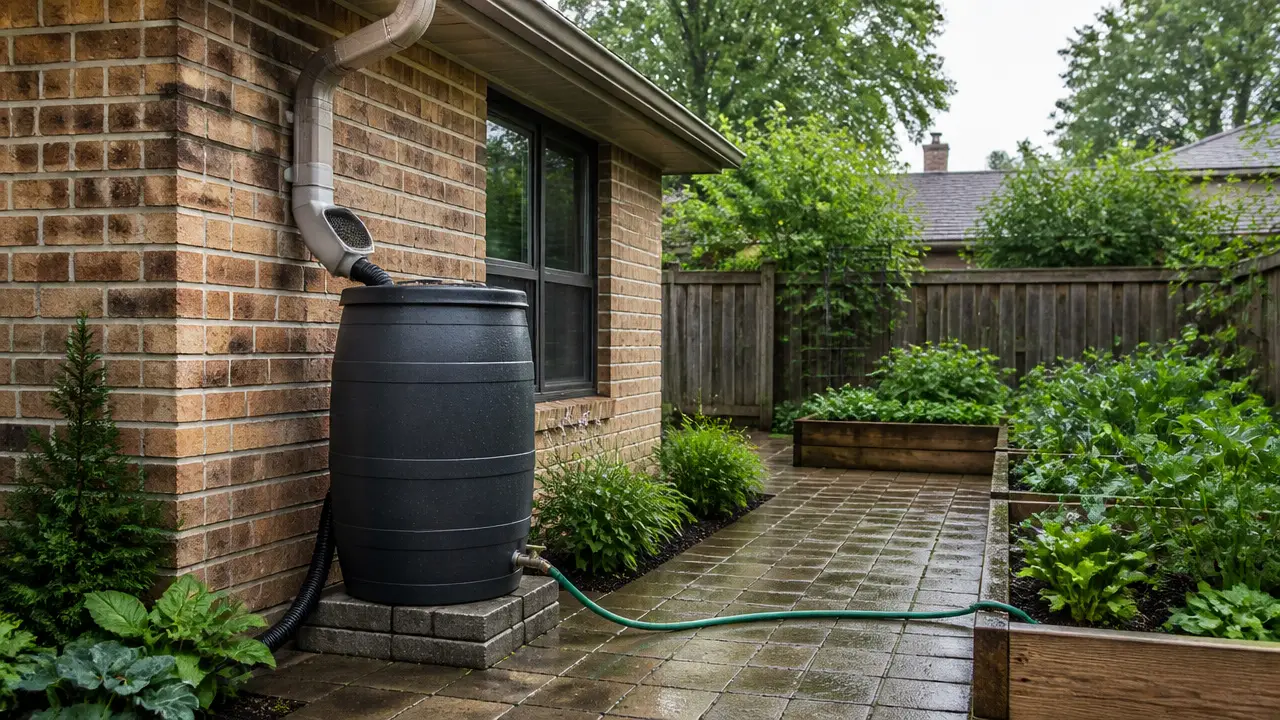
For a rainwater harvesting system, there is an important difference between testing rain falling directly from the sky and testing water coming off your roof or sitting in a tank. Roof materials, leaves, dust, bird droppings, stored sediment, and other materials can change the pH after the rain falls.
What pH Tells You About Rain
The pH scale runs from acidic to alkaline:
| pH | General meaning |
|---|---|
| Below 7 | Acidic |
| 7 | Neutral |
| Above 7 | Alkaline |
The scale is logarithmic. That means a change of one whole pH number represents a tenfold change in acidity.
Because ordinary rain is naturally around pH 5.6, a reading below 7 does not automatically mean you have unusual acid rain. A sample around pH 5.5, for example, can be close to normal rainfall.
Rain around pH 4 to 4.5 is considerably more acidic than normal rainfall and falls within the range commonly associated with acid rain.
How to Test Rainwater for Acidity
For a useful test, first decide what you are trying to learn.
If you want to know whether the rain itself is acidic, collect it directly from the sky. If you want to know the condition of water in your rainwater system, test the roof runoff or stored water instead.
1. Collect rain directly in a clean container
Place a clean glass or plastic container in an open location where rain can fall directly into it.
Keep it away from:
- Roof edges and gutters
- Overhanging trees
- Downspouts
- Sprinklers
- Soil splash
- Metal surfaces that could drain into it
Do not collect the sample from a rain barrel if your goal is to measure the acidity of the rainfall itself. By that point, the water has already contacted the roof, gutters, downspout, tank, sediment, and possibly treatment equipment.
2. Test the sample soon after collection
Use either pH test strips designed for the range you need or a digital pH meter.
Dip the strip according to its directions and compare the color with the supplied scale. With a meter, rinse the probe as directed, place it in the sample, and wait for the reading to stabilize.
Digital meters can provide more detail than inexpensive color strips, but only when they are properly calibrated and maintained. A meter that has been stored incorrectly or has not been calibrated can give misleading numbers.
3. Record the result
A simple log can be useful:
| Date | Sample location | pH |
|---|---|---|
| Rain event 1 | Direct rainfall | 5.5 |
| Rain event 1 | Downspout | 6.1 |
| Rain event 1 | Storage tank | 6.5 |
Testing the different points can show how your collection system changes the water.
4. Repeat the test
Do not draw a broad conclusion from one storm.
Rain chemistry can change between storms. The first part of a rain event can also interact with airborne particles differently from rain later in the storm.
Testing several rain events gives you a much better picture than testing one cup of rain once.
Can You Use Litmus Paper?
Litmus paper can tell you whether something is generally acidic or alkaline, but it is not the best tool for determining how acidic your rain is.
Rain that is pH 5.6 and rain that is pH 4.3 are both acidic. Basic litmus paper may show that both samples are acidic without giving you enough information to distinguish them.
A pH test strip with a numbered color scale is more useful.
For regular monitoring, a calibrated digital pH meter can make small changes easier to see.
Can a TDS Meter Tell You Whether Rain Is Acidic?
No.
A TDS meter measures total dissolved solids indirectly through the electrical conductivity of the water. Total dissolved solids are dissolved minerals, salts, metals, and similar substances.
TDS and pH are different measurements.
Water can have:
- Low TDS and low pH
- High TDS and low pH
- Low TDS and higher pH
- High TDS and higher pH
A TDS reading therefore cannot replace a pH test.
It also cannot tell you whether rainwater is safe to drink.
Direct Rain and Roof Runoff May Have Different pH
This distinction matters a great deal for rainwater harvesting.
After rain lands on a roof, it can pick up or react with materials including:
- Dust
- Pollen
- Leaves
- Bird and animal droppings
- Roof particles
- Gutter debris
- Metals
- Sediment in the tank
Roof and storage conditions can therefore change both the chemistry and microbiological quality of collected rainwater. Guidance on rainwater harvesting also notes that catchment cleanliness and roofing materials can affect stored-water quality.
Examine contamination risks in fresh rainwater to verify the main trade-offs before the next design decision.
For example, suppose you measure:
- Direct rainfall: pH 5.2
- Downspout runoff: pH 6.0
- Tank water: pH 6.4
That does not mean your pH meter is necessarily wrong. The water has interacted with different materials at each stage.
The reverse can also happen.
If you are troubleshooting a rain barrel, IBC tote, cistern, or household reuse system, test the water where it matters for the intended use, not only the rainfall entering the system.
Does Low-pH Rainwater Damage a Rainwater System?
Acidic water can be more corrosive to some materials, but pH is only part of the corrosion picture.
Water chemistry, contact time, pipe material, fittings, temperature, dissolved minerals, and other factors all matter.
This deserves more attention in systems containing metal components such as certain pipes, fittings, pumps, or tanks. Corrosion may eventually affect the equipment or introduce metals into the water.
For drinking-water systems, the EPA lists pH 6.5 to 8.5 as a secondary drinking-water guideline related mainly to issues such as corrosion, taste, and other aesthetic effects. This is not a rule saying that any water within that pH range is safe to drink.
Does a Good pH Reading Mean Rainwater Is Safe to Drink?
No.
This is one of the most important limits of a pH test.
A sample can have a perfectly ordinary pH while still containing unwanted microorganisms or chemical contaminants. Roof runoff can collect material from animals, roofing surfaces, airborne pollution, gutters, and storage tanks.
Likewise, a pH meter cannot identify:
- Bacteria
- Viruses
- Parasites
- Lead
- Other individual metals
- Pesticides
- Many organic chemicals
- Other specific contaminants
For that reason, neither a pH meter nor a test strip can establish that harvested rainwater is potable, meaning suitable for drinking.
Drinking-water use needs to be treated as a whole system. That includes a suitable collection surface, debris control and prefiltration, appropriate treatment, maintenance, current laboratory testing for relevant contaminants, and compliance with applicable local requirements.
What If Your Stored Rainwater Has a Very Low pH?
First, confirm the measurement.
If you are using strips, repeat the test with a fresh strip. If you are using a digital meter, check its calibration and follow its instructions for probe cleaning and storage.
Then compare several samples:
- Direct rainfall
- Roof runoff
- Tank water
- Water after any treatment equipment
This can help identify where the change occurs.
For example, if direct rainfall and roof runoff are similar but tank water is noticeably different, something within the storage system may be affecting the water. Check for sediment buildup, unusual materials, corrosion, or other system changes.
Do not begin adding chemicals to a household rainwater supply simply to chase a pH number. Chemical adjustment requires proper dosing and an understanding of the rest of the water chemistry. For water intended for household consumption, significant or persistent pH problems are a good reason to use qualified water-treatment help and appropriate laboratory testing.
The Simplest Way to Tell If Rain Is Acidic
If you only want a quick check, collect fresh rain directly in a clean plastic or glass container and test it with a pH strip covering the expected range.
Use these numbers as general reference points:
- pH 7: neutral
- About pH 5.6: normal rain
- About pH 4.2 to 4.4: typical acid-rain range
Those figures describe rainfall acidity, not drinking-water safety.
For a rainwater harvesting system, it is often more useful to test both the direct rainfall and the stored water. That tells you whether the collection and storage system is changing the pH after the rain reaches your property.
Frequently Asked Questions
Is all rain slightly acidic?
Yes. Normal rain is naturally somewhat acidic because carbon dioxide in the atmosphere dissolves into the water and forms a weak carbonic acid. The EPA gives about pH 5.6 as a typical value for normal rain.
What pH is considered acid rain?
Acid rain commonly has a pH of about 4.2 to 4.4, compared with roughly 5.6 for normal rain.
Can I tell acid rain by its color or smell?
No. You should not expect acid rain to have an obvious appearance or smell that reliably identifies it. Measuring pH is the practical way to check its acidity.
Can I test rainwater from my gutter?
Yes, but that measures roof runoff, not untouched rainfall. The roof, debris, gutters, and downspout can change the water before you test it. Collect rain directly from the sky if you want to measure the rain itself.
Are pH strips accurate enough for rainwater?
They can be useful for basic checks, especially when the strips cover a narrow enough pH range to distinguish normal rain from more acidic rain. A properly calibrated digital pH meter is usually better when you want to track smaller differences.
Does a pH of 7 mean harvested rainwater is safe to drink?
No. pH tells you about acidity or alkalinity. It does not determine whether the water contains disease-causing microorganisms, metals, chemicals, or other contaminants. Drinking-water decisions require appropriate treatment and current water-quality testing.
Why does my tank water have a different pH from fresh rain?
Water can react with the roof, gutters, pipes, sediment, tank surfaces, and other materials. Organic debris and minerals can also influence the result. Testing direct rain, roof runoff, and tank water separately can help locate where the change occurs.