As an affiliate, we may earn a commission from qualifying purchases. We get commissions for purchases made through links on this website from Amazon and other third parties.
There is no single number of days or months that makes cistern water “too old.” Water can remain in a well-designed cistern for weeks or months, but storage time alone does not tell you whether the water is safe to use.
The important questions are where the water came from, how the cistern is built, whether contaminants can enter it, and what you plan to do with the water. Water used for irrigation has very different safety needs from water used for drinking.
How Long Can Water Stay in a Cistern?
For garden irrigation and many other outdoor non-potable uses, water can often remain in a covered cistern for long periods as long as the system keeps out sunlight, insects, animals, and debris.
Non-potable means water that is not intended for drinking.
You do not normally need to drain a rainwater cistern simply because the water has been there for a certain number of weeks. However, regular water turnover is useful. It reduces long periods of stagnation and leaves room for the next rainfall.
Drinking water is different. There is no reliable rule such as “cistern water is safe for six months.” The CDC notes that rainwater can contain germs and chemicals even when it looks clean. Water intended for drinking, cooking, or bathing should be collected, treated, maintained, and tested for that intended use.
What Happens When Water Sits for a Long Time?
Stored water does not automatically spoil on a certain date. Instead, water quality can slowly change depending on conditions inside the tank.
Sediment can collect on the bottom
Dust, pollen, roof particles, leaves, and other fine material can enter a rainwater cistern. Some of this material settles to the bottom.
Sediment can provide places for microorganisms to grow and can be pulled into pumps or plumbing if the outlet is located too close to the bottom.
A roof screen and first flush diverter can reduce this problem. A first flush diverter sends the first part of a rainfall away from the tank because that water tends to carry more dirt and contamination from the roof.
Biofilm can develop
A biofilm is a thin layer of microorganisms that can form on wet surfaces.
Storage tanks can develop sediment and biofilm over time. EPA guidance for drinking-water storage facilities identifies both as water-quality concerns and recommends inspection and cleaning as part of proper tank maintenance.
Algae can grow if light enters the tank
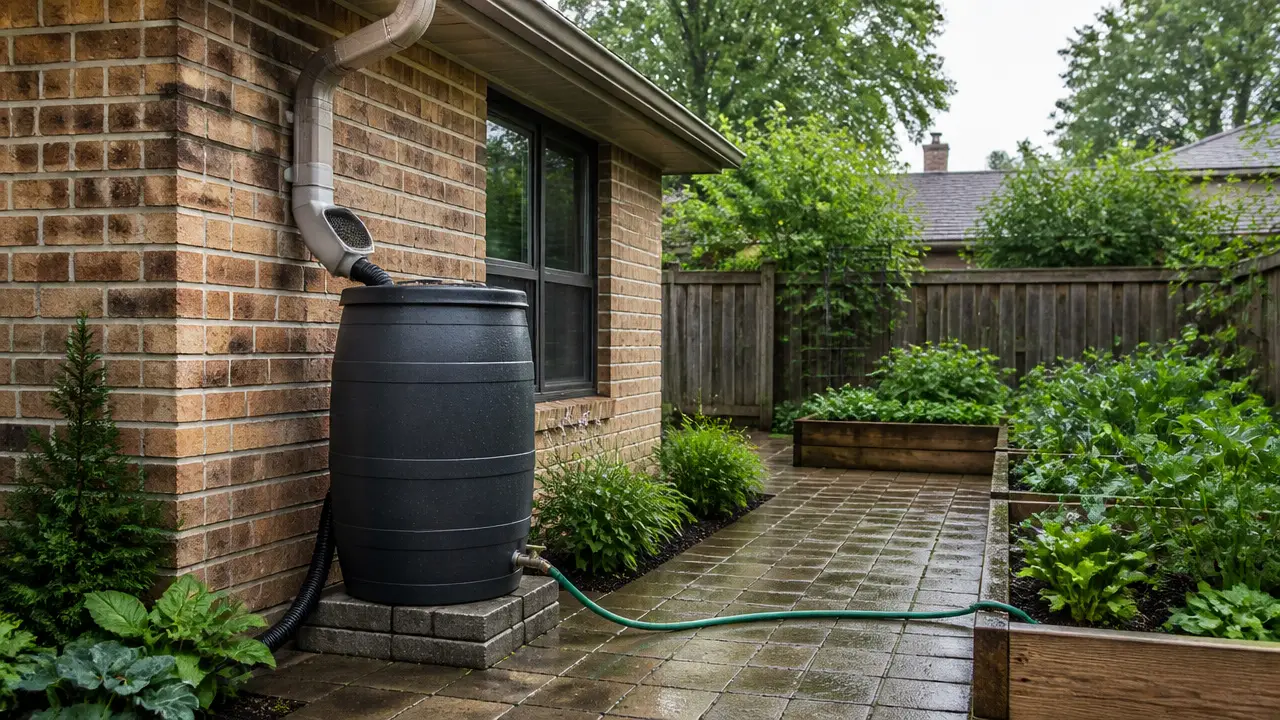
Algae need light. An opaque cistern that blocks sunlight is therefore much better for long-term water storage than a clear or translucent container.
If you can see green growth inside the tank, simply using the water faster does not solve the underlying problem. Check where light is entering and clean the tank as appropriate.
Insects and animals can contaminate the water
Tank openings, vents, overflows, and inlets should prevent mosquitoes, rodents, birds, and other animals from entering.
The EPA recommends inspecting tank lids, vents, screens, and other openings and repairing holes or gaps when found.
Intended Use Matters More Than Storage Time
A useful way to think about cistern storage is to start with what the water will be used for.
| Intended use | Does storage time alone determine safety? | Main concerns |
|---|---|---|
| Watering ornamental plants | Usually no | Mosquitoes, algae, sediment, clogged irrigation parts |
| General outdoor cleaning | Usually no | Odor, debris, microorganisms |
| Toilet flushing or other indoor non-potable use | No | Treatment needs, plumbing separation, local rules |
| Bathing | No | Germs and chemicals |
| Cooking or drinking | No | Collection quality, treatment, testing, maintenance, local requirements |
Water that is acceptable for watering trees may not be suitable for washing food or drinking.
Rainwater Can Become Contaminated Before It Reaches the Cistern
Storage time is only one part of the problem.
Rainwater can pick up contaminants from:
- Airborne dust and smoke
- Bird and animal droppings
- Roofing materials
- Gutters and downspouts
- Pipes and fittings
- Tank materials
- Decaying leaves and other organic debris
The CDC specifically warns that rainwater is not necessarily safe to drink simply because it came from the sky or looks clear.
Good cistern design therefore starts before the tank. Keeping the roof and gutters clean, screening incoming water, and diverting the dirtiest initial runoff can improve stored-water quality.
Does a Full Cistern Keep Water Better?
A full, closed tank can have some advantages because there is less air space and less opportunity for repeated temperature changes. However, fullness does not make contaminated water safe.
A clean tank that is half full can contain better-quality water than a full tank receiving dirty roof runoff.
The important features are a tank that is:
- Made from material suitable for its intended water use
- Opaque or otherwise protected from sunlight
- Covered securely
- Protected from insects and animals
- Equipped with screened vents and overflows
- Protected from surface runoff and floodwater
- Connected to a reasonably clean collection system
Should You Regularly Empty a Cistern?
Guidance on the safe drinking period for treated rainwater helps compare how to interpret the readings without assuming complete safety.
A large cistern normally does not need to be emptied on a fixed short schedule simply because the stored water is getting older.
Instead, inspect and maintain the system so you can find sediment buildup, damaged screens, leaks, contamination, or other problems before they become serious. EPA rainwater-harvesting guidance recommends recurring inspection of gutters, pretreatment devices, tank openings, overflow components, and sediment accumulation.
For a rainwater system, regular use also creates natural turnover. Garden irrigation, toilet flushing where permitted, or other planned uses can draw down older water while new rainfall refills the tank.
Do not enter a cistern to clean it unless the work has been properly assessed and performed using appropriate confined-space procedures. Tanks can present serious atmospheric, electrical, slip, and access hazards.
When Should You Stop Using the Water?
Do not judge water safety only by its appearance. Harmful germs and chemicals may be present without changing the taste, smell, or color.
However, visible changes can still warn you that something is wrong. Investigate the system if you notice:
- Heavy algae growth
- Unusual odor
- Significant discoloration
- Dead animals or insects in the tank
- Large amounts of sediment
- Broken or missing inlet screens
- An open or damaged tank lid
- Floodwater entering the cistern
- Chemical, fuel, or sewage contamination
Flooding deserves special caution. The CDC advises that floodwater and heavy storm runoff can introduce germs and chemicals into cisterns. A contaminated cistern may need to be emptied, cleaned, disinfected, and refilled with safe water before it is returned to drinking-water service.
What If the Cistern Water Is for Drinking?
Do not rely on storage time, appearance, a single filter, or a home test strip to decide whether rainwater is potable.
Potable means suitable for drinking.
A drinking-water cistern should be treated as a complete water system. That can involve a suitable collection surface, debris removal, first-flush control, storage materials intended for drinking-water contact, filtration, treatment matched to the contaminants present, proper plumbing, maintenance, and laboratory testing.
The CDC recommends regularly testing rainwater used for drinking, cooking, or bathing for relevant germs and chemicals. Its general guidance for private rainwater systems recommends testing at least annually, with additional testing when water quality changes or contamination is suspected.
Different treatment methods handle different contaminants. For example, a sediment filter does not automatically remove dissolved chemicals or all disease-causing organisms. Treatment should be selected based on the water and its intended use.
Local health or plumbing authorities may also have requirements for potable rainwater systems.
How to Keep Cistern Water Usable Longer
Good storage conditions matter more than trying to follow an arbitrary replacement date.
Keep debris out of the tank before it enters. Clean gutters and collection surfaces as needed, maintain screens and prefilters, and use first-flush control when appropriate.
Keep the cistern dark and closed. Protect every opening while still providing any ventilation or overflow the system requires.
Inspect the bottom periodically for excessive sediment. Check pumps, pipes, fittings, screens, vents, lids, and overflows at the same time.
Most importantly, match water quality to the intended use. Water stored for irrigation does not need to meet the same standard as water entering a kitchen faucet.
Frequently Asked Questions
Can cistern water sit for a year?
It can physically remain in a cistern for a year or longer, but that does not mean it is automatically suitable for every use. Conditions inside the tank, contamination entering from the collection system, maintenance, and the intended use matter more than the calendar.
Does cistern water go bad?
There is no fixed expiration date. However, stagnant water can develop sediment, biofilm, algae, odors, or microbial problems if the storage system is poorly protected or maintained.
Should I drain old rainwater before adding new rainwater?
Usually not for a properly maintained irrigation cistern. New rainfall can mix with the existing water. However, drain and address the problem if the tank has known contamination, significant sediment, floodwater intrusion, or another condition that makes the stored water unsuitable.
How can I tell if cistern water is safe to drink?
You cannot reliably determine drinking-water safety by looking at, smelling, or tasting the water. A potable rainwater system needs suitable collection and treatment, regular maintenance, current laboratory testing, and compliance with applicable local requirements.
Can algae make cistern water unusable?
Heavy algae growth indicates that light is reaching the stored water and that the system needs attention. For irrigation, the water may still sometimes be usable depending on the situation, but algae can clog equipment. For drinking-water systems, investigate and correct the cause rather than assuming treatment downstream will solve it.
Is rainwater stored underground better than water in an above-ground cistern?
Underground storage often provides better protection from sunlight and temperature swings, but it introduces other concerns such as groundwater intrusion, structural loading, access, and difficult cleaning. Either type can work when correctly designed and maintained.
Should a cistern be completely sealed?
It should be securely covered and protected against insects, animals, debris, and contaminated runoff. However, many systems also need properly designed vents and overflows. These openings should be screened and arranged so they do not become contamination routes.