As an affiliate, we may earn a commission from qualifying purchases. We get commissions for purchases made through links on this website from Amazon and other third parties.
A rainwater tank and a cistern do the same basic job: they store collected rainwater. The main difference is usually how the words are used.
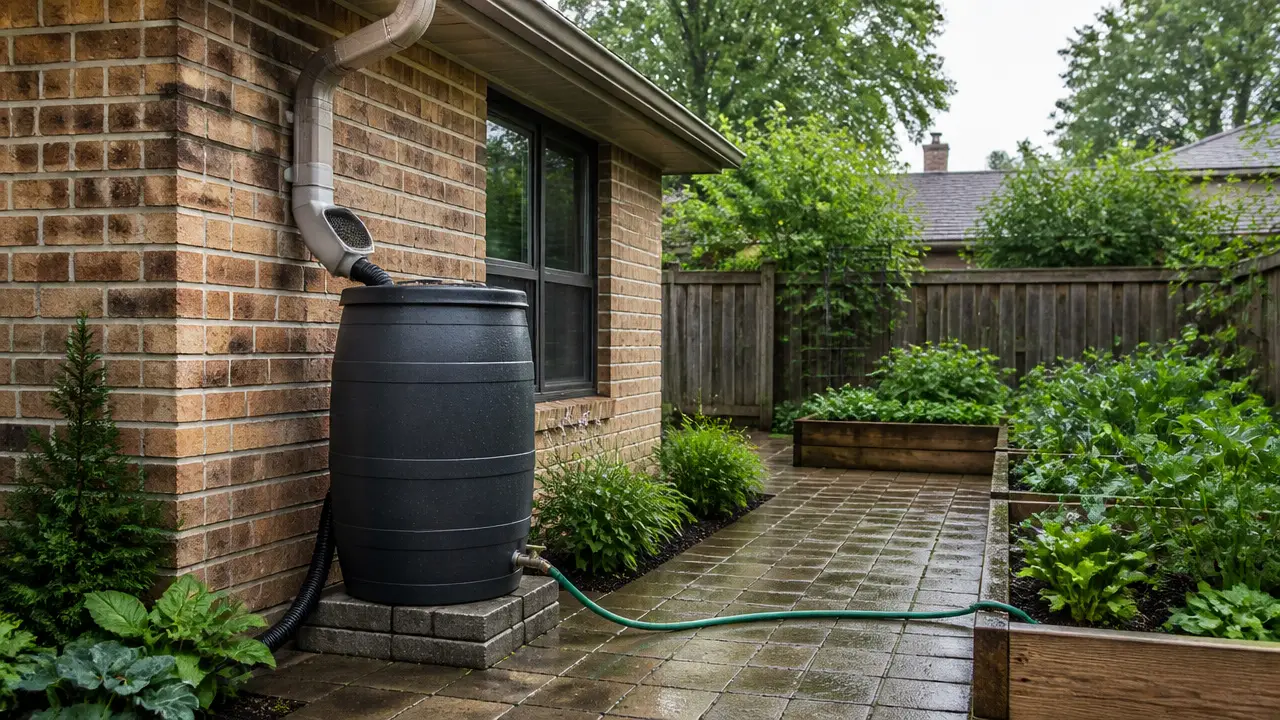
A rainwater tank often means a manufactured container installed above ground or beside a building. A cistern often means a larger, more permanent storage system, which may be above ground, buried underground, or built into a structure.
There is no universal size or design rule that separates a tank from a cistern. When planning a system, the label matters less than the container's capacity, material, location, fittings, access, overflow, and intended water use.
Rainwater Tank vs Cistern at a Glance
| Feature | Rainwater Tank | Cistern |
|---|---|---|
| Main purpose | Stores rainwater | Stores rainwater |
| Typical installation | Often above ground | Above ground or underground |
| Typical size | Small to very large | Often medium to very large |
| Construction | Usually manufactured as one unit | May be manufactured, buried, or built in place |
| Installation difficulty | Often simpler | Can require excavation or construction |
| Inspection access | Usually easier | Can be harder, especially underground |
| Pump needed | Depends on use and height | Common for underground systems |
| Best fit | Gardens, sheds, homes, cabins | Large storage and whole-property systems |
These are common patterns, not strict definitions.
What Is a Rainwater Tank?
A rainwater tank is a container designed to hold water collected from a roof or another suitable catchment surface.
Common tank materials include plastic, fiberglass, steel, and concrete. Tanks can range from small containers connected to one downspout to large storage vessels serving several roof areas.
A basic rainwater tank system may include:
- gutters and downspouts
- leaf screens or other debris control
- a tank inlet
- an overflow
- an outlet fitting
- a drain or cleaning point
- a pump if gravity does not provide enough pressure
A bulkhead fitting is a fitting that passes through the tank wall and creates a sealed connection for a pipe, valve, or hose.
Above-ground tanks are popular because leaks, fittings, water levels, and maintenance points are usually easier to see.
What Is a Cistern?
A cistern is also a water-storage container. The word is often used for larger or more permanent systems.
Cisterns may be:
- installed above ground
- partly buried
- completely underground
- placed beneath a building or patio
- made from concrete, plastic, fiberglass, or another suitable material
Some people use "cistern" for almost any large rainwater tank. Others reserve the term for buried storage.
That difference in language can cause confusion when comparing systems. Always look at the actual design rather than assuming that something called a cistern has certain features.
The Biggest Difference Is Often Location
The most useful comparison is often not tank versus cistern. It is above-ground storage versus underground storage.
Above-ground storage
An above-ground tank is easier to inspect and usually easier to install.
You can often reach:
- valves
- pumps
- filters
- overflow pipes
- access covers
- tank walls
without excavation.
Above-ground tanks also make leaks easier to notice.
Their main drawback is that they take up visible space. They are also more exposed to outdoor temperatures and sunlight.
Underground storage
An underground cistern saves surface space and keeps the storage container out of sight.
It can work well where a property needs substantial capacity but has limited room around the house.
However, buried storage adds complexity. Installation may involve excavation, drainage planning, soil conditions, groundwater, structural loading, and safe access.
A tank designed only for above-ground use should not simply be buried. Soil and groundwater can place large forces on its walls.
Use a storage vessel specifically designed for its installation method.
Capacity Matters More Than the Name
Neither "tank" nor "cistern" tells you how much water the system can store.
A better way to choose storage is to compare:
- how much roof area drains into the system
- how much rain falls at the property
- how much water you plan to use
- how long you want stored water to last between rains
- how much space is available
A large roof can collect a significant amount of water during heavy rain. But a large storage container does not automatically mean you will have enough water during dry periods.
Collection depends on rainfall and catchment area, and real systems have losses from splash, overflow, debris removal, first-flush devices, and other factors.
A first-flush device diverts some of the first roof runoff from a rain event. This helps keep part of the roof debris and contamination from entering storage.
Tanks Are Often Easier to Install
A simple above-ground rainwater tank may require a prepared base, downspout connection, overflow line, and outlet plumbing.
A buried cistern can require much more work.
Depending on the site, installation may involve:
- excavation
- a suitable base
- backfill requirements
- groundwater management
- vehicle or building load considerations
- underground pipes
- pump wiring
- access covers
- safe overflow routing
Large tanks are also very heavy when full.
Water weighs roughly 8.3 pounds per US gallon, or about 1 kilogram per liter. The supporting surface needs to handle the full operating weight of the tank and water.
For large storage systems, buried installations, or locations near foundations, professional design or installation may be appropriate.
Cisterns Often Depend More on Pumps
An elevated outlet can sometimes supply a garden hose or drip line using gravity.
Pressure from gravity depends mainly on the vertical distance between the water surface and the outlet. This vertical distance is called head height.
An underground cistern has little useful gravity pressure for fixtures located above it. Water usually must be pumped upward.
A pump should be selected based on the system's actual requirements, including:
- vertical lift
- desired pressure
- required flow rate
- pipe size and length
- power supply
- intended water use
Flow rate means how much water moves through the system during a period of time, such as gallons per minute or liters per minute.
Do not choose a pump only by matching its pipe connection to the cistern outlet.
Maintenance Access Can Be Very Different
Every rainwater storage system needs maintenance.
An above-ground tank often makes this work simpler because much of the system is visible.
A buried cistern may require more planning for:
- inspection
- sediment removal
- pump servicing
- inlet cleaning
- overflow checks
- level-sensor replacement
Access openings should be secure and appropriate for the storage system.
Never enter a cistern or other enclosed water-storage vessel unless the work is handled under proper confined-space safety procedures. A tank can contain hazardous air conditions even when it appears empty.
Many maintenance jobs can be performed from outside the vessel.
Temperature and Freezing Affect Both
Climate should be part of the choice.
Above-ground tanks are more exposed to freezing weather. Pipes, valves, filters, pumps, and small water passages may freeze before the main body of stored water does.
Underground cisterns may receive more protection from temperature swings, but burial does not automatically make a system freeze-proof. Pipes near the surface, exposed pump equipment, overflow lines, and connections can still freeze.
Freeze protection should be planned for the local climate and the actual installation depth and layout.
Sunlight Can Affect Stored Water
Opaque tanks help limit the light that reaches stored water.
Light can encourage algae growth when nutrients are present. This is one reason rainwater storage should generally be designed to exclude sunlight.
Buried cisterns naturally receive little light, but openings, vents, inspection ports, and above-ground components still need proper covers and screening.
Above-ground tanks should use materials and designs suitable for outdoor water storage.
Both Need Safe Overflow
Every rainwater tank or cistern can fill completely.
Evaluate practical steps for getting rainwater from the roof into a tank to coordinate how roofing material changes the expected water yield.
The overflow therefore needs to handle incoming water when the storage vessel is full.
A poor overflow layout can send water toward:
- foundations
- crawl spaces
- slopes
- neighboring property
- areas that erode easily
The overflow should discharge water to a suitable location while following local drainage requirements.
It should also help keep insects, debris, and animals from entering the storage vessel.
Mosquito Control Is Important
Stored rainwater should not provide an easy breeding area for mosquitoes.
Openings such as vents, inlets, and overflows may need suitable screening. Lids and inspection covers should remain secure.
A buried cistern is not automatically protected from insects. Mosquitoes can enter through poorly protected openings.
Regular inspection is more reliable than assuming the container type solves the problem.
Which Is Better for Garden Watering?
For many gardens, an above-ground tank is the simpler option.
It can be installed near a downspout and connected to:
- a watering can
- a hose
- a small pump
- a suitable drip irrigation system
Gravity may be enough for very low-pressure uses, depending on tank height and the irrigation equipment.
Larger gardens with high water demand may benefit from greater storage capacity. That storage could be an above-ground tank or a cistern.
The best choice depends on available space, irrigation demand, rainfall patterns, and whether pumping is practical.
Which Is Better for a Home?
Larger household rainwater systems may use either above-ground tanks or cisterns.
The storage container is only one part of the system.
A household system can also require:
- suitable collection surfaces
- debris control
- first-flush management where appropriate
- pumps
- pressure controls
- backflow protection
- treatment
- monitoring
- safe plumbing separation
Rainwater used for toilets, laundry, irrigation, or other non-potable purposes does not necessarily require the same treatment as drinking water.
Non-potable means water that is not intended for drinking.
Local plumbing and water-use rules may also affect how rainwater can be connected to a building.
Can a Tank or Cistern Store Drinking Water?
A storage container by itself does not make collected rainwater safe to drink.
Potable means suitable for drinking.
Roof runoff can pick up microorganisms, animal waste, dirt, roofing materials, airborne pollution, and other contaminants before it reaches storage.
If rainwater is being considered for drinking, the entire system needs to be evaluated. That can include appropriate collection materials, debris control, treatment stages, protected storage, ongoing maintenance, and current laboratory testing.
Treatment needs depend on the water source and the risks present. One filter, UV unit, purifier, meter, or test strip should not be treated as proof that roof-collected rainwater is potable.
Drinking-water systems should also follow current local health and plumbing requirements. Professional water-treatment guidance may be appropriate.
Above-Ground Tank Advantages
An above-ground tank often makes sense when you want a simpler system.
Common advantages include:
- easier installation
- easier inspection
- easier plumbing access
- easier leak detection
- simpler pump servicing
- no major excavation
- easier replacement if the storage system changes later
The tradeoff is that the tank takes up space and may be more exposed to weather.
Underground Cistern Advantages
A buried cistern can make sense when storage capacity and land use are more important than installation simplicity.
Possible advantages include:
- less visible equipment
- more usable yard space
- room for substantial storage
- less direct exposure to sunlight
- more stable surrounding temperatures
These benefits come with additional design and maintenance needs.
Excavation, groundwater, structural loading, access, pumps, and underground plumbing should all be considered before installation.
How to Choose Between a Tank and a Cistern
Start with the system rather than the name on the container.
Choose an above-ground tank when:
- you have enough outdoor space
- you want easier access for maintenance
- simple installation is important
- the system mainly serves a garden or other nearby use
- large-scale excavation is not practical
Consider a buried cistern when:
- surface space is limited
- you need substantial storage
- appearance is an important concern
- the site is suitable for excavation
- you are prepared for pump and access requirements
A large above-ground tank can still serve a complex home system, and a small underground cistern can serve a limited use. There is no fixed dividing line.
What to Check Before Buying Either One
The container should fit the rest of the rainwater system.
Check the following before choosing a tank or cistern:
- Capacity: Does it match your expected collection and use?
- Dimensions: Will it physically fit through gates, around buildings, or into the excavation area?
- Installation rating: Is it designed for above-ground, underground, or both?
- Inlet size: Can it accept the expected roof runoff?
- Overflow size: Can excess water leave safely?
- Outlet size: Will it connect to your plumbing or pump?
- Access: Can you inspect and maintain the system safely?
- Material: Is it suitable for the intended type of water storage?
- Light control: Will stored water be protected from sunlight?
- Pest protection: Can openings be screened and secured?
- Foundation or base: Can it support the full tank weight?
- Climate: How will freezing, heat, and weather affect the installation?
Checking these details before installation can prevent many compatibility problems later.
The Bottom Line
A rainwater tank and a cistern are both water-storage vessels. The terms overlap, and there is no universal rule that separates them.
In everyday use, a rainwater tank usually describes a manufactured container that is often installed above ground. A cistern often describes a larger or more permanent storage system and is commonly associated with underground installations.
For most projects, the better question is not whether you need a tank or a cistern. It is whether the storage vessel has the right capacity, location, connections, access, structural support, overflow, and maintenance setup for the way you plan to use the water.
Frequently Asked Questions
Is a cistern the same thing as a rainwater tank?
They can be. Both store water, and the terms are sometimes used interchangeably. "Cistern" is often used for larger or underground storage, while "tank" is a broader term.
Are cisterns always underground?
No. Cisterns can be above ground, below ground, or built into a structure. Always check the actual installation design rather than relying on the name.
Can I bury an above-ground rainwater tank?
Not unless the manufacturer specifically allows it. Soil and groundwater can place pressure on the tank walls and may collapse a container that was not designed for burial.
Does an underground cistern need a pump?
Usually, if the water must travel to fixtures or irrigation equipment above the cistern. Pump requirements depend on lift, required flow, pressure, pipe layout, and intended use.
Is an above-ground tank better for a garden?
It often is because installation and maintenance are simpler. Gravity may also supply some low-pressure watering systems if the tank is high enough. Larger gardens may still benefit from a bigger tank or cistern.
Does a cistern keep rainwater cleaner?
Not automatically. Underground storage can block sunlight, but water quality also depends on the roof, gutters, debris control, inlets, pests, sediment, maintenance, and other parts of the system.
Can rainwater from a tank or cistern be used for drinking?
The storage container alone does not make rainwater safe to drink. Drinking-water use requires a whole-system approach that may include suitable collection, treatment, protected storage, maintenance, laboratory testing, and compliance with current local requirements.
Which lasts longer, a tank or a cistern?
Service life depends on material, construction, installation, exposure, water conditions, maintenance, and manufacturer requirements. The words "tank" and "cistern" alone do not tell you which will last longer.