As an affiliate, we may earn a commission from qualifying purchases. We get commissions for purchases made through links on this website from Amazon and other third parties.
What Do You Put Under a Water Tank?
A water tank needs a flat, level, stable base that can support the full weight of the tank and water.
For many above-ground plastic tanks, common base materials include:
- Compacted crushed stone
- A concrete slab
- A properly built paver base
- A reinforced structural platform designed for the load
The right choice depends on the tank size, tank shape, soil, drainage, climate, and the tank manufacturer's installation instructions.
Do not place a large tank directly on soft soil, loose gravel, uneven blocks, or a few pieces of lumber. A poor base can let the tank settle unevenly, strain fittings, or damage the bottom of the tank.
How Much Weight Does the Base Need to Hold?
Water is heavy. One US gallon of water weighs about 8.34 pounds.
That means the water alone weighs about:
| Tank capacity | Approximate water weight |
|---|---|
| 55 gallons | 459 lb |
| 100 gallons | 834 lb |
| 275 gallons | 2,294 lb |
| 500 gallons | 4,170 lb |
| 1,000 gallons | 8,340 lb |
| 2,500 gallons | 20,850 lb |
The tank itself adds more weight.
A 1,000-gallon tank, for example, can place well over four tons on its base when full. That is why larger tanks need much more preparation than a small rain barrel.
Best Base Options for Above-Ground Water Tanks
Compacted Crushed Stone
A properly prepared crushed-stone base works well for many ground-level polyethylene water tanks.
The stone should be:
- Compacted firmly
- Flat across the entire tank footprint
- Level
- Free of sharp rocks
- Wide enough to support the whole tank bottom
The important word is compacted. A loose pile of gravel can shift or settle after the tank fills.
Fine crushed stone that locks together usually provides better support than large, rounded landscaping gravel.
The site should also drain well so runoff does not wash material out from under the tank.
Always check the tank manufacturer's base requirements before using gravel or crushed stone.
Concrete Slab
A concrete slab provides a hard, permanent base and is often a good choice for larger tanks or sites where soil movement is a concern.
The slab needs to be designed for the tank's fully loaded weight and local ground conditions.
Concrete is especially useful when you need:
- A durable permanent installation
- Very accurate leveling
- Protection from erosion
- A secure mounting surface
- Support for pumps or nearby equipment
Simply pouring a thin patch of concrete is not the same as building a suitable tank foundation. Large tanks may require proper sub-base preparation, reinforcement, slab thickness, and drainage.
For large installations, have the foundation requirements checked by the tank manufacturer or a qualified contractor or engineer.
Pavers
Pavers can work under some smaller tanks when they are installed over a properly compacted base.
The pavers should form one continuous, level surface. They should not be used as a few isolated supports under the tank.
Individual pavers placed directly on soil can sink at different rates. That can twist or tilt the tank.
Structural Platform
Sometimes a tank is raised so gravity can provide a little water pressure or so a bucket, watering can, or plumbing connection can fit underneath.
Small rain barrels are often placed on purpose-built stands or platforms. Larger tanks are different.
A raised tank creates a substantial structural load.
For example, a 275-gallon tote can contain more than 2,200 pounds of water. Raising that load on a homemade timber platform without proper design can be dangerous.
The platform must support the tank evenly and handle:
- The full tank weight
- Water movement
- Wind
- Soil settlement
- Moisture and rot
- Local seismic or storm conditions where applicable
Do not improvise a raised structure for a large tank.
Can You Put a Water Tank Directly on Dirt?
Usually, prepared soil is better than untreated dirt.
Bare ground may look flat when the tank is empty but can change after rain or repeated wetting. Soft areas can compress, and flowing water can erode soil from one side.
If the tank manufacturer allows installation over soil or aggregate, the area normally needs to be:
- Cleared of roots, vegetation, and organic material.
- Excavated or built up as needed.
- Compacted.
- Leveled.
- Protected from erosion.
The finished surface should support the entire bottom of the tank.
Can You Put a Water Tank on Gravel?
Yes, many tanks can sit on a prepared gravel or crushed-stone base, but the material matters.
Large, loose river rock is usually a poor choice because it does not provide smooth, even support.
A compactable aggregate is generally better because the particles lock together and create a firm surface.
Avoid leaving sharp stones directly against a plastic tank bottom unless the manufacturer specifically approves that base.
The Entire Tank Bottom Needs Support
Most flat-bottom vertical water tanks are designed to rest across their full bottom surface.
Do not support one using only:
- Concrete blocks
- Bricks
- Timber runners
- A few pavers
- Narrow steel rails
unless the tank was specifically designed for that type of support.
Point loads can concentrate thousands of pounds in small areas.
A tank that looks rigid when empty can flex considerably when filled.
Make the Base Wider Than the Tank
The prepared area should generally extend beyond the edge of the tank rather than ending exactly at the tank wall.
This helps keep the edge from breaking away or eroding.
The exact dimensions should follow the tank manufacturer's installation instructions.
Also leave enough working space around the tank for:
- Valves
- Hoses
- Pumps
- Overflow piping
- Cleaning
- Inspection
A tank squeezed tightly between walls or landscaping can be difficult to maintain.
Drainage Around the Tank Matters
A strong base can still fail if water repeatedly washes underneath it.
Route overflow and roof runoff away from the foundation.
For a rainwater storage tank, the overflow pipe may handle a large amount of water during a heavy storm. Do not simply dump that water next to the tank base.
Send overflow toward a suitable drainage area, infiltration area, or stormwater connection where permitted.
The goal is to prevent:
- Erosion
- Mud
- Base washout
- Standing water
- Foundation settlement
Keep the Tank Level
A tank should normally sit level unless its manufacturer states otherwise.
An uneven base can make one side carry more of the load. It can also affect:
- Outlet fittings
- Pipe alignment
- Tank stability
- Water-level readings
- Overflow position
Check the finished foundation before filling the tank.
Do not rely on the weight of the water to force an uneven base flat.
Do Not Use the Plumbing to Hold the Tank in Place
Tank pipes should connect without pulling sideways on the tank fittings.
This is especially important with polyethylene tanks because the tank wall can move slightly as the tank fills and empties.
Rigid plumbing installed under tension can place stress on a bulkhead fitting, which is the fitting that passes through the tank wall and creates a sealed connection.
Factor in recommended slab thickness for a water tank to assess tank dimensions and fittings suited to the available space.
Support pipes separately when needed and follow the manufacturer's recommendations for flexible connections.
What Goes Under an IBC Tote?
An IBC tote is different from a simple flat-bottom tank.
The inner plastic container normally sits inside a metal cage on its original pallet-style base. That complete assembly should then rest on a strong, level foundation.
Good choices may include:
- Compacted aggregate
- Concrete
- A properly designed structural pad
Do not remove the tote from its supporting frame and place the inner bottle directly on the ground.
Also inspect used IBC totes carefully. Their previous contents matter greatly if the stored rainwater will be used around food crops, animals, household applications, or anywhere people could contact the water.
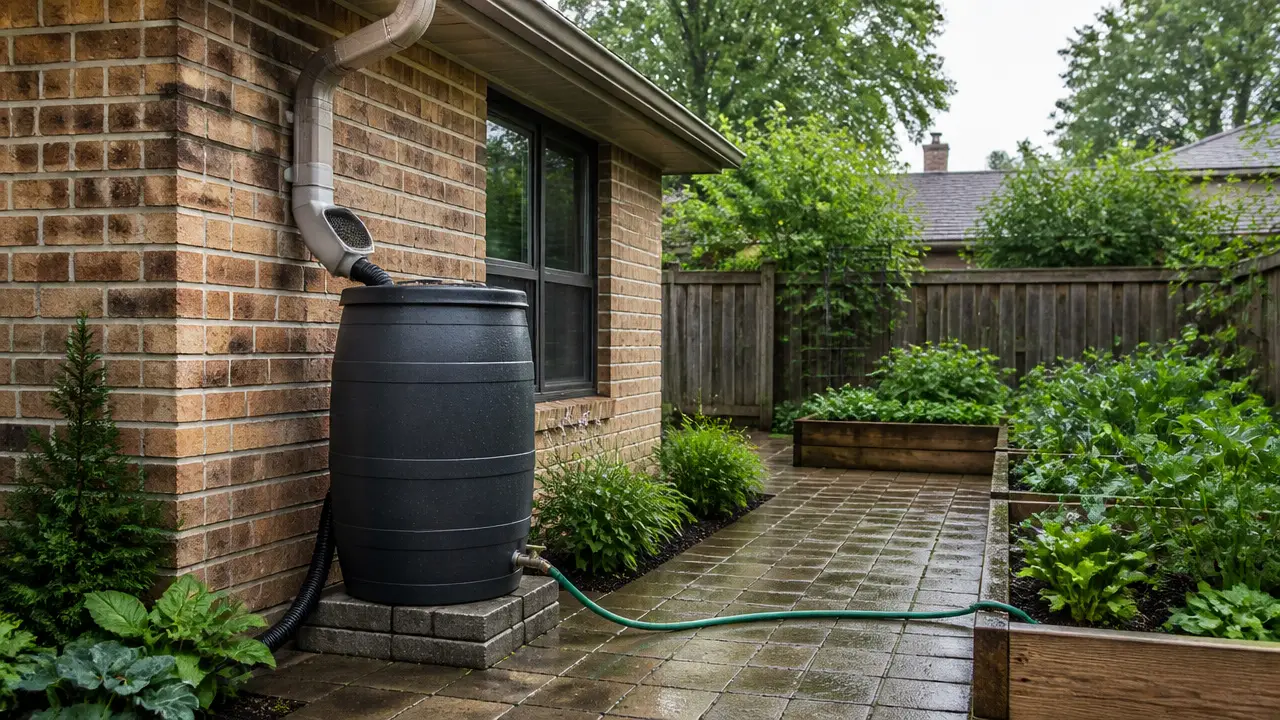
What Goes Under a Small Rain Barrel?
A small rain barrel can often sit on:
- Concrete
- Pavers
- A compacted gravel pad
- A manufacturer-approved stand
Raising a small barrel can make the spigot easier to use.
But even a 55-gallon barrel holds about 459 pounds of water, so its stand still needs to be sturdy and level.
Do not stack loose concrete blocks or unstable materials where the barrel could tip.
What About Tanks on Decks or Inside Buildings?
Do not place a large water tank on a deck, porch, floor, roof, or elevated structure unless that structure has been confirmed to handle the load.
Water creates a large load in a relatively small area.
A 500-gallon tank contains roughly 4,170 pounds of water before including the tank and equipment.
Whether a structure can support that load is a structural question, not just a question of whether the tank physically fits.
For significant loads, get advice from a qualified structural professional.
What About Underground Tanks?
Underground tanks require a completely different installation approach.
The tank must be specifically designed for burial.
Installation may involve requirements for:
- Excavation
- Bedding material
- Groundwater conditions
- Backfill
- Burial depth
- Traffic loads
- Anchoring against flotation
Do not bury an ordinary above-ground polyethylene tank.
Excavation also creates collapse hazards. Deep excavations should be handled using appropriate professional equipment and safety practices.
Preparing a Basic Ground-Level Tank Base
For a typical above-ground tank, the general process is:
1. Check the Tank Instructions
Find out what foundation materials the manufacturer permits.
This should come before choosing concrete, aggregate, or another base.
2. Choose Firm Ground
Avoid locations with obvious erosion, unstable fill, steep slopes, or constantly wet soil.
Also think about where the overflow will go.
3. Remove Soft Surface Material
Grass, roots, topsoil, and decomposing organic material can settle over time.
The foundation needs stable material beneath it.
4. Build and Compact the Base
Prepare the approved foundation material in a way that produces a firm, even surface.
Large tanks may need professional site preparation.
5. Check Level
Check across several directions, not just one edge.
6. Place the Tank Before Connecting Plumbing
Make sure the tank sits evenly and does not rock.
7. Connect Pipes Without Stressing the Tank
Allow for tank movement and support heavy plumbing independently.
8. Control Overflow
Direct overflow away from the foundation so the base does not erode.
Consider Freezing Climates
Freezing conditions can affect both the tank and its foundation.
Frozen ground can move as moisture in the soil freezes and expands. This is called frost heave.
Whether a tank foundation needs special frost protection depends on:
- Local climate
- Soil type
- Tank size
- Foundation design
- Whether the tank stays filled during winter
Pipes and valves can also freeze even when the tank itself is suitable for outdoor storage.
Follow local construction practices and the tank manufacturer's cold-weather guidance.
When a Simple DIY Base Is Not Enough
A small rain barrel on a ground-level paver pad is very different from a multi-thousand-gallon cistern.
Get qualified help when the installation involves:
- Very large tanks
- Elevated tanks
- Unstable or sloped ground
- Retaining walls
- Structural floors or decks
- Significant excavation
- High groundwater
- Seismic anchoring
- Complicated foundation requirements
A foundation problem becomes much harder to fix after several tons of water are sitting on it.
Frequently Asked Questions
What is the best thing to put under a plastic water tank?
A flat, level base made from manufacturer-approved material is best. Compacted crushed stone and properly designed concrete slabs are common choices for ground-level tanks.
Can I put a water tank on concrete blocks?
Not unless the tank manufacturer specifically allows that support method. Most flat-bottom tanks need continuous support under the entire base rather than a few blocks.
How thick should a concrete pad be for a water tank?
There is no single correct thickness for every tank. Tank weight, slab size, soil, reinforcement, local conditions, and manufacturer requirements all affect the design. Large tanks may require professional foundation design.
Can a water tank sit on sand?
Some tank manufacturers allow particular types of compacted sand or sand-based foundations, while others recommend different materials. Loose sand can shift or erode, so follow the tank's installation requirements.
Does a water tank base need to be perfectly level?
It should be level within the limits specified by the tank manufacturer. Significant unevenness can place extra stress on the tank and fittings.
Should I put rubber under a water tank?
Usually not unless the tank manufacturer recommends it. Adding rubber, foam, timber, or another soft layer can change how the tank bottom is supported.
Can I put an IBC tote directly on gravel?
An intact IBC tote can often sit on a properly prepared, level aggregate base if its supporting pallet and cage remain in place and the installation is appropriate for the tote. Avoid loose, uneven gravel that allows the base to rock or settle.
Do I need a concrete base for a 1,000-gallon water tank?
Not always. Some 1,000-gallon tanks can use a properly prepared compacted aggregate base, while others may require or benefit from concrete. Follow the tank manufacturer's foundation requirements and account for the roughly 8,340 pounds of water the tank can hold.