As an affiliate, we may earn a commission from qualifying purchases. We get commissions for purchases made through links on this website from Amazon and other third parties.
The best base for a water tank is a flat, level, stable surface that supports the entire bottom of the tank. For a large permanent tank, a properly designed concrete slab is often the safest choice. For many smaller above-ground plastic tanks, a well-compacted crushed-stone base can also work well if the tank manufacturer allows it.
The important part is not just the material. The base must stay level after the tank is full. Water is heavy, and even a small tank can put thousands of pounds on the ground.
Why the Water Tank Base Matters
A water tank needs even support across its bottom. If part of the base settles, the tank can lean or twist.
That can cause problems such as:
- Stress cracks in a plastic tank
- Damage around outlet fittings
- Uneven tank walls
- Leaking connections
- A tank that shifts or tips
- Trouble connecting rigid pipes
- Poor drainage around the tank
Water weighs about 8.34 pounds per gallon. That means the water alone weighs roughly:
| Tank capacity | Approximate water weight |
|---|---|
| 100 gallons | 834 lb |
| 250 gallons | 2,085 lb |
| 500 gallons | 4,170 lb |
| 1,000 gallons | 8,340 lb |
| 2,500 gallons | 20,850 lb |
The tank itself adds more weight.
A base that looks solid when the tank is empty may settle once several tons of water are added.
Best Overall Base: A Concrete Slab
For a large tank that will stay in one place, a reinforced concrete slab is often the best base.
Concrete provides:
- Full support under the tank
- A smooth, level surface
- Good resistance to erosion
- Less settling than loose soil
- A stable surface for pumps and plumbing
Concrete is especially useful for large rainwater tanks, household water-storage tanks, and systems connected to permanent plumbing.
The slab should extend far enough to support the entire tank footprint. The tank should not hang over the edge.
The correct slab thickness, reinforcement, and ground preparation depend on tank size, soil conditions, local climate, and the manufacturer's installation requirements. Large tanks may need a slab designed by a qualified contractor or engineer.
Simply pouring concrete over soft soil does not solve a bad foundation. The soil below the slab still needs to support the load.
Compacted Crushed Stone Is a Good Alternative
A compacted crushed-stone base can work very well for many above-ground plastic tanks.
It is usually better than loose gravel because crushed stone contains angular pieces that lock together when compacted.
A typical base starts with removing:
- Grass
- Roots
- Soft topsoil
- Organic material
- Large rocks
The base material is then placed and compacted until it forms a firm, level pad.
The finished surface should not contain sharp stones that can press into the bottom of a plastic tank.
Crushed stone can be useful for rainwater tanks because it also lets water drain away instead of collecting around the tank.
However, always check the tank manufacturer's instructions. Some tanks require concrete or have specific foundation requirements.
Is Gravel a Good Base for a Water Tank?
Gravel can work, but loose round gravel is usually not as stable as compacted crushed stone.
Round stones can shift under load. A tank may gradually settle or develop low spots.
If you use a granular base, choose material that can be firmly compacted rather than simply spreading loose decorative gravel beneath the tank.
The finished surface needs to remain:
- Flat
- Level
- Firm
- Free of sharp objects
- Large enough for the whole tank
Can You Put a Water Tank Directly on Dirt?
Putting a large water tank directly on ordinary soil is usually a poor choice.
Bare soil can:
- Settle unevenly
- Turn soft when wet
- Wash away during heavy rain
- Grow roots and weeds
- Become damaged by burrowing animals
- Develop low spots under the tank
A small temporary barrel may sit on firm soil without trouble, but larger storage tanks need better preparation.
If the ground contains clay, fill material, soft topsoil, or poorly compacted soil, settlement can become a serious problem.
Avoid Supporting a Tank on a Few Blocks
Concrete blocks, bricks, timbers, or scattered pavers are generally not a good foundation for a flat-bottom water tank unless the tank was specifically designed for that type of support.
A tank holding thousands of pounds of water needs its load spread across the intended support area.
Supporting only a few points can create concentrated loads on the tank floor.
That may cause:
- Distortion
- Cracking
- Fitting damage
- Uneven settling
This is different from a water barrel sitting on a purpose-built stand. Small barrels can often be raised on a strong stand because the stand supports the barrel as intended.
A large vertical storage tank should follow its manufacturer's support requirements.
What About Sand?
Sand is sometimes used as a finishing layer under tanks, but loose sand by itself can move and wash away.
It can also erode from beneath the edge of a tank if runoff flows across the base.
If sand is part of the installation, it needs to be properly contained and prepared. Follow the tank manufacturer's instructions rather than assuming a sand pad will work for every tank.
The Base Must Be Level
Keeping the tank level is one of the most important parts of the installation.
A leaning tank puts uneven forces on:
- Tank walls
- Outlet fittings
- Valves
- Pumps
- Connected pipes
Even a small slope becomes more important as tank diameter and water depth increase.
Do not try to correct a badly sloping site by placing loose material only under one side of the tank. Prepare and compact the whole foundation.
Check the finished pad before placing the tank.
Make the Base Large Enough
The complete bottom of the tank should rest on the prepared base.
Do not allow part of the tank to extend over:
- A concrete edge
- A retaining wall
- A gravel pad
- A timber frame
- A raised platform
It is usually helpful for the prepared area to extend beyond the tank so erosion does not begin directly at its edge.
If you are building a concrete slab, use the tank manufacturer's required slab dimensions rather than estimating from the tank's stated capacity. Tanks with the same capacity can have very different diameters.
Plan for Drainage Around the Tank
Explore a suitable foundation for a rainwater tank to understand capacity needed to cover demand until the next refill.
Rainwater should move away from the foundation rather than underneath it.
This is especially important for rainwater tanks because overflowing gutters, tank overflows, and heavy storms can put a lot of water near the base.
Route the tank overflow somewhere that will not erode the foundation.
Watch for:
- Roof runoff
- Downspout discharge
- Tank overflow
- Hillside runoff
- Sprinklers
- Standing water
Good drainage helps prevent soil below the tank from softening or washing away.
Think About the Tank Outlet Before Building the Base
Many tanks have an outlet near the bottom.
Before placing the tank, make sure there will be enough room for:
- The outlet fitting
- Shutoff valve
- Flexible connector
- Pump suction line
- Drain connection
A bulkhead fitting is a fitting that passes through the tank wall and creates a sealed connection for a pipe or valve.
Do not let the tank's weight rest on the fitting or attached plumbing.
Rigid pipe connected directly to a tank can also be stressed if the tank settles slightly. Flexible connections are often used where permitted to reduce that stress.
Raised Bases Need Extra Care
Raising a tank can provide some gravity pressure, but a raised tank requires a much stronger structure.
Every foot of height increases the consequences of a structural failure.
A 500-gallon tank contains more than two tons of water. A 1,000-gallon tank contains more than four tons.
Do not place a large tank on a homemade deck, stacked blocks, or improvised timber platform unless the structure has been designed for the full load.
If gravity pressure is the goal, compare the cost and complexity of a raised structure with using a properly sized pump.
Consider Frost and Freezing Climates
Cold climates create another problem: frost movement.
Water in the soil can freeze and expand. That can lift part of a slab or base and leave the tank uneven.
The correct foundation depends on:
- Local frost depth
- Soil type
- Drainage
- Tank size
- Whether the tank stays full during winter
A large permanent installation in a freezing climate may need local foundation guidance.
Freeze protection for the tank, pipes, valves, and pump is a separate issue. A good base does not prevent the water system from freezing.
Be Careful on Slopes
A tank should not simply be placed on a pad cut into a steep hillside.
The uphill side must remain stable, and the downhill side must safely support the full tank load.
You may also need to manage runoff and soil pressure around the site.
Large cuts, retaining walls, or filled slopes can move the project beyond a simple DIY foundation. A qualified contractor or engineer may be needed.
What About IBC Totes?
An IBC tote is different from a typical round plastic tank because it normally sits inside a metal cage on an integrated base.
The ground underneath still needs to be firm and level.
Good choices may include:
- Concrete
- A properly prepared compacted aggregate pad
- Another foundation suitable for the loaded tote
A full 275-gallon tote contains about 2,294 pounds of water before adding the tote itself.
Never assume a deck, pallet, or raised platform can support one simply because it looks strong.
Choosing the Right Base
For many installations, the choices can be simplified like this:
| Situation | Base to consider |
|---|---|
| Large permanent water tank | Properly designed concrete slab |
| Medium above-ground plastic tank | Concrete or manufacturer-approved compacted crushed stone |
| Small rainwater tank | Level concrete or compacted base allowed by manufacturer |
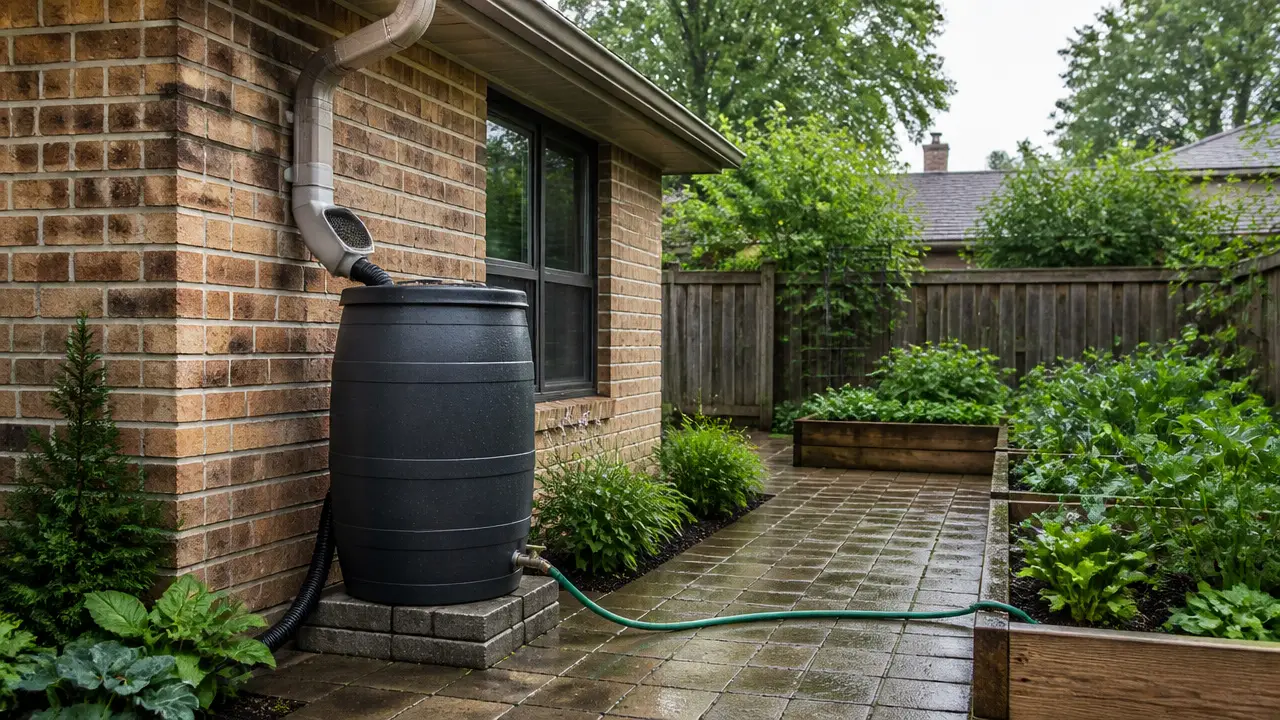
| Rain barrel | Stable level pad or properly built stand |
| IBC tote | Firm, level, full-support surface |
| Large tank on difficult soil | Professionally designed foundation |
| Tank on steep slope | Professional site and foundation assessment |
The tank manufacturer's installation instructions should take priority over general rules. Tank shape, floor design, and material can change the type of support required.
A Practical Base Checklist
Before filling the tank, check that:
- The ground below the base is stable.
- Soft topsoil and organic material have been removed.
- The foundation is level.
- The entire tank bottom is supported.
- There are no sharp rocks under a plastic tank.
- The base will not easily wash away.
- Tank overflow drains away from the foundation.
- Plumbing does not support the tank's weight.
- The outlet and valves have enough clearance.
- The tank cannot slide or move because of site conditions.
- The installation follows the tank manufacturer's instructions.
Also consider what happens when the tank is empty. Large empty plastic tanks can be affected by strong wind or moving floodwater. Anchorage requirements depend on the tank, site, and manufacturer.
Frequently Asked Questions
Does a water tank need a concrete base?
Not always. Concrete is a strong choice for large permanent tanks, but some above-ground plastic tanks can be installed on properly compacted crushed stone. Follow the tank manufacturer's foundation requirements.
How level does a water tank base need to be?
The foundation should be level across the tank's full footprint. An uneven foundation can make the tank lean and put extra stress on the walls, outlet, and plumbing.
Can I put a plastic water tank on gravel?
Possibly, but compacted crushed stone is generally more stable than loose round gravel. The surface must provide even support and should not contain sharp rocks. Check the tank manufacturer's instructions first.
Can I put a water tank on concrete blocks?
Large flat-bottom tanks generally should not be supported only at a few points unless the manufacturer specifically allows it. Point supports can concentrate thousands of pounds of load in small areas.
Can I put a water tank on a wooden platform?
Small barrels can sometimes use properly built stands. Large tanks need a structure designed for their full weight. A 1,000-gallon tank contains more than 8,000 pounds of water, so an ordinary deck or homemade platform may not be safe.
Should the water tank base be larger than the tank?
The entire tank bottom must be supported. Having the prepared base extend beyond the tank can also help protect the edges from erosion. Follow any minimum dimensions given by the tank manufacturer.
What is the best base for a 1,000-gallon water tank?
A properly prepared concrete slab is often a good choice for a permanent 1,000-gallon tank. Some manufacturers also allow compacted aggregate bases. Because the water alone weighs about 8,340 pounds, the soil and foundation must be able to support the full load without uneven settling.
Can I put a rainwater tank directly on the ground?
A small container may sometimes sit on firm ground, but larger rainwater tanks should have a prepared foundation. Bare soil can soften, settle, or erode, especially when tank overflow and roof runoff are nearby.