As an affiliate, we may earn a commission from qualifying purchases. We get commissions for purchases made through links on this website from Amazon and other third parties.
The best type of rainwater tank for most homes is a durable, opaque polyethylene tank made for water storage. It is light, does not rust, comes in many sizes, and usually works well for garden watering and other non-potable uses.
But there is no single best tank for every property. The right choice depends on how much water you want to store, where the tank will sit, how the water will be used, and whether freezing, sunlight, limited space, or structural loads are concerns.
Which Rainwater Tank Is Best for Most Homes?
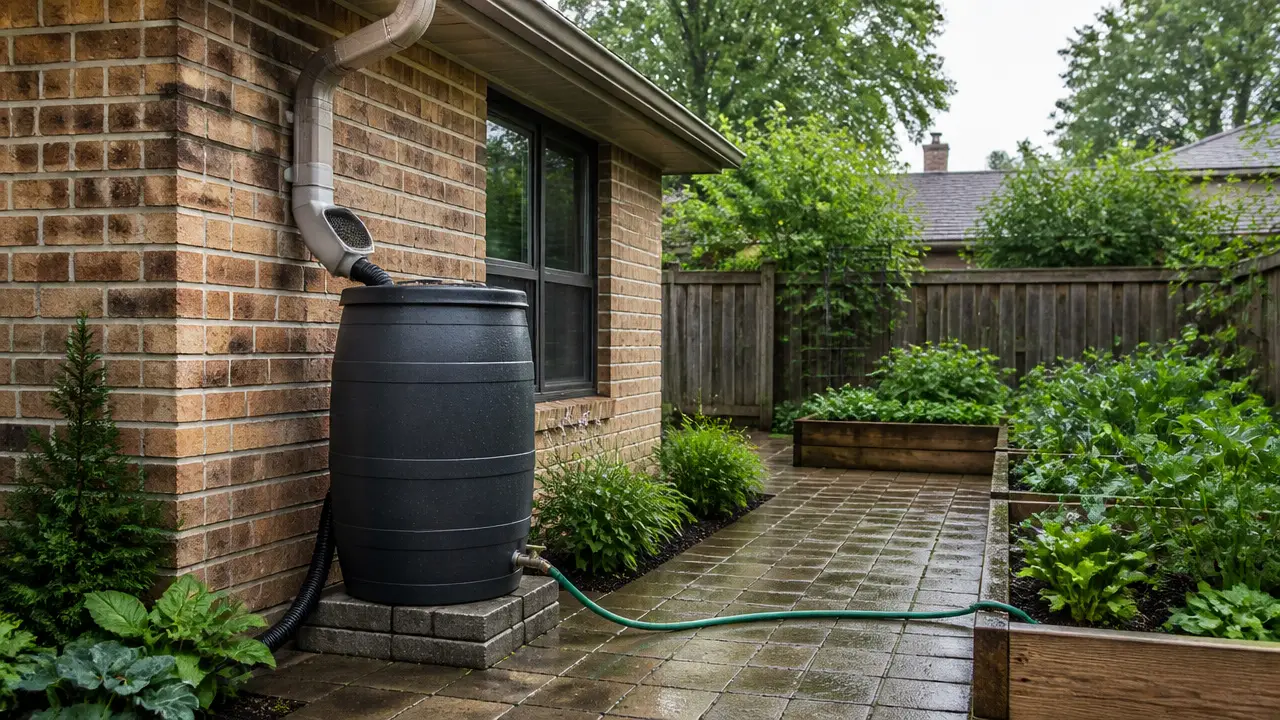
For a typical residential rainwater harvesting system, a vertical above-ground polyethylene tank is often the simplest choice.
Polyethylene is a type of plastic commonly used for molded water tanks. A suitable rainwater tank should be:
- Designed for water storage
- Opaque enough to limit sunlight inside
- Resistant to outdoor weather
- Large enough for your expected collection and use
- Compatible with your inlet, overflow, outlet, and pump connections
- Installed on a firm, level base that can support its full weight
An opaque tank is important because sunlight encourages algae growth. A dark exterior does not automatically mean a tank is suitable for drinking-water storage, however. Tank material and intended use still matter.
Comparing the Main Types of Rainwater Tanks
Polyethylene Tanks
Polyethylene tanks are common because they balance cost, weight, durability, and ease of installation.
They work especially well for:
- Garden irrigation
- Rainwater collection from house roofs
- Cabins and homesteads
- Above-ground cistern systems
- Properties where a tank may eventually need to be moved or replaced
Unlike steel, polyethylene does not rust. Molded tanks are also available in many shapes.
The main limitation is that plastic tanks need proper support. They can deform if installed on an uneven base, and some installations may require protection from impact or severe weather.
They should also be rated for the way you plan to install them. An above-ground tank should not simply be buried unless the manufacturer specifically designed it for underground installation.
Steel Rainwater Tanks
Steel tanks can be a good choice when you need a large, strong above-ground storage tank.
Common versions include galvanized steel tanks and steel tanks with protective liners or coatings.
They can work well for:
- Large roof catchments
- Rural properties
- Large irrigation systems
- Situations where very large storage capacity is needed
Steel tanks are heavier than plastic tanks and may require more planning for delivery and installation.
Corrosion is another consideration. Coatings, liners, fittings, fasteners, and water chemistry can all affect the life of a steel tank. Damage to protective surfaces may eventually lead to corrosion.
Concrete Tanks
Concrete tanks are usually used when large storage capacity and permanent installation are priorities.
They may be installed above ground, partly below ground, or underground depending on their design.
Advantages include:
- High structural strength
- Large available capacities
- Good protection from sunlight
- Stable water temperature compared with exposed small tanks
The disadvantages are substantial weight and installation complexity.
Concrete tanks require a properly prepared site. Underground installations may involve excavation, drainage planning, engineering, and local permit requirements.
Concrete is generally better suited to a permanent system than a small DIY rain barrel setup.
Fiberglass Tanks
Fiberglass tanks are less common in basic home rainwater systems but can be useful when corrosion resistance or a particular tank design is needed.
They are relatively lightweight compared with concrete and steel.
However, tank quality, resin type, intended water use, and installation requirements vary. A fiberglass tank should be specifically designed for water storage rather than assuming any fiberglass container is suitable.
Underground Plastic Tanks
An underground tank can be useful when you want to save yard space or keep a large tank out of sight.
These tanks are specially reinforced to handle soil loads.
They can be a good option when:
- Above-ground space is limited
- Appearance is important
- A large storage volume is desired
- Freezing conditions make exposed plumbing difficult
Installation is much more involved than placing an above-ground tank.
The excavation must account for soil conditions, groundwater, drainage, tank anchoring where required, access, and vehicle or structural loads above the tank.
Never bury a standard above-ground polyethylene tank. Soil pressure can collapse it.
What Tank Shape Is Best?
Tank shape often matters almost as much as tank material.
Vertical Round Tanks
A vertical round tank is usually the simplest choice when you have enough open space.
Its advantages include:
- Large capacity for the footprint
- Simple plumbing layout
- Many available sizes
- Good structural efficiency
This is often the best starting point for a typical home rainwater system.
Slimline Tanks
Slimline tanks are narrow tanks designed to fit beside houses, garages, fences, or other tight spaces.
They are useful where a round tank will not fit.
The tradeoff is that the shape may provide less storage for the same general installation area, and connection locations can be more restrictive.
Check the actual tank dimensions before planning gutters or plumbing.
Low-Profile Tanks
Low-profile tanks can fit beneath decks or in other areas with limited height.
They may solve difficult space problems, but access for inspection and cleaning can be less convenient.
Make sure you can still reach important components.
Rain Barrels
Rain barrels are best for small-scale collection rather than large household storage.
They are useful for:
- Watering containers
- Small gardens
- Testing whether rainwater collection is useful on your property
A barrel fills quickly during a strong storm, so an overflow route is especially important.
Several barrels can sometimes be connected together, but a larger tank may become simpler once storage needs increase.
IBC Totes
IBC totes are sometimes adapted for rainwater collection because they hold much more water than a barrel.
They require more care than purpose-built rainwater tanks.
Before using one, you need to know its previous contents. A used tote that held an unknown or unsuitable substance should not be assumed safe for water storage.
The plastic tank inside an IBC tote is also commonly translucent. It may need protection from sunlight to reduce algae growth.
Choose the Tank Based on How You Will Use the Water
Start with the intended water use rather than the tank material alone.
Garden Watering
For basic garden irrigation, an above-ground polyethylene tank is usually practical.
Pay attention to the outlet location and elevation. Water leaving a tank under gravity has only modest pressure.
A tank sitting slightly above the garden may feed a hose or drip system, but many sprinklers and irrigation systems require a pump.
Toilet or Laundry Reuse
Reviewing a suitable water storage tank for home use helps evaluate tank size based on expected use between rain events.
Connecting rainwater to household plumbing is much more complicated.
You may need:
- Pumps
- Pressure controls
- Backflow protection
- Separate piping
- Filtration
- Automatic mains-water backup
- Required labeling or plumbing safeguards
Local plumbing rules can apply. Household rainwater plumbing should be planned so rainwater cannot contaminate the potable water supply.
Drinking Water
A tank being marketed for potable water storage does not make collected roof runoff automatically safe to drink.
Potable means suitable for drinking.
Drinking-water rainwater systems require consideration of the entire collection and treatment path, including the roof, gutters, debris removal, first-flush management where appropriate, tank, plumbing, treatment equipment, maintenance, and current water testing.
A first flush device diverts some of the initial roof runoff, which may contain accumulated dirt and debris. It is only one part of water-quality management.
Anyone planning to drink harvested rainwater should follow current public-health guidance, applicable local requirements, and appropriate laboratory testing. Treatment should be designed for the contaminants that may actually be present.
How Big Should the Tank Be?
The best tank is not necessarily the biggest tank you can fit.
Tank sizing depends mainly on:
- Roof catchment area
- Local rainfall pattern
- Water demand
- Available installation space
- Length of dry periods
- How much overflow you are willing to lose
A useful theoretical estimate for collected water is:
Collected water = rainfall depth × catchment area
For metric units, approximately 1 millimeter of rain falling on 1 square meter of roof equals 1 liter of water before losses.
For example, 10 mm of rainfall on a 100 m² roof represents about:
10 × 100 = 1,000 liters
Actual collection will be lower because of splash, evaporation, gutter losses, first-flush diversion, overflow, and other system losses.
Tank sizing should therefore consider rainfall timing as well as annual rainfall. A property that gets most of its rain in a short wet season may need a different storage strategy from one that receives regular rainfall throughout the year.
Do Not Forget the Full Weight of the Tank
Water is heavy.
One liter of water has a mass of about one kilogram. A 5,000-liter tank therefore contains about 5,000 kilograms of water when full, before adding the weight of the tank itself.
That load needs proper support.
Large tanks should normally sit on a base prepared according to the tank manufacturer's requirements. Decks, elevated platforms, retaining walls, and other structures should not be assumed capable of supporting a full water tank.
When structural capacity is uncertain, get qualified advice.
Check the Tank Connections Before Buying
A good tank can still create problems if your plumbing does not fit it.
Check:
- Inlet size and location
- Overflow size and location
- Outlet position
- Drain or cleaning access
- Pump connection
- Tank venting
- Inspection access
- Screen attachment points
A bulkhead fitting is a fitting that passes through the tank wall and creates a sealed plumbing connection.
Avoid drilling new holes into a tank unless the tank design and manufacturer instructions allow it. Poorly placed penetrations can leak or weaken the tank.
The overflow is particularly important. Once the tank fills, incoming rainwater must have somewhere safe to go without flooding foundations, eroding the tank base, or causing the tank to overflow uncontrollably.
The Best Tank Should Keep Light, Debris, and Pests Out
Regardless of tank material, good rainwater storage includes basic contamination control.
A well-designed tank installation should limit:
- Sunlight entering the stored water
- Leaves and large debris
- Insects and mosquitoes
- Animals
- Sediment entering unnecessarily
Screens and covers still need inspection. A damaged mosquito screen or loose lid can defeat the purpose of the protection.
The tank also needs ventilation as water levels rise and fall.
Think About Cleaning Before Choosing a Tank
Tank maintenance is easier when the tank was designed with access in mind.
Before buying, look at how you would:
- Inspect the inside
- Remove accumulated sediment
- Clean inlet screens
- Reach strainers
- Service the outlet
- Check the overflow
- Isolate the tank if repairs are needed
Do not enter a rainwater tank or cistern. Tanks can be confined spaces with serious hazards. Cleaning methods that require entry should be left to properly equipped professionals.
What Is Best in Freezing Climates?
Freezing weather changes the choice.
The tank itself may survive cold weather while exposed valves, filters, pumps, pipes, and fittings freeze and break.
A system in a cold climate may require seasonal draining, protected plumbing, buried lines at suitable depths, insulation, or other freeze-management measures appropriate to the local climate.
Underground storage can reduce temperature swings, but underground tanks introduce excavation and installation issues of their own.
Do not assume insulation alone guarantees protection from freezing.
Best Rainwater Tank by Situation
| Situation | Usually worth considering |
|---|---|
| Typical home garden | Above-ground polyethylene tank |
| Very small garden | Rain barrel |
| Narrow side yard | Slimline polyethylene tank |
| Large rural storage system | Large polyethylene, steel, or concrete tank |
| Limited above-ground space | Purpose-built underground tank |
| Permanent large cistern | Concrete or engineered underground tank |
| Temporary or adaptable setup | Polyethylene tank |
| IBC tote project | Suitable known-history tote with proper light protection |
These are starting points rather than fixed rules. Site conditions and intended water use can change the best choice.
So, What Type of Rainwater Tank Should You Choose?
For most homeowners wanting rainwater for garden watering or similar non-potable uses, start by looking at a purpose-built, opaque, above-ground polyethylene rainwater tank.
Choose the shape and capacity that fit your property, then make sure the tank has suitable connections, safe overflow handling, inspection access, and a properly prepared base.
Move toward steel, concrete, or underground storage when capacity, space, durability, appearance, or site conditions justify the extra installation work.
Most importantly, choose the tank as one part of the whole rainwater system. Roof collection, debris control, overflow, plumbing, pumps, water use, cleaning, and water-quality requirements all affect whether the installation works well.
Frequently Asked Questions
What is the longest-lasting type of rainwater tank?
Tank life depends on material quality, installation, sunlight exposure, corrosion, water chemistry, physical damage, and maintenance. Concrete and well-designed steel tanks can provide long service in suitable installations, while good polyethylene tanks can also last many years. Proper installation is often as important as the material itself.
Are plastic rainwater tanks better than metal tanks?
Plastic tanks are usually lighter, easier to install, and resistant to rust. Metal tanks may be attractive for larger installations and can be very strong. Neither material is automatically better in every situation.
What color rainwater tank is best?
The important issue is keeping sunlight from reaching the stored water. An opaque tank helps limit algae growth. Tank suitability should be based on its construction and intended use rather than exterior color alone.
Can I use an IBC tote as a rainwater tank?
An IBC tote can sometimes be used for non-potable rainwater storage if its history and condition are suitable. Avoid totes that previously contained unknown or hazardous materials. Because many totes allow light through, they may also require effective protection from sunlight.
Is an underground rainwater tank better?
It can be better when yard space is limited or you want the tank hidden. However, underground tanks cost more effort to install and must be designed for burial. Soil conditions, groundwater, excavation safety, access, and structural loading all need consideration.
Can I drink water from a rainwater tank?
Do not assume stored roof runoff is safe to drink. Drinking-water use requires suitable collection materials, contamination controls, treatment appropriate to the water quality, maintenance, current laboratory testing, and compliance with applicable health and local requirements.
Does a rainwater tank need a pump?
Not always. Gravity can work for some low-pressure watering systems when the tank is elevated enough. A pump is usually needed when equipment requires higher pressure or when water must be moved uphill or through household plumbing.