As an affiliate, we may earn a commission from qualifying purchases. We get commissions for purchases made through links on this website from Amazon and other third parties.
Rain diverters are usually worth it if you want a simple way to send roof runoff into a rain barrel without rebuilding your whole downspout system. They can make filling a barrel easier, reduce overflow problems, and let the downspout keep handling excess water once the barrel is full.
They are not the best choice for every setup. A diverter must match your downspout, barrel connection, and expected water use. It also needs regular cleaning so leaves and roof debris do not block the flow.
What Does a Rain Diverter Do?
A rain diverter, often called a downspout diverter, is installed in a roof downspout. It redirects some of the rainwater flowing through the downspout into a rain barrel or other storage container.
A typical setup works like this:
- Rain lands on the roof.
- Gutters carry the water to the downspout.
- The diverter sends some water through a hose into the barrel.
- When the barrel is full, many diverter systems allow excess water to continue down the original downspout.
That last feature is one of the main reasons a diverter can be useful. You may not need a separate barrel overflow pipe if the diverter is specifically designed to return excess water to the downspout.
Check the instructions for your particular diverter. Not every design handles a full barrel in the same way.
When Is a Rain Diverter Worth It?
A diverter makes the most sense when you have a rain barrel beside an existing downspout and want to keep the original drainage path.
It can be especially useful when:
- You want a fairly simple rain barrel installation.
- You do not want to cut off and reroute the bottom of the downspout.
- You want excess water to keep flowing through the normal drainage system.
- Your barrel is used mainly for garden watering or other non-potable uses.
- The barrel sits close enough to the downspout for a short connecting hose.
Non-potable means water that is not intended for drinking.
For a basic garden barrel, a well-matched diverter can make the system much easier to manage.
When Might a Diverter Not Be Worth It?
A diverter is less useful when your rainwater system needs to collect nearly all available runoff.
Many small downspout diverters capture only part of the water passing through the downspout. That is often fine for a rain barrel, which can fill quickly during a storm. It may be less suitable for a large cistern where maximizing collection matters.
You may also want another approach if:
- The storage tank is far from the downspout.
- You are using large pipes rather than a small barrel hose.
- Your downspout shape or dimensions do not match available fittings.
- Your roof produces heavy flows that exceed the practical capacity of the diverter.
- Your system needs a dedicated first-flush device or more advanced prefiltration.
- You want several downspouts feeding one large storage tank.
Large rainwater systems are normally planned around full-size collection pipes, filters, overflows, and tank connections rather than small rain-barrel diverters.
Rain Diverters Can Make Overflow Easier to Manage
Overflow is an important part of any rainwater storage system.
A barrel does not stop receiving rain just because it is full. Without a safe path for extra water, runoff can spill around the barrel and collect near a foundation, walkway, or other unwanted area.
Some downspout diverters are designed so that water stops entering the barrel once the water reaches a certain level. Additional runoff then continues through the downspout.
This arrangement can be convenient because the original downspout still sends excess water toward its normal drainage location.
However, this only works correctly when the diverter and barrel are installed at the proper relative heights. A poorly positioned hose or connection can prevent the system from behaving as intended.
Check Downspout Compatibility Before Installing One
Downspouts are not all the same size or shape.
Before choosing a diverter, check:
- Downspout width and depth
- Rectangular or round shape
- Diverter connection size
- Hose diameter
- Barrel inlet location
- Available space around the downspout
- Whether the downspout can be safely cut at the required height
Do not assume a diverter labeled for a common downspout will fit yours.
Measure the actual downspout first.
The hose also matters. A hose that is kinked, blocked, too long, or routed uphill can reduce water movement into the barrel.
Barrel Height Matters
Many diverters rely on the water level inside the barrel reaching roughly the same level as part of the diverter before excess water continues down the downspout.
That means installation height matters.
Placing the diverter much too high or too low compared with the barrel inlet can cause poor filling or overflow behavior.
Follow the diverter's installation dimensions rather than choosing a cutting point based only on convenience.
The barrel itself should also sit on a firm, level base.
Water is heavy. A full rain barrel can place several hundred pounds of load on a small area, depending on its capacity. Larger tanks require even more careful support.
How Much Water Can a Diverter Collect?
That depends on the roof area draining to the downspout, rainfall amount, system design, and collection losses.
The theoretical amount of water falling on a roof can be estimated from:
Roof catchment area × rainfall depth = theoretical runoff volume
Actual collection will be lower because some water is lost to roof wetting, gutter losses, splashing, debris removal, and other parts of the system.
A small rain barrel may fill much sooner than expected during steady rainfall. In that case, capturing every gallon passing through the downspout is not especially useful. Once the barrel is full, you need somewhere safe for the remaining runoff to go.
For large storage systems, collection efficiency becomes more important.
A Rain Diverter Is Not the Same as a First-Flush Diverter
The names can be confusing.
A downspout diverter sends roof runoff toward a rain barrel or tank.
A first-flush diverter is intended to separate some of the earliest runoff from the stored water. Early runoff can carry accumulated dust, droppings, plant material, and other debris from the roof.
Some rainwater systems use both.
Installing a basic barrel diverter does not automatically provide first-flush treatment or make roof runoff clean enough for drinking.
Does a Diverter Filter the Rainwater?
Usually not in any meaningful water-treatment sense.
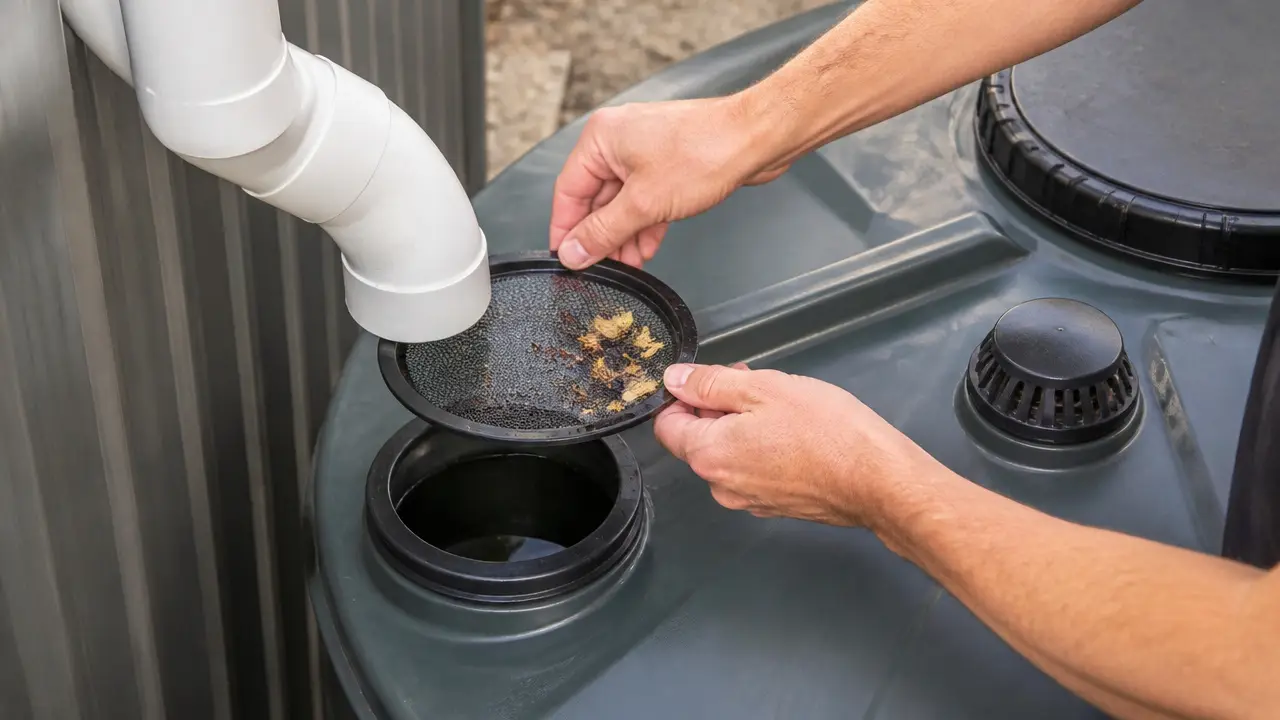
Some systems include a screen or simple debris catcher. This can help keep leaves and larger material out of the barrel.
That is useful, but it is not the same as treating water for microbiological or chemical contamination.
Screens, gutter guards, and debris filters mainly protect the collection system and improve water quality before storage. They do not establish that roof runoff is safe to drink.
Rain Diverters Still Need Maintenance
A diverter is a low-complexity part, but it is not maintenance-free.
Check it periodically for:
- Leaves
- Roof grit
- Seeds
- Small twigs
- Insect nests
- Algae or organic buildup
- Clogged screens
- Loose hoses
- Leaks around connections
Inspect it more often when nearby trees drop large amounts of leaves or seeds.
Also check the gutters. A clean diverter cannot work properly if the gutter or downspout above it is blocked.
What About Mosquitoes?
The diverter itself is usually not the main mosquito concern. Openings into stored water are.
Regarding the value of downspout diverters, evaluate the conveyance path from the roof surface into the tank.
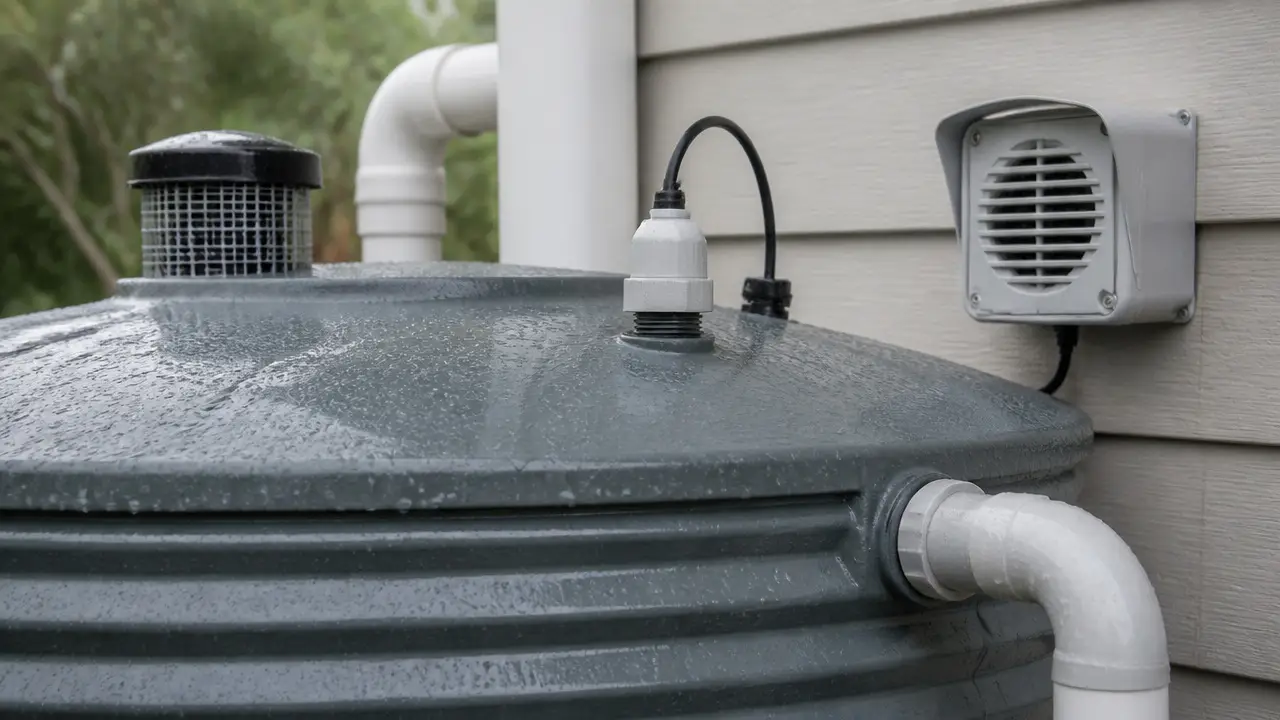
A rain barrel should be set up so mosquitoes cannot easily reach the water to lay eggs. Screen necessary openings with appropriate fine mesh, keep lids secure, and repair gaps around hoses and fittings.
Do not leave an open barrel simply because the incoming water passes through a diverter.
Do Rain Diverters Work in Freezing Weather?
They can create problems in freezing climates if water remains trapped in hoses, fittings, or the barrel.
Ice expansion can damage components and connections. A frozen barrel may also prevent the diverter from operating as intended.
Depending on the system and climate, winter preparation may include disconnecting or bypassing the barrel and restoring normal downspout drainage.
Follow the manufacturer's cold-weather instructions for the diverter and storage container. Do not assume a system is freeze-proof simply because the barrel is outdoors.
Are Rain Diverters Good for Large Tanks?
Sometimes, but small rain-barrel diverters are generally better suited to small storage systems.
For an IBC tote or cistern, consider how much water you are trying to move.
A small hose can become a bottleneck when a large roof is producing substantial runoff. Large tanks may work better with a full-flow collection pipe sized for the downspout and expected flow.
Larger systems also need a properly planned overflow. Overflow water should be directed somewhere that can safely accept it without causing erosion or moisture problems around buildings.
What Can Go Wrong With a Rain Diverter?
Most problems come from installation or maintenance rather than the basic idea of diverting water.
The barrel fills slowly
Possible causes include:
- A blocked diverter
- A kinked hose
- An uphill hose run
- Incorrect installation height
- Poorly matched fittings
- Limited flow through the diverter
Water spills around the barrel
The barrel may lack adequate overflow control, or the diverter may not be installed in the position required for its automatic overflow function.
The downspout backs up
Look for leaves, sediment, or another blockage. Do not allow a diverter to restrict the main roof drainage path during heavy rain.
The hose leaks
Check the connection and fitting compatibility rather than simply tightening parts harder. Excess force can damage plastic fittings.
The barrel stays full for long periods
Use the stored water regularly when practical. Standing rainwater systems still require cleaning and mosquito control.
Is a Diverter Better Than Cutting Off the Downspout?
For many single-barrel systems, it can be.
A traditional setup often cuts the downspout and directs its entire flow into the top of the barrel. The barrel then needs its own overflow pipe capable of carrying excess water away.
That arrangement can collect water effectively, but overflow becomes especially important.
A diverter keeps the original downspout largely functional. This can make a small system simpler and provide a convenient route for excess runoff.
Neither method is automatically better. The important question is how much water you want to collect and how the system will safely handle runoff after storage is full.
Are Rain Diverters Worth It for Garden Watering?
This is one of their best uses.
A garden rain barrel generally does not need a complicated collection system. A diverter can provide a practical way to fill the barrel while keeping the existing downspout drainage available.
Before setting one up, make sure you have:
- A compatible downspout
- A stable barrel base
- A screened and covered container
- Suitable connections
- A safe overflow arrangement
- A practical way to get water from the barrel to the garden
Remember that a barrel sitting close to ground level creates only modest water pressure. The diverter helps fill the barrel, but it does not increase outlet pressure.
A pump or greater water height may be needed for equipment that requires more pressure.
Are Rain Diverters Worth It for Drinking Water Systems?
A basic downspout diverter should not be viewed as drinking-water treatment.
Roof runoff can contain microorganisms, animal waste, debris, metals, chemicals, and contaminants from roofing materials or the surrounding environment.
If collected rainwater is being considered for drinking, the whole system matters. That can include suitable catchment materials, debris removal, first-flush management where appropriate, protected storage, properly designed treatment, ongoing maintenance, and current laboratory water testing.
A simple screen, diverter, household filter, UV unit, test strip, or water-quality meter by itself does not establish that rainwater is potable.
Potable means suitable for drinking.
So, Are Rain Diverters Worth Buying?
For a typical rain barrel, yes. A downspout diverter is often a practical addition because it lets you collect useful rainwater without sending the entire downspout directly into the barrel.
Its biggest benefits are convenience and easier management of excess runoff.
The main reasons not to use one are poor downspout compatibility, a need for much higher collection flow, or a larger system that would work better with full-size piping and a dedicated overflow.
Measure everything before installation, keep the diverter clean, and make sure normal roof drainage still has a safe path when your storage is full.
Frequently Asked Questions
Do rain diverters really work?
Yes. A properly installed downspout diverter can redirect part of the runoff from a roof into a rain barrel or storage container. Performance depends on downspout compatibility, installation height, hose routing, and regular cleaning.
Will a rain diverter stop automatically when my barrel is full?
Some designs are made to send excess water back through the downspout when the barrel reaches a certain level. This feature depends on correct installation and is not universal, so check how your specific diverter handles a full barrel.
Can a rain diverter handle heavy rain?
The main downspout should still be able to carry runoff during heavy rain. A small diverter hose may collect only part of that flow. Make sure the installation does not create a restriction that causes the gutter or downspout to back up.
Does a rain diverter need an overflow pipe?
It depends on the design. Some diverters use the original downspout as the overflow route. Other setups require a separate barrel overflow. Always provide a safe path for water once storage is full.
Can I install a rain diverter on any downspout?
No. Downspouts vary in size and shape. Measure yours and verify that the diverter is designed for those dimensions before cutting the downspout.
Is a rain diverter the same as a first-flush diverter?
No. A downspout diverter directs rainwater toward storage. A first-flush diverter separates some early roof runoff so that it does not enter the main storage tank.
Can I use a rain diverter with an IBC tote?
You can in some systems, but check whether the diverter and hose can move enough water for your collection goals. A larger tank and roof catchment may benefit from larger collection piping instead.