As an affiliate, we may earn a commission from qualifying purchases. We get commissions for purchases made through links on this website from Amazon and other third parties.
An air breather on a water tank lets air move in and out as the water level changes. It helps prevent unwanted pressure or vacuum inside the tank while still allowing the tank to stay mostly closed to dirt, insects, and debris.
On a rainwater tank, cistern, or IBC-based storage system, the breather is usually a vent opening near the top of the tank. A properly designed vent is especially important when water is entering quickly from the roof or leaving quickly through a pump or large outlet.
What an Air Breather Does on a Water Tank
A closed tank cannot fill or drain freely unless air has somewhere to go.
When rainwater enters the tank, the incoming water takes up space. The air already inside the tank needs to escape.
When water leaves the tank, the opposite happens. Air needs to enter and replace the volume of water that was removed.
The air breather provides this path.
In simple terms:
- Tank filling: air flows out.
- Tank draining: air flows in.
- Water level steady: very little air movement is needed.
Without enough ventilation, pressure differences can develop inside the tank.
Why a Tank Needs to Breathe
Many rainwater tanks are not designed to hold pressure or withstand a strong vacuum.
If water is pumped out faster than air can enter, a partial vacuum can form. On some tanks, this can pull the tank walls inward or interfere with water flow.
If water enters faster than air can escape, pressure can build inside a tightly sealed tank. This can stress lids, seals, fittings, or tank walls.
The breather keeps the air pressure inside the tank much closer to the outside air pressure.
This matters most when the tank has:
- A high-flow pump
- A large inlet pipe
- Fast roof runoff
- Multiple tanks connected together
- A tightly sealed lid
- Large outlet plumbing
A small rain barrel with a loose-fitting lid may already have enough natural ventilation. A sealed cistern or large storage tank usually needs a deliberate vent.
What an Air Breather Looks Like
A tank breather can take several forms.
It may be a:
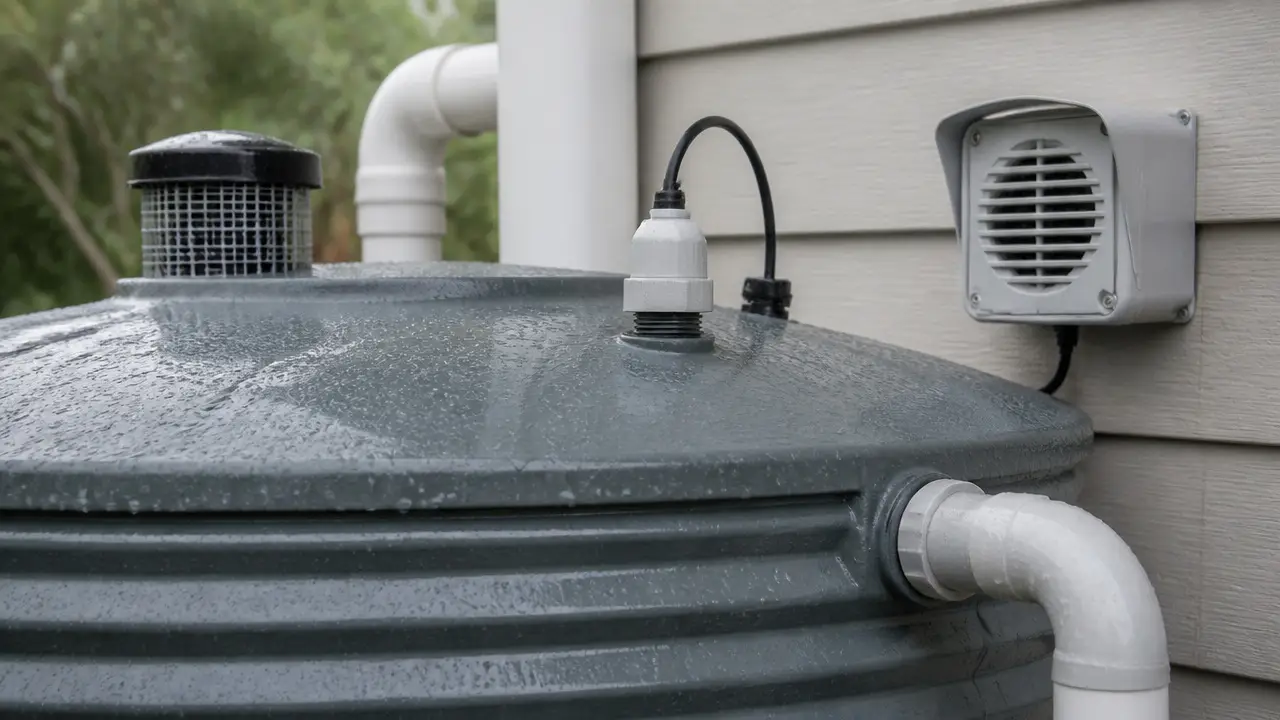
- Small screened vent fitting
- Short vertical vent pipe
- Downturned pipe elbow
- Hooded vent
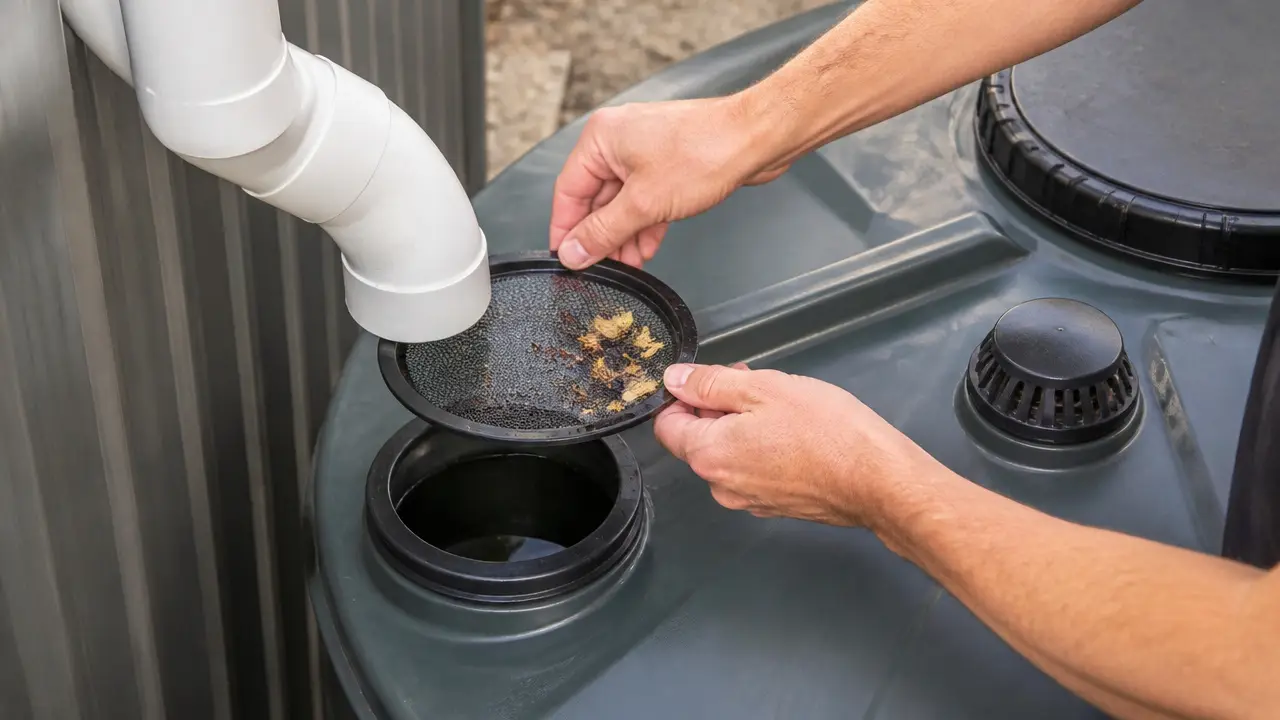
- Vent cap with insect screening
The opening is normally located above the tank's normal water level.
Outdoor vents should be arranged so that rain, leaves, insects, and small animals cannot easily enter the tank. Screens are commonly used to reduce insect access.
The vent should not simply be an uncovered hole in the top of the tank.
Air Breather vs. Overflow Pipe
The breather and overflow have different jobs.
| Part | Main job |
|---|---|
| Air breather | Lets air enter and leave the tank |
| Overflow | Carries excess water away when the tank becomes full |
| Inlet | Brings collected rainwater into the tank |
| Outlet | Sends stored water to a tap, pump, or irrigation system |
An overflow pipe should not automatically be treated as a substitute for a proper vent.
An open overflow can sometimes provide some air movement, but its ability to do so depends on the plumbing layout. During heavy rain, the overflow may also be carrying water.
A dedicated vent gives the tank a predictable air path.
Does an Air Breather Stop a Tank From Collapsing?
It can help prevent vacuum-related deformation, but only when the vent is large enough and remains open.
For example, imagine a pump drawing water rapidly from a sealed polyethylene tank. If the pump removes water faster than air can enter, the pressure inside the tank drops. Thin tank walls may start pulling inward.
A working breather allows replacement air to enter instead.
However, a vent does not guarantee that a tank cannot deform. Tank construction, flow rate, plumbing, blockages, installation, and manufacturer requirements all matter.
A tank that is visibly collapsing, swelling, or changing shape should not simply be given a larger vent without first identifying the cause.
How Large Should the Breather Be?
There is no single vent size that is correct for every rainwater tank.
The vent must handle the expected movement of air while the tank is filling and emptying.
Important factors include:
- Maximum inlet flow
- Maximum pump or outlet flow
- Tank size and design
- Vent pipe length
- Bends and restrictions
- Screen resistance
- Manufacturer requirements
A very small opening may work on a slow-filling barrel but be too restrictive for a large cistern receiving a strong flow of roof runoff.
Screens also reduce the effective open area of a vent. A vent that looks large enough may become restrictive if its mesh becomes clogged with dust, insects, algae, or debris.
For manufactured tanks, follow the tank maker's venting requirements rather than choosing a size from tank capacity alone.
The Breather Should Stay Above the Water Level
The vent opening normally needs to remain above the highest intended water level.
If the breather fills with water, it can no longer move air freely.
Its position should also help keep runoff from entering directly through the vent. A downturned elbow or weather-protected vent cap is often used for outdoor tanks.
Do not place the vent where overflow water routinely submerges it.
Why the Screen Matters
Reviewing practical considerations for a water tank need a vent helps evaluate the storage-vessel configuration for the installation area.
Rainwater tanks can provide attractive breeding conditions for mosquitoes if insects can reach stored water.
A screened breather helps block access while still allowing airflow.
The screen must remain intact and reasonably clean. A damaged screen can let insects into the tank, while a heavily clogged screen can restrict airflow.
Check the vent during normal tank maintenance, especially if the system is surrounded by trees, dust, or insects.
Can the Air Breather Get Blocked?
Yes.
Common causes include:
- Spider webs
- Insect nests
- Dust
- Leaves
- Algae or organic buildup
- Damaged or collapsed mesh
- Ice
- Paint or sealant accidentally covering the opening
A blocked vent can behave almost like having no vent at all.
If a tank begins making unusual noises, changing shape, draining poorly, or behaving differently when a pump operates, inspect the vent along with the rest of the plumbing.
Do not climb onto a tank or roof to reach a vent unless the access method is designed for safe maintenance.
Air Breathers in Freezing Climates
Cold weather adds another possible problem: ice.
Water or condensation around a vent can freeze and restrict airflow. Snow can also cover poorly positioned vents.
A vent in a freezing climate should be installed with local conditions in mind and kept where it can remain open. Tank plumbing, pumps, filters, and exposed pipes may need their own freeze-protection measures.
A vent alone does not protect a rainwater system from freeze damage.
Air Breathers on IBC Totes
IBC totes often have a top cap or lid that may provide some ventilation depending on how the tote is configured.
If an IBC tote is converted into a rainwater tank and the top is sealed, the system may need a deliberate air vent.
This becomes more important when a pump is connected to the bottom outlet. Removing water quickly from a sealed tote can create a vacuum.
Any added fitting should be suitable for the container and installed without weakening the tank or allowing contaminants easy access.
Does a Rain Barrel Need an Air Breather?
Some rain barrels do, while others are already vented through their lid, inlet, or overflow arrangement.
A tightly sealed barrel needs a way for air to move as water enters and leaves.
If the barrel fills slowly and has a vented lid, a separate breather may not be necessary. If it is sealed, connected to a pump, or filled through larger plumbing, proper ventilation becomes more important.
Keep any opening protected against insects and debris.
Maintenance Is Simple but Important
The breather does not normally require complicated maintenance.
Periodically check that:
- Air can still pass through it
- Screens are intact
- Mesh is not clogged
- Insects have not built nests inside
- The vent has not been submerged
- Caps and fittings are secure
- Ice or debris is not blocking the opening
It is also worth checking the breather whenever you clean the tank inlet, overflow, or prefilter.
A clear vent is a small part of the system, but it helps the whole tank fill and drain normally.
Frequently Asked Questions
What is the purpose of an air breather on a water tank?
It allows air to enter when water leaves the tank and allows air to escape when water enters. This helps keep the tank close to normal atmospheric pressure.
Can a water tank work without an air breather?
Some loosely covered tanks have enough ventilation through other openings. A sealed tank generally needs a proper air path, especially when it fills or drains quickly.
Is an air breather the same as an overflow?
No. A breather moves air. An overflow carries excess water away when the tank is full. Some plumbing arrangements allow the overflow to provide limited ventilation, but the two functions should not automatically be treated as interchangeable.
What happens if a tank breather is blocked?
A blocked breather can cause pressure or vacuum to develop as the water level changes. Possible signs include poor flow, unusual tank noises, or the tank walls moving inward or outward.
Should a tank breather have a screen?
For outdoor rainwater storage, a suitable insect screen is generally useful because it helps keep mosquitoes and other pests from entering. The screen must also be kept clean enough to allow airflow.
Where should an air breather be installed?
It is normally installed near the top of the tank and above the highest intended water level. Its opening should be protected from rain, debris, insects, and accidental submersion.
Does a pump make tank ventilation more important?
Yes. A pump can remove water much faster than a gravity-fed outlet. If replacement air cannot enter at a similar rate, a vacuum may develop inside a sealed tank.