As an affiliate, we may earn a commission from qualifying purchases. We get commissions for purchases made through links on this website from Amazon and other third parties.
For rainwater harvesting, gutters should usually be checked every 1 to 3 months and cleaned at least twice a year. Homes under trees, in stormy areas, or with heavy pollen may need cleaning much more often.
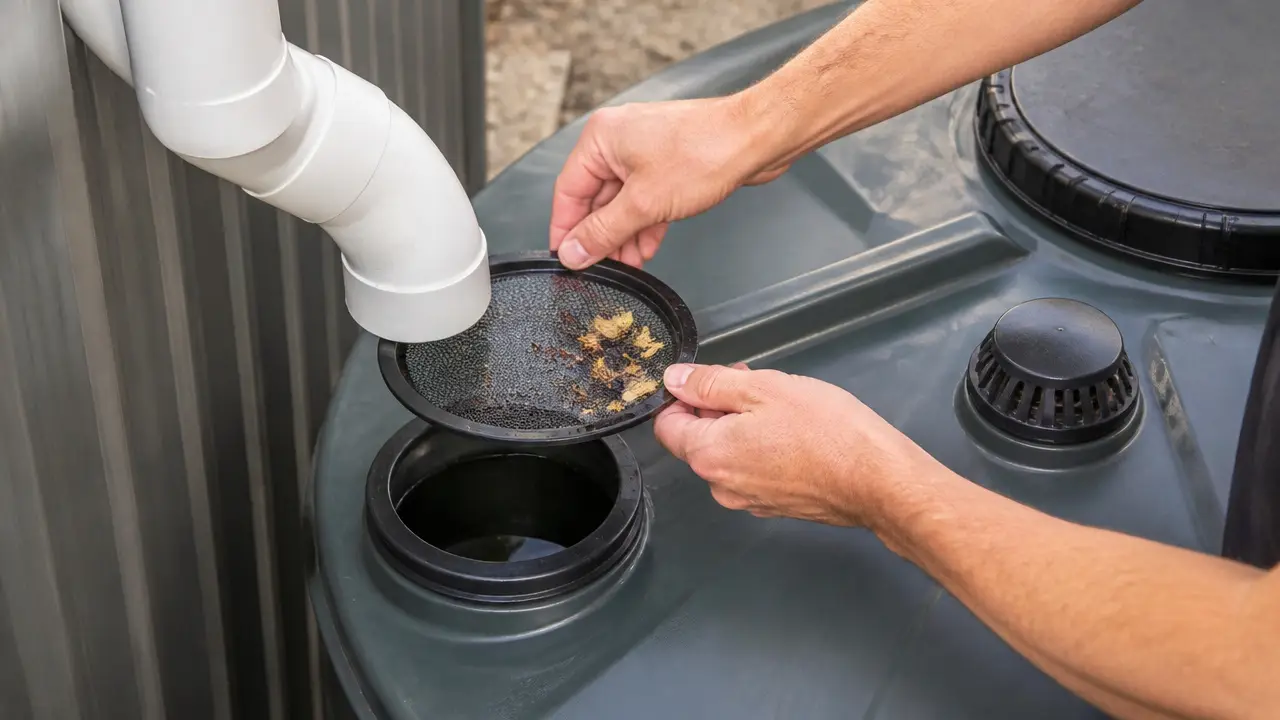
The goal is not just to prevent clogged gutters. Leaves, dirt, animal droppings, insects, and roof debris can wash into your rain tank. Keeping gutters clean reduces the amount of contamination that reaches your screens, first-flush diverter, filters, and stored water.
A Good Gutter Cleaning Schedule for Rainwater Collection
For many homes, this is a practical starting point:
| Situation | Suggested gutter care |
|---|---|
| Few nearby trees | Inspect every 2–3 months; clean about twice a year |
| Several nearby trees | Inspect monthly during leaf and seed seasons |
| Trees directly over the roof | Inspect every few weeks during heavy shedding |
| Heavy pollen or flowering trees | Check during and after peak pollen season |
| Frequent strong storms | Inspect after major storms |
| Long dry season followed by rain | Inspect before the wet season begins |
| Gutters visibly overflowing | Clean and inspect as soon as it is safe |
These are starting points, not fixed rules. Your actual cleaning schedule depends on how quickly debris collects.
For a rainwater harvesting system, checking the gutters is often more useful than following a strict calendar. A gutter that stays almost clean does not need the same schedule as one surrounded by pine needles, leaves, and bird activity.
Why Rainwater Harvesting Gutters Need Extra Attention
A normal gutter only needs to move water away from a roof.
A harvesting gutter has another job: it is part of your water collection system.
Anything sitting in the gutter can become part of the water entering the tank. Common debris includes:
- Leaves
- Twigs
- Seeds
- Pine needles
- Moss
- Roof grit
- Dust
- Pollen
- Insects
- Bird and animal droppings
Organic material can also break down inside a wet gutter. The resulting fine material may pass through a coarse gutter screen and end up in the tank.
A cleaner gutter reduces the debris load on everything downstream.
Clean Before the Main Rainy Season
One of the most useful times to clean harvesting gutters is just before the season when you expect to collect the most rain.
During a long dry spell, roofs and gutters can collect dust, leaves, droppings, and other material. The first heavy rain can wash much of it toward the tank.
Before regular rainfall begins, check:
- The roof where it can be viewed safely
- Gutters
- Downspout openings
- Leaf screens
- Gutter outlets
- First-flush components
- Tank inlet screens
This does not make the collected water sterile or automatically safe to drink. It simply reduces the amount of debris entering the system.
Check Gutters More Often Around Trees
Nearby trees are one of the biggest reasons a gutter cleaning schedule changes.
A tree does not have to drop large leaves to cause problems. Pine needles, blossoms, seeds, bark, small twigs, and fine organic material can also collect in gutters.
Some trees shed heavily for only a short part of the year. During that period, checking every few weeks may make more sense than cleaning twice a year.
Watch the gutter rather than the calendar. If you find a noticeable layer of debris every time you inspect it, shorten the time between inspections.
Inspect After Strong Storms
A heavy storm can put a large amount of material onto a roof in a short time.
Wind may carry:
- Leaves
- Small branches
- Seed pods
- Dust
- Loose roof material
- Debris from nearby trees
After a major storm, look for obvious signs of trouble from the ground if possible.
Check for overflowing water, sagging gutter sections, blocked outlets, damaged screens, or disconnected downspouts.
Do not climb onto a wet roof to inspect a harvesting system. Roof work can involve serious fall risks. If the gutters cannot be reached safely with suitable equipment and a stable work area, use a qualified gutter or roofing professional.
Signs Your Gutters Need Cleaning Now
You do not need to wait for your normal cleaning date if the system is already showing problems.
Common warning signs include:
Water spilling over the gutter edge
Overflow usually means water cannot move through the gutter or outlet fast enough. Debris may be blocking the flow.
Overflow also means you are losing water that could otherwise reach your storage tank.
Slow flow into the tank
If rainfall is good but very little water is reaching storage, inspect the collection path.
The restriction could be in the gutter outlet, downspout, leaf screen, first-flush device, or another inlet component.
Visible leaves or plants in the gutter
Plants growing from a gutter are a strong sign that organic material and sediment have been sitting there for some time.
Dirty inlet screens soon after cleaning
If the tank inlet screen keeps filling rapidly, the gutters or roof may be sending more debris downstream than your prefiltration system can handle.
Bad-smelling organic debris
Wet decomposing leaves and similar material should be removed rather than allowed to remain in the collection path.
Are Gutter Guards Enough?
Gutter guards can reduce how often you need to remove large leaves, but they do not eliminate maintenance.
Fine debris can still collect:
- On top of the guard
- Along its edges
- Under some guard designs
- Around gutter outlets
- Inside downspouts
Pollen, roof grit, small seeds, and broken-down leaf material may also pass through openings.
For rainwater harvesting, think of a gutter guard as one debris-control stage, not a maintenance-free solution.
It should still be inspected regularly.
What About Leaf Screens and Downspout Screens?
Leaf screens help stop larger debris before it moves farther into the system.
They are useful, but they can clog.
A blocked screen can cause water to bypass the harvesting system or overflow from the gutter. During heavy leaf fall, a screen may need attention much more often than the gutter itself.
Whenever you inspect the gutters, also check accessible screens and strainers in the water path.
Does a First-Flush Diverter Replace Gutter Cleaning?
Evaluate the best season for gutter cleaning to compare the outlet capacity required by the catchment area.
No.
A first-flush diverter is a device that directs some of the first roof runoff away from the storage tank. That first runoff often carries more dust and loose debris than later rainfall.
It can help reduce what reaches storage, but it is not designed to compensate for gutters full of leaves, mud, or decomposing material.
Keeping the collection surface and gutters reasonably clean reduces the load on the first-flush system.
The diverter itself also needs maintenance according to its design because sediment and debris can collect inside it.
Do Filters Mean You Can Clean Gutters Less Often?
Not usually.
Filters work better when large amounts of debris are removed before water reaches them.
Sending unnecessary dirt through a filtration system can lead to:
- Faster clogging
- Lower water flow
- More frequent filter cleaning
- More frequent filter replacement
- Greater maintenance throughout the system
It is generally better to keep debris out near the start of the collection path than to depend on downstream filters to remove everything later.
How to Build Gutter Cleaning Into Your Rainwater Maintenance Routine
You can make gutter care easier by connecting it with other regular system checks.
A simple routine might include inspecting:
- Gutters and outlets.
- Downspouts.
- Leaf screens and strainers.
- First-flush components.
- Tank inlet screens.
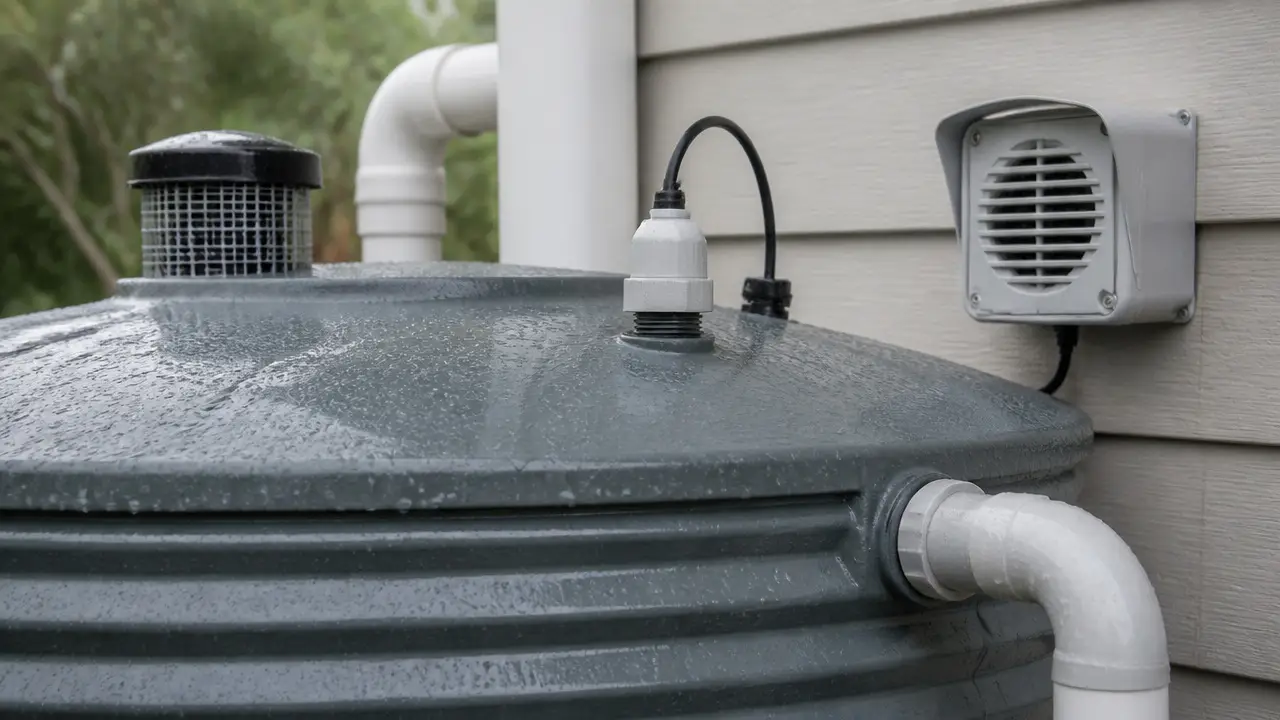
- Overflow screens and mosquito barriers.
- Accessible pipes and fittings for leaks or damage.
You do not need to take everything apart every time. The goal is to notice problems before they restrict water flow or send excessive debris into storage.
After a few months, you will usually learn which parts of your particular system clog first.
Gutters Should Drain Properly After Cleaning
Cleaning out leaves does not fix every gutter problem.
Water should be able to move toward the outlet instead of sitting in low spots for long periods.
Persistent standing water may indicate:
- Poor gutter slope
- Sagging sections
- A partially blocked outlet
- Damaged hangers
- Installation problems
Correcting gutter alignment or damaged roofing components may require work at height. If the repair cannot be done safely from suitable access equipment, have a qualified professional handle it.
Cleaning Frequency Depends on Your Intended Water Use
Good gutter hygiene matters for any rainwater system, but the consequences of poor maintenance depend partly on how you plan to use the water.
Garden irrigation
A garden system may tolerate some fine debris, but clogged screens, valves, pumps, and irrigation emitters can still become a problem.
Keeping gutters clean can reduce maintenance farther down the line.
Toilet flushing and household non-potable use
Non-potable means water that is not intended for drinking.
Indoor reuse systems often have more plumbing and treatment components than a simple garden tank. Reducing debris at the gutter can help protect those parts.
Drinking water
Do not assume clean-looking gutters make roof runoff safe to drink.
Drinking-water use requires a whole-system approach. Collection surfaces, debris control, storage, treatment, ongoing maintenance, and water testing all matter. Treatment needs depend on the contaminants that may be present.
If collected rainwater will be used for drinking, use current local health guidance and appropriate laboratory testing, and get qualified professional help when needed.
A Simple Schedule That Works for Many Systems
If you are setting up a maintenance routine for the first time, start with this approach:
Inspect monthly for the first few months.
You may discover that your gutters stay clean for several months. If so, you can inspect less often.
If you find leaves and debris every month, continue the shorter schedule.
At minimum, many systems benefit from a thorough gutter check:
- Before the main rainy season
- After the main leaf-drop season
- After major storms
- Whenever water flow into the tank drops
This approach adapts to your roof and surroundings instead of relying on one cleaning interval for every home.
Frequently Asked Questions
How often should I clean gutters connected to a rain barrel?
For many rain barrel systems, cleaning about twice a year is a reasonable starting point, with inspections every one to three months. Check more often if trees hang over the roof or the inlet screen fills quickly.
Should I clean gutters before it rains?
If a major rainy period is approaching, cleaning beforehand is useful. Dry periods allow debris to build up, and the next rain can wash that material toward your tank or barrel.
How often should gutters be cleaned when there are trees nearby?
Inspect them at least monthly during heavy leaf, seed, flower, or needle drop. Trees directly over the roof may require checks every few weeks during peak shedding.
Can dirty gutters contaminate a rainwater tank?
They can add dirt, organic material, droppings, insects, and other contaminants to incoming water. Gutter cleaning reduces this material but does not by itself make stored rainwater suitable for drinking.
Will a gutter guard stop me from having to clean the gutters?
No. A gutter guard can reduce large debris, but fine material can still collect on or beneath it. The guard, gutter outlets, and downspouts still need inspection.
Should I clean my first-flush diverter when I clean the gutters?
It is a good time to inspect it. A first-flush diverter can collect sediment and debris, so maintain it according to its design and the amount of material coming from your roof.
Why is my rain tank filling slowly even though the gutters look clean?
Check other parts of the collection path. A gutter outlet, downspout, leaf screen, first-flush device, inlet screen, or pipe may be restricting flow.
Is cleaning gutters twice a year enough for rainwater harvesting?
It can be for homes with little nearby vegetation and modest debris. Systems under trees or in areas with heavy storms, pollen, or seasonal leaf fall usually need more frequent inspections and cleaning.