As an affiliate, we may earn a commission from qualifying purchases. We get commissions for purchases made through links on this website from Amazon and other third parties.
What Is a Good Tool for Cleaning Gutter Downspouts?
A flexible hand-crank drain auger, sometimes called a plumber’s snake, is one of the best tools for clearing a clogged gutter downspout. It can reach leaves, twigs, and packed debris that a garden hose may not move.
For lighter cleaning, a garden hose with a spray nozzle often works well. The best choice depends on where the blockage is and how tightly it is packed.
If your gutters feed a rain barrel, IBC tote, or cistern, cleaning the downspouts also helps keep extra debris out of the storage system.
Best Tools for Downspout Cleaning
Different clogs need different tools. Start with the simplest option and move to a stronger method only if needed.
Garden Hose With a Spray Nozzle
A garden hose is a good first tool when the downspout has loose leaves or dirt.
Run water through the downspout and watch the outlet. A strong, steady stream usually means the pipe is open.
A hose works best for:
- Loose leaves
- Small roof grit
- Light dirt buildup
- Checking whether a downspout is blocked
It may not clear a tightly packed clog.
If the downspout connects to a rainwater tank, disconnect or divert it first if possible. You do not want to flush a large amount of gutter debris directly into the tank.
Flexible Drain Auger
A flexible drain auger is better when water cannot get through the downspout.
The cable bends through elbows and reaches debris that is deeper inside the pipe. A hand-crank version gives you more control than a powered drain-cleaning machine.
It is useful for:
- Packed leaves
- Twigs
- Seed pods
- Debris stuck near an elbow
- Clogs that a hose cannot move
Feed the cable gently. Do not force it through tight bends. Thin metal or plastic downspouts can be damaged by aggressive twisting or pushing.
Gutter Scoop
A gutter scoop does not clean the inside of the downspout, but it can prevent many downspout clogs.
Use it to remove leaves, pine needles, and roof debris from the gutter before flushing the downspout.
A scoop is especially useful near the downspout opening, where debris often collects.
Telescoping Gutter Cleaning Wand
A telescoping wand lets you spray water into gutters while standing lower or, with some setups, from the ground.
It can be useful for routine cleaning when the gutter contains loose debris.
However, a wand is less effective for a solid blockage inside the downspout. If water backs up instead of draining, switch to a flexible auger or inspect the downspout sections.
Flexible Downspout Cleaning Brush
Long flexible brushes can remove dirt, leaves, and light buildup from straight or moderately curved downspouts.
They work best for maintenance rather than severe clogs.
A brush can also be helpful when you want to clean residue without forcing large amounts of water through a rainwater collection system.
Which Tool Should You Use?
A simple way to choose is to match the tool to the problem.
| Problem | Useful Tool |
|---|---|
| Loose leaves in gutter | Gutter scoop |
| Light debris in downspout | Garden hose |
| Packed downspout clog | Flexible hand-crank auger |
| Routine flushing | Hose or telescoping wand |
| Light dirt inside pipe | Flexible cleaning brush |
| Debris at downspout entrance | Scoop or gloved hand |
For most homeowners, a gutter scoop, garden hose, and flexible hand auger cover the common cleaning jobs.
How to Find a Downspout Clog
Before using a tool, try to locate the blockage.
Remove visible debris around the top of the downspout. Then run a small amount of water into the gutter.
If water immediately backs up, the clog may be near the top.
If water enters the downspout but does not appear at the bottom, debris may be trapped farther down or around an elbow.
Downspouts often clog at:
- The gutter outlet
- Sharp elbows
- Connections between pipe sections
- The bottom elbow
- Underground drain connections
Do not assume the vertical downspout is blocked if it empties into an underground pipe. The blockage may be below ground instead.
A Safe Way to Clear a Downspout
First remove as much debris as you can from the gutter and the opening of the downspout. This keeps you from pushing more material into the pipe.
Next, flush the downspout with a garden hose.
If water flows freely, continue flushing until the discharge looks reasonably clear.
If the water backs up, stop adding water. Insert a flexible hand auger from an accessible end of the downspout and gently work it toward the obstruction.
Factor in harvesting rainwater from roof drainage to assess roof-drainage protection during debris-heavy rainfall.
After loosening the debris, remove what you can and flush the pipe again.
If the downspout can be safely disconnected at an elbow or joint, opening that section may make the clog much easier to remove.
Do not take apart sections that are difficult to reach from the ground unless you can work safely.
Be Careful With Pressure Washers
A pressure washer may seem like an easy way to blast out a clog, but it is usually not the first tool to use.
High-pressure water can:
- Separate downspout joints
- Damage thin material
- Spray dirty water and debris back toward you
- Force debris deeper into underground drains
- Send roof contamination toward a rainwater tank
A normal garden hose provides enough pressure for many routine cleaning jobs.
Cleaning Downspouts on a Rainwater Harvesting System
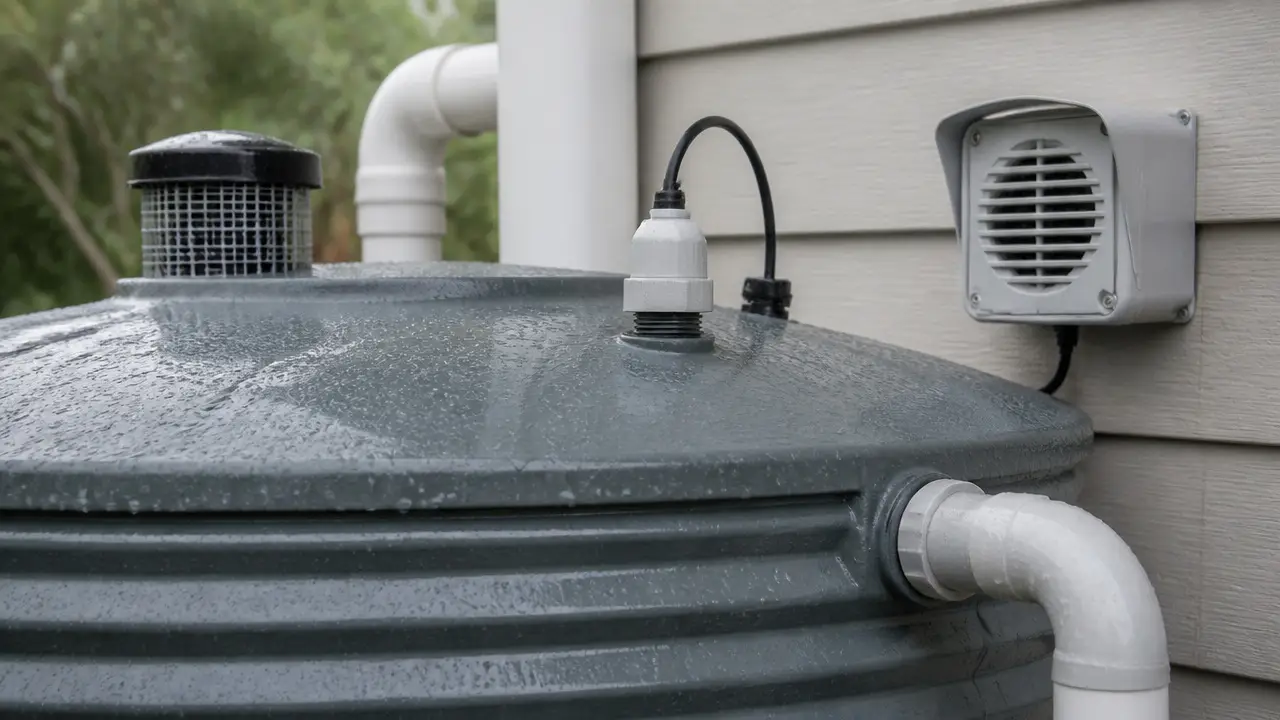
Downspout cleaning matters even more when roof runoff is being collected.
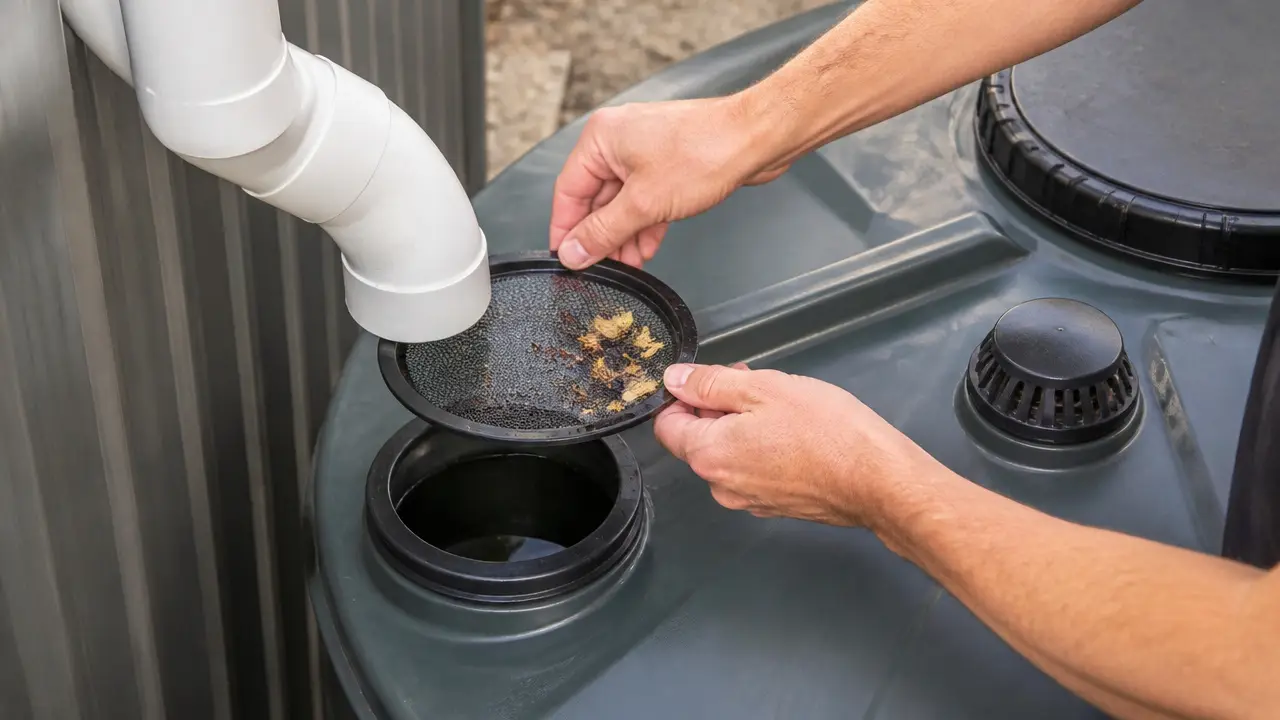
Leaves and organic material that enter a tank can settle on the bottom and add to sludge. They can also make screens, filters, pumps, and irrigation components harder to maintain.
Before flushing dirty gutters or downspouts, divert the water away from storage when practical.
Check any:
- Leaf screens
- Gutter guards
- Downspout screens
- First-flush devices
- Inlet strainers
A first-flush device diverts some of the first runoff from a rain event. This early runoff often carries more dust and roof debris than later water.
A first-flush device does not replace gutter or downspout cleaning.
What About Gutter Guards?
Gutter guards can reduce the amount of large debris entering a downspout, but they do not eliminate maintenance.
Fine leaves, seeds, roof grit, pollen, and dirt can still collect around the screen or enter the gutter.
Inspect the downspout opening even if guards are installed.
For rainwater collection, also make sure the guard material and opening size work with your roof debris and collection setup. A guard that blocks leaves but sheds water over the edge can reduce the amount of rainwater reaching the tank.
When to Stop the DIY Cleaning
Simple gutter and downspout cleaning is often manageable from the ground or from a safely accessible location.
Stop and call a qualified service if the job requires unsafe roof access or work from a tall ladder.
Professional help may also be a better choice when:
- A downspout disappears into an underground drain
- Several downspouts back up at once
- Water is entering the building
- Sections are crushed or damaged
- A clog keeps returning
- You cannot reach the blockage safely
Underground drainage problems may require tools that are different from those used for a normal vertical downspout.
How to Reduce Future Downspout Clogs
Regular gutter cleaning is usually easier than clearing a packed clog.
Inspect gutters more often when the roof is near trees, especially after periods of heavy leaf or seed drop.
Keep the gutter outlet clear and clean screens before debris builds into a thick layer.
For a rainwater harvesting system, include downspouts and inlet screens in the same maintenance routine as the storage tank and prefilters.
Frequently Asked Questions
What is the best tool for a clogged downspout?
A flexible hand-crank drain auger is a good choice for a packed clog inside a downspout. A garden hose is usually enough for loose debris.
Can I use a plumber's snake in a gutter downspout?
Yes. A flexible hand-operated plumber's snake can work well. Feed it gently so you do not damage thin downspout walls or fittings.
Can I clean a downspout with a garden hose?
Yes. A hose is a good first step for loose leaves and dirt. If water backs up, stop flushing and use another method to loosen the blockage.
Should I clean a downspout from the top or bottom?
Either direction can work. Start from the easiest safe access point. A blockage near the bottom may be easier to reach from the outlet, while debris near the gutter may be easier to remove from the top.
Can a pressure washer clear a downspout?
It may move debris, but high pressure can damage joints or push debris into underground drainage. A garden hose and flexible auger are usually safer first choices.
How often should gutter downspouts be cleaned?
There is no single schedule for every home. Check them when gutters collect leaves or seeds, after major debris buildup, and whenever water overflows instead of draining normally.
Should I flush gutter debris into my rain barrel or cistern?
No. Divert dirty flushing water away from storage when practical. Removing debris before it enters the tank reduces sludge and helps protect downstream screens, filters, pumps, and irrigation equipment.