As an affiliate, we may earn a commission from qualifying purchases. We get commissions for purchases made through links on this website from Amazon and other third parties.
Downspout filters can work very well, but only for the job they are designed to do. They are mainly prefilters. They remove leaves, twigs, insects, roof grit, and other larger debris before rainwater reaches a barrel, IBC tote, or cistern.
They do not make roof runoff safe to drink. Most downspout filters cannot reliably remove bacteria, viruses, dissolved chemicals, or very small particles. Their main value is keeping larger debris out of the storage tank so the rest of the rainwater system stays cleaner and easier to maintain.
What Does a Downspout Filter Do?
A downspout filter sits in or beside the pipe carrying rainwater from the gutter.
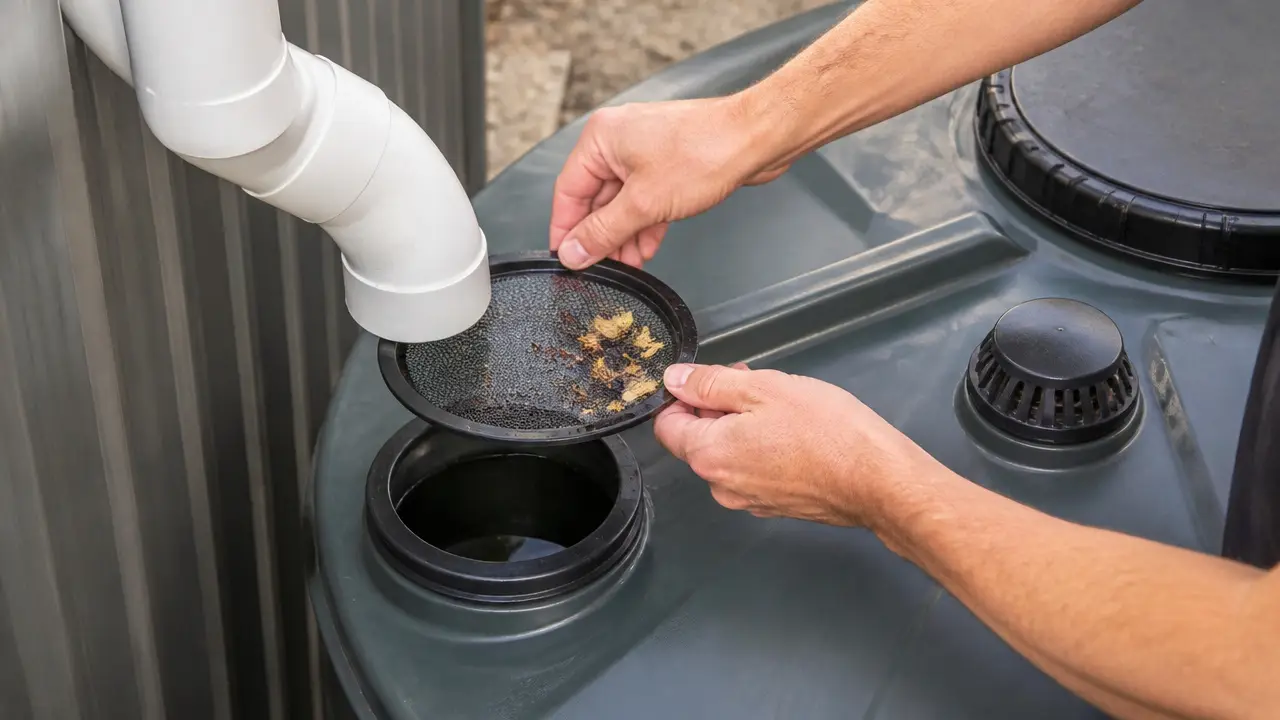
As water flows through it, a screen or mesh separates some of the debris from the water. Depending on the design, the debris may:
- Stay on a screen until you clean it
- Slide off the screen and out a waste opening
- Continue down a separate section of pipe
- Collect in a removable basket
The filtered rainwater then continues toward your storage tank.
Some filters are very simple leaf screens. Others use angled mesh, baskets, or vortex-style flow to separate debris.
The exact amount they remove depends on the size of the openings in the filter.
What Downspout Filters Remove Well
A properly sized and maintained downspout filter can remove a large amount of visible roof debris.
It may catch:
- Leaves
- Pine needles
- Twigs
- Seeds
- Insects
- Moss pieces
- Roof granules
- Larger dirt particles
- Bird nesting material
- Other gutter debris
Keeping these materials out of the tank can reduce sludge buildup and clogged pipes.
It can also help protect pumps, irrigation valves, and finer filters farther downstream.
What Downspout Filters Do Not Remove
A downspout filter should not be treated as a water purifier.
Most do not reliably remove:
- Bacteria
- Viruses
- Dissolved metals
- Pesticides
- Salts
- Dissolved chemicals
- Very fine sediment
- Smoke-related contaminants
- Contaminants washed from roofing materials
- Contamination from animal droppings
Some fine screens may catch smaller particles than a basic leaf guard, but that still does not mean the water is safe for drinking.
A filter that makes rainwater look clear has not necessarily made it microbiologically or chemically safe.
Downspout Filter vs. First-Flush Diverter
These two parts do different jobs.
A downspout filter physically screens debris from flowing water.
A first-flush diverter sends away the first portion of runoff from a rain event. That early runoff often carries a higher amount of dust, pollen, droppings, and other material that collected on the roof between rains.
Many rainwater systems benefit from using both.
A typical path might look like this:
Roof → gutter → leaf screen → downspout filter → first-flush system → storage tank
The exact order depends on the design. Some systems combine more than one function into one fitting.
Neither device should be considered a complete treatment system for drinking water.
How Much Difference Does a Downspout Filter Make?
The biggest difference is often inside the storage tank.
Without good prefiltration, leaves and organic debris can enter the tank and settle at the bottom. Over time, this material can form a layer of sediment.
That may lead to:
- More frequent tank cleaning
- Clogged outlets
- Dirty irrigation lines
- Faster filter blockage
- Pump problems
- More organic material breaking down in stored water
A downspout filter reduces how much of this material reaches the tank.
It will not eliminate tank sediment completely. Fine dust and small particles can still pass through.
Filter Opening Size Matters
Downspout filters come with different screen and mesh sizes.
A coarse screen lets water pass easily but catches only large debris. A finer mesh catches smaller particles but may clog faster.
This creates a tradeoff.
Coarse screens
Best when you mainly want to stop:
- Leaves
- Twigs
- Large insects
- Large roof debris
They usually handle heavy rain more easily because water can pass through larger openings.
Fine screens
They can catch:
- Smaller insects
- Roof grit
- Smaller plant material
- More visible sediment
But fine mesh may need more cleaning, especially if your roof is surrounded by trees.
Do not choose the finest screen simply because it sounds better. A screen that clogs during a storm may cause water to overflow instead of reaching your tank.
Heavy Rain Can Reduce Filter Performance
Every downspout filter has a limit on how much water can pass through it.
During a hard storm, a roof can send a large amount of water through the downspout in a short time.
If the filter cannot handle that flow, water may:
- Overflow
- Bypass the screen
- Back up toward the gutter
- Spill beside the house
- Carry debris through parts of the system
This is why filter size should match the amount of runoff coming from the roof.
Roof area and rainfall intensity both matter.
A large roof feeding one small downspout can create much more flow than a small shed roof feeding the same filter.
A Dirty Filter Does Not Work Like a Clean One
Maintenance is one of the biggest factors in whether a downspout filter actually works.
A screen covered with leaves cannot pass as much water.
During rainy seasons, inspect the filter regularly. Homes surrounded by trees may need much more frequent cleaning than homes with open roof areas.
Understanding a suitable downspout filter helps assess what the available water-quality readings can reliably show.
Check for:
- Leaves covering the screen
- Mud or roof grit
- Algae growth
- Insect nests
- Cracked mesh
- Loose fittings
- Water overflowing around the unit
Cleaning is usually easier when the filter can be reached from the ground.
Avoid climbing onto a wet roof to reach a filter. If routine maintenance requires unsafe roof access, the system should be redesigned or serviced by someone with suitable equipment.
Downspout Filters and Mosquito Control
A downspout filter can help keep larger insects and debris out of a rain barrel, but it should not be your only mosquito barrier.
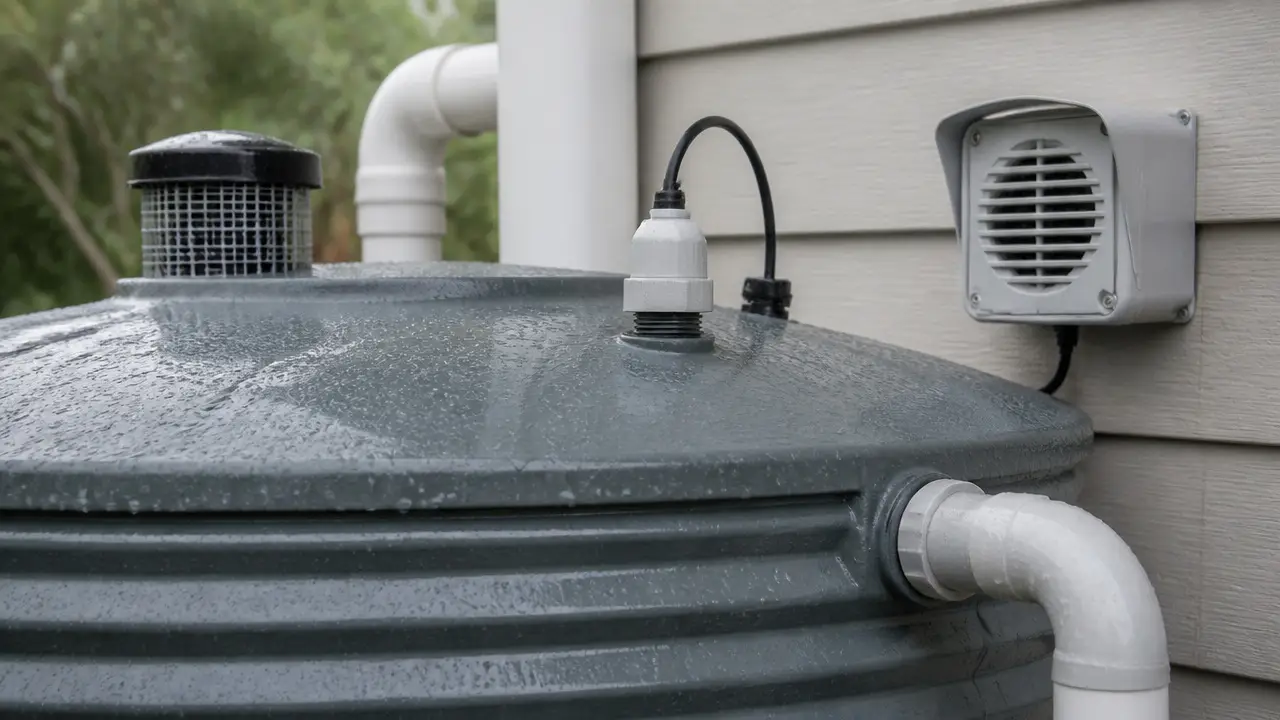
Openings into stored rainwater should normally be protected with suitable insect screening.
Also check:
- Tank vents
- Overflow pipes
- Tank lids
- Downspout connections
- Gaps around hoses or fittings
Mosquito control works best when the entire storage system is screened, not just the incoming downspout.
Do You Need a Filter if You Already Have Gutter Guards?
Usually, some additional prefiltration is still useful.
Gutter guards can reduce the amount of large debris entering the gutter, but small material may still get through.
Depending on the guard, runoff may still contain:
- Roof grit
- Pollen
- Small leaves
- Insects
- Dust
- Organic particles
A downspout filter gives you another barrier before the water reaches storage.
However, systems vary. A clean roof with effective gutter screening may need less aggressive downspout filtration than a roof under heavy tree cover.
Are Downspout Filters Enough for Garden Water?
They are often a useful first stage for garden systems.
If rainwater is being stored for drip irrigation or small sprinklers, additional filtration may still be needed.
Small irrigation openings clog easily.
A practical system might include:
- Gutter or leaf screening
- Downspout prefilter
- Storage tank
- Pump, if needed
- Irrigation filter sized for the emitters
The downspout filter keeps large debris out of the tank. The irrigation filter protects the much smaller openings in the watering system.
Always choose downstream filtration based on what the irrigation equipment requires.
Are Downspout Filters Enough for Household Rainwater?
Not by themselves.
For non-potable uses such as toilet flushing, a system may need additional filtration, pumps, controls, backflow protection, or plumbing separation depending on its design and local requirements.
For drinking water, the difference is much larger.
Roof runoff intended for drinking requires a whole-system approach. That may include suitable collection materials, debris control, first-flush management, storage practices, filtration, disinfection or other treatment, maintenance, and current laboratory testing.
A downspout screen is only an early prefiltration stage.
Do not assume that water is potable, meaning safe for drinking, simply because it has passed through a downspout filter.
When a Downspout Filter Is Worth Installing
A downspout filter is especially useful when:
- Your roof is surrounded by trees
- Leaves frequently enter the gutters
- You store water in a rain barrel or cistern
- Sediment builds up quickly in your tank
- You use a pump
- You use drip irrigation
- You want to reduce tank-cleaning work
- You want easier access to the main debris filter
It is less useful if the unit is undersized, difficult to clean, or installed where overflowing water can damage the building.
How to Get Better Results From a Downspout Filter
Think of the filter as one part of the whole collection path.
For better performance:
- Keep the roof and gutters reasonably clean
- Remove large debris before it reaches fine mesh
- Choose a filter that can handle expected rain flow
- Install it where you can inspect it safely
- Keep its waste or overflow path clear
- Clean the screen when debris builds up
- Check the tank inlet for insects
- Clean stored-water sediment when needed
- Add finer downstream filtration when your intended use requires it
The goal is not to catch every possible contaminant at the downspout. It is to remove enough debris early that the rest of the system works better.
So, Do Downspout Filters Really Work?
Yes. Downspout filters are effective at removing the larger debris they are designed to catch.
They can keep leaves, insects, roof grit, and other material out of rain barrels and tanks. This can reduce sediment buildup and help protect pumps, valves, and irrigation equipment.
But they are prefilters, not water purifiers.
Their performance depends on screen size, storm flow, installation, and regular cleaning. For the best results, use a downspout filter as one part of a rainwater system designed around how you plan to use the water.
Frequently Asked Questions
Can a downspout filter make rainwater safe to drink?
No. A downspout filter mainly removes physical debris. It cannot establish that roof runoff is safe from microbes, dissolved chemicals, metals, or other contaminants. Drinking-water systems require appropriate treatment, maintenance, current laboratory testing, and any applicable local requirements.
Will a downspout filter remove roof sediment?
It can remove some roof grit and sediment, depending on the mesh size. Very fine particles can still pass through and settle in the storage tank.
Do downspout filters clog?
Yes. Leaves, pollen, moss, dirt, and roof grit can block the screen. Finer filters generally need cleaning more often than coarse ones.
Can a downspout filter reduce tank cleaning?
Usually. By stopping larger debris before it enters the tank, a filter can slow the buildup of organic material and sediment. Some fine sediment will still reach the tank.
Do I need both a first-flush diverter and a downspout filter?
They perform different jobs, so using both can be useful. A filter catches debris, while a first-flush system diverts some of the early roof runoff.
Can I use a downspout filter with a rain barrel?
Yes. Downspout filters are commonly used before rain barrels. Make sure the filter and overflow arrangement can handle the amount of water coming from the roof.
Will a downspout filter stop mosquitoes?
It can help, but it should not be the only protection. The barrel or tank should also have screened inlets, vents, and overflow openings so mosquitoes cannot reach stored water.