As an affiliate, we may earn a commission from qualifying purchases. We get commissions for purchases made through links on this website from Amazon and other third parties.
There is no single official list of “four main types” of water filters. For practical home and rainwater systems, they are often grouped as sediment filters, activated carbon filters, membrane filters, and specialty media or ion-exchange filters.
Each type solves a different problem. A filter that catches dirt may do little for dissolved chemicals. A carbon filter can improve taste and odor but is not a complete germ treatment. Choosing the right filter starts with knowing what is in the water and how you plan to use it.
The Four Main Types of Water Filters
| Filter type | Main job | Common rainwater use |
|---|---|---|
| Sediment | Catches dirt and particles | Protects pumps and later filters |
| Activated carbon | Adsorbs certain chemicals and improves taste and odor | Later treatment stage |
| Membrane | Separates very small particles or dissolved material | Fine treatment or reverse osmosis |
| Specialty media or ion exchange | Targets certain dissolved contaminants | Used when testing shows a specific problem |
These types can be used alone for simple non-potable jobs or combined into a multi-stage system.
1. Sediment Filters
A sediment filter physically catches particles as water passes through it.
It may remove:
- Sand
- Silt
- Dirt
- Small pieces of organic debris
- Rust or other suspended particles
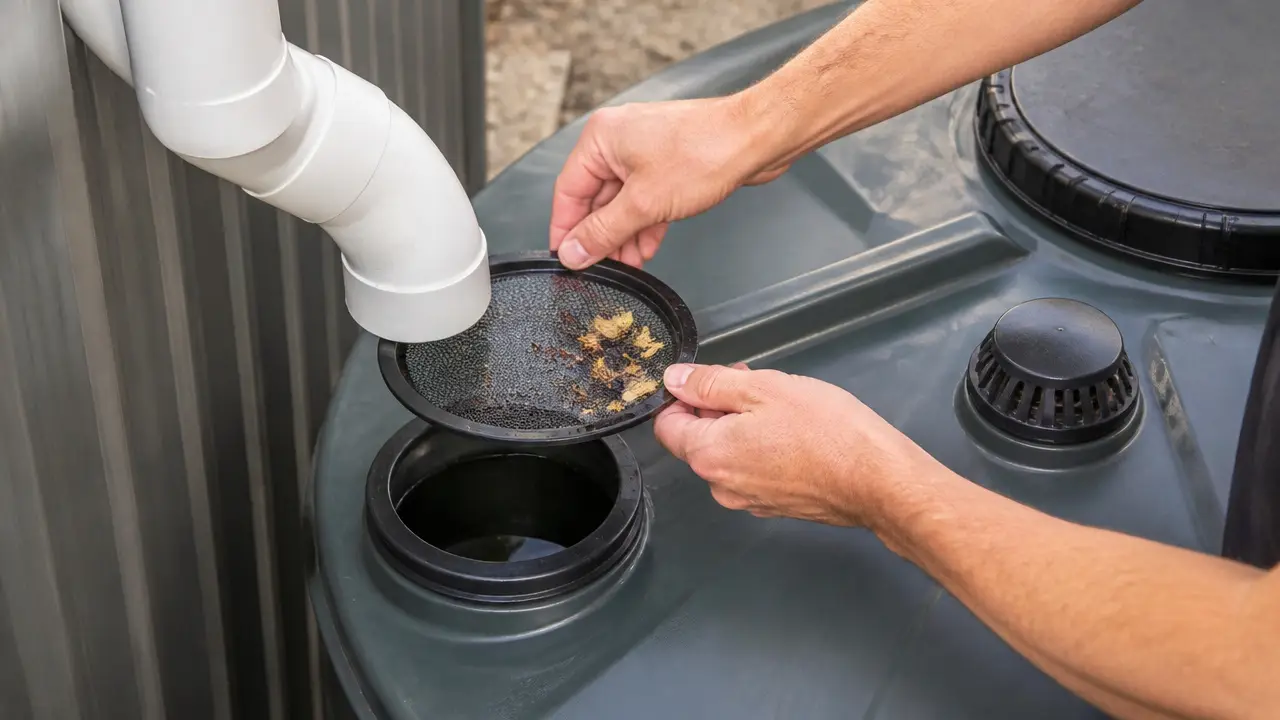
Sediment filters are especially useful with rainwater because roof runoff can carry dust, pollen, grit, roofing debris, and fine organic material into the storage tank.
How sediment filters are rated
Many sediment filters have a micron rating. A micron is a very small unit of measurement.
A lower micron number means the filter can catch smaller particles.
For example, a coarse filter may be useful before a finer cartridge. This staged approach can keep a fine filter from clogging too quickly.
Do not choose the smallest micron rating just because it sounds better. Very fine filters can reduce flow and clog quickly when the incoming water contains a lot of debris.
What sediment filtration cannot do
A normal sediment filter does not reliably remove:
- Dissolved salts
- Many dissolved chemicals
- Viruses
- All bacteria
- Contaminants that are too small to be trapped by the filter
The CDC notes that filtration performance depends heavily on pore size and the contaminant being removed.
For a rainwater system, sediment filtration is usually a pretreatment step, not a complete water-treatment system.
2. Activated Carbon Filters
Activated carbon filters work differently from basic sediment filters.
Carbon has a large porous surface. Certain substances stick to that surface through a process called adsorption.
Activated carbon can be useful for reducing some:
- Tastes
- Odors
- Organic compounds
- Treatment chemicals, depending on the filter and application
EPA describes granular activated carbon as a porous treatment media with a very large internal surface area.
Carbon comes in several forms. Two common ones are:
Granular activated carbon
Granular activated carbon, often called GAC, uses loose carbon granules.
Water flows through the spaces between the granules.
Carbon block
Carbon block filters use compressed carbon. Depending on their design, they may provide both adsorption and some physical particle filtration.
Carbon filters have limits
A carbon filter should not be treated as a general-purpose purifier.
Carbon alone does not reliably make microbiologically unsafe water safe to drink. It also does not remove every dissolved mineral, salt, metal, or chemical.
Its ability to reduce a particular contaminant depends on the carbon, filter design, flow rate, contact time, condition of the cartridge, and any verified contaminant-reduction claims.
Carbon also needs regular replacement. Once the media becomes exhausted, its ability to adsorb contaminants falls.
3. Membrane Filters
Membrane systems push water through a barrier containing extremely small openings or pathways.
Several technologies fit into this group, including:
- Microfiltration
- Ultrafiltration
- Nanofiltration
- Reverse osmosis
These systems are not interchangeable.
Microfiltration
Microfiltration removes relatively small suspended particles and can remove certain microorganisms when the membrane is designed for that purpose.
It does not generally remove dissolved salts.
Ultrafiltration
Ultrafiltration, or UF, uses a finer membrane.
It can remove very small suspended material and many microorganisms, depending on the membrane's specifications.
However, dissolved salts and some very small dissolved substances can still pass through.
Nanofiltration
Nanofiltration uses an even tighter membrane and can remove some dissolved substances as well as very small particles.
Its exact performance depends on the membrane.
Reverse osmosis
Reverse osmosis, usually called RO, forces water under pressure through a semipermeable membrane.
RO can reduce many dissolved substances that ordinary sediment or carbon filters cannot. EPA describes reverse osmosis and nanofiltration as membrane separation processes that can remove a broad range of contaminants.
RO also creates two water streams:
- Treated water
- Concentrated reject water
Because of this, RO needs suitable pressure, drainage, pretreatment, and regular membrane maintenance.
For a rainwater system, placing an RO unit directly after dirty storage water is usually poor system design. Sediment and other material can foul the membrane. Pretreatment should be matched to the incoming water and the membrane manufacturer's requirements.
4. Specialty Media and Ion-Exchange Filters
Some water problems require a filter or treatment media designed for a particular contaminant.
One common example is ion exchange.
Explore key facts about the top 3 water filters to assess testing choices and treatment needs for the intended application.
Ion-exchange systems contain resin beads that exchange certain dissolved ions in the water for other ions.
Water softeners are a familiar example. They are mainly used to reduce hardness caused by calcium and magnesium.
Specialty media may also be designed for specific dissolved contaminants. Which media is appropriate depends on the contaminant, its concentration, water chemistry, flow rate, and the treatment system's verified capabilities.
EPA lists ion exchange and several adsorptive media processes among drinking-water treatment technologies.
These systems should not be added to a rainwater setup simply because they provide another treatment stage. They make sense when the water conditions and intended use call for them.
Is UV One of the Four Main Filters?
You will sometimes see ultraviolet treatment included in lists of water filters.
Technically, UV is not a filter.
UV treatment exposes water to ultraviolet light to inactivate microorganisms. It does not physically strain sediment from the water.
CDC separates filtration from disinfection and identifies ultraviolet light as one method of disinfecting water.
This distinction matters because a UV system normally needs water that has already been filtered well enough for the UV unit to operate as designed.
Cloudy water, suspended material, fouling, poor flow control, an aging lamp, or other operating problems can interfere with treatment.
UV also does not remove sediment or most dissolved chemical contaminants.
How These Filters Fit Into a Rainwater System
A rainwater harvesting system often works better when treatment is done in stages rather than asking one cartridge to handle everything.
A basic system might move water through:
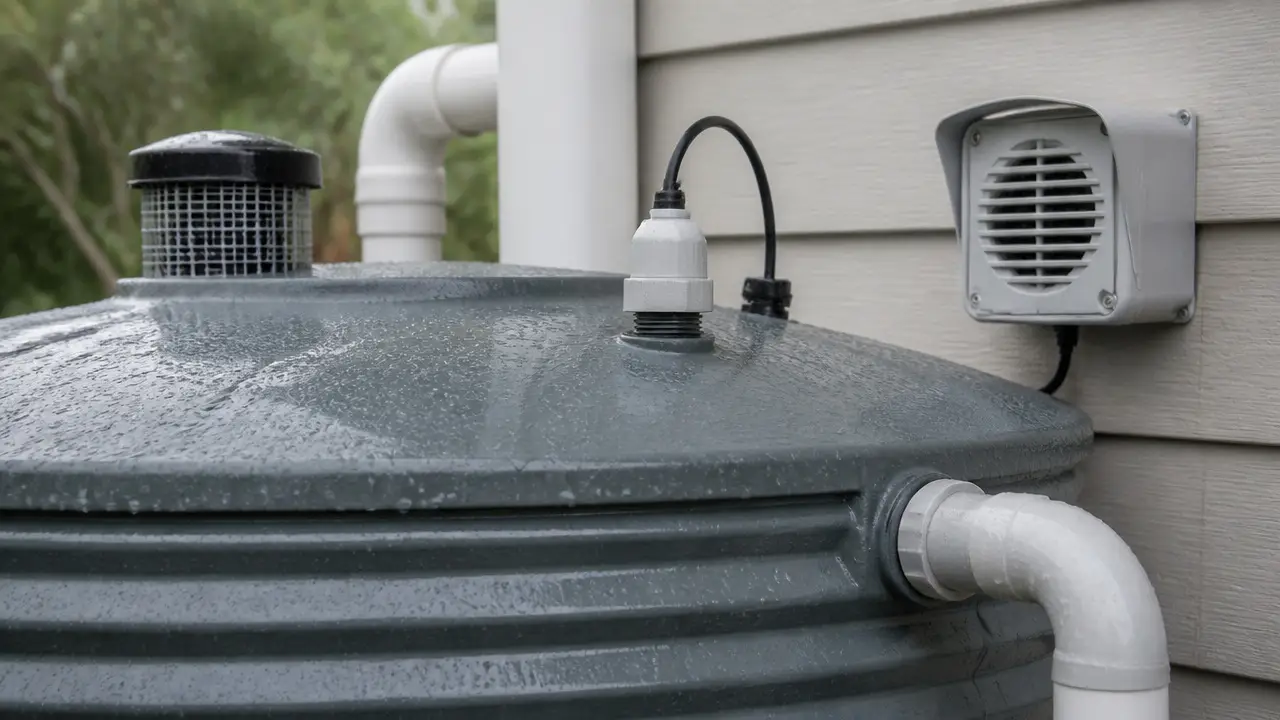
Roof → gutter screening → first-flush or debris control → storage tank → sediment filtration → additional treatment if needed → point of use
A first-flush device diverts some of the initial roof runoff so that part of the dirt and debris collected on the roof does not enter the main storage supply.
The exact stages after the tank depend on what you are doing with the water.
Garden irrigation
Rainwater used for basic garden irrigation may mainly need debris and sediment control to protect:
- Pumps
- Valves
- Drip emitters
- Sprayers
Very fine treatment may only create unnecessary restriction and maintenance.
Toilet flushing or other household non-potable use
Non-potable means water that is not intended for drinking.
Indoor reuse may need finer filtration and other controls depending on the plumbing arrangement, intended use, equipment, and local requirements.
Cross-connections between rainwater plumbing and drinking-water plumbing require particular care.
Drinking water
Potable means suitable for drinking.
Roof-collected rainwater should not be assumed potable just because it looks clear or has passed through several filters.
A drinking-water system needs to be considered as a whole. That can include suitable collection surfaces, debris control, storage practices, filtration, treatment for relevant microorganisms and chemicals, maintenance, and current laboratory testing.
The correct treatment stages depend on the actual water quality. Local health and plumbing requirements also matter.
A sediment cartridge, carbon filter, UV unit, RO system, meter, or home test kit by itself does not establish that rainwater is safe to drink.
Why Multi-Stage Filtration Is Common
Different filters are combined because each stage can protect the next.
For example:
- A coarse stage removes larger debris.
- A sediment cartridge removes smaller suspended particles.
- Carbon may address certain tastes, odors, or organic compounds.
- A membrane or other treatment stage addresses problems that earlier stages cannot.
This also helps control maintenance.
Sending heavily contaminated water straight into a fine cartridge may cause rapid clogging. Sending dirty water into a membrane system may shorten membrane life. Sending poorly filtered water through a UV reactor can interfere with reliable operation.
More stages are not automatically better. Every extra housing, cartridge, fitting, valve, and treatment device creates another maintenance point and another possible source of leaks or flow restriction.
Choose the Filter by the Problem
Do not start by asking, “What is the best water filter?”
Start with three questions:
- What will the water be used for?
- What needs to be removed?
- What flow and pressure must the system provide?
A sediment problem needs a different solution from a dissolved chemical problem. Irrigation water has different treatment needs from water intended for drinking.
For rainwater systems, also consider how much debris reaches the tank. Better gutter screening, tank inlet design, tank maintenance, and sensible collection practices can reduce the work required from downstream filters.
Frequently Asked Questions
What is the most basic type of water filter?
A sediment filter is one of the simplest types. It physically traps dirt, sand, silt, and other suspended particles. It is often used as the first cartridge stage in a rainwater system.
Is a carbon filter better than a sediment filter?
Neither is automatically better. They perform different jobs. Sediment filters mainly catch particles, while activated carbon adsorbs certain dissolved compounds and can improve taste and odor. Many systems use both.
Does a water filter remove bacteria?
Some membrane filters can remove bacteria when they have the proper pore size and are designed and maintained for that purpose. Ordinary sediment and carbon filters should not be assumed to provide reliable bacterial treatment.
Is reverse osmosis a type of filter?
Yes. Reverse osmosis is a membrane separation process. Pressure forces water through a semipermeable membrane that can reduce many dissolved substances as well as very small contaminants.
Is UV a water filter?
No. UV is a disinfection treatment rather than a physical filter. It uses ultraviolet light to inactivate microorganisms under suitable operating conditions and does not remove sediment or most dissolved contaminants.
Which filter is best for rainwater?
There is no single best rainwater filter. The right setup depends on the intended water use, debris load, water quality, pump flow, pressure, maintenance needs, and any contaminants that need treatment.
Can filtered rainwater be used as drinking water?
Filtration alone does not establish that rainwater is safe to drink. Drinking-water use requires a whole-system approach that considers collection, storage, treatment, maintenance, current laboratory testing, and applicable local requirements.