As an affiliate, we may earn a commission from qualifying purchases. We get commissions for purchases made through links on this website from Amazon and other third parties.
There is no single “#1 gutter guard” for every roof. For most homes, a well-fitted micro-mesh gutter guard is the best all-around choice, especially when the gutters feed a rain barrel or storage tank.
Micro-mesh can block leaves, pine needles, insects, and much of the smaller roof debris while still letting rain enter the gutter. But the mesh size, available drainage area, roof shape, rainfall intensity, and cleaning access all matter. A very fine guard that clogs easily can collect less rainwater than a more open guard that stays clear.
What Makes a Gutter Guard the Best?
The best gutter guard does three things well:
- Keeps large debris out of the gutter.
- Lets enough water through during heavy rain.
- Can be inspected and cleaned without major work.
For a rainwater harvesting system, there is another concern: you want to keep organic material out of the storage tank without restricting useful water flow.
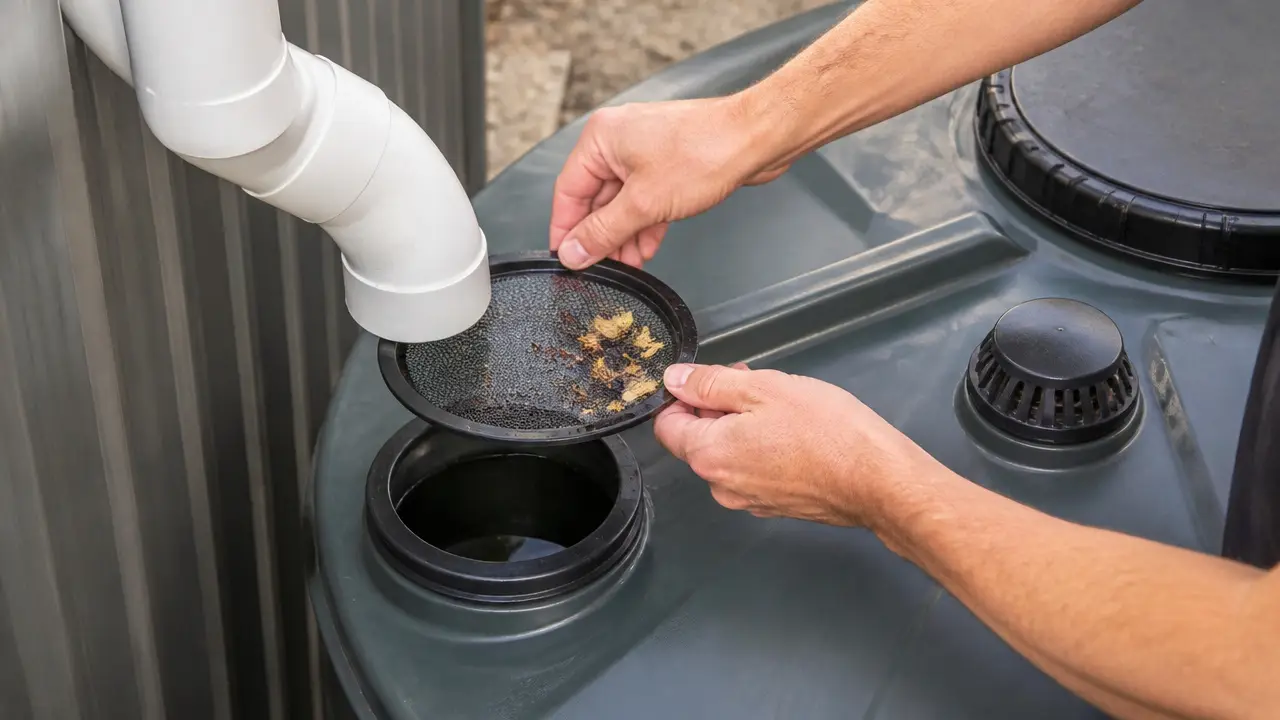
Leaves, twigs, seed pods, and other debris can break down inside a tank. This can add sediment and organic matter to stored water. Rainwater-harvesting guidance therefore uses gutter screens and leaf screens as an early prefiltration step.
A gutter guard is only the first stage. It should not be treated as a complete rainwater filter.
Why Micro-Mesh Is Usually the Best All-Around Type
A micro-mesh guard uses a screen with very small openings. Water passes through the screen while larger material stays above it.
This design works well where roofs collect:
- Leaves
- Pine needles
- Seeds
- Small twigs
- Insects
- Pieces of moss or plant material
- Some roofing grit
The smaller openings can keep more material out than basic screens with large holes.
That can be useful for rainwater collection because less debris reaches the downspout, tank inlet, or rain barrel.
However, finer does not automatically mean better.
Very fine mesh can collect pollen, dust, roof grit, or wet organic material on its surface. Once enough material covers the screen, water may run over the gutter instead of through it.
So the best micro-mesh system is not simply the one with the smallest holes. It also needs enough exposed screen area and a design you can clean.
How the Main Gutter Guard Types Compare
| Gutter guard type | Debris control | Rainwater flow | Maintenance |
|---|---|---|---|
| Micro-mesh | Very good for small and large debris | Good when clean and correctly sized | Needs surface cleaning |
| Perforated metal | Good for leaves and larger debris | Usually good | Smaller debris may collect |
| Standard mesh screen | Good for larger leaves | Good | More small material can pass through |
| Reverse-curve guard | Designed to shed debris | Depends heavily on installation and rainfall | Requires inspection |
| Brush insert | Stops some large material | Water passes around brush | Debris can become caught in bristles |
| Foam insert | Blocks some debris | Water passes through foam | Material can collect on or in the foam |
For most rainwater systems, micro-mesh or a good perforated screen makes more sense than a design that is difficult to inspect or clean.
Easy access matters because no gutter guard eliminates maintenance.
The Best Guard Depends on What Falls on Your Roof
Look at the material that actually causes problems at your house.
Large Leaves
A perforated metal or mesh guard may be enough if your main problem is large leaves.
You may not need extremely fine mesh.
Larger openings can also provide plenty of drainage area during strong rain.
Pine Needles
Pine needles are harder to stop because they can fit through larger openings.
Micro-mesh is usually the better choice when pine needles are common.
Still, needles and pollen can sit on top of the screen, so periodic cleaning remains important.
Roof Grit
Asphalt shingles can release small mineral particles over time.
Some of this material may pass through a gutter guard even when the openings are small. Some may also collect on top of the mesh.
If you are collecting rainwater, plan for another filtration or settling stage before the water reaches sensitive equipment.
Seeds and Small Tree Debris
Small seeds can be difficult for ordinary gutter screens.
A finer screen may help, but compare that benefit against clogging risk. A guard that becomes covered by seeds every few weeks is not maintenance-free.
Rainfall and Roof Design Matter Too
A gutter guard must handle water as well as debris.
This becomes especially important on:
- Large roof sections
- Steep roofs
- Roof valleys
- Areas with intense storms
- Short gutter runs receiving water from large catchment areas
A roof valley can send a concentrated stream of water toward one small part of the gutter.
If the guard cannot accept the incoming flow quickly enough, water can shoot across the screen or overflow the gutter.
This does not always mean the screen material is wrong. The problem could also involve gutter capacity, slope, downspout capacity, or where the roof sends its runoff.
If you harvest rainwater, overflow also means lost collection capacity.
Gutter Guards Do Not Eliminate Gutter Cleaning
Even the best guard needs inspection.
Debris may collect:
- On the guard
- Along its edges
- Around roof valleys
- Behind raised shingles or flashing
- Near downspout openings
- Where branches hang over the roof
Fine material can also get through the guard.
For drawbacks of gutter guards, first compare measures that prevent blocked or overflowing gutters.
Rainwater-harvesting guidance calls for gutters, screens, and other prefiltration components to be inspected and cleaned because blocked screens can prevent water from entering the collection system.
How often you need to clean yours depends mostly on nearby trees, roof material, wind, and the season.
Check more often during heavy leaf or seed drop.
What Is the Best Gutter Guard for Rainwater Harvesting?
For a typical rainwater harvesting setup, a durable micro-mesh or fine perforated guard that can handle your roof's flow and is easy to clean is usually the strongest choice.
But do not make the gutter guard your only debris-control stage.
A practical system may have several stages:
- Roof and gutters
- Gutter guard or leaf screen
- Downspout debris screen or prefilter
- First-flush device when appropriate
- Tank inlet screen or filter
- Storage tank
- Additional filtration or treatment based on how the water will be used
A first-flush device diverts some of the earliest runoff from a rain event instead of sending it into storage. That early water can carry dust and other material that accumulated on the roof.
The EPA notes that leaf screens can remove larger debris while first-flush devices can help divert smaller contaminants washed from the roof.
The guard and first flush perform different jobs.
Do Not Choose a Guard Based Only on Micron Size
You may see very fine mesh described using a micron rating.
A micron is one-millionth of a meter. Smaller openings can stop smaller particles.
But micron size alone does not tell you whether a gutter guard is suitable.
You also need to know:
- How much open screen area it has
- How easily debris slides or washes off
- Whether it can handle concentrated roof runoff
- Whether it fits your gutter and roof edge
- Whether you can remove or clean it
- Whether it interferes with roof drainage
A finer screen that stays covered with debris may perform worse than a somewhat larger screen that stays open.
Make Sure the Guard Fits the Rest of the System
If the gutters feed a rain barrel, IBC tote, or cistern, look beyond the gutter itself.
Check that:
- Downspouts are large enough for expected flow.
- Downspout screens can be reached for cleaning.
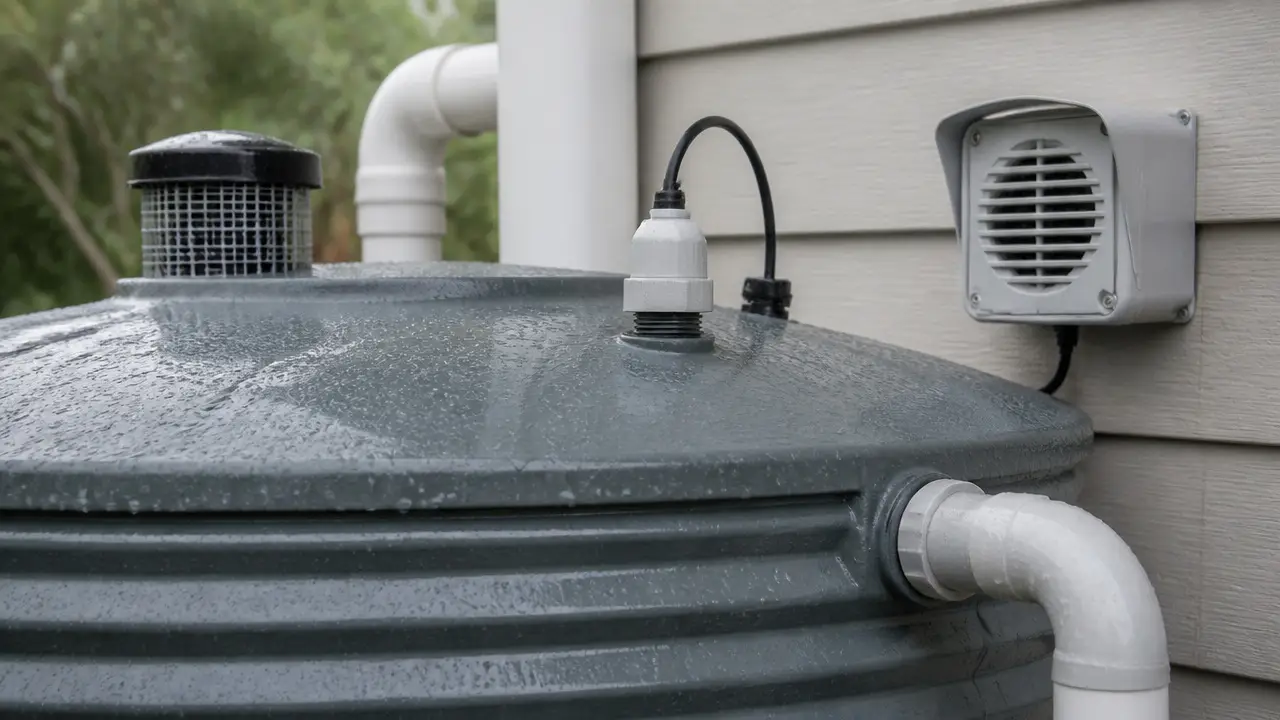
- Tank inlets are protected from leaves and insects.
- Overflow pipes can carry excess water safely away.
- Water cannot back up against the house.
- Filters downstream are sized for the available flow.
Keeping debris out before it reaches storage can reduce sediment and organic buildup inside the tank. The Texas Water Development Board notes that greater filtration before storage reduces sediment and organic matter entering the tank.
A Gutter Guard Does Not Make Rainwater Safe to Drink
Even very fine gutter mesh only removes certain physical debris.
It does not reliably remove:
- Bacteria
- Viruses
- Dissolved chemicals
- Metals
- Fine contaminants
- Contamination from animals or roofing materials
Do not assume water is potable because it passed through a gutter guard.
Potable means suitable for drinking.
Using collected roof water as drinking water requires a whole-system approach. Collection materials, prefiltration, suitable treatment, maintenance, current laboratory testing, and applicable local requirements all need to be considered.
For garden irrigation or other non-potable uses, the treatment requirements may be very different.
The Bottom Line
If you want one simple answer, micro-mesh is usually the best all-around gutter guard type, particularly when small leaves, pine needles, or other fine debris are common.
But there is no universal #1 model or design.
For a rainwater system, prioritize:
- Enough flow capacity for your roof
- Effective debris removal
- Easy cleaning
- Durable construction
- Good fit with your gutters and downspouts
- Additional prefiltration before storage
The best guard is the one that stays clear enough to capture rain while keeping most roof debris out of the rest of your system.
Frequently Asked Questions
Are micro-mesh gutter guards the best?
Micro-mesh guards are one of the best all-around options because they can stop both large leaves and much smaller debris. They still need cleaning, and the screen must have enough drainage area for your roof and local rainfall.
What gutter guard is best for pine needles?
Fine micro-mesh usually works better than screens with larger openings because pine needles can slip through larger holes. Check the surface regularly because needles and pollen can still collect on top.
Do gutter guards work with rain barrels?
Yes. Gutter guards can act as the first debris-control stage before water enters the downspout and rain barrel. You should still use a screened tank inlet or another suitable prefilter.
Do I still need a first-flush diverter with gutter guards?
They perform different jobs. A gutter guard mainly stops larger physical debris. A first-flush device diverts some of the initial roof runoff that can carry dust and other smaller contaminants.
Can gutter guards cause gutters to overflow?
They can contribute to overflow if their surface becomes clogged or cannot accept water quickly enough. Roof valleys and steep roofs can create especially concentrated flows. Gutter size, slope, and downspout capacity also matter.
Do gutter guards eliminate gutter cleaning?
No. They usually reduce the amount of material inside the gutter, but debris can still collect on top of the guard or around roof valleys and downspouts.
Will a gutter guard make collected rainwater drinkable?
No. A gutter guard is a debris screen, not a complete drinking-water treatment system. Drinking-water use requires suitable collection, treatment, maintenance, laboratory testing, and compliance with applicable local requirements.