As an affiliate, we may earn a commission from qualifying purchases. We get commissions for purchases made through links on this website from Amazon and other third parties.
The best way to redirect water from a downspout is to carry it to a safe discharge point where it can soak into the ground or continue downhill without flowing back toward the house.
For many homes, a simple downspout extension works well. If water needs to travel farther, cross a walkway, or stay out of sight, a properly sloped solid drain pipe is usually the better choice.
The key is not just moving the water away from the downspout. You also need to make sure the new outlet does not create erosion, standing water, icing, or drainage problems for a neighbor.
Start With the Place Where the Water Should Go
Before buying pipe or fittings, decide where the water can safely end up.
A good discharge area should:
- Be lower than the downspout outlet when possible.
- Drain away from the foundation.
- Have enough soil or vegetation to absorb runoff.
- Avoid septic systems, retaining walls, basement stairwells, and low spots.
- Avoid sending concentrated water onto a sidewalk, driveway, or neighboring property.
Watch the area during a heavy rain if you can. Water often reveals low spots and natural drainage paths that are hard to see when the ground is dry.
If the yard slopes toward the house, simply adding a longer downspout extension may not solve the problem. The water may run right back toward the foundation.
Use a Downspout Extension for Short Runs
A downspout extension is usually the simplest solution when you only need to move roof runoff a short distance across the yard.
Extensions may be rigid or flexible. They connect to the bottom of the existing downspout and carry water farther from the house.
A rigid extension generally holds its shape and slope better. Flexible corrugated extensions are easy to route around obstacles, but their ridges can collect leaves and sediment.
The extension should:
- Fit securely over or into the downspout outlet.
- Stay supported instead of sagging.
- Slope toward the discharge point.
- End where water will continue moving away from the house.
Do not leave the outlet in a low spot where water pools after every storm.
Use Solid Drain Pipe for Longer Distances
For a longer run, buried solid pipe is often a cleaner and more reliable way to redirect a downspout.
A typical setup includes:
- An adapter connecting the downspout to the drain line.
- Solid pipe carrying the water across the yard.
- Continuous downhill slope whenever the site allows it.
- A safe outlet where the water can discharge.
Smooth-wall solid pipe generally moves roof runoff more easily than perforated or heavily corrugated pipe.
Perforated pipe has holes designed to let water enter or leave along its length. That can be useful for some drainage systems, but it is usually not the first choice for simply transporting concentrated downspout water away from a foundation.
If the goal is to carry water to another location, use a pipe intended to carry water there rather than letting it leak out beside the house.
Keep the Drain Line Sloped
Gravity drainage works best when the pipe continuously falls toward its outlet.
A low section can trap water, leaves, and sediment. In freezing climates, trapped water can also freeze inside the line.
You do not need an extreme slope. What matters most is avoiding sections that rise uphill or sag.
Before burying a drain line, test it with water. Confirm that water reaches the outlet without backing up.
For difficult grades, deep excavation, retaining walls, or yards that naturally slope toward the building, a drainage contractor may be a better option.
Do Not Connect a Downspout to a French Drain Without a Plan
A French drain and a downspout drain do different jobs.
A downspout drain carries concentrated roof runoff from one place to another.
A French drain collects groundwater through perforated pipe surrounded by drainage stone.
Dumping a large amount of roof runoff directly into an undersized French drain can overwhelm it. It can also fill the surrounding soil with water near the area you were trying to keep dry.
In many systems, it makes more sense to keep roof runoff in solid pipe until it reaches an appropriate discharge or infiltration area.
Consider a Rain Garden
A rain garden can work well when you have enough yard space and suitable soil.
Instead of simply releasing water onto the lawn, a downspout feeds a shallow planted area designed to temporarily hold runoff while it soaks into the ground.
A rain garden should not be placed where stored water can threaten the foundation, septic system, underground utilities, or nearby structures.
Soil matters too. Water should drain away between storms rather than remaining stagnant for long periods.
If you are unsure how quickly your soil drains, evaluate the site before directing a large roof area into one small spot.
A Dry Well Can Work Where Surface Discharge Is Difficult
A dry well stores runoff underground temporarily while allowing it to soak into surrounding soil.
It can be useful where there is no convenient downhill outlet, but it must be sized for the amount of water entering it and the soil's ability to absorb that water.
A small dry well can fill quickly during a heavy storm if it receives runoff from a large roof.
Consider:
- Roof area draining to the downspout.
- Local rainfall intensity.
- Soil drainage.
- Groundwater level.
- Distance from foundations.
- Available overflow route.
An overflow path is important. Even a properly planned infiltration system can fill during an unusually large storm.
Local rules may also limit where infiltration systems can be installed.
Redirect the Water Into Rainwater Storage
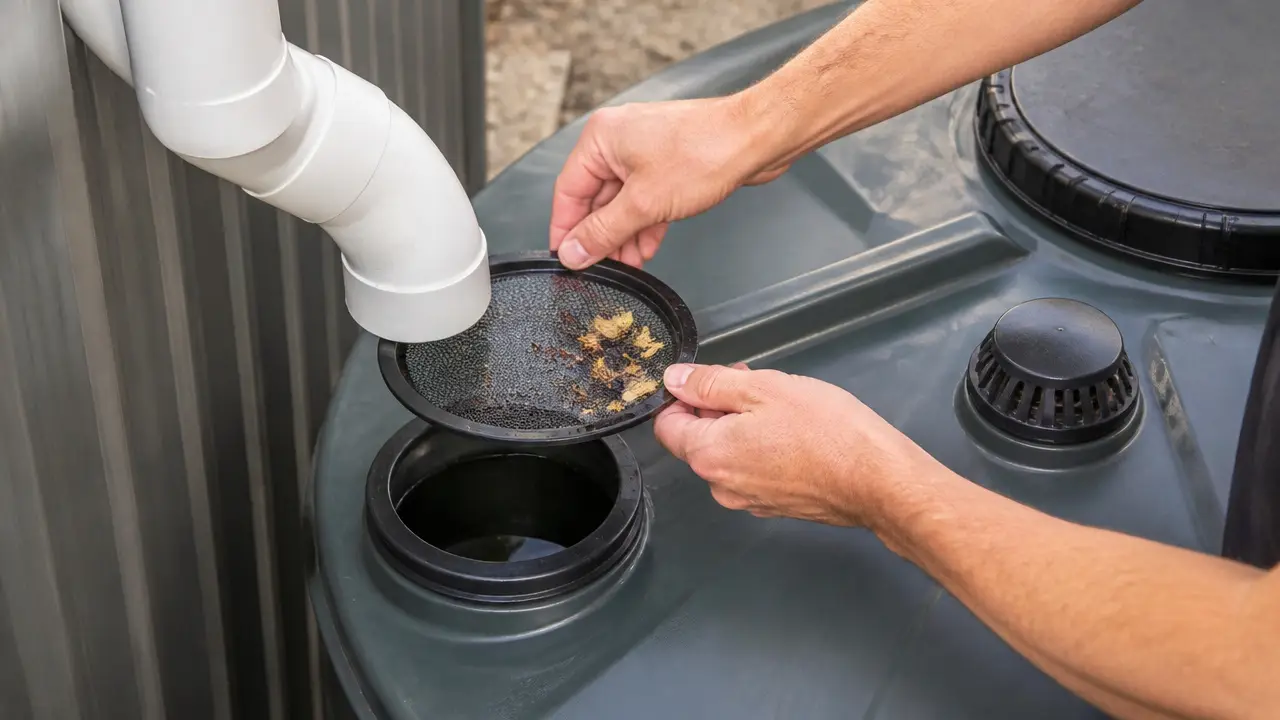
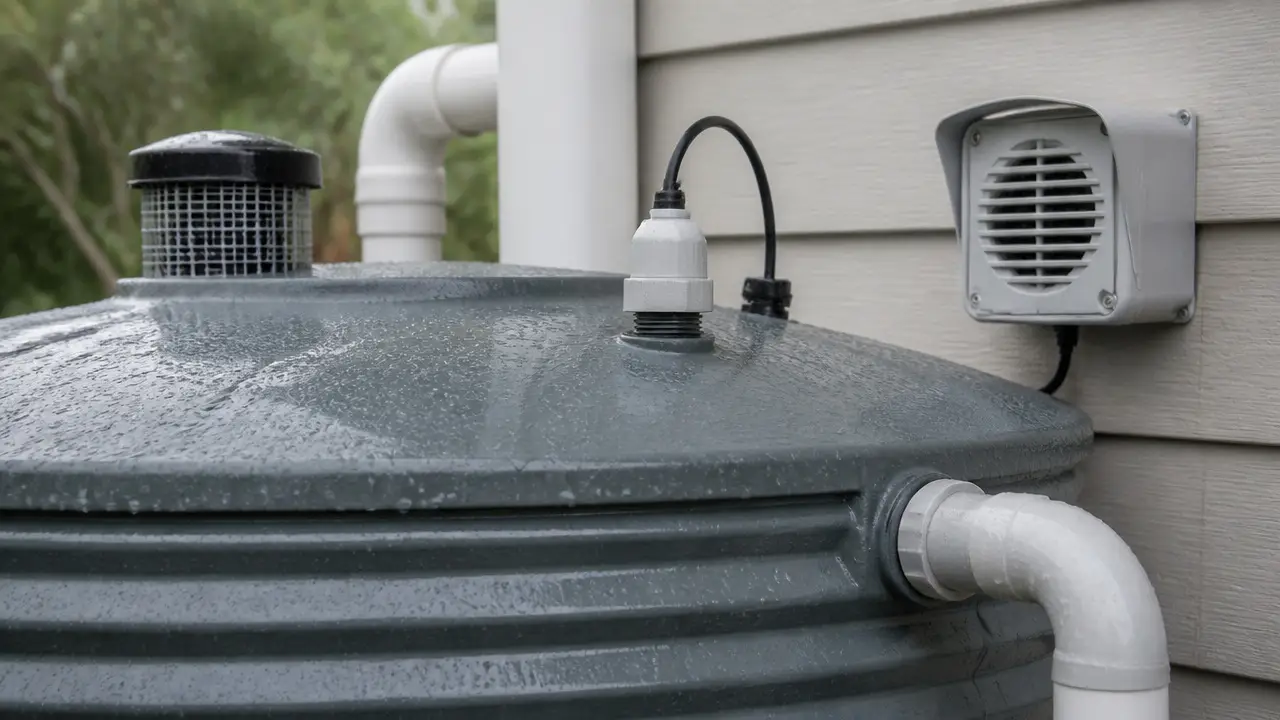
If you want to reuse the water, the downspout can feed a rain barrel, IBC tote, or larger cistern.
This changes the system from simple drainage to rainwater collection.
Look closely at key facts about some creative ideas for extensions for gutter downspouts to compare the outlet capacity required by the catchment area.
A basic collection setup may include:
- Gutter screening.
- A downspout diverter or inlet.
- Debris control.
- A covered storage tank.
- A screened overflow.
- A planned route for overflow water.
The overflow is especially important. Once the tank fills, every additional gallon coming off the roof still needs somewhere safe to go.
Do not place a storage tank where an overflow, leak, or tank failure could send water toward the foundation.
Stored rainwater should also be treated according to its intended use. Roof runoff is not automatically potable, meaning safe to drink.
Be Careful With Pop-Up Emitters
A pop-up emitter is a small outlet installed near ground level. Water pressure from a buried drain line lifts the lid and lets water escape.
They can make a buried downspout system less noticeable, but they have limitations.
Leaves, sediment, roots, freezing, or poor grading can interfere with drainage. Water may also remain in the pipe if the emitter is higher than part of the drain line.
If you use one, make sure the pipe still has a practical way to drain and that the emitter can be opened for cleaning.
Prevent Erosion at the Outlet
A strong stream of roof runoff can wash away soil.
If the outlet is eroding the yard, spread the flow before it reaches bare ground. Depending on the site, you might use:
- A splash block.
- Gravel or stone.
- Dense grass or other vegetation.
- A wider discharge area.
- A properly designed rain garden.
Avoid creating a narrow stream that cuts a trench through the yard.
Keep Downspout Connections Accessible
Buried systems still need maintenance.
Leaves, roof grit, shingle particles, seed pods, insects, and other debris can enter the line.
It helps to have a connection that can be opened without digging up the yard.
Check the system periodically and after major storms. Look for:
- Water backing up at the downspout.
- Loose fittings.
- Standing water.
- Soil erosion.
- Crushed or exposed pipe.
- Overflow near the foundation.
- Blocked outlets.
Gutter cleaning also matters. A clear drain pipe cannot compensate for gutters packed with leaves.
Plan for Freezing Weather
In freezing climates, avoid configurations that permanently trap water.
A buried gravity line that drains fully is generally easier to manage than one with deep sags or closed low points.
Above-ground extensions may need seasonal attention because snow, ice, or frozen soil can block their outlets.
Do not assume burying a pipe automatically prevents freezing. Depth, climate, slope, and whether water remains inside the pipe all affect freeze risk.
Do Not Create a New Problem Somewhere Else
Redirecting a downspout should solve drainage problems rather than move them.
Avoid discharging water where it can:
- Flood a neighbor's yard.
- Run across a public sidewalk.
- Freeze on walking surfaces.
- Undermine a retaining wall.
- Saturate soil beside a basement.
- Wash out landscaping.
- Enter a septic drain field.
- Pool against another structure.
Stormwater rules vary by location. Some communities also regulate connections to storm sewers or require permits for certain drainage work. Check current local requirements before connecting a downspout to municipal infrastructure or making major changes to site drainage.
A Simple Way to Choose
Use an above-ground downspout extension when the water only needs to move a short distance and the yard already slopes in the right direction.
Use buried solid pipe when the water needs to travel farther or you want the drainage line out of the way.
Use a rain garden or dry well when the site is suitable for infiltration and the system is sized for the runoff it receives.
Use rainwater storage when you want to reuse the water, but always provide a safe overflow route.
For any option, the basic goal stays the same: collect the roof runoff, move it away from the building, and give it a safe place to go.
Frequently Asked Questions
How far should a downspout drain away from the house?
There is no single distance that works for every property. The important point is to discharge water where the ground carries it away from the foundation rather than back toward it. Soil type, slope, basement depth, roof size, and local drainage conditions all matter.
Can I bury a downspout extension?
A purpose-built solid drain pipe is usually better for a permanent buried installation than simply burying a lightweight flexible extension. The pipe should have adequate slope, durable connections, and an accessible outlet.
Should I use solid or perforated pipe for a downspout?
Solid pipe is usually the better choice when the goal is to transport roof runoff to another location. Perforated pipe is intended to exchange water with the surrounding soil and is more common in groundwater drainage systems.
Can I connect a downspout directly to a French drain?
It is possible in some designed systems, but it is not automatically a good idea. Concentrated roof runoff can overwhelm a French drain. Keeping downspout water in solid pipe until it reaches an appropriate discharge or infiltration area is often more predictable.
Why does water back up from my buried downspout drain?
Common causes include leaves, sediment, roots, crushed pipe, a blocked outlet, poor slope, or a low section holding water. Disconnect the downspout if necessary during heavy rain so backed-up water does not remain against the house while you investigate.
Can I redirect a downspout into a rain barrel?
Yes. A downspout can feed a rain barrel or larger storage tank if the inlet is compatible and the container has a safe, screened overflow. The overflow should carry excess water away from the foundation when the tank fills.
Is it okay to drain a downspout onto the driveway?
It is usually better to avoid concentrated discharge onto paved walking or driving areas. Water can cause nuisance runoff, erosion along edges, and dangerous ice in freezing weather. A landscaped discharge area is often preferable when the site allows it.