As an affiliate, we may earn a commission from qualifying purchases. We get commissions for purchases made through links on this website from Amazon and other third parties.
For a heavy-duty gutter setup, the best rain chains are large cup-style chains made from copper or stainless steel. Wide, deep cups control more water and splash less than simple open-link chains. A strong gutter adapter, a stable lower anchor, and a drainage area that can safely carry water away are just as important as the chain itself.
Rain chains can handle substantial runoff, but they are still open drainage devices. They do not contain water as completely as a properly sized downspout. Cup-style chains are generally better suited to heavier rainfall than link-style chains, while conventional downspouts remain the safer choice where very high roof runoff must be contained.
The Best Heavy-Duty Rain Chain Types
For most homes, these are the rain-chain designs worth considering.
| Rain chain type | Heavy-rain control | Durability | Best use |
|---|---|---|---|
| Large copper cup chain | Excellent for a rain chain | Excellent | Best overall heavy-duty choice |
| Stainless-steel cup chain | Excellent for a rain chain | Excellent | Wet climates and low-maintenance systems |
| Heavy aluminum cup chain | Good to very good | Good | When lower chain weight matters |
| Large linked copper or stainless chain | Moderate | Excellent | Decorative locations with lower runoff |
| Thin decorative link chain | Limited | Varies | Light or moderate runoff |
The important point is that heavy-duty does not simply mean heavy metal. Water-path design matters more.
A thick open chain can still throw water sideways during a downpour. A well-designed series of broad cups usually keeps the water closer to the chain.
Large Copper Cup Chains: Best Overall
A large cup-style copper chain is one of the strongest choices when you want both durability and good control of gutter runoff.
Each cup catches water from the cup above and funnels it downward. This creates a more controlled path than water running over open links.
Copper also handles long-term outdoor exposure well and does not rust like ordinary steel. Its surface will naturally change color as it weathers. That change is normal rather than a sign that the chain has failed.
Look for:
- Wide cup openings
- Fairly deep cups
- Unobstructed openings at the bottom of each cup
- Strong connections between cups
- A secure upper attachment
- Enough chain length to reach the intended drainage point
Do not judge performance by cup diameter alone. A large cup with a very restricted bottom opening can fill faster than it drains during intense rain. Cup width, depth, outlet size, spacing, and incoming runoff all affect performance.
Stainless-Steel Cup Chains: Best for Strength and Low Maintenance
Stainless steel is another good heavy-duty material.
It is useful when you want a chain that stays relatively consistent in appearance instead of developing the changing patina associated with copper. Stainless steel also provides good corrosion resistance for a component that will repeatedly get wet.
For high-flow locations, choose a cup-style stainless chain rather than an open-link stainless chain. The metal determines durability, but the cup shape determines much of the water control.
Stainless steel can also make a fairly heavy chain. Before installing one, make sure the gutter and upper connection are sound enough for the chain's actual weight.
That becomes especially important where ice can form.
Heavy Aluminum Cup Chains: Best When Weight Matters
Aluminum is much lighter than copper or stainless steel and does not rust.
That lower weight can be useful when the existing gutter is not suited to carrying a very heavy decorative chain. Powder-coated and other finished aluminum chains also come in many appearances.
However, light weight has a tradeoff. A light chain can move more easily in wind.
For a heavy-rain installation, look for a substantial cup design and plan on stabilizing the bottom of the chain. The anchor should keep the chain aligned without pulling hard on the gutter.
Aluminum cup chains can work well, but the material alone does not make them high capacity. The size and shape of the cups still matter most.
What About Heavy Link-Style Chains?
Large copper or stainless links can be physically strong, but they are usually not the best option when controlling heavy rain is the main goal.
A link chain guides water over its surfaces. Because the path is open, some water can:
- Separate from the links
- Fall through open spaces
- Blow sideways
- Splash against siding
- Miss the receiving basin
This becomes more noticeable as flow increases. A larger chain may improve the path somewhat, but simply making the links heavier does not turn an open chain into a closed drain.
Link chains still make sense where rainfall is moderate or where the outlet drains a relatively small roof section.
For the outlet receiving your home's largest concentration of roof runoff, cups or a conventional downspout are usually better choices.
Features That Matter More Than Decorative Style
When comparing heavy-duty rain chains, focus on the entire water path rather than the finish or shape alone.
Large, Deep Cups
Cup-style chains provide better control during heavier rain because each cup gives falling water a receiving area before passing it downward. This Old House likewise identifies cup chains as the better rain-chain option for frequent downpours.
Very shallow decorative cups can still splash badly.
A Generous Water Passage
Water needs somewhere to go after entering each cup.
If the opening through the cup is too restrictive, the cup can overflow during high flow. The ideal design provides both a reasonably broad receiving area and a clear path downward.
Strong Connections
Check how the individual cups or links join together.
A heavy-duty chain should not rely on delicate decorative connectors to support the full suspended length.
Connections matter even more on long drops, windy walls, and exposed corners.
A Proper Gutter Attachment
The gutter outlet must deliver water onto the chain rather than beside it.
Some chains use a simple crossbar or hanger. Other installations use an adapter or installation outlet that creates a more defined transition between the gutter and chain.
An adapter can improve alignment, but it cannot fix an undersized gutter or an outlet that cannot carry the incoming roof runoff.
Also check compatibility rather than assuming every adapter fits every gutter. K-style gutters, half-round gutters, existing outlet openings, and different gutter materials can require different fittings.
An Anchored Bottom
A heavy rain chain should normally have a controlled landing point.
That could include:
- A drainage basin
- A gravel drainage area
- A surface drain
- A rain garden
- A suitable collection container
- A designed landscape drainage feature
The lower end can also be stabilized so the chain does not swing excessively in wind.
Do not tension the chain tightly between the ground and gutter. The goal is stabilization, not pulling downward on the gutter.
Check How Much Roof Feeds the Chain
One of the easiest mistakes is choosing a large rain chain without considering where the water comes from.
Reviewing key facts about some alternatives to rain chains helps coordinate surface losses when estimating collectible runoff.
A small section of gutter can receive runoff from a surprisingly large roof area. Roof valleys can concentrate even more water at one point.
During intense rain, concentrated runoff may enter the gutter faster than a rain chain can carry it away. Water can then overflow the gutter, spill from the first cups, or bypass the chain completely.
Pay particular attention to an outlet if it receives water from:
- A large roof plane
- A steep roof
- Several gutter sections
- A roof valley
- An upper roof draining onto a lower roof
In these situations, the better solution may be another outlet, a second rain chain, or a conventional downspout rather than simply purchasing a larger chain.
Do Not Ignore Drainage at the Bottom
A heavy-duty chain only moves water downward. It does not automatically move that water safely away from the building.
This is especially important with rainwater harvesting.
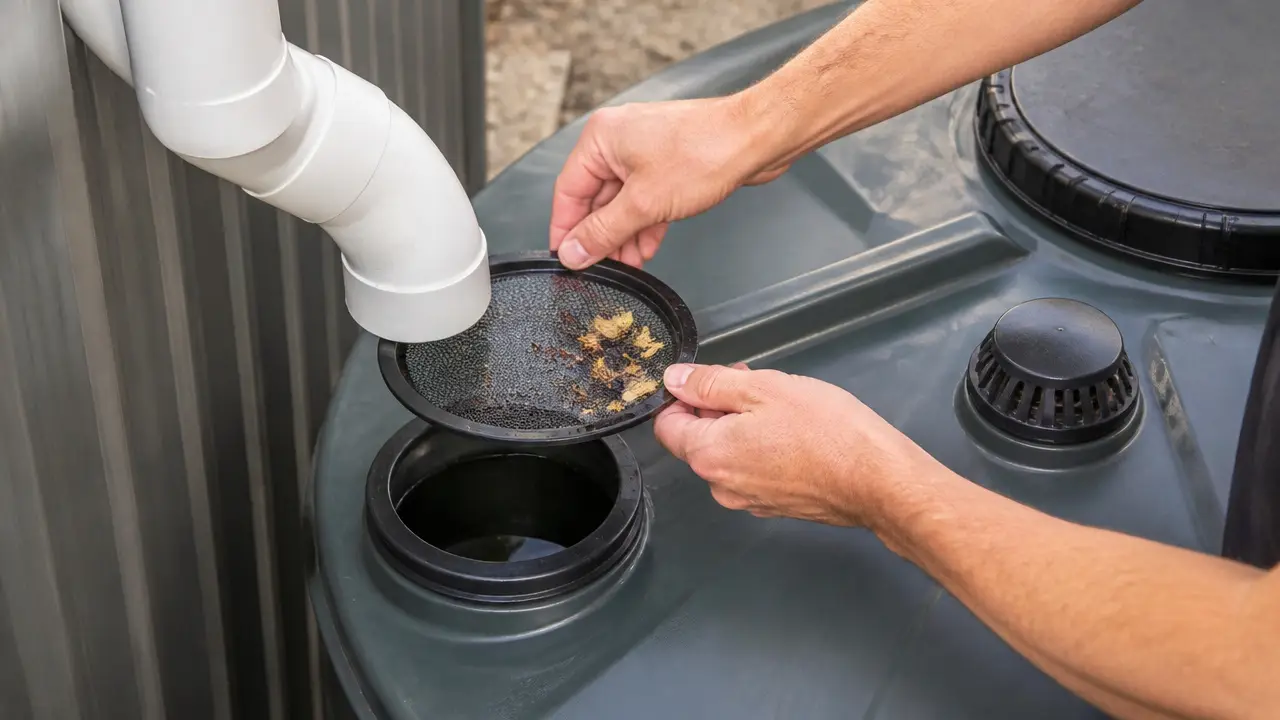
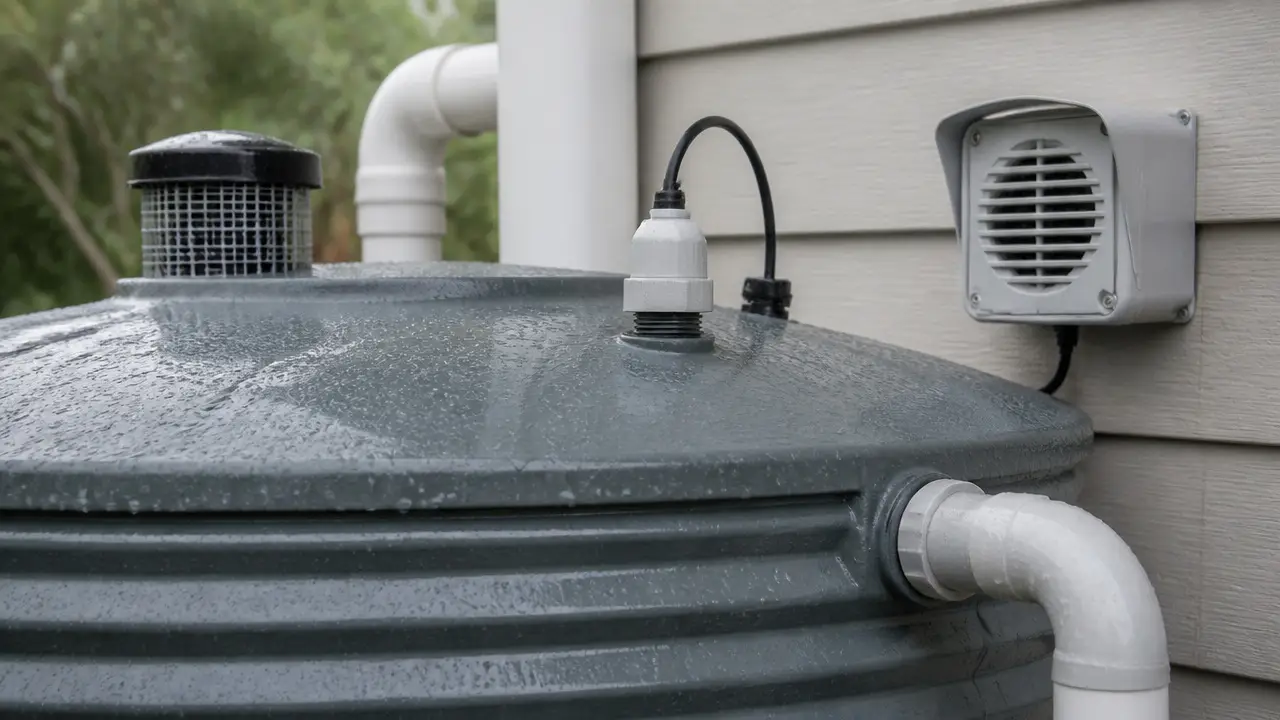
You can direct a chain toward a collection container, but the container still needs appropriate inlet screening and a safe overflow route. Roof runoff can contain leaves, dirt, bird droppings, roofing particles, and other contaminants. A decorative rain chain does not provide water treatment.
If the chain drains onto the ground instead, make sure the receiving area has somewhere for the water to continue flowing.
A shallow decorative bowl may catch the initial cascade, but it should not be treated as storage for all the water coming from a roof. During sustained rain it will overflow.
Keep uncontrolled splash and overflow away from foundations, doors, steps, and walking surfaces.
Heavy Rain Versus a Regular Downspout
Even the best heavy-duty rain chain has limits.
A conventional downspout surrounds the water with a pipe. A rain chain leaves the water exposed to wind and allows some splash.
This Old House notes that cup chains work better than link chains for heavy rainfall, but also considers conventional downspouts better at handling heavy rain and controlling water near foundations.
That makes rain chains especially suitable for:
- Porch roofs
- Smaller roof sections
- Visible architectural areas
- Outlets with good drainage underneath
- Rainwater features where some splash is acceptable
A conventional downspout may be more appropriate for a large roof section that routinely produces concentrated storm runoff.
You can also use both approaches. Decorative rain chains can serve selected outlets while standard downspouts remain on the highest-flow parts of the roof.
What About Wind?
Wind exposes one of the main limitations of rain chains.
Water following a chain can be blown sideways, and an unsecured chain can swing away from its drainage point.
A heavier chain may move less, but added weight is not always desirable because the gutter must support it.
A better approach is to combine an adequately strong chain with a suitable lower stabilizer.
Also provide clearance from walls and windows. Even a large cup chain can splash when heavy rain arrives with strong wind.
What About Snow and Freezing Weather?
Freezing climates require extra care.
Water can freeze on cups and links. That ice adds weight to the chain and therefore to the gutter connection.
This Old House and Better Homes & Gardens both note freezing or icing as a consideration with rain chains, including seasonal removal where conditions warrant it.
Do not assume that choosing thicker metal solves this problem. The chain may survive the ice while the gutter attachment, fascia, or gutter itself receives excessive loading.
If substantial icing is common at your home, consider seasonal removal or have the attachment and gutter system evaluated before using a particularly heavy chain.
The Best Heavy-Duty Setup
For a typical homeowner who wants a strong rain chain capable of dealing with substantial gutter flow, a good starting configuration is:
- A large cup-style chain, rather than simple links.
- Copper or stainless steel for a durable installation, or substantial aluminum where lower weight is important.
- A compatible gutter adapter or secure hanger that puts runoff directly onto the chain.
- A lower stabilizer if the location is exposed to wind.
- A basin, gravel area, drain, or other planned receiving point beneath the chain.
- A safe overflow route that keeps water away from the building.
- A conventional downspout instead if the outlet regularly receives more water than an open chain can control.
If heavy-rain performance is the priority, choose the water-handling design first and the decorative design second.
Maintenance for a Heavy-Duty Rain Chain
Rain chains are simple, but they are not maintenance-free.
Inspect the system periodically and after unusually severe storms.
Check for:
- Leaves blocking the gutter outlet
- Debris caught inside cups
- Loose cup connections
- A bent or shifting gutter attachment
- Excessive chain movement
- Soil erosion beneath the chain
- Splash marks on nearby siding
- Standing water near the foundation
- A blocked surface drain or collection inlet
- Ice loading during freezing weather
A blocked gutter outlet can make even an excellent chain appear undersized.
The same applies to the drainage point below. If a catch basin or drain is blocked, improving the chain will not solve the underlying drainage problem.
Frequently Asked Questions
Can a rain chain really handle heavy rain?
A large cup-style rain chain can handle more water than a simple link chain, but it will not contain runoff as completely as a properly sized downspout. Very high or concentrated roof runoff may require another outlet, multiple chains, or a conventional downspout.
Is copper or stainless steel better for a heavy-duty rain chain?
Both are strong choices. Copper is durable and develops a natural patina over time. Stainless steel provides good corrosion resistance while keeping a more consistent metallic appearance. Cup design and proper installation usually matter more to rain performance than choosing between these two materials.
Are cup rain chains better than link chains?
For heavier rainfall, usually yes. Cups catch and funnel water from one level to the next, while open links allow more water to separate from the chain and splash during high flow or wind.
Do I need a special gutter adapter for a rain chain?
Not always, but a compatible adapter or installation outlet can create a better transition from the gutter to the chain. Check your gutter profile, outlet opening, chain attachment, and adapter dimensions before installing anything.
Can a heavy-duty rain chain drain into a rain barrel?
Yes, if the chain and barrel inlet are arranged so water enters the container reliably. The barrel also needs suitable debris control and a safe overflow route. Collecting roof runoff does not automatically make the water safe to drink.
How do I stop a rain chain from swinging in the wind?
A lower anchor or stabilizing connection can help keep the chain aligned over its drainage point. It should stabilize the chain without placing excessive downward tension on the gutter.
Should I use a rain chain in a freezing climate?
You can, but icing needs to be considered. Ice can add considerable weight to the chain and gutter attachment. Where heavy icing is common, seasonal removal or a professional assessment of the attachment may be appropriate.