As an affiliate, we may earn a commission from qualifying purchases. We get commissions for purchases made through links on this website from Amazon and other third parties.
Water pipe connectors are fittings that join pipe to pipe, pipe to hose, pipe to a valve, or pipe to other parts of a water system. The main types include threaded fittings, compression fittings, push-to-connect fittings, solvent-weld fittings, barbed fittings, unions, couplings, flanges, clamps, and specialty adapters.
The right connector depends on the pipe material, pipe size, water pressure, whether the joint must come apart later, and how the water will be used. In a rainwater system, the connector also needs to match parts such as tanks, pumps, filters, irrigation lines, and overflow pipes.
Common Types of Water Pipe Connectors
Couplings
A coupling joins two pieces of pipe in a straight line.
Couplings are common when extending a pipe or repairing a damaged section. They are made for many pipe materials, including PVC, CPVC, copper, polyethylene, and PEX.
Some couplings make a permanent joint. Others can be removed.
A coupling usually connects pipes of the same size. A reducing coupling connects two different pipe sizes.
For example, a rainwater tank outlet line might use a reducing coupling when the tank plumbing changes from a larger pipe to a smaller irrigation line.
Unions
A union also joins two pipes, but it is designed to come apart without cutting the pipe.
A union normally has three main pieces. The center section can be loosened so equipment can be removed.
This makes unions useful near:
- Pumps
- Filters
- Valves
- UV treatment units
- Pressure tanks
- Other equipment that may need service
Adding unions around a rainwater pump or filter can make future maintenance much easier.
Threaded Connectors
Threaded connectors screw together.
Common threaded fittings include:
- Male adapters
- Female adapters
- Threaded couplings
- Threaded elbows
- Threaded tees
- Threaded reducers
A male fitting has threads on the outside. A female fitting has threads on the inside.
Threaded fittings are common on pumps, valves, pressure gauges, filters, tank outlets, and hose connections.
The thread type must match. Two fittings that look almost identical may use different thread standards and may not seal correctly.
Do not force mismatched threads together. This can damage plastic fittings or create leaks.
Compression Fittings
Compression fittings make a seal by tightening a nut around a pipe.
Many designs use a small ring called a ferrule. Tightening the nut compresses the ferrule against the pipe and fitting body.
Compression fittings are often used with:
- Copper tubing
- Plastic tubing
- Small water lines
- Some irrigation systems
They can be useful where soldering or gluing is not practical.
The pipe must match the fitting's approved size and material. A compression fitting designed for one type of tubing may not work correctly with another.
Push-to-Connect Fittings
Push-to-connect fittings allow compatible pipe to be pushed directly into the fitting.
Internal seals and gripping parts hold the pipe in place.
They are commonly available for materials such as PEX, copper, and CPVC, depending on the fitting design.
They can make repairs and small plumbing changes easier because they usually do not require soldering or solvent cement.
The pipe end still needs proper preparation. A rough, damaged, or poorly cut pipe can damage the internal seal.
Check that the fitting is approved for the pipe material, pressure, temperature, and intended water use.
Solvent-Weld Fittings
Solvent-weld fittings are widely used with plastic pipe such as PVC and CPVC.
A fitting slides over the outside of the pipe. The correct primer and solvent cement, where required, create a bonded joint.
Common solvent-weld fittings include:
- Couplings
- Elbows
- Tees
- Reducers
- Adapters
- Unions
These fittings are common in rainwater collection lines, irrigation systems, pump plumbing, and tank piping.
PVC and CPVC are not interchangeable simply because both are plastic. They have different uses and require compatible fittings and joining products.
A solvent-weld joint is generally meant to be permanent. If equipment may need removal later, adding a union can make maintenance easier.
Barbed Fittings
A barbed fitting has raised ridges that slide inside flexible tubing or hose.
The ridges help keep the tubing from pulling off.
Barbed fittings are common with:
- Polyethylene irrigation tubing
- Flexible pump hose
- Drip irrigation
- Small transfer lines
Many installations also use a compatible clamp around the tubing.
The barb must match the tubing's inside diameter. A fitting that is too small may leak. One that is too large may damage the tubing during installation.
Hose Connectors
Hose connectors join hoses to faucets, valves, pumps, tanks, irrigation equipment, or pipe fittings.
Common versions include:
- Hose-thread adapters
- Hose couplings
- Quick-connect fittings
- Hose-to-pipe adapters
- Hose splitters
Garden hose threads are different from many plumbing pipe threads. A garden hose may appear to screw onto another fitting but still fail to seal correctly if the thread standards do not match.
This difference matters when connecting a rain barrel or cistern outlet to a garden hose.
Quick-Connect Fittings
Quick-connect fittings allow a hose or tube to be attached and removed without repeatedly unscrewing a threaded joint.
They are useful where hoses are changed often, such as around:
- Rain barrels
- Garden irrigation
- Transfer pumps
- Wash-down hoses
Different quick-connect systems are not always compatible with each other.
Check both the connection type and the opening size. A small connector can also restrict flow even if it physically fits the hose.
Flanged Connections
Flanges are flat connection surfaces that bolt together.
A gasket between the flanges creates the seal.
Flanged connections are more common on larger water systems, large pumps, valves, treatment equipment, and commercial-size tanks.
They can handle larger pipe sizes while still allowing equipment to be removed.
A typical backyard rain barrel usually does not need flanged plumbing, but a large cistern or high-flow pump system may use it.
Clamp-Type Couplings
Clamp-type or flexible couplings join pipes using a flexible sleeve and one or more clamps.
They may be used for certain drainage, overflow, or low-pressure applications.
They can also help connect pipes made from different materials when the fitting is specifically designed for that purpose.
Not every rubber sleeve or clamp fitting is suitable for pressurized water. Check the fitting's intended use before installing it on a pump discharge line.
Bulkhead Fittings
A bulkhead fitting creates a sealed pipe connection through the wall of a tank or container.
It normally includes a fitting body, gasket, and retaining nut.
Bulkhead fittings are especially useful for rainwater systems because they can provide connections for:
- Tank outlets
- Overflow pipes
- Tank-to-tank connections
- Pump suction lines
- Drain lines
A bulkhead fitting must match the hole size and tank wall conditions.
The gasket also needs to sit correctly against a clean, suitable surface. Overtightening some plastic bulkhead fittings can distort the gasket or damage the tank wall.
Tank Adapters
Tank adapters connect storage tanks to plumbing.
Some are bulkhead-style fittings. Others attach to molded or threaded tank outlets.
The main concern is matching the tank connection.
Before buying an adapter, check:
- Outlet size
- Thread type
- Male or female connection
- Pipe size
- Pipe material
Do not assume a tank outlet labeled with one nominal size will accept every fitting with the same size printed on it.
Reducers and Reducing Bushings
Reducers connect two different pipe sizes.
A reducing coupling changes pipe size in a straight line. A reducing bushing fits inside another fitting to create a smaller opening.
Reducers are useful when connecting large tank plumbing to smaller pumps, filters, hoses, or irrigation lines.
Reducing pipe size can affect flow. A very small fitting placed in an otherwise large line can become a restriction.
This is especially important on a pump suction line, where unnecessary restrictions can hurt pump performance.
Elbows
Elbows change the direction of a pipe.
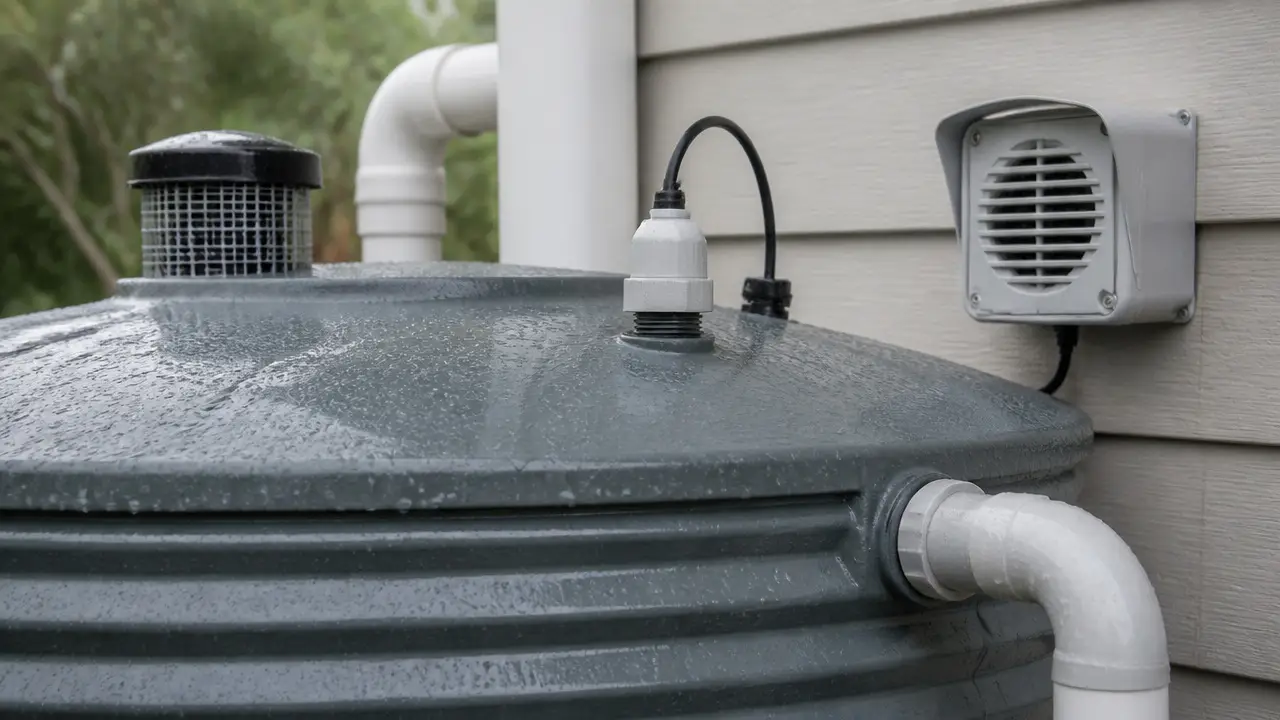
Reviewing suitable materials for tank connectors helps verify long-term tank ventilation with dependable overflow handling.
Common angles include 90 degrees and 45 degrees.
Although an elbow is usually called a fitting rather than simply a connector, it performs both jobs by connecting pipes while changing direction.
Try to avoid unnecessary sharp bends in high-flow or pump suction plumbing. Every fitting adds some resistance to water flow.
Tees
A tee connects three pipe sections.
It allows one water line to split into two directions or lets another line join the main pipe.
Tees are useful for creating branches such as separate irrigation zones.
A tee does not automatically divide water evenly. Flow through each branch depends on pipe size, pressure, restrictions, valves, and elevation.
Wye Fittings
A wye also joins or divides lines, but its branch enters at an angle rather than at 90 degrees.
Wyes are often more useful for gravity drainage than pressurized plumbing.
They can help water move smoothly through rainwater collection and overflow piping.
Connectors for Different Pipe Materials
Pipe material is one of the first things to check before choosing a connector.
| Pipe or tubing | Common connector types |
|---|---|
| PVC | Solvent-weld, threaded, unions, flanges |
| CPVC | Solvent-weld, threaded, some push fittings |
| PEX | Crimp, clamp, expansion, push-to-connect |
| Copper | Soldered, press, compression, push-to-connect |
| Polyethylene tubing | Barbed, compression, clamp-style |
| Flexible hose | Barbed, hose-thread, quick-connect |
| Large tank piping | Threaded, bulkhead, union, flange |
The exact fitting must be approved for the pipe being used. Similar-looking plastic pipes and fittings are not always compatible.
PEX Connector Types
PEX pipe uses several connection systems.
Crimp Fittings
Crimp fittings use a metal ring around the outside of the PEX pipe. A special crimping tool compresses the ring around the fitting.
Clamp Fittings
Clamp systems use a stainless steel clamp that is tightened with a special tool.
Expansion Fittings
Expansion systems temporarily enlarge compatible PEX tubing so it can fit over the connector. The tubing then contracts around the fitting.
Only PEX and fittings made for that connection method should be used together.
Push Fittings
Some push-to-connect fittings are approved for PEX. They can be useful for repairs and transitions between compatible pipe materials.
Do not mix PEX connection systems unless the fitting manufacturer specifically allows it.
How to Choose the Right Water Pipe Connector
Start with the pipe rather than the fitting.
Match the Pipe Material
Find out whether you are working with PVC, PEX, copper, polyethylene, CPVC, or another material.
Then use a fitting designed for that pipe.
Match the Actual Connection Size
Plumbing sizes can be confusing because the stated pipe size is often a nominal size rather than the exact measured diameter.
Check the fitting standard rather than choosing a connector only by measuring the pipe with a ruler.
Check the Thread Type
Threaded connections need compatible thread standards.
This becomes especially important when connecting tanks, imported equipment, pumps, filters, and garden hoses.
If two threaded fittings do not screw together smoothly, stop and identify the thread types instead of forcing them.
Consider Pressure
A connector used on an open rain barrel has very different demands from one installed on the discharge side of a pressure pump.
Use fittings rated for the expected operating conditions of the system.
Gravity drainage fittings should not automatically be treated as pressure fittings.
Consider Flow
A fitting can physically connect two parts while still creating a major flow restriction.
This matters around:
- Pump inlets
- High-flow tank outlets
- Irrigation mains
- Filters
- Transfer lines
A chain of small adapters may reduce the effective opening far below the size of the main pipe.
Think About Future Maintenance
Permanent joints are fine where the pipe is unlikely to be removed.
Around equipment that needs cleaning or replacement, removable fittings are usually easier to live with.
Unions are especially helpful near pumps and filters.
Check Water-Use Requirements
Connector materials should suit the intended water use.
For non-potable rainwater used for irrigation, the requirements may differ from a system supplying water intended for drinking.
Potable means suitable for drinking.
If rainwater will be treated for drinking, connectors are only one part of the safety picture. Suitable collection surfaces, prefiltration, treatment, maintenance, current laboratory testing, and applicable local requirements all matter. A plumbing fitting or filter by itself does not make roof runoff safe to drink.
Pipe Connectors for Rainwater Tanks
Tank plumbing often uses several connector types together.
A simple system might include:
- A bulkhead fitting through the tank wall.
- A threaded adapter at the outlet.
- A valve to shut off the water.
- A union so the downstream plumbing can be removed.
- A reducer if the pipe size changes.
- A hose, PVC pipe, or polyethylene line carrying the water away.
Each connection should have a purpose.
Using many adapters just to make mismatched parts fit can create more leak points and reduce flow.
Whenever possible, plan the whole connection path before buying individual fittings.
Pipe Connectors Around Pumps
Pump plumbing deserves extra attention.
The pump inlet needs enough water flow with as little restriction as practical. Too many small fittings, elbows, valves, or adapters can make it harder for the pump to receive water.
The discharge side must also use fittings suitable for the pump's pressure.
Useful features around a serviceable pump may include:
- Shutoff valves
- Unions
- Properly sized pipe
- Suitable adapters
- A check valve when required by the system design
Do not use a connector merely because its threads fit the pump. Confirm its material, size, pressure suitability, and intended application.
Electrical pump installation also needs proper electrical protection. Water fittings do not replace safe wiring, grounding, or other required electrical safeguards.
Common Water Pipe Connector Mistakes
Many leaks and poor-flow problems come from simple compatibility errors.
Common mistakes include:
- Mixing different thread standards
- Using the wrong pipe size
- Forcing plastic threads
- Using drainage fittings on pressure lines
- Installing tubing on the wrong barb size
- Making pump suction plumbing too small
- Using too many reducers
- Forgetting removable unions around serviceable equipment
- Overtightening plastic fittings
- Using a connector that is not approved for the pipe material
- Assuming every fitting suitable for irrigation is suitable for drinking-water plumbing
A connector should do more than physically fit. It needs to work safely with the whole water system.
Frequently Asked Questions
What is the most common type of water pipe connector?
Couplings, threaded fittings, and material-specific fittings such as PVC solvent-weld fittings are among the most common. The right type depends mainly on the pipe material and whether the joint needs to be removable.
What is the difference between a coupling and a union?
A coupling normally joins two pipes as a simple connection. A union is designed so the connection can be taken apart without cutting the pipe. Unions are useful near pumps, filters, and valves that may need service.
Can I connect two different types of water pipe?
Yes, when you use a transition fitting designed for both materials. For example, certain approved adapters can connect plastic pipe to threaded metal equipment. Do not improvise a transition just because two parts seem to fit.
Are garden hose threads the same as pipe threads?
No. Garden hose threads and common plumbing pipe threads use different shapes and sealing methods. Use a proper hose-to-pipe adapter when connecting a garden hose to plumbing.
Are push-to-connect fittings permanent?
They can be used as long-term connections when the fitting is approved for the pipe and application. Some designs can also be removed with the proper release method. Always follow the fitting's installation requirements.
What connector should I use on a rainwater tank?
It depends on the tank. Bulkhead fittings are commonly used to create connections through tank walls, while tanks with molded threaded outlets may need a compatible threaded adapter. Confirm the outlet size and thread type before choosing a fitting.
Should pipe connectors be the same size as the pump inlet?
In many systems, avoiding unnecessary restriction at the pump inlet is important. Do not reduce the suction line simply because a smaller fitting is easier to find. Follow the pump's installation requirements and consider the entire suction path, including pipe length, elevation, valves, and fittings.
Can water pipe connectors make rainwater safe to drink?
No. Connectors only join parts of the plumbing system. Drinking-water safety depends on the complete collection and treatment system, suitable materials, ongoing maintenance, current laboratory testing, and applicable local requirements.