As an affiliate, we may earn a commission from qualifying purchases. We get commissions for purchases made through links on this website from Amazon and other third parties.
How to Attach a Hose to an IBC Tote
You can attach a garden hose to an IBC tote by installing an adapter on the tote's outlet valve. The adapter must match both the tote's outlet thread and the hose connection.
The important part is identifying the tote fitting before buying an adapter. IBC totes do not all use the same outlet size or thread.
For a typical setup, the connection looks like this:
IBC tote valve → tote adapter → garden hose
Once the correct adapter is installed, attaching and removing the hose is much like using an outdoor faucet.
Check the IBC Tote Before Adding a Hose
Before working on the outlet, make sure the tote is suitable for the water you plan to store.
If the tote is used, find out what it previously contained. Do not use a tote that held unknown chemicals, pesticides, fuel, solvents, or other hazardous materials for rainwater that may contact people, pets, food crops, or household plumbing.
Even a clean-looking tote can hold residue from its previous contents.
For rainwater collection, a known food-grade tote is generally easier to evaluate than a tote with an unknown history. The container itself still does not make collected rainwater potable, which means safe for drinking.
Also inspect the outlet valve for:
- Cracks
- Damaged threads
- Missing seals
- Heavy corrosion or contamination
- Leaks around the valve
- A valve that will not fully close
Fix valve problems before adding a hose.
Identify the Tote Outlet Fitting
Most IBC totes have a large valve near the bottom. The hose does not normally screw directly onto this valve.
Instead, you need an adapter.
A common IBC outlet uses a coarse thread often called S60x6 or a 2-inch IBC buttress thread. But other thread sizes and styles are also used.
Do not order an adapter based only on the tote's capacity. Two 275-gallon totes, for example, may have different valves.
Check the markings
Look for molded or printed markings on the valve or valve cap. These may identify the thread or nominal size.
Measure if necessary
If there are no useful markings, measure:
- The outside diameter of the threaded outlet
- The distance between thread peaks
- Whether the thread is coarse or fine
- Whether the threads are on the outside or inside of the outlet
A fitting that is almost the right size is not good enough. Forcing mismatched threads can permanently damage the valve.
If you are unsure, take the original valve cap to a plumbing, irrigation, or agricultural supply shop and use it to help identify the fitting.
Choose the Right Hose Adapter
For an ordinary garden hose, you usually need an adapter with:
- An IBC-compatible connection on one side
- A male garden hose connection on the other
A garden hose normally has a female swivel fitting on its inlet end. That fitting screws onto a male garden-hose-thread outlet.
Some adapters include a small shutoff valve. Others are only reducers and rely on the tote's main valve to control water.
Either arrangement can work.
Avoid confusing pipe threads with hose threads
Garden hose threads and common plumbing pipe threads are different.
A garden hose fitting may look similar to a pipe fitting of roughly the same size, but the thread shape and pitch may not match.
Do not force them together.
If your adapter ends in pipe thread rather than garden hose thread, you will need another fitting to make the transition.
How to Connect the Hose
The exact parts vary, but the basic installation is simple.
1. Empty the tote below the outlet level
Working on a full tote can release a large amount of water if the valve opens or a fitting comes loose.
Close the main tote valve and lower the water level before changing fittings whenever practical.
2. Remove the outlet cap
Unscrew the protective cap from the tote valve.
Clean dirt, grit, and old seal material from the threads.
Check the sealing surface for damage.
3. Inspect the adapter seal
Many IBC adapters seal with a rubber gasket rather than by tightening the threads themselves.
Make sure the gasket:
- Is present
- Sits flat
- Is clean
- Has no cracks or deep deformation
A missing gasket is a common cause of leaks.
4. Screw on the IBC adapter
Start the adapter by hand.
It should turn smoothly for several threads. If it becomes tight immediately or sits crooked, stop. The threads may not match or may be cross-threaded.
Cross-threading happens when two threaded parts start at an angle and damage each other's threads.
Hand-tightening is often enough to seat a gasket. If the fitting needs additional tightening, follow the fitting manufacturer's instructions and avoid excessive force on the plastic valve.
5. Attach the garden hose
Check that the rubber washer is inside the female end of the garden hose.
Screw the hose onto the adapter by hand.
The hose washer normally makes this seal. Thread-sealing tape is generally not needed on a garden hose connection that seals against a washer.
6. Open the valve slowly
Open the IBC valve gradually and watch every connection.
Check for leaks around:
- The tote valve
- The IBC adapter
- The garden hose connection
- Any added shutoff valve
A slow leak usually means the connection needs to be reseated, the gasket is damaged, or the fittings do not match correctly.
Do You Need Thread-Sealing Tape?
It depends on how the fitting seals.
Do not automatically wrap every connection with PTFE thread-sealing tape.
Many IBC adapters use a flat gasket. The gasket creates the seal, not the threads. Tape on these threads usually does not fix a damaged or missing gasket.
With practical considerations for there different types of ibc fittings, you can understand routine maintenance needed for dependable operation.
Garden hoses also normally seal with a rubber washer inside the female hose fitting.
Thread-sealing tape is more appropriate on certain tapered pipe-thread connections. If your adapter assembly includes those fittings, follow the fitting manufacturer's instructions.
How Much Pressure Will You Get From an IBC Tote?
A hose attached directly to an IBC tote relies on gravity unless you add a pump.
Gravity pressure depends mainly on the vertical distance between the water surface and the hose outlet. This distance is sometimes called head height.
A tote sitting directly on the ground usually provides only modest pressure.
That may be enough for:
- Filling watering cans
- Slow garden watering
- Drip lines designed for low pressure
- Transferring water downhill
It may not be enough for:
- Many lawn sprinklers
- Long hoses
- Pressure-dependent irrigation equipment
- Spray nozzles that need strong pressure
Raising the tote increases gravity pressure, but a full IBC tote is extremely heavy. Water weighs about 8.34 pounds per U.S. gallon, or about 1 kilogram per liter.
A 275-gallon tote can therefore contain more than 2,200 pounds of water before counting the tote and cage.
Do not place a filled tote on a makeshift platform. Any elevated support must be designed for the full load and kept stable on a suitable foundation.
Hose Length and Diameter Affect Flow
Even when the tote has enough water, the hose itself can restrict flow.
Longer and narrower hoses create more resistance. Flow also drops as the water level inside the tote falls because the available head height decreases.
For simple gravity watering, keeping the hose:
- Reasonably short
- Free of sharp bends
- At or below the tote water level when possible
can improve flow.
A larger hose can also reduce flow restriction, although the tote valve and adapter may still limit how much water can pass.
Should You Add a Shutoff Valve?
A separate shutoff valve at the hose connection is useful but not required.
It can make it easier to stop flow without repeatedly operating the large IBC valve.
A typical arrangement might be:
IBC valve → adapter → small shutoff valve → garden hose
This can be especially convenient if the main tote valve is stiff or awkward to reach.
Do not rely on an added valve to compensate for a damaged main tote valve. A leaking or cracked valve should be repaired or replaced.
Prevent Stress on the Tote Valve
A long, water-filled hose can pull downward or sideways on the tote outlet.
Over time, that stress can damage plastic fittings or cause leaks.
Try to keep the hose supported instead of letting its entire weight hang from the adapter.
Avoid:
- Pulling the tote by the hose
- Stepping on the connected hose
- Leaving a heavy valve assembly unsupported
- Using long rigid pipe sections that act like levers on the outlet
A short flexible section near the tote can help reduce strain in more permanent installations.
Connecting a Tote to Drip Irrigation
An IBC tote can supply some gravity-fed drip systems, but connecting the hose is only the first step.
The irrigation system must also work with the pressure and flow available from the tote.
Depending on the setup, you may need:
- A screen or sediment filter
- A pressure regulator designed for the available pressure
- Larger supply tubing
- Separate irrigation zones
- A pump when gravity pressure is insufficient
Some common irrigation filters and regulators are designed for pressurized water and may not work well at very low gravity pressure.
Check their operating requirements before installing them.
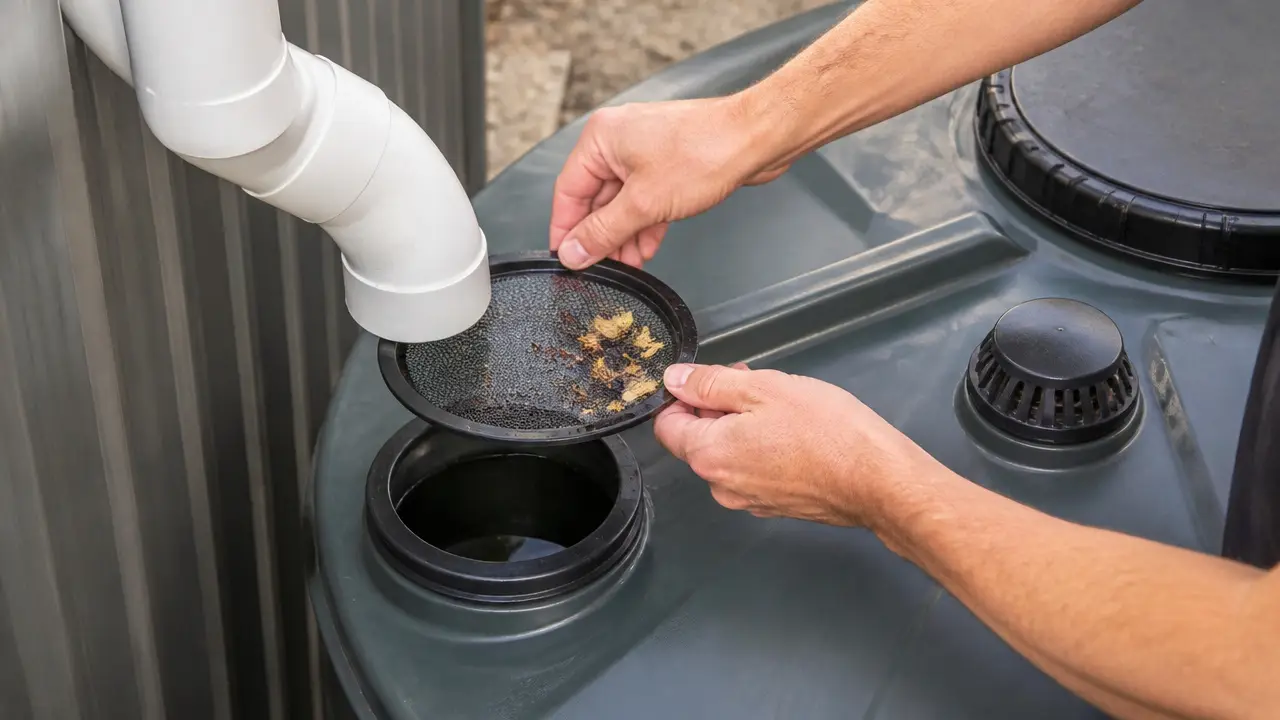
Keep Debris Out of the Hose System
Rainwater can carry leaves, roof grit, insects, sediment, and organic material into storage.
An outlet near the bottom of an IBC tote is also close to where settled sediment may collect.
For garden irrigation, a simple screen or suitable sediment filter may help keep small emitters and spray devices from clogging.
Filtration requirements depend on what the water is being used for. A sediment filter removes particles, but it does not make roof runoff safe to drink.
Protect the Connection From Freezing
Water trapped inside a hose, adapter, valve, or filter can expand when it freezes.
That expansion can crack plastic fittings and valve bodies.
In freezing climates, seasonal shutdown may include:
- Disconnecting hoses
- Draining exposed fittings
- Removing water from filters
- Protecting valves from trapped water
- Following the tote and accessory manufacturers' winter-storage guidance
Simply closing the valve does not guarantee that exposed plumbing is protected from freezing.
Check the Connection Regularly
Inspect the hose connection from time to time, especially after moving the tote or changing hoses.
Look for:
- Drips around the adapter
- Cracked plastic
- Loose fittings
- Flattened or hardened gaskets
- Kinked hoses
- Sediment buildup
- Damage caused by freezing or sunlight
Small leaks are easier to fix before they become larger valve or fitting problems.
Frequently Asked Questions
Can I connect a regular garden hose directly to an IBC tote?
Usually not. Most IBC totes have a large outlet valve with a thread that does not match a garden hose. You normally need an IBC-to-garden-hose adapter.
What size adapter do I need for an IBC tote?
It depends on the valve. A 2-inch S60x6-style buttress fitting is common, but it is not universal. Check the valve markings or measure the outlet before buying an adapter.
Do I need a pump to use a hose from an IBC tote?
Not always. Gravity can work for filling containers and some low-pressure irrigation. A pump may be needed for sprinklers, long hose runs, higher elevations, or equipment that requires more pressure.
Why is my IBC hose adapter leaking?
Common causes include a missing or damaged gasket, dirt on the sealing surface, a loose fitting, cross-threading, or an adapter with the wrong thread.
Should I use thread tape on an IBC adapter?
Not when the adapter seals with a flat gasket unless its manufacturer says otherwise. Garden hose fittings also normally seal with a washer. Thread tape is mainly used on appropriate threaded pipe connections.
Can I leave a hose connected to the tote all year?
You can in some mild climates, but the hose and fittings still need regular inspection. In freezing climates, trapped water can crack hoses, adapters, valves, and filters, so exposed parts usually need to be drained or winterized.
Can I use an IBC tote and garden hose for drinking water?
A hose connection does not make stored rainwater safe to drink. Drinking-water use requires suitable collection and storage materials, appropriate treatment, current laboratory testing, ongoing maintenance, and compliance with applicable local requirements. A tote with an unknown previous use should not be assumed suitable for potable water.