As an affiliate, we may earn a commission from qualifying purchases. We get commissions for purchases made through links on this website from Amazon and other third parties.
For most IBC totes, the bottom outlet is a 2-inch nominal connection, but “2-inch” does not tell you which adapter will fit.
The most common outlet found on IBC totes is S60×6 male buttress thread. It measures about 60 mm across the outside of the threads, with about 6 mm between thread peaks. Many 275-gallon and 330-gallon totes use this connection.
However, IBC fittings are not universal. Some totes use NPS, BSP, camlock, larger buttress threads, or manufacturer-specific connections. Measure the outlet before buying an adapter.
The Most Common IBC Tote Fitting Size
For a typical plastic IBC tote with a bottom butterfly valve, you will often find:
| Connection | Common size | What it means |
|---|---|---|
| Valve outlet | S60×6 | About 60 mm outside diameter with 6 mm thread spacing |
| Nominal outlet size | 2 inches | General valve size, not the actual measured thread diameter |
| Garden hose adapter | S60×6 to 3/4-inch GHT | Lets you connect a standard garden hose |
| Pipe adapter | S60×6 to NPT or other pipe thread | Lets you connect pumps, valves, or rigid pipe |
| Transfer hose | S60×6 to 2-inch camlock | Common for larger hoses and quick disconnects |
S60×6 is widely used, but other outlet styles exist.
The important point is that a 2-inch IBC outlet is not necessarily the same thing as ordinary 2-inch plumbing thread.
What Does S60×6 Mean?
S60×6 is a coarse buttress thread commonly molded onto the end of an IBC valve.
The name gives you two useful measurements:
- 60 refers to an outside thread diameter of roughly 60 mm, or about 2.36 inches.
- 6 refers to a thread pitch of 6 mm. Pitch is the distance from one thread peak to the next.
These threads are much coarser than normal pipe threads.
That difference is easy to see. An S60×6 outlet has a small number of large, widely spaced threads. A 2-inch pipe thread has many more threads packed into the same distance.
Do not force a pipe fitting onto an S60×6 outlet even if it seems to start threading. A mismatched connection can damage the plastic threads and may leak.
Why a “2-Inch Adapter” May Not Fit
The word 2-inch describes several fittings that are not interchangeable.
An IBC tote could have a fitting described as:
- 2-inch S60×6 buttress
- 2-inch NPS
- 2-inch NPT
- 2-inch BSP
- 2-inch camlock
- another buttress thread size
These can look similar from a distance.
For example, an S60×6 outlet is about 60 mm across and has very coarse 6 mm thread spacing. A 2-inch NPS-type connection can have a similar outside diameter but much finer threads.
This is why buying an adapter based only on “2-inch IBC fitting” can produce the wrong part.
How to Measure Your IBC Tote Outlet
You can usually identify the outlet without removing the entire valve from the tote.
1. Measure the outside thread diameter
Measure straight across the threaded outlet from the outside of one thread to the outside of the opposite thread.
A caliper gives the clearest measurement, but a ruler or tape can usually tell you whether the connection is around 60 mm, 75 mm, or 100 mm.
An outlet measuring roughly 60 mm across is a strong sign that you may have S60×6.
2. Measure the thread spacing
Measure from the peak of one thread to the peak of the next.
S60×6 has approximately 6 mm between thread peaks.
The threads should look noticeably coarse.
3. Look at the thread shape
Buttress threads look different from ordinary plumbing threads. They are large and widely spaced.
NPT, NPS, and BSP connections normally have much finer threads.
4. Check markings on the valve
Some IBC valves have the manufacturer, nominal size, or thread information molded into the plastic.
If you can find a valve model number, use that information along with your measurements rather than relying on appearance alone.
275-Gallon vs. 330-Gallon IBC Tote Fittings
Do not choose an adapter based on tote capacity.
A 275-gallon IBC tote and a 330-gallon IBC tote can use the same S60×6 outlet, while another tote of either size may use a different valve.
Capacity tells you how much liquid the container holds. It does not reliably identify the outlet thread.
Measure the actual valve.
Connecting an IBC Tote to a Garden Hose
For simple gravity-fed garden watering, one of the most useful setups is:
IBC valve → correct IBC adapter → 3/4-inch garden hose thread
If your valve has an S60×6 outlet, look for an adapter specifically described as:
S60×6 female to 3/4-inch GHT
GHT means garden hose thread.
Make sure the adapter includes the correct sealing gasket. S60×6 connections commonly seal against a flat gasket rather than depending on thread tape alone.
Remember that a garden hose greatly reduces the opening compared with the tote's full-size outlet. That may be fine for watering plants but can limit flow when feeding a pump, transferring water quickly, or supplying several irrigation lines.
Connecting an IBC Tote to 1-Inch or 2-Inch Pipe
If you are building a rainwater system, you may want to connect the tote to PVC, polyethylene pipe, a pump, or a manifold.
The normal arrangement is:
IBC valve → IBC thread adapter → standard plumbing connection
For example, an S60×6 adapter can convert the tote outlet to an NPT connection.
NPT means National Pipe Thread, a common tapered plumbing thread in North America.
Do not assume that an adapter labeled simply “2-inch female” is correct. Confirm what type of female thread it has on the tote side and what thread it provides on the pipe side.
Also check whether your downstream plumbing is 3/4 inch, 1 inch, 1-1/2 inches, or 2 inches. Reducing the line immediately after the tote can restrict gravity flow.
Using a Camlock Connection
A camlock, also called a cam-and-groove coupling, lets you attach and remove a large hose quickly without unscrewing threaded fittings each time.
For a common S60×6 tote, you can use:
S60×6 adapter → 2-inch camlock
Camlocks are useful when you regularly connect the tote to:
- a transfer pump
- a large irrigation hose
- another storage tank
- temporary plumbing
- a water-transfer setup
For selecting the right thread is used for ibc tote valves, first assess assembly details that affect everyday performance.
Some IBC valves already have a camlock-style outlet, so inspect what you have before ordering another adapter.
What Size Is the Top Opening?
The top fill opening is much larger than the bottom outlet.
Many common IBC totes have a top lid around 6 inches or 150 mm, but top lids and caps vary by manufacturer and tote design. Some use different diameters or closure systems.
Do not confuse the large top lid with the S60×6 outlet.
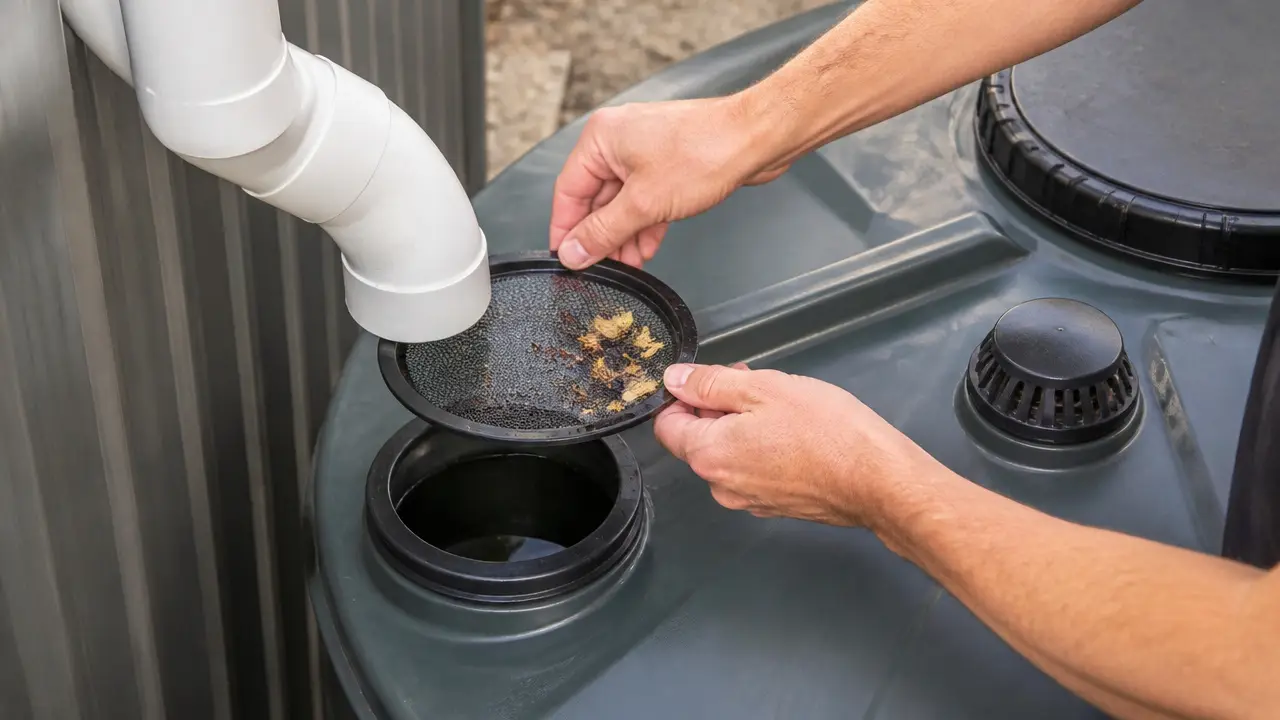
For a rainwater collection system, you may not need a threaded adapter on the main lid at all. Water can instead enter through a suitable screened inlet or a properly designed lid connection.
Any opening used for rainwater collection should also prevent mosquitoes, debris, and animals from entering the tote.
The Valve-to-Tote Connection Is Different
There are actually two connections around the bottom valve:
- The connection between the IBC bottle and the valve
- The connection on the front of the valve where your hose or pipe attaches
Most DIY rainwater systems only need an adapter for the second one.
Do not remove the factory valve simply because you want to connect a garden hose or pipe. Removing the valve exposes a larger tank connection and creates another place where the tote could leak.
If the valve itself is damaged, identify both the tote-side connection and valve specifications before replacing it.
What About Bulkhead Fittings?
A bulkhead fitting is a fitting that passes through a hole in the tank wall and seals against the wall with a gasket.
It is different from the factory IBC valve.
You might add a bulkhead fitting when installing:
- an overflow
- a second outlet
- a tank-to-tank balancing line
- a level indicator
- another dedicated connection
The hole size required is not the same as the nominal pipe size. A 1-inch bulkhead, for example, normally needs a hole larger than 1 inch.
Use the hole-size specification supplied for the exact bulkhead fitting rather than drilling based on its nominal pipe size.
Once an IBC tote is drilled, changing the connection later is more difficult. Plan the fitting location and size before cutting.
Fitting Size Affects Rainwater Flow
For rainwater systems, fitting size is not only about whether the threads match.
It also affects how quickly water can move.
A full-size outlet feeding a large pipe can move much more water under gravity than the same tote reduced immediately to a garden hose.
This matters when you are:
- transferring water between totes
- feeding several irrigation zones
- supplying a pump
- connecting multiple totes together
- trying to drain the tote quickly
Gravity pressure from an IBC tote is fairly low. Higher water level creates more pressure, but it does not turn the tote into a normal pressurized water supply.
If a pump is involved, size the outlet and suction plumbing around the pump's required flow and inlet conditions rather than simply using the smallest convenient adapter.
Check the Gasket as Well as the Thread
Correct threads do not guarantee a leak-free connection.
Many IBC adapters use a flat gasket that seals against the end of the valve outlet. Check that the gasket:
- is present
- sits flat
- is not split or distorted
- is suitable for the intended water use
- matches the adapter
Do not solve every IBC leak by adding more thread tape. If the connection is designed to seal against a gasket, the gasket is doing the important work.
Overtightening plastic fittings can also deform or crack them.
Used IBC Totes Need More Than the Right Fitting
If you are reusing an IBC tote for rainwater, fitting compatibility is only part of the decision.
Find out what the tote previously contained.
A tote that previously held an unknown chemical should not be assumed suitable for garden water, animal water, household reuse, or drinking-water storage just because it has been rinsed.
For drinking-water use, the container and fittings must be appropriate for that use, and the complete rainwater system needs suitable collection, prefiltration, treatment, maintenance, current water testing, and compliance with applicable local requirements.
A fitting or adapter by itself does not make stored rainwater potable. Potable means suitable for drinking.
A Simple Way to Buy the Right IBC Fitting
Before ordering anything, write down four things:
- Outlet outside diameter
- Thread spacing
- Type of connection you want on the other side
- Required hose or pipe size
For example:
About 60 mm outside diameter + 6 mm thread pitch + standard garden hose
That points toward an S60×6 female to 3/4-inch garden hose adapter.
For a pump installation, you might instead need:
S60×6 female → 1-inch or 2-inch pipe connection
The exact second connection should match the pump and plumbing you are using.
That approach is much safer than shopping only by tote capacity or searching for a generic “IBC 2-inch adapter.”
Frequently Asked Questions
What is the standard fitting size on an IBC tote?
The most common bottom valve outlet is a 2-inch nominal S60×6 male buttress thread. It measures roughly 60 mm across the outside of the threads with a 6 mm thread pitch. Other outlet types exist, so measure yours before ordering an adapter.
Do all 275-gallon IBC totes have the same fittings?
No. Many use S60×6 outlets, but the tote's capacity does not determine its fitting type. Valve designs and threads vary between manufacturers and tote models.
Do 275-gallon and 330-gallon IBC totes use the same fittings?
They often can, but not always. Both sizes are commonly found with 2-inch nominal outlets, including S60×6 valves. Identify the actual valve thread instead of choosing a fitting based on tank capacity.
Will a 2-inch PVC fitting screw directly onto an IBC tote?
Not necessarily. A common IBC outlet uses S60×6 buttress thread, which is different from normal NPT plumbing thread. You will usually need an adapter that converts the IBC thread to the pipe connection you want.
What adapter do I need to connect a garden hose to an IBC tote?
If your tote has the common S60×6 outlet, you normally need an S60×6 female to 3/4-inch garden hose thread adapter. Verify the tote thread before ordering.
How can I tell whether my IBC tote is S60×6?
Measure the outside diameter and thread spacing. An S60×6 connection is roughly 60 mm across with approximately 6 mm between thread peaks. Its threads are noticeably coarse.
What size is the top cap on an IBC tote?
Many IBC totes use a top fill lid around 6 inches or 150 mm, but top closures vary. Measure the lid or check its markings before buying a replacement or adding a rainwater inlet fitting.