
As an affiliate, we may earn a commission from qualifying purchases. We get commissions for purchases made through links on this website from Amazon and other third parties.
Best Overall
Best for High-Flow Transfer
Best for Higher Lift
A rain barrel pump needs to do more than move water. It has to match the barrel opening, the distance to the garden, the vertical lift, the hose size, and the amount of flow the watering setup can actually use. A high-flow utility pump can empty a barrel very quickly, while a small transfer pump may be easier to control for hand watering but too weak for a demanding irrigation line.
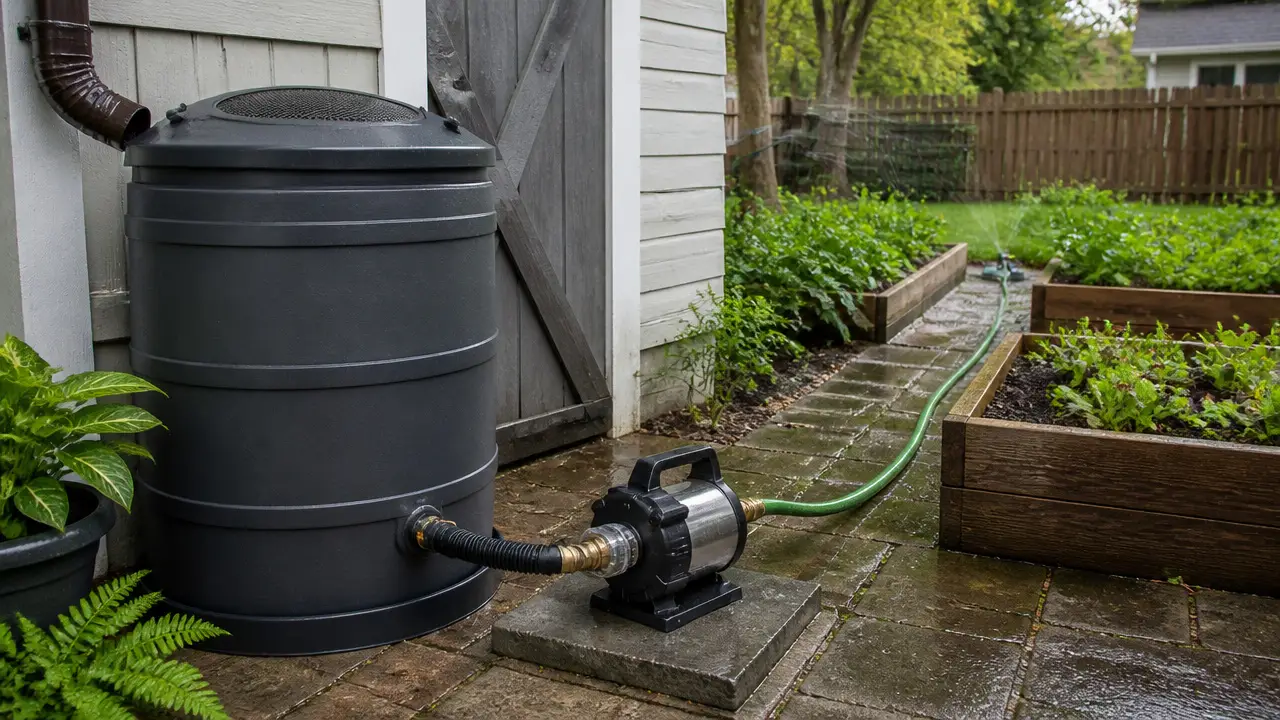
The four pumps here serve different jobs. Algreen is the most purpose-built rain-barrel kit and includes garden-hose connections. Superior Pump moves the most water and suits fast transfer or draining. SumpMarine is a compact non-submersible transfer pump with a high documented discharge lift. TecHome is another portable 115-volt transfer option with a low-suction attachment for pulling water close to the bottom of a container.
A fifth prepared product, the XWILLING 330 GPH transfer pump, is not ranked separately because its supported flow, lift, priming method, and included low-suction hardware duplicate the roles already covered by the TecHome and SumpMarine picks without adding a distinct buying advantage.
Electricity and stored water need a conservative setup. Follow the pump's directions, keep non-submersible motors dry, use suitable protected power, and do not improvise permanent electrical work around a tank.
Quick Comparison
| Pump | Best For | Max Flow | Lift / Head | Pump Style | Main Tradeoff |
|---|---|---|---|---|---|
| Algreen 500 GPH Rain Barrel Pump Kit | Everyday barrel watering | 8.33 gpm | Not the main strength | Submersible | Too little pressure for some irrigation layouts |
| Superior Pump 91250 | Fast transfer and draining | 30 gpm | Up to 25 ft | Submersible utility | Can empty a small barrel very quickly |
| SumpMarine 330 GPH | Longer vertical discharge | 5.5 gpm | Up to 39 ft | Non-submersible transfer | Pump housing can run hot and requires priming |
| TecHome 330 GPH | Portable low-suction transfer | 5.5 gpm | Up to 40 ft discharge head; 6 ft suction lift | Non-submersible transfer | Slower flow and air-lock sensitivity |
Flow Rate and Lift Are Different Limits
Flow rate tells you how much water the pump can move under favorable conditions. Lift or head tells you how high the pump can push the water before flow falls away. Both matter, and neither should be read as a promise that the pump delivers its maximum flow at its maximum height.
A barrel beside a garden bed may need very little lift. In that case, a moderate submersible pump can be easier to use than a transfer pump that needs priming. If the garden sits uphill or the hose must climb to a higher yard, discharge head becomes more important.
Long hoses, small fittings, filters, splitters, and irrigation emitters all add resistance. A pump that moves water quickly through a short open hose may deliver much less at the end of a long drip line.
A Purpose-Built Rain Barrel Watering Kit
1 / 4
Algreen 500 GPH Rain Barrel Pump Kit

Pump Type
Submersible
Maximum Flow
500 GPH / 8.33 GPM
Connections
Garden-hose fittings included
Algreen has the clearest rain-barrel-specific design in this group. The kit uses a 500 GPH submersible pump and includes flow control, garden-hose connections, and hose clamps. It is intended to let you water directly from one or two connected rain barrels without relying only on the small amount of pressure created by elevating the barrels.
That makes it a practical choice for nearby plants, a watering wand, or a modest hose run. The submersible layout also removes the priming routine required by small surface transfer pumps. Put the pump in the water, make the intended hose connection, and manage flow from the supplied control.
The limitation is pressure. Users have found it suitable for a soaker hose or nearby plants but too weak for some drip systems and lawn-watering jobs. A pump rated at 500 GPH can still fall short when an irrigation system needs more pressure than the pump can produce. Choose it for straightforward barrel watering rather than assuming it can replace a household-pressure pump.
Why It Works
- Designed specifically around rain-barrel watering rather than general utility pumping.
- Includes garden-hose fittings, clamps, and flow control in one kit.
- Submersible layout avoids the priming and suction-hose setup of a surface transfer pump.
What To Keep In Mind
- Low pressure may not operate some drip emitters, sprinklers, or long hose layouts well.
- The pump may need cleaning if debris reaches its intake.
- A submersible pump still needs power arranged according to the manufacturer's electrical-safety directions.
A High-Flow Submersible Pump for Fast Transfer
2 / 4
Superior Pump 91250 1/4 HP Submersible Utility Pump

Maximum Flow
1,800 GPH / 30 GPM
Maximum Lift
25 ft
Discharge
1-1/4-in NPT with 3/4-in hose adapter
The Superior Pump 91250 is in a different flow class from the small barrel pumps. Its documented maximum is 1,800 GPH, or 30 GPM, with up to 25 feet of vertical lift. It has a 1-1/4-inch NPT discharge and includes a 3/4-inch garden-hose adapter, so it can serve either larger discharge plumbing or a common hose connection.
This is the better tool when the goal is to empty or transfer water quickly. It can make sense for moving rainwater between tanks, draining a container for maintenance, or feeding a short open hose where fast flow is useful. A removable suction screen handles small debris up to 1/8 inch.
High flow is not automatically better for a 50-gallon barrel. A pump this strong can empty small storage very quickly, and continuous-duty expectations need to match the actual pump instructions. Some long-term intermittent installations have been durable, while other continuous runs have ended with seal or motor problems. Use the pump for the duty it is designed to handle rather than leaving it running simply because water is available.
Why It Works
- 30 GPM documented maximum is far above the other distinct pumps here.
- 25-foot lift gives useful headroom for transfer work.
- Large discharge plus garden-hose adapter provides flexible outlet options.
What To Keep In Mind
- High flow can drain a rain barrel faster than expected.
- It does not include an automatic float switch in this configuration.
- Continuous runtime needs to stay within the manufacturer's intended use and cooling requirements.
A Compact Transfer Pump for Higher Discharge Lift
3 / 4
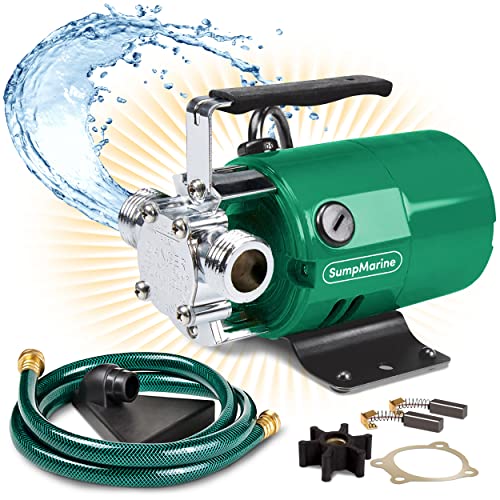
SumpMarine 115V 330 GPH Water Transfer Pump
Maximum Flow
330 GPH / 5.5 GPM
Maximum Lift
39 ft
Motor
1/10 HP
SumpMarine's small surface transfer pump is the best fit here when you need modest flow but more vertical discharge capability than a simple barrel pump. It moves up to 330 GPH and documents a maximum lifting height of 39 feet. The kit includes a six-foot hose, suction attachment, and replacement impeller.
Because it is non-submersible, the motor stays outside the water and the suction side must remain primed. The operating directions call for priming before use and keeping the intake attachment submerged. That setup is less convenient than dropping a submersible pump into a barrel, but it can be useful when access through the barrel lid is limited.
Heat and duty cycle are the main cautions. The pump housing can become very hot during operation, and some users have experienced overheating or early failure during repeated use. Keep the unit in a suitable dry location, do not touch the hot housing during operation, and give it the runtime and maintenance the manufacturer specifies.
Why It Works
- 39-foot documented lift gives it a clear role for uphill or elevated discharge paths.
- Compact 1/10 HP motor moves water at a manageable 5.5 GPM maximum.
- Included suction hose and attachment cover the basic transfer setup.
What To Keep In Mind
- Requires priming and must not be run dry.
- Housing becomes hot during operation.
- Repeated long runs can lead to overheating or shortened service life.
A Portable Low-Suction Transfer Pump
4 / 4
TecHome 115V Rain Barrel Water Transfer Pump

Maximum Flow
330 GPH / 5.5 GPM
Maximum Suction Lift
6 ft
Discharge Head
40 ft
TecHome is another 1/10 HP portable transfer pump, but its included low-suction attachment gives it a clear role when the goal is to pull water down close to the bottom of a barrel, shallow container, or flat surface. The documented system can remove water down to about 1/8 inch when that suction attachment is used correctly.
The pump uses 3/4-inch suction and discharge ports and comes with a six-foot suction hose. It needs water added to the pump head before starting, so it is not a self-forgetting setup you can leave permanently attached without understanding the priming process.
Flow is modest at 5.5 GPM maximum, and air lock can make operation frustrating if the suction side pulls air. Durability feedback is also mixed. This is better treated as an occasional portable transfer pump than as a permanent pressure source for a large irrigation system.
Why It Works
- Low-suction attachment helps remove water close to the bottom of a container.
- 40-foot documented discharge head gives useful reach for a small portable pump.
- 3/4-inch ports pair naturally with common hose-side plumbing.
What To Keep In Mind
- Air entering the suction line can stop effective pumping.
- Flow is slower than a larger submersible utility pump.
- Prepared material data contains a conflict, so construction material should not be the deciding claim.
Submersible vs. Surface Transfer Pumps
A submersible pump sits in the stored water. It does not need a suction hose or external priming routine, which makes it simple for open-top barrels and tanks with enough access. The electrical cable and outlet still need to be handled exactly as the pump manufacturer requires.
A surface transfer pump stays dry and pulls water through a suction hose. That can be useful when the storage opening is small or when you want one portable pump to serve several containers. The tradeoff is priming, suction leaks, air lock, and a limit on how far the pump can lift water on the intake side.
Do not confuse suction lift with discharge head. A pump may push water dozens of feet upward after the pump while only being able to pull water a few feet up to its inlet.
Matching a Pump to Garden Watering
A watering wand or open hose usually needs flow more than high pressure. Drip emitters, pressure-compensating irrigation, and sprinklers may have specific minimum pressure requirements. Compare those requirements with the pump curve or manufacturer data rather than only the maximum GPH number.
Soaker hose can work with lower pressure, but long runs still create resistance. A small rain-barrel pump may be ideal for a short bed and disappointing on a large irrigation zone.
If you need household-style pressure, look at pumps and controls designed for that job rather than forcing a barrel-transfer pump to serve a pressure system.
Pump Care Around Rainwater
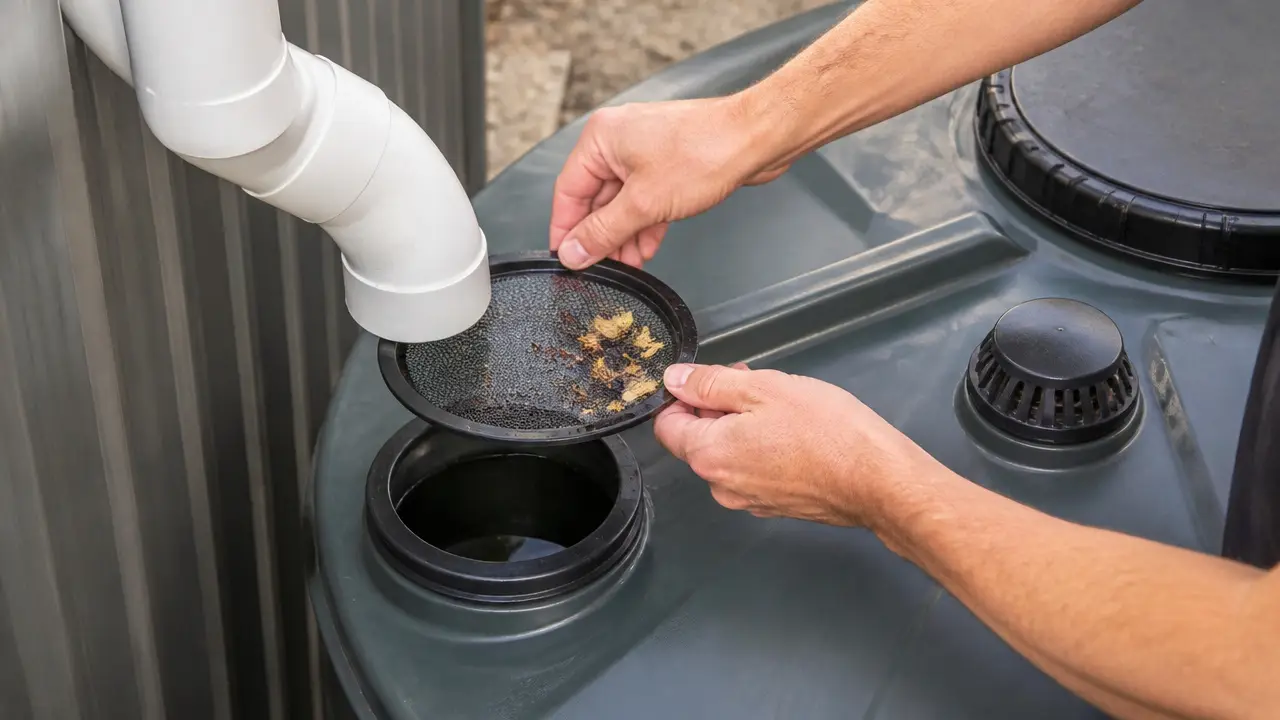
Keep leaves and sediment away from the intake. A barrel screen and routine tank cleaning reduce the amount of debris reaching the pump. Small impellers and suction strainers can clog quickly when the bottom of the container holds organic material.
Never run a pump dry unless its instructions explicitly allow it. Water often provides cooling and lubrication. A dry intake can overheat or damage a pump quickly.
Drain portable pumps and hoses before freezing weather. A small amount of trapped water can crack housings, fittings, or impellers when it freezes.
Frequently Asked Questions
What size pump do I need for a rain barrel?
Choose from the required flow, vertical lift, hose length, and connected equipment. A small 500 GPH pump can suit nearby garden watering, while fast transfer or higher lift may require a different pump style.
Can a rain barrel pump run a sprinkler?
Only if the pump provides the flow and pressure that the sprinkler requires after hose and lift losses. Many small barrel pumps are better suited to hand watering or low-pressure irrigation than to sprinklers.
Is a submersible pump better for a rain barrel?
It is often simpler because it does not need a suction hose or priming. A surface transfer pump can still be useful when the barrel opening is small or the same pump needs to serve several containers.
Can I connect a garden hose to a rain barrel pump?
Yes, when the pump has a compatible 3/4-inch garden-hose adapter or suitable outlet fitting. Check both thread type and pump flow before connecting the hose.
Why does my transfer pump lose prime?
Air can enter through a loose suction connection, low water level, cracked hose, or intake that is not fully submerged. Suction-side connections need to remain airtight.
Can I leave a rain barrel pump in the water all year?
Follow the pump's installation and winter-storage directions. Freezing conditions can damage pumps, hoses, and fittings, and some pumps are intended for portable rather than permanent use.
Does a rain barrel pump make the water safe to use indoors?
No. A pump only moves water. Indoor or potable use requires a rainwater system designed for that intended use, including suitable treatment, plumbing separation, current testing, and local requirements.
If electricity is not convenient, hand pumps for water barrels provide a manual alternative for modest transfer. A portable powered option can also be compared with battery-powered water transfer pumps when cord access is the main problem. For quick occasional transfer, drill pumps for water transfer use a drill as the power source. If the barrel outlet itself is the restriction, rain barrel spigots cover the valve and connection hardware before the pump is added.