As an affiliate, we may earn a commission from qualifying purchases. We get commissions for purchases made through links on this website from Amazon and other third parties.
Water does not usually become clean in one step. A complete treatment system uses several stages, with each stage doing a different job.
The five common stages of conventional drinking-water treatment are coagulation, flocculation, sedimentation, filtration, and disinfection. This is a common treatment sequence for surface water used by public water systems.
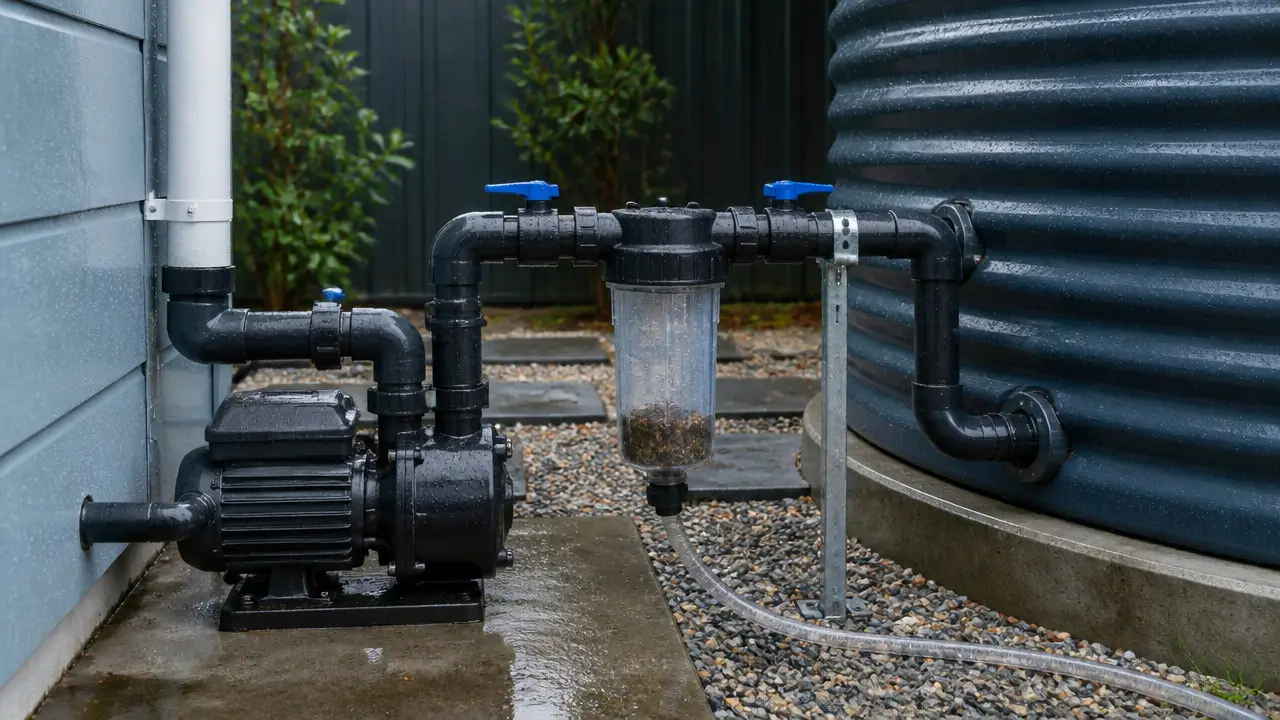
For rainwater collected at home, the equipment and order may look different. Roof runoff often needs debris removal, sediment filtration, and other treatment chosen for the intended use. Drinking-water treatment requires more than simply passing rainwater through a filter.
The 5 Main Stages of Water Treatment
1. Coagulation
Coagulation helps remove very small particles that will not settle on their own.
A treatment plant adds a chemical called a coagulant to the water. The coagulant changes the electrical charge around tiny suspended particles. This allows the particles to begin sticking together.
These particles may include:
- Clay
- Fine dirt
- Organic material
- Other suspended matter
Coagulation is mainly used in larger water-treatment systems. It is not normally a stage found in a simple rain barrel or basic household rainwater system.
2. Flocculation
After coagulation, the water is mixed gently.
The small particles start joining together into larger clumps called floc. These larger clumps are much easier to remove than the tiny particles that were originally suspended in the water.
Coagulation and flocculation are closely connected, but they are not exactly the same.
Coagulation prepares the particles to stick together. Flocculation gives them time and movement to form larger clumps.
3. Sedimentation
The water then enters a settling area.
Because the floc particles are heavier than water, many of them sink to the bottom. This process is called sedimentation.
The settled material can then be removed.
Sedimentation reduces the amount of dirt and suspended material that reaches the filters. That matters because sending heavily contaminated water straight into a filter can clog the filter quickly.
The same basic idea can help in rainwater systems. Sediment sometimes settles on the bottom of tanks, especially when water remains still for long periods. However, a storage tank should not be treated as a substitute for proper filtration or treatment.
4. Filtration
After much of the suspended material has been removed, the water passes through a filter.
Filtration removes smaller particles that remain in the water.
Large treatment plants may use media such as:
- Sand
- Gravel
- Anthracite
- Granular activated carbon
- Membranes
Different filters remove different contaminants.
A micron rating describes the approximate particle size a filter is designed to capture. One micron is one-thousandth of a millimeter.
A coarse filter may catch sand and visible debris. A much finer filter may capture very small particles. Some membrane systems can remove certain microorganisms and dissolved contaminants, depending on the membrane and system design.
Activated carbon works differently from a simple screen. Instead of only trapping particles, carbon can adsorb certain substances onto its surface. It is often used to improve taste and odor and to reduce specific chemicals when the filter is designed and certified for that purpose.
No single filter removes every possible contaminant.
5. Disinfection
The final major stage is usually disinfection.
Disinfection is intended to kill or inactivate disease-causing microorganisms that may remain after filtration.
Common methods include:
- Chlorine
- Chloramine in some public systems
- Ultraviolet light
- Other approved disinfection processes
The U.S. EPA describes disinfection as a normal part of conventional surface-water treatment following filtration.
WHO also notes that filtration and disinfection serve different purposes. Turbid, or cloudy, water can reduce the effectiveness of disinfection, which is one reason removing particles before disinfection matters.
A UV system, for example, should not be viewed as a dirt filter. It uses ultraviolet light to inactivate susceptible microorganisms under suitable operating conditions. Water quality, flow rate, lamp condition, and system design all affect performance.
What Are the 5 Stages in a Home Rainwater System?
A rainwater harvesting system usually does not copy a municipal treatment plant step for step.
A more practical sequence might be:
- Debris removal at the roof, gutter, or tank inlet
- Prefiltration or settling to reduce leaves and larger sediment
- Sediment filtration to remove smaller suspended particles
- Contaminant-specific treatment, such as activated carbon or another suitable treatment stage
- Disinfection, when required for the intended use
A first-flush diverter may also be installed before storage. A first-flush system diverts some of the first roof runoff away from the tank because that runoff can carry accumulated dirt and debris from the roof.
The correct sequence depends heavily on what you plan to do with the water.
Garden Water
Rainwater used for garden irrigation often needs much less treatment than drinking water.
The main goals may simply be keeping leaves, grit, insects, and sediment out of the tank and preventing irrigation emitters from clogging.
Review a suitable water filtration systems for rainwater tanks to evaluate capacity needed to cover demand until the next refill.
A typical system could include gutter screens, an inlet filter, and an irrigation filter.
Toilet or Laundry Water
Indoor non-drinking uses can require more control over water quality.
Non-potable means water that is not intended for drinking.
Treatment requirements depend on the system, plumbing arrangement, local rules, and intended use. Cross-connections between rainwater plumbing and drinking-water plumbing need particular care.
Drinking Water
Potable water means water considered suitable for drinking.
Roof-collected rainwater should not be assumed to be potable simply because it looks clear or has passed through several filters.
Roof runoff can contain microorganisms, animal waste, dust, roofing-related contaminants, and other pollutants. A filter's appearance or micron rating alone cannot establish that the finished water is safe to drink.
WHO recognizes filtration and disinfection as separate household water-treatment approaches and evaluates treatment technologies based on their actual performance against microbial hazards.
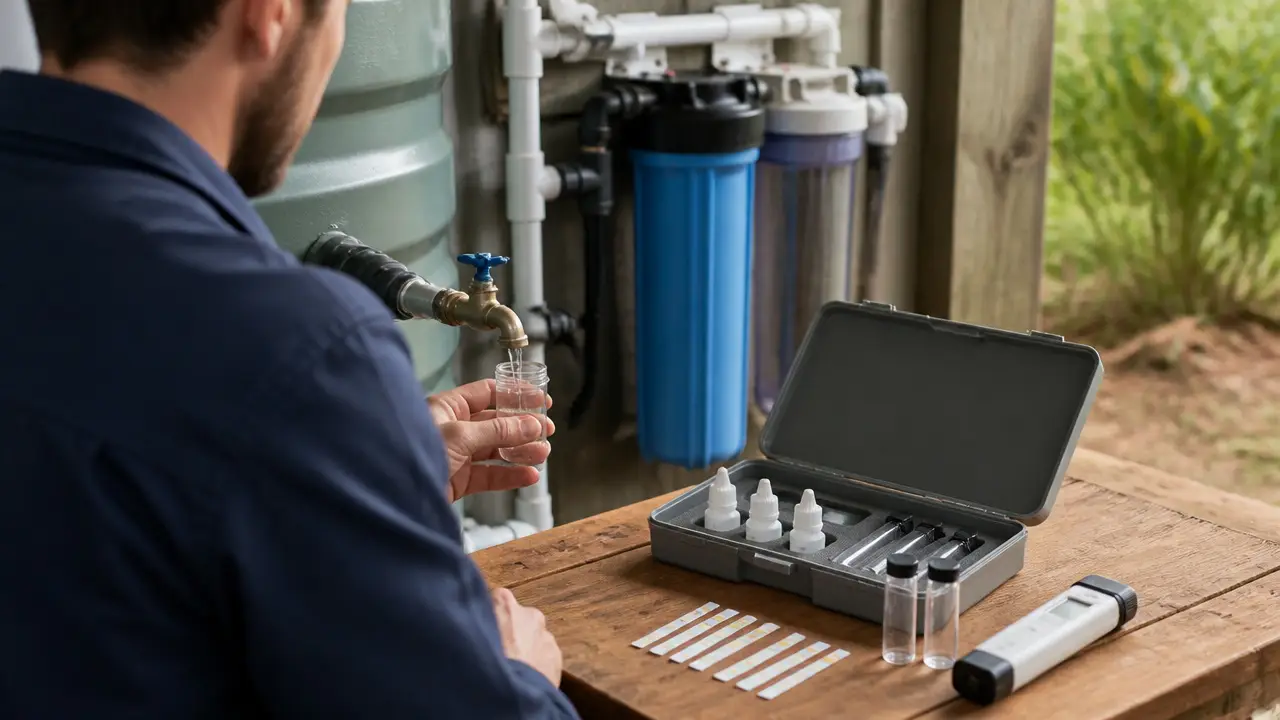
For drinking-water use, think of treatment as a whole system. It should consider the collection surface, prefiltration, storage conditions, appropriate treatment stages, ongoing maintenance, current laboratory testing, and applicable local requirements.
Why the Order of the Stages Matters
Water treatment works best as a sequence.
Putting a very fine filter first may cause it to clog rapidly with dirt. Disinfecting very cloudy water can also be less effective because suspended material can interfere with some disinfection processes.
A typical treatment train therefore moves from larger problems toward smaller ones:
Large debris → suspended particles → fine particles or specific contaminants → microorganisms
This approach also helps protect expensive or sensitive equipment farther downstream.
For example, a UV unit will generally benefit from having suitable prefiltration before it. A fine membrane may last longer when larger sediment has already been removed.
Filtration and Purification Are Not the Same Thing
The terms are often used interchangeably, but they can describe different processes.
Filtration generally means passing water through a material that separates certain particles or contaminants from the water.
Other treatment processes may use:
- Adsorption
- Ion exchange
- Membranes
- Chemical treatment
- UV disinfection
- Heat
- Other specialized methods
The treatment method should be chosen for contaminants that are actually present or reasonably expected.
Adding more stages does not automatically make a system safer. Five poorly chosen filters can be less useful than three properly selected treatment stages.
Maintaining a Multi-Stage System
Every stage eventually needs attention.
Maintenance may include cleaning screens, removing tank sediment, replacing cartridges, changing activated carbon, cleaning filter housings, checking seals, servicing UV equipment, or maintaining pumps and controls.
Follow the equipment manufacturer's replacement and maintenance instructions.
Do not judge filter condition only by how clean the water looks. Some treatment media can lose effectiveness without producing an obvious visual change.
If a system supplies drinking water, testing and treatment decisions should be based on the actual source water and system rather than appearance, taste, or odor alone.
Frequently Asked Questions
What are the five basic stages of water treatment?
The five commonly described stages of conventional surface-water treatment are coagulation, flocculation, sedimentation, filtration, and disinfection. Individual treatment plants may add, remove, or modify stages depending on their source water and treatment needs.
Is sedimentation the same as filtration?
No. Sedimentation allows heavier suspended particles to settle out of water. Filtration passes water through a medium or membrane to remove particles or other targeted contaminants.
Does a five-stage filter make water safe to drink?
Not automatically. The number of stages does not prove that a system removes all important contaminants. Drinking-water safety depends on the source water, the treatment methods, their performance, maintenance, laboratory testing, and applicable requirements.
What filtration stages are useful for collected rainwater?
A rainwater system may use debris screening, first-flush diversion, sediment control, cartridge filtration, activated carbon, and disinfection. The exact stages should be selected according to how the water will be used.
Does activated carbon disinfect water?
Activated carbon should not be treated as a complete disinfection method. It is mainly used to adsorb certain contaminants and can help with some taste and odor problems. Microbial control may require a separate suitable treatment process.
Should UV treatment come before or after filtration?
UV treatment is commonly placed after suitable prefiltration. Removing suspended material first can help the UV system work under the water-quality conditions for which it was designed. The exact setup should follow the UV manufacturer's requirements.
Can clear rainwater still contain contaminants?
Yes. Water can look clear while still containing microorganisms or dissolved contaminants that cannot be seen. Appearance alone cannot show whether collected rainwater is suitable for drinking.