As an affiliate, we may earn a commission from qualifying purchases. We get commissions for purchases made through links on this website from Amazon and other third parties.
Water can contain particles, germs, dissolved minerals, metals, chemicals, and gases. No single water filter removes all of them. What passes through depends on the filter material, pore size, and treatment method.
Treatment limits become clearer when you identify the contaminants water filters cannot remove without another process.
A simple sediment filter may catch dirt and rust but let dissolved chemicals pass through. An activated carbon filter may reduce certain chemicals but usually will not remove dissolved salts or all germs. Even reverse osmosis does not remove every possible contaminant.
For collected rainwater, this matters because water that looks clear can still contain contaminants that cannot be seen.
What a Basic Water Filter Cannot Remove
A basic filter usually works by trapping particles as water passes through small openings. This works well when the contaminant is physically larger than those openings.
It does not work as well when the contaminant is dissolved in the water or is smaller than the filter pores.
Common examples include:
- Dissolved salts
- Nitrates
- Some metals
- Many dissolved chemicals
- Viruses
- Very small molecules
- Dissolved gases
Whether these are removed depends on the exact treatment technology.
Dissolved Salts and Minerals
Ordinary sediment and activated carbon filters generally do not remove dissolved salts.
Examples include:
Filter selection should also consider whether carbon filters remove rainwater contaminants expected from the roof and storage tank.
- Sodium
- Chloride
- Calcium
- Magnesium
- Sulfate
These substances are dissolved at the molecular or ionic level. They can pass through filters that easily stop sand, leaves, or rust.
This is why filtering salty water through a typical household cartridge will not make it fresh water.
Reverse osmosis, distillation, and some other specialized treatment methods can remove many dissolved salts. Reverse osmosis uses pressure to push water through a very thin membrane while rejecting many dissolved substances.
Calcium and magnesium are also what commonly make water "hard." A normal sediment filter does not soften hard water.
Nitrate and Nitrite
Nitrate and nitrite are dissolved contaminants. Ordinary sediment filters and many carbon filters do not remove them.
They can enter groundwater from fertilizer, sewage, animal waste, and other sources. High nitrate levels are especially dangerous for infants.
Some reverse osmosis systems can reduce nitrate, but you should not assume that every RO system does. Check the system's certification and the specific contaminant reduction claim.
If nitrate is a concern in drinking water, testing the water is more useful than guessing based on taste, smell, or appearance.
Viruses Can Pass Through Many Filters
Viruses are extremely small.
A filter that removes visible sediment may have almost no effect on viruses. Even many portable filters that remove parasites and bacteria cannot reliably remove viruses.
CDC guidance notes that filters with an absolute pore size of 0.3 micron or smaller can remove bacteria and parasites, but not viruses. Nanofiltration and reverse osmosis can remove viruses when the system is designed and maintained for that purpose.
Micron rating describes the size of the openings in a filter. One micron is one-millionth of a meter.
A smaller micron rating does not automatically mean the water is safe to drink. Chemicals dissolved in water may still pass through a filter that removes microbes.
Many Dissolved Chemicals Need More Than Particle Filtration
Chemical contamination is one reason the word "filter" can be misleading.
A sediment cartridge may make cloudy water look much cleaner while doing little about a dissolved chemical.
Activated carbon can trap certain organic chemicals and can reduce chlorine, tastes, and odors. However, it does not remove every chemical. CDC recommends checking the filter label for the specific contaminants it is designed to reduce.
Different chemicals may require different treatment methods, such as:
| Contaminant type | Treatment that may be used |
|---|---|
| Sediment | Sediment filtration |
| Certain organic chemicals | Activated carbon |
| Some metals | Certified carbon, ion exchange, or membranes |
| Dissolved salts | Reverse osmosis or distillation |
| Nitrate | Certain reverse osmosis or ion exchange systems |
| Bacteria and parasites | Fine membrane filtration or disinfection |
| Viruses | Suitable membrane treatment or disinfection |
| Some PFAS compounds | Certified activated carbon, ion exchange, or reverse osmosis |
EPA identifies granular activated carbon, ion exchange resin, and reverse osmosis as treatment options that can reduce certain PFAS compounds. The effectiveness still depends on the specific system and certification.
A Carbon Filter Does Not Make Contaminated Water Safe
Activated carbon is useful, but its job is often misunderstood.
Many refrigerator filters, pitchers, and faucet filters use activated carbon. They may improve taste and smell and reduce certain chemicals.
Most are not designed to remove all disease-causing germs. CDC notes that many pitcher and refrigerator filters are mainly intended to improve taste or reduce selected contaminants rather than make microbiologically unsafe water safe.
Carbon also has a limited capacity. Once the filter becomes loaded with contaminants, its performance can fall. Filters therefore need to be replaced according to their instructions.
Boiling and UV Do Not Remove Chemicals
The opposite problem also occurs.
Some treatments are good at dealing with germs but poor at removing chemicals.
Boiling can kill many disease-causing organisms, but it does not remove dissolved chemical contamination. Chlorine and other disinfectants also deal mainly with microbes rather than dissolved chemicals. CDC specifically notes that boiling and chemical disinfection cannot remove chemical contaminants.
UV works differently. Ultraviolet light can inactivate microorganisms when the water and system conditions are suitable, but UV does not physically remove salts, metals, or most dissolved chemicals.
Evaluate safe filtration ratings for drinking water to compare testing scope appropriate to the planned level of human contact.
This is why water treatment systems often use several stages rather than one device.
Reverse Osmosis Removes a Lot, but Not Everything
Reverse osmosis, or RO, is one of the broadest household treatment methods.
An RO membrane can reduce many:
- Dissolved salts
- Metals
- Minerals
- Organic chemicals
- Bacteria
- Parasites
- Viruses
But an RO system should not be described as removing "everything."
EPA notes that reverse osmosis does not remove every inorganic or organic contaminant. Performance also varies with the membrane, system design, water chemistry, pressure, maintenance, and contaminant being treated.
A system should therefore be selected for the contaminants actually present rather than simply because it uses RO.
Clear Water Can Still Be Contaminated
Appearance is a poor test of water quality.
Water may look perfectly clear while containing:
- Bacteria
- Viruses
- Nitrate
- Lead
- Arsenic
- Other dissolved metals
- Pesticides
- Solvents
- Other organic chemicals
Likewise, unpleasant taste or odor does not tell you exactly what contaminant is present.
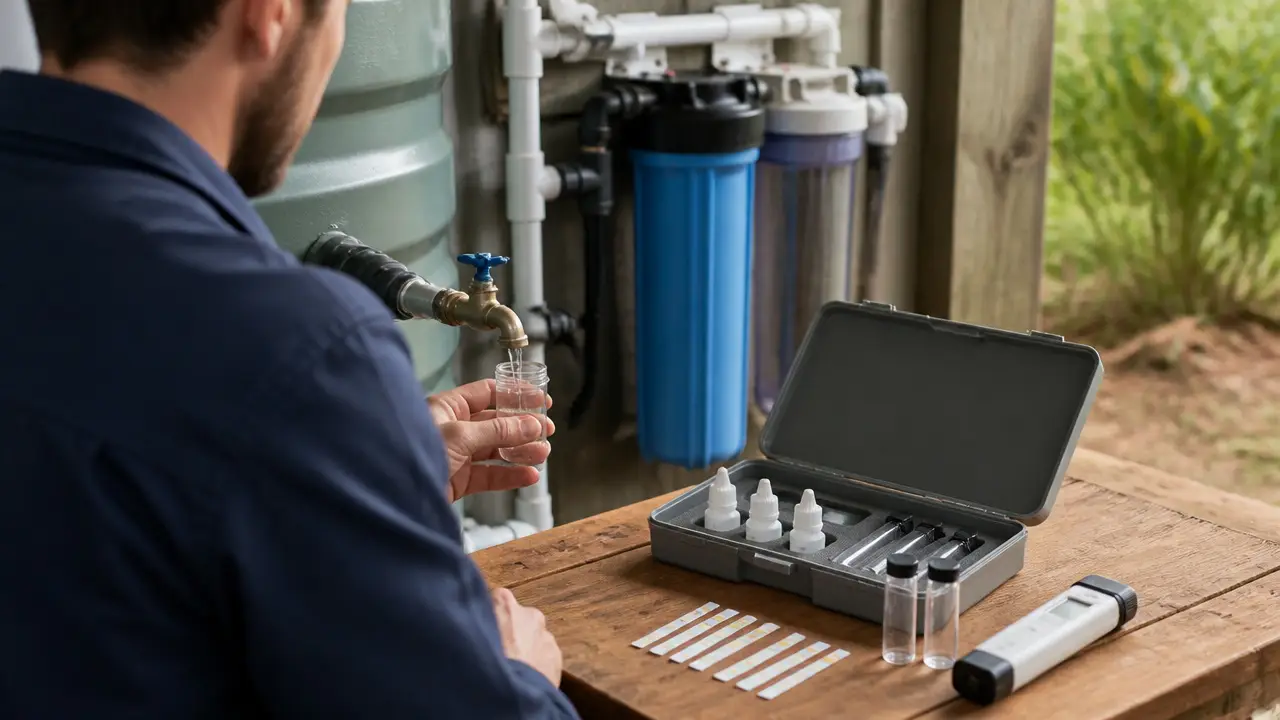
Water testing is the better starting point when health safety matters.
For private drinking-water supplies, EPA recommends using certified drinking-water laboratories and choosing treatment based on the contaminants found.
What This Means for Rainwater
Collected rainwater should not be treated as automatically clean because it passed through a screen or cartridge.
A rainwater system may collect material from:
- Roofing
- Gutters
- Dust
- Bird and animal droppings
- Smoke and airborne pollution
- Organic debris
- Storage tanks
- Pumps and plumbing
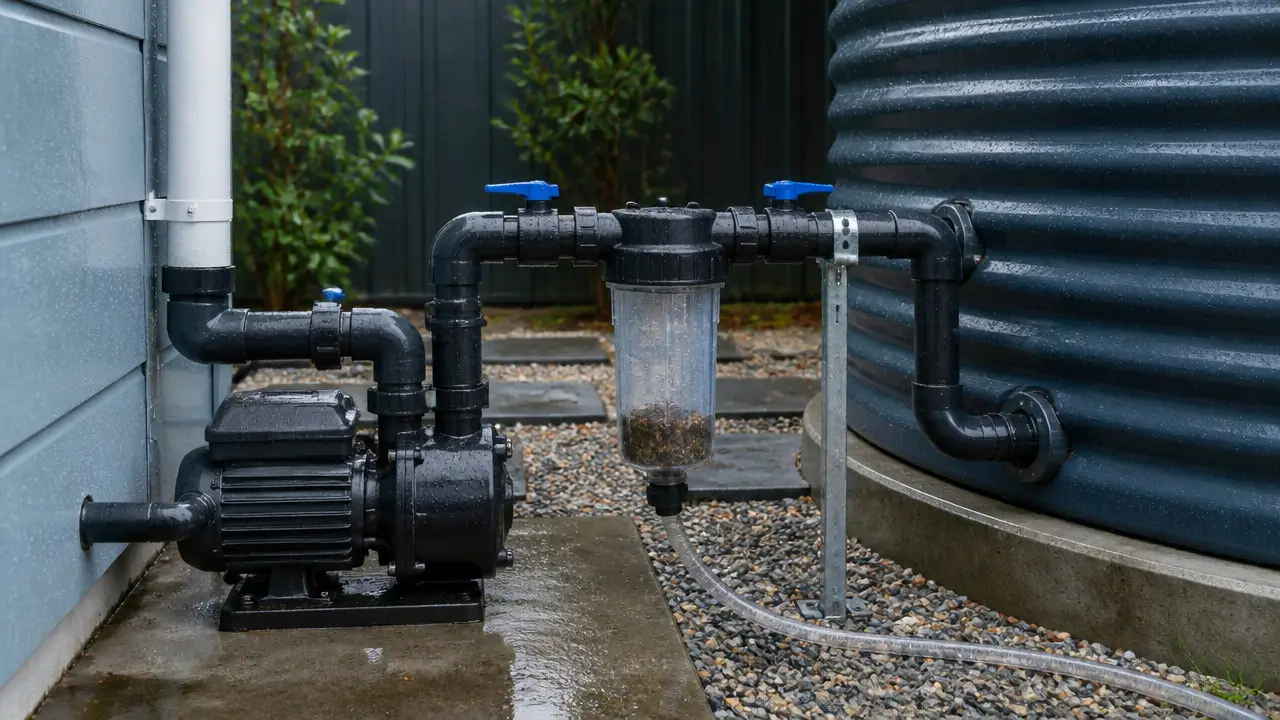
A leaf screen may stop leaves. A first-flush device may divert some of the dirty runoff from the beginning of a storm. A sediment filter may catch smaller particles.
First flush means diverting the first portion of roof runoff before sending later water into storage.
None of these steps alone establishes that the water is safe to drink.
For garden watering and other non-potable uses, meaning uses where the water is not intended for drinking, treatment needs may be much simpler.
For potable use, meaning water intended for drinking, cooking, or similar human consumption, the whole system matters. That includes suitable collection materials, debris control, storage, prefiltration, appropriate treatment, maintenance, current laboratory testing, and applicable local requirements.
Do not choose one filter and assume that it covers every possible rainwater contaminant.
Start With the Contaminant, Not the Filter
The safest way to choose water treatment is to work backward.
First determine:
- What the water will be used for.
- What contaminants may be present.
- What testing is appropriate.
- Which treatment method is proven to address those contaminants.
- What maintenance that treatment requires.
A sediment filter may be exactly what you need to protect a garden pump from grit.
It is not the same thing as a drinking-water treatment system.
Likewise, a carbon filter may solve a chlorine taste problem while doing nothing for nitrate. A UV unit may treat certain microbes while leaving dissolved chemicals unchanged.
That is why there is no useful filter that simply "removes everything."
Frequently Asked Questions
Can any water filter remove everything?
No. Different filters target different contaminants. Sediment filters remove particles, carbon filters can reduce certain chemicals, and membrane systems such as reverse osmosis can remove many dissolved contaminants and germs. No single household treatment method removes every possible contaminant.
Can bacteria be filtered out of water?
Yes, with a filter or membrane designed with a small enough pore size. CDC says an absolute pore size of 0.3 micron or smaller can remove bacteria and parasites. Many ordinary pitcher, refrigerator, and sediment filters are not designed for this purpose.
Can viruses be filtered out of water?
Some membrane systems can remove viruses, but many ordinary filters cannot. CDC lists nanofiltration and reverse osmosis among filtration methods capable of removing viruses.
Does activated carbon remove salt from water?
Generally, no. Activated carbon is mainly useful for certain organic chemicals, chlorine, tastes, and odors. Desalination normally requires treatment such as reverse osmosis or distillation.
Can a filter remove nitrate?
Ordinary sediment and activated carbon filters generally do not remove nitrate. Certain reverse osmosis and ion exchange systems may reduce it. Use water testing and a treatment system specifically rated for nitrate reduction when nitrate is a concern.
Does boiling remove chemicals from water?
Boiling is mainly used to kill germs. It does not provide general removal of dissolved chemical contamination. Some chemicals may remain in the water even after boiling.
Is filtered rainwater safe to drink?
Not necessarily. Filtering rainwater does not by itself establish that it is potable. Drinking-water use requires a suitable collection and storage system, appropriate treatment for the contaminants present, proper maintenance, current water testing, and compliance with applicable local requirements.