As an affiliate, we may earn a commission from qualifying purchases. We get commissions for purchases made through links on this website from Amazon and other third parties.
The best UV water filter is usually a properly sized UV disinfection system with good prefiltration, not a stand-alone UV lamp.
For rainwater that may be used as drinking water, look for a system certified to NSF/ANSI 55 Class A, sized for your highest expected flow rate. Class A systems are designed for water that may contain disease-causing microorganisms. Class B systems are meant only to reduce non-disease-causing bacteria in water that is already disinfected.
UV should normally be the last disinfection stage after sediment and other needed treatment. It does not remove dirt, chemicals, metals, salts, or most other dissolved contaminants.
What a UV Water Filter Actually Does
A UV system passes water through a chamber containing an ultraviolet light source.
The UV light damages microorganisms so they cannot reproduce. With suitable prefiltration and treatment conditions, UV can address:
- Bacteria
- Viruses
- Parasites and cysts
CDC notes that UV systems work better when the water is filtered before UV treatment. CDC also makes an important distinction: UV treatment does not remove chemicals from water.
This is why "UV water filter" can be a misleading name.
UV disinfects water. It does not work like a sediment, carbon, or reverse-osmosis filter.
The Best Type of UV System for Rainwater
For a rainwater system where microbial safety matters, a good setup normally has these features:
| Feature | Why It Matters |
|---|---|
| NSF/ANSI 55 Class A certification | Provides independent verification for microbial disinfection performance |
| Correct flow rating | Gives the water enough UV exposure at peak demand |
| Prefiltration | Keeps dirt and suspended material from shielding microorganisms |
| UV intensity monitoring | Helps detect weak UV performance |
| Alarm | Warns you when the system may not be treating correctly |
| Automatic shutoff option | Can prevent untreated water from continuing downstream |
| Serviceable quartz sleeve | Allows scale and film to be cleaned away |
| Available replacement lamp or UV module | Makes long-term maintenance practical |
Certification should apply to the complete system and its claimed performance, not merely to one component.
NSF's current listings include Class A point-of-entry systems at several different rated flow rates, which is a reminder that there is no single correct size for every house or rainwater system.
Choose Class A Instead of Class B When Microbial Safety Is the Goal
The difference between NSF Class A and Class B matters.
Class A
Class A UV systems are intended to treat water that may be microbiologically unsafe. NSF describes these systems as being designed to inactivate or kill bacteria, viruses, and cysts in contaminated water.
That makes Class A the more appropriate certification to look for when microbial contamination of a private rainwater supply is a concern.
Class B
Class B has a different purpose.
These systems are intended to reduce non-disease-causing bacteria in water that has already been disinfected. They should not be treated as substitutes for Class A systems when the source water may contain harmful microorganisms.
A product saying only "UV sterilizer" or "UV purifier" does not tell you which level of treatment it has actually been tested to provide.
Look for the certification and the exact treatment claim.
Size the UV System by Flow Rate
Do not size a UV system according to the size of your rainwater tank.
A 5,000-gallon cistern does not automatically need a larger UV unit than a 500-gallon tank.
What matters more is flow rate.
Flow rate means how much water passes through the UV chamber in a given time. It is often listed in gallons per minute, or GPM.
For example, imagine several fixtures could run together:
- Shower: 2 GPM
- Kitchen faucet: 1.5 GPM
- Bathroom faucet: 1 GPM
The system could briefly need about 4.5 GPM.
You would need a UV system whose certified treatment flow meets or exceeds the actual peak demand under the required water conditions.
Do not simply buy the highest-flow model you can find. Larger equipment can require bigger plumbing, more power, and different service parts.
Do Not Judge a UV System by Lamp Wattage Alone
A common mistake is comparing UV systems by lamp wattage.
More watts do not automatically mean better treatment.
Performance also depends on factors such as:
- Chamber design
- Water flow
- UV intensity
- Lamp or LED output
- Water clarity
- Quartz sleeve condition
- UV transmittance through the water
- System monitoring and controls
UV transmittance describes how easily UV light can pass through the water.
Very clear water lets more UV reach microorganisms. Cloudy, colored, or dirty water can reduce treatment effectiveness.
A certified performance rating at a stated flow rate is therefore much more useful than lamp wattage by itself.
Prefiltration Is Essential
Rainwater can carry particles from the roof and collection system.
These may include:
- Dust
- Pollen
- Small bits of leaves
- Organic matter
- Rust or roofing particles
- Sediment from the tank
Particles can interfere with UV treatment by blocking the light.
A typical rainwater treatment path might look like:
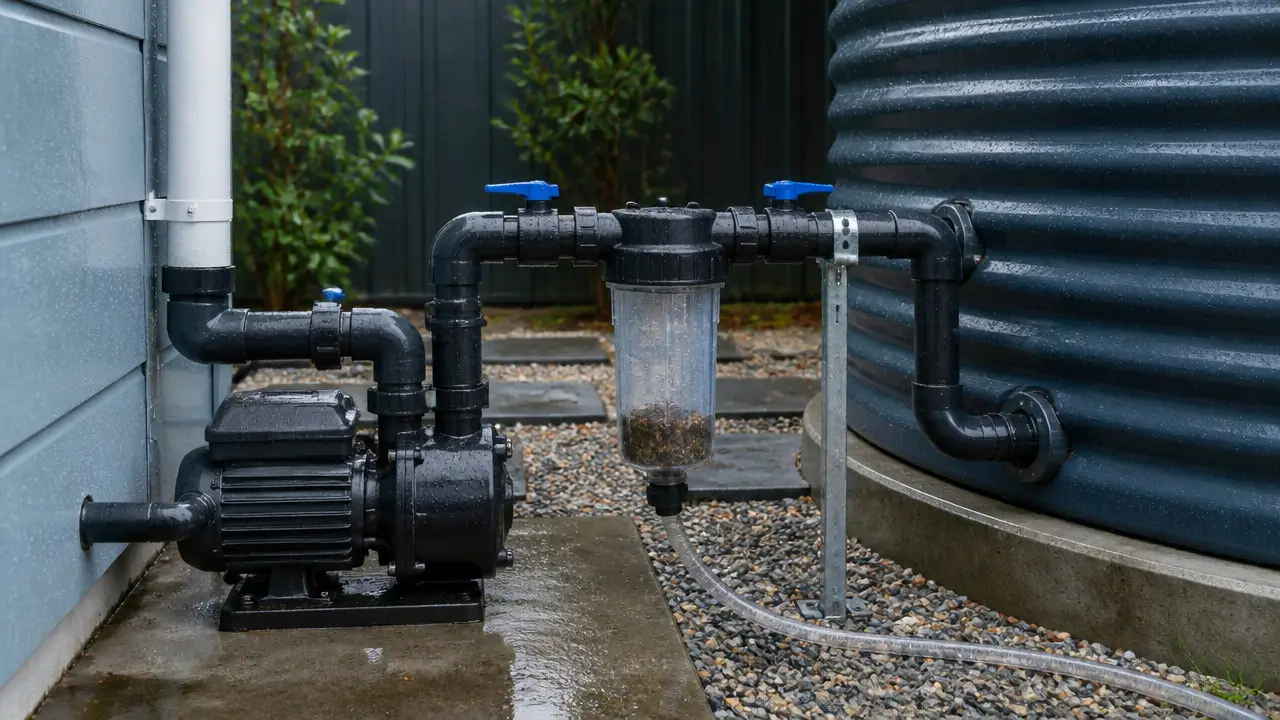
Roof → debris control → first flush → tank → pump → sediment treatment → other required treatment → UV → use
A first-flush diverter directs some of the first roof runoff away from the storage tank. This can reduce the dirt and contaminants washed from the roof at the beginning of a rain event.
The exact filters needed before UV depend on the water.
A sediment filter may be enough for one system. Another system may need several treatment stages because of color, hardness, iron, chemicals, taste, or other water-quality problems.
CDC recommends testing water first and selecting treatment based on the contaminants that actually need to be addressed.
Micron Rating Matters, but Smaller Is Not Always Better
Sediment filters are often described by their micron rating.
A micron is one-thousandth of a millimeter.
Lower micron numbers generally mean the filter captures smaller particles.
However, installing an extremely fine filter does not automatically improve the system. A very fine cartridge can clog quickly and cause a large pressure drop.
The right setup balances:
- Water clarity
- Flow demand
- Pump capacity
- Pressure loss
- Cartridge life
- UV manufacturer's water-quality requirements
Follow the UV manufacturer's specified pretreatment requirements rather than choosing a micron rating at random.
Put UV Near the End of the Treatment System
UV usually makes the most sense near the end of the treatment train.
That allows earlier equipment to remove the things that could interfere with UV.
A basic arrangement might be:
Tank → pump → sediment filtration → other treatment → UV → household plumbing
If activated carbon is needed, its position should be chosen as part of the complete treatment design.
There is another reason to keep UV near the end. Water can be recontaminated after disinfection if it passes through dirty tanks, filters, pipes, hoses, or fittings.
The plumbing after the UV chamber should therefore be kept sanitary.
Whole-House or Under-Sink UV?
UV systems are available as both point-of-entry and point-of-use equipment.
Point-of-entry
A point-of-entry system treats water as it enters the home's plumbing.
This is often the better arrangement when a private rainwater supply serves several indoor fixtures.
The UV unit must be able to handle the home's peak flow.
Point-of-use
For recommended UV water purifiers for rainwater systems, first assess the cleaning priority revealed by repeatable measurements.
A point-of-use system treats water at one location, such as a drinking-water faucet.
This can make sense when only one outlet requires treatment.
However, untreated rainwater may still reach the rest of the plumbing. Whether that is appropriate depends on the intended uses and local plumbing requirements.
NSF describes point-of-entry systems as whole-house treatment and point-of-use systems as treatment serving specific locations.
Look for Monitoring and Fail-Safe Features
The UV light can become too weak even though water still flows normally.
That makes monitoring especially useful.
A good system may have:
- Lamp or module status display
- UV intensity sensor
- Audible or visible alarm
- Service reminder
- Fault indicator
- Automatic shutoff valve
An automatic shutoff can be especially valuable when untreated water should not pass through the system after a UV failure.
For example, the system may stop water flow if UV output falls below the required operating level.
The exact controls vary, so check what the certification covers and how the manufacturer's protection system works.
Remember That UV Needs Power
Most UV systems need continuous electrical power while water is being supplied.
If the electricity fails, the UV treatment stops.
This matters for cabins, wells, rainwater systems, and off-grid properties.
A storage tank may still contain plenty of water during an outage, but that does not mean the water leaving the tank is receiving UV treatment.
If continuous treated water is important, consider how the UV unit, pump, controls, and any automatic shutoff will operate during a power failure.
Electrical work around pumps and water-treatment equipment should be installed according to applicable requirements.
UV Requires Regular Maintenance
A UV system is not maintenance-free.
Clean the quartz sleeve
Many UV lamps sit inside a clear quartz sleeve.
Minerals, dirt, or film can build up on this sleeve. That buildup can block UV light.
Inspect and clean it according to the manufacturer's instructions.
Replace the UV source when required
UV lamps lose output as they age.
A lamp may still glow even when it no longer provides the required treatment performance.
Replace lamps or UV modules according to the specified service interval rather than waiting for the light to visibly fail.
Replace prefilters
A clogged sediment filter can reduce pressure and flow.
A neglected filter can also become a poor part of an otherwise well-designed treatment system.
Check alarms and sensors
Do not assume an alarm works just because it has never sounded.
Follow the manufacturer's maintenance and testing instructions.
What UV Does Not Remove
UV should not be expected to remove:
- Sediment
- Metals
- Lead
- Arsenic
- PFAS
- Pesticides
- Nitrates
- Dissolved salts
- Hardness
- Many chemical contaminants
- Unwanted taste or odor
CDC specifically notes that UV treatment does not remove chemicals.
Other treatment stages may be needed if testing finds these problems.
A carbon filter, sediment cartridge, softener, reverse-osmosis membrane, and UV system all perform different jobs. One does not automatically replace the others.
Is UV Needed for Garden Rainwater?
Usually not.
If rainwater is being used only for ordinary outdoor irrigation, UV treatment may add cost and maintenance without providing a useful benefit.
For a garden system, priorities are more often:
- Keeping leaves and debris out
- Controlling mosquitoes
- Preventing algae where practical
- Keeping emitters from clogging
- Maintaining suitable flow and pressure
The answer changes when rainwater is used indoors or in ways that can expose people to aerosols or ingestion.
The treatment system should match the intended use.
Can UV Make Rainwater Safe to Drink?
UV can be an important part of a drinking-water treatment system, but UV alone does not establish that collected rainwater is safe to drink.
Roof runoff can be affected by animals, roofing materials, airborne contaminants, storage conditions, tank sediment, and plumbing.
A potable rainwater system should be treated as a complete system involving:
- Suitable roof and collection surfaces
- Debris and first-flush control
- Protected storage
- Appropriate prefiltration
- Treatment for contaminants identified in the source water
- Validated microbial treatment such as an appropriate UV system
- Clean downstream plumbing
- Regular maintenance
- Current laboratory testing
- Compliance with applicable local requirements
Potable means suitable for drinking. Non-potable means water that is not intended for drinking.
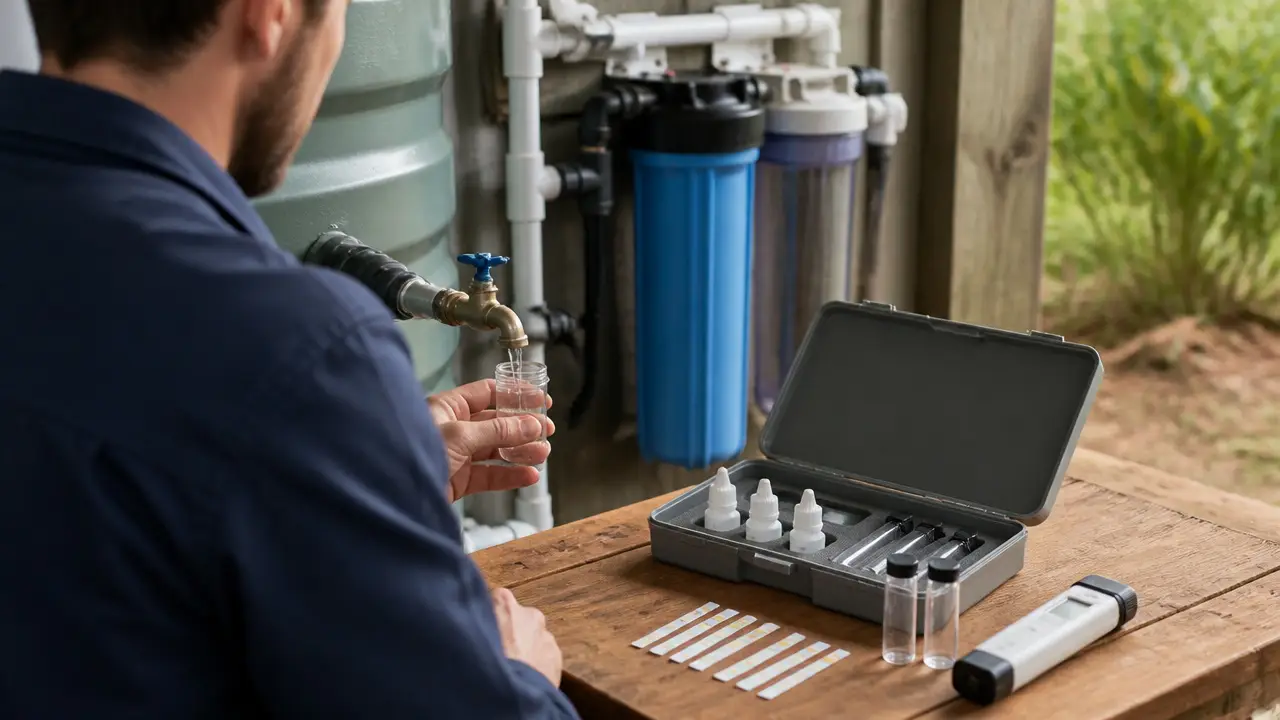
Home meters and simple test strips cannot provide a complete drinking-water safety assessment.
For rainwater intended for potable household use, use current laboratory testing and qualified water-treatment or public-health guidance when designing and maintaining the system.
So, What Is the Best UV Water Filter?
For rainwater where microbial disinfection is needed, the best choice is generally a certified UV treatment system matched to the water quality and peak flow of the installation.
For water that may be microbiologically unsafe, prioritize:
- NSF/ANSI 55 Class A certification
- Enough certified flow capacity
- Proper sediment prefiltration
- Water conditions within the manufacturer's limits
- UV intensity monitoring
- A clear alarm
- Automatic shutoff where appropriate
- Easy access for sleeve cleaning
- Readily available replacement UV components
- A practical maintenance schedule
Do not choose based only on lamp wattage, pipe size, or marketing claims.
And do not add UV just because a rainwater tank is part of the system. Start with how the water will actually be used.
Frequently Asked Questions
Is a UV water filter better than reverse osmosis?
They perform different jobs. UV is mainly used for microbial disinfection. Reverse osmosis can reduce many dissolved contaminants but has different limitations and maintenance needs. Some drinking-water systems use both when water testing and the intended use justify them.
Does UV remove bacteria from rainwater?
UV does not physically filter bacteria out. It exposes microorganisms to ultraviolet light and inactivates them when the equipment and water conditions provide the required treatment.
Does UV remove chemicals from rainwater?
No. UV should not be relied on to remove chemicals, dissolved metals, salts, or many other non-microbial contaminants. Separate treatment may be required.
Should I buy a Class A or Class B UV system?
If the source may contain disease-causing microorganisms, Class A is the relevant NSF/ANSI 55 category to consider. Class B is intended for supplemental treatment of water that has already been disinfected.
Does a UV system need a sediment filter?
Prefiltration is usually important because particles can interfere with UV treatment. CDC states that UV systems with prefiltration work better than systems without it. Follow the UV manufacturer's water-quality and pretreatment requirements.
How large should my UV system be?
Size it mainly according to the maximum water flow through the unit, not the size of the rainwater tank. Check the certified treatment flow rate and make sure it can handle your expected peak demand under the required water-quality conditions.
Can I use UV-treated rainwater as drinking water?
UV treatment by itself is not enough to establish that rainwater is potable. Drinking-water use requires suitable collection and storage, appropriate treatment for identified contaminants, microbial control, regular maintenance, current laboratory testing, and compliance with applicable local requirements.