As an affiliate, we may earn a commission from qualifying purchases. We get commissions for purchases made through links on this website from Amazon and other third parties.
Gravity water filters can remove or reduce many microplastics, but only when the filter element is fine enough and is designed or independently tested for particle removal. Gravity itself does not remove microplastics. It only supplies the pressure that moves water through the filter.
Some ceramic, carbon-block, and membrane gravity filters can trap very small particles. Other gravity filters use much coarser media and may remove little more than visible sediment. The smallest plastic particles, especially nanoplastics, are harder to remove and should not be assumed to be captured.
For drinking water, look for a specific, independently verified microplastics reduction claim rather than relying only on words such as “gravity filter,” “carbon filter,” or “purifier.” NSF states that filters certified to NSF/ANSI 401 can be certified for microplastics reduction, and its current listings include some gravity-fed systems with that claim.
How Gravity Filters Remove Microplastics
Microplastics are tiny pieces or fibers of plastic. They cover a very wide range of sizes. Some are easy for a fine filter to catch. Others are extremely small.
A gravity filter normally works like this:
- Water sits in an upper chamber.
- Gravity pushes the water through a filter element.
- Particles that cannot pass through the filter are trapped.
- Filtered water collects in a lower chamber.
The important part is the filter media, not the gravity.
A filter with very small pathways can physically block plastic particles larger than those pathways. A coarse filter may let smaller particles pass.
Studies of drinking-water treatment have found that filtration processes designed to remove particles generally reduce microplastics, but smaller particles are harder to remove. Membrane filtration tends to provide stronger particle removal than simpler treatment methods.
Micron Rating Matters
The filter's micron rating can help you understand how fine the filter is.
One micron, also called a micrometer or µm, is one-thousandth of a millimeter.
For example, a filter designed to trap particles around a few microns is much finer than a screen intended only to catch leaves, grit, or insects.
However, micron ratings need some care.
A nominal micron rating usually means the filter removes much of the material around a stated size under certain conditions. It does not necessarily mean every particle of that size is stopped.
An absolute rating generally describes a more tightly controlled particle-size limit. Even then, you should check how the manufacturer defines and tests the rating.
A micron number alone also does not prove microplastics performance. Plastic particles can be fibers, fragments, films, and other shapes rather than simple round particles.
For drinking-water use, a tested contaminant-reduction claim gives you more useful information than the micron number by itself.
Which Gravity Filter Media Can Reduce Microplastics?
Different filter materials behave differently.
| Filter type | Likely role with microplastics |
|---|---|
| Coarse screen or cloth | Mainly catches larger debris and plastic fragments |
| Sediment filter | Can trap particles larger than its effective filtration size |
| Loose granular activated carbon | Should not be relied on for fine microplastic removal unless specifically tested |
| Carbon block | May physically trap small particles as water moves through fine pathways |
| Ceramic element | Can act as a fine physical barrier, depending on its pore structure |
| Hollow-fiber membrane | Can provide fine particle filtration when the membrane size and design are suitable |
Ceramic filters
Ceramic gravity filters contain very small pores. Water passes through the ceramic while particles larger than the effective openings are held back.
That makes ceramic filtration potentially useful for reducing microplastics.
But ceramic elements are not all made to the same specification. Do not assume that every ceramic candle removes the same particle sizes or has been tested for microplastics.
Carbon-block filters
A carbon block is made from activated carbon formed into a dense structure.
Activated carbon is commonly used for certain tastes, odors, and chemical contaminants. A dense carbon block can also provide physical particle filtration.
How well it removes microplastics depends on the construction of the element. A carbon filter's ability to reduce one chemical does not automatically mean it removes microplastics.
Granular activated carbon
Loose activated-carbon granules leave pathways between individual pieces of carbon.
They can have useful water-treatment roles, but you should not assume that loose carbon alone provides reliable fine-particle filtration.
Drinking-water research has examined granular activated carbon as one part of treatment systems, but microplastic removal varies with particle size, water conditions, and treatment design.
Membrane filters
Fine membranes provide one of the clearest physical barriers to small particles.
Microfiltration and ultrafiltration membranes are widely studied for microplastic removal. Research reviews generally find membrane technologies effective at removing many microplastics, although performance depends on membrane size, particle size, fouling, and the rest of the treatment system.
Some membranes can operate with gravity rather than an electric pump. Others require pressure.
Can a Gravity Filter Remove All Microplastics?
No filter should be assumed to remove all microplastics.
The term microplastics includes particles of many different sizes and shapes. A filter that easily catches a large plastic fiber may not stop a much smaller fragment.
There can also be differences between laboratory test particles and the mixed particles found in real water.
For this reason, “removes particles” is not the same as “removes all microplastics.”
NSF advises consumers to check the specific contaminant claims attached to a certified filter. Certification to a water-filter standard does not mean that a product removes every possible contaminant.
What About Nanoplastics?
Nanoplastics make the problem harder.
These particles are smaller than typical microplastics and can approach sizes where ordinary particle filters become less dependable. Definitions and measurement methods for nanoplastics also vary.
Research continues into ultrafiltration, nanofiltration, reverse osmosis, and other membrane methods for removing these very small particles. Reviews have found that nanoplastics can be more difficult to remove than larger microplastics.
A gravity filter advertised for microplastics should therefore not automatically be treated as a nanoplastics filter.
Examine key facts about the disadvantages of gravity filters to assess the laboratory check best suited to the suspected pollutant.
Unless the manufacturer provides reliable test data for the particle sizes you are concerned about, assume that some smaller particles may pass.
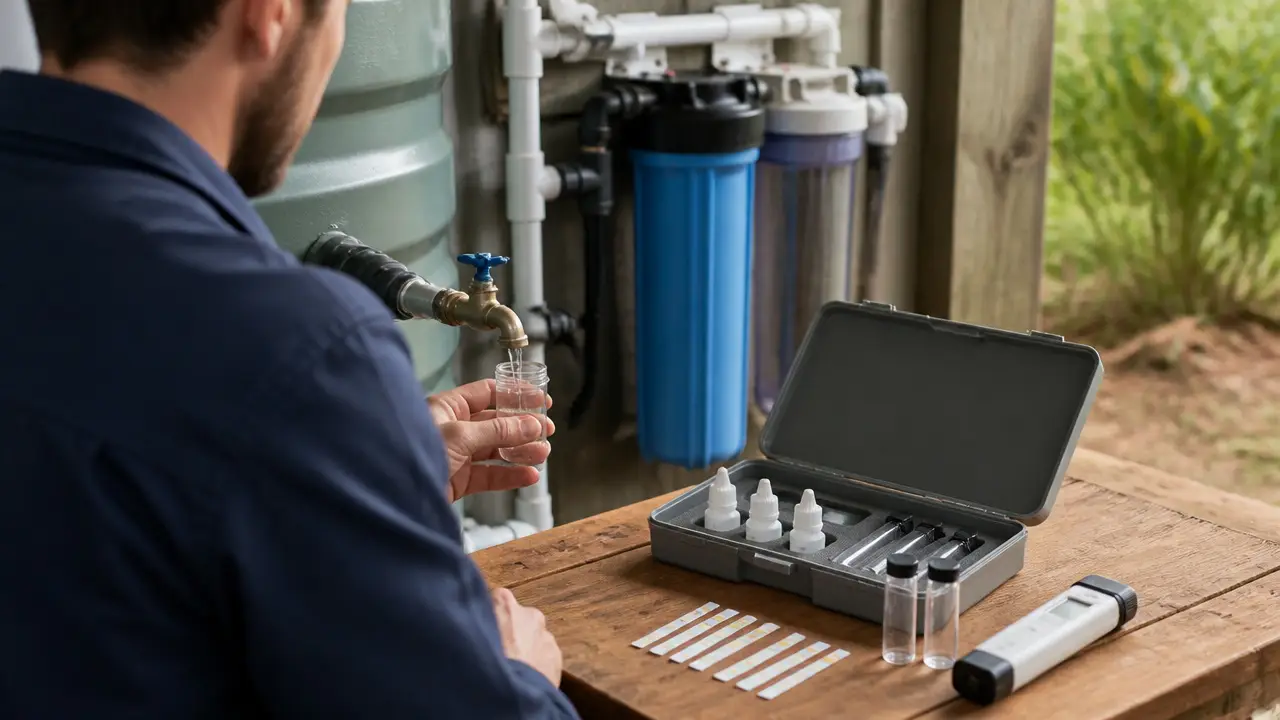
Look for a Verified Microplastics Reduction Claim
If microplastics are your main concern, check the actual certification listing rather than relying on packaging language.
As of August 2026, NSF says that drinking-water filters certified under NSF/ANSI 401 can carry a microplastics reduction claim. NSF's official product database currently lists filters, including some gravity-fed systems, with this specific claim.
This distinction matters.
A filter might be certified for:
- material safety,
- chlorine reduction,
- taste and odor,
- lead,
- certain chemicals,
- or another specific contaminant.
None of those claims automatically proves microplastics reduction.
Look for the contaminant name “Microplastics Reduction” in the current certification record.
Does a Finer Filter Always Work Better?
A finer physical filter can catch smaller particles, but there is a tradeoff.
Very fine filters normally create more resistance to water flow. With a gravity system, that may mean slower filtering.
Sediment can also plug fine pores.
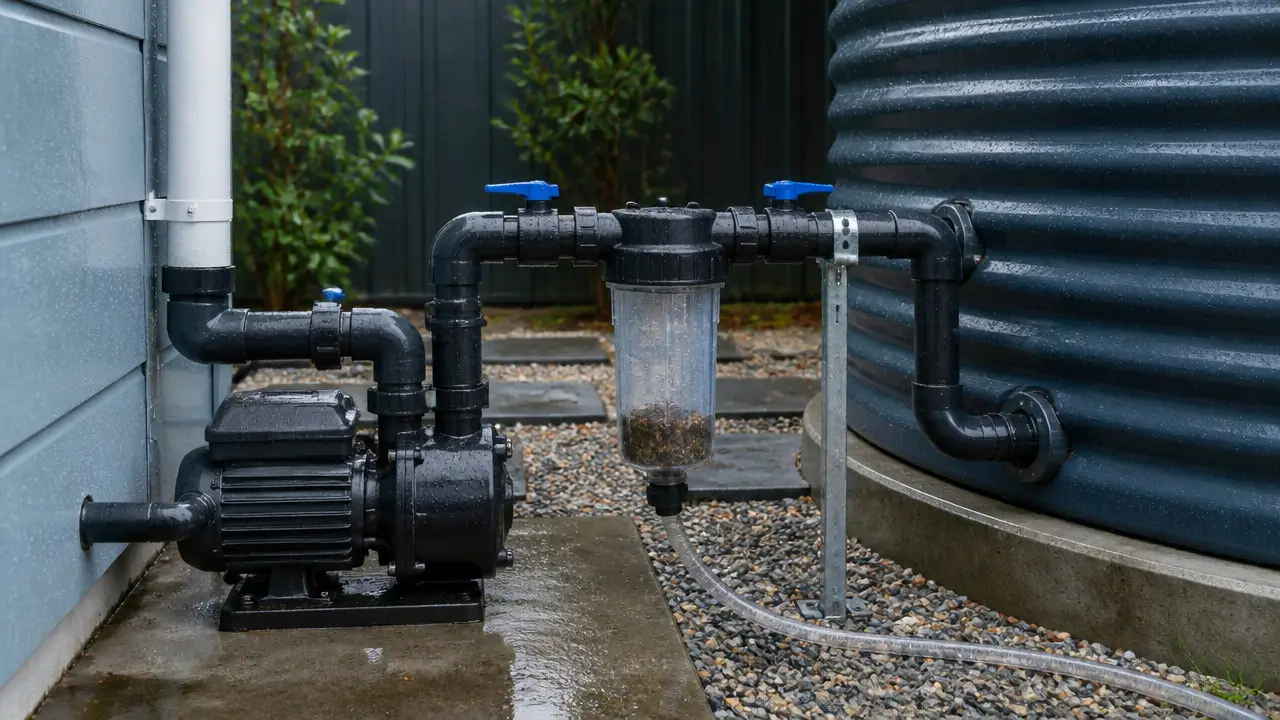
For rainwater or other water containing visible sediment, a coarse prefilter can help keep the main element from clogging quickly. The prefilter catches larger dirt while the finer element handles smaller particles.
Do not make the prefilter so restrictive that the gravity system cannot maintain useful flow.
Maintenance Affects Microplastic Removal
A good filter cannot work as designed if water can bypass it.
Check the system regularly for:
- loose seals,
- cracked filter elements,
- damaged gaskets,
- incorrectly seated cartridges,
- excessive sediment buildup,
- clogged elements,
- or replacement intervals that have been exceeded.
Clean reusable elements only by the method specified by their manufacturer. Scrubbing, chemicals, or tools that are not recommended can damage some filter surfaces.
Also keep the clean-water chamber clean. Filtering water does little good if the lower container, faucet, or plumbing introduces contamination afterward.
What About Microplastics in Collected Rainwater?
Rainwater systems can collect many kinds of particles from roofs, gutters, air, storage tanks, and system components.
A leaf screen, gutter guard, or first-flush device can reduce larger material entering storage, but none should be treated as a complete microplastics treatment step.
A first flush diverts some of the first roof runoff from a rain event. That early runoff may carry dirt and other material from the roof. It is useful as part of rainwater management, but it does not guarantee removal of microplastics or other contaminants.
If the stored rainwater is only being used for suitable non-potable purposes, very fine microplastic filtration may not be necessary for the system's intended job.
Non-potable means water that is not intended for drinking.
If rainwater is intended for drinking, the decision is much larger than choosing a gravity filter. Roof runoff can contain microbes, chemicals, animal waste, metals, and other contaminants that a microplastic filter may not address.
Collected rainwater should never be assumed to be potable simply because it passed through a gravity filter.
A Gravity Filter Is Only One Treatment Stage
For drinking water, microplastics are only one possible concern.
WHO has reviewed microplastics in drinking water and has continued to identify important gaps in what is known about exposure and health effects. Its broader assessment also emphasizes continued research into nano- and microplastic exposure.
In the United States, EPA added microplastics as a contaminant group to its draft Sixth Contaminant Candidate List in April 2026. Being placed on the candidate list is part of EPA's evaluation process; it is not the same as having a federal drinking-water limit for microplastics.
For drinking collected rainwater or water from another untreated source, think about the whole system:
collection → debris control → storage → sediment treatment → appropriate filtration → disinfection or other required treatment → current water testing → maintenance
A gravity filter may fit into that system, but one filter should not be treated as proof that untreated water is safe to drink.
Frequently Asked Questions
Do all gravity water filters remove microplastics?
No. Gravity only provides the force that moves water through the filter. Microplastic removal depends on the filter element, particle size, construction, and tested performance.
Is activated carbon enough to remove microplastics?
Not necessarily. Fine carbon blocks may physically trap some particles, but loose activated carbon should not automatically be considered a microplastics filter. Look for a specific verified reduction claim.
Is a ceramic gravity filter good for microplastics?
It can be. Ceramic filters provide a physical barrier and may trap microplastics larger than their effective pores. Performance varies between elements, so check the manufacturer's test data and certification.
What micron size removes microplastics?
There is no single micron rating that removes every microplastic because microplastics cover a wide range of sizes and shapes. A finer filter can generally capture smaller particles, but a specific microplastics reduction test is more useful than relying on a micron number alone.
Can gravity filters remove nanoplastics?
Some very fine membranes may reduce nanoplastics, but an ordinary gravity filter should not be assumed to do so. Nanoplastics are much smaller and can require more advanced membrane treatment.
Does NSF certification mean a filter removes microplastics?
Only if the certification listing includes the appropriate microplastics reduction claim. NSF currently identifies microplastics reduction under NSF/ANSI 401. Check the exact model in the certification database rather than assuming all certified filters have that capability.
Can I drink rainwater after running it through a gravity filter?
Not on that basis alone. A gravity filter may reduce certain particles or contaminants, but roof-collected rainwater can contain microbes, chemicals, metals, and other hazards. Drinking-water use requires suitable collection and treatment, current laboratory testing, regular maintenance, and compliance with applicable local requirements.