As an affiliate, we may earn a commission from qualifying purchases. We get commissions for purchases made through links on this website from Amazon and other third parties.
Gravity water filters are simple because they move water through filter media without a pump. That simplicity can be useful for rainwater systems, cabins, garden setups, and small amounts of household water. But gravity filters also have important limits.
The main disadvantages of gravity filters are slow flow, low pressure, frequent cleaning, limited treatment capability, and reduced performance as the filter clogs. They also need enough height for gravity to work, and they are usually a poor choice when you need large amounts of filtered water quickly.
For collected rainwater, the biggest concern is water quality. A gravity filter should not be assumed to make roof runoff safe to drink. Its actual treatment ability depends on the filter media, pore size, certifications, maintenance, and contaminants in the incoming water.
Gravity Filters Have a Slow Flow Rate
Gravity provides much less driving force than a pump or pressurized water line. This limits how quickly water can move through fine filter media.
Flow rate means the amount of water that passes through the filter during a set amount of time.
A slow flow rate may not matter when filling a drinking-water container or watering a few plants. It becomes much more noticeable when you need water for:
- Several people
- A large garden
- A washing machine
- Multiple plumbing fixtures
- Frequent tank transfers
- High-flow irrigation
The finer the filter, the more resistance it usually creates.
A gravity filter that works well for filling a small container may therefore be impractical as the main filter for an entire rainwater system.
Flow Gets Slower as the Filter Clogs
Rainwater can carry sediment, pollen, roof debris, organic material, and other suspended particles.
These materials collect on or inside the filter. As they build up, water has a harder time passing through.
The result can be a gradual drop in flow.
A filter that starts with acceptable performance may become frustratingly slow if dirty rainwater reaches it directly.
Good upstream controls can help. Depending on the system, these may include:
- Gutter screens
- Leaf guards
- A rain head or debris screen
- A first-flush device
- Settling inside a storage tank
- A coarse prefilter
A first flush device diverts part of the initial roof runoff, which can contain a higher concentration of dirt and debris.
Prefiltration does not eliminate the need to maintain the gravity filter, but it can reduce how quickly the main filter becomes loaded with debris.
Gravity Filters Produce Very Little Pressure
A gravity system depends on the height difference between the water surface and the outlet.
This height difference creates head pressure.
The greater the vertical distance, the more pressure gravity can provide. But the pressure available from a typical raised tank or countertop container is still much lower than the pressure produced by many household pumps.
That makes gravity filters poorly suited to equipment that needs meaningful inlet pressure.
You may have trouble running:
- Sprinklers
- Some drip irrigation systems
- Long hoses
- Multiple fixtures at once
- Appliances
- Pressure-dependent treatment equipment
A gravity filter can clean water while still leaving you with too little pressure to use that water where you want it.
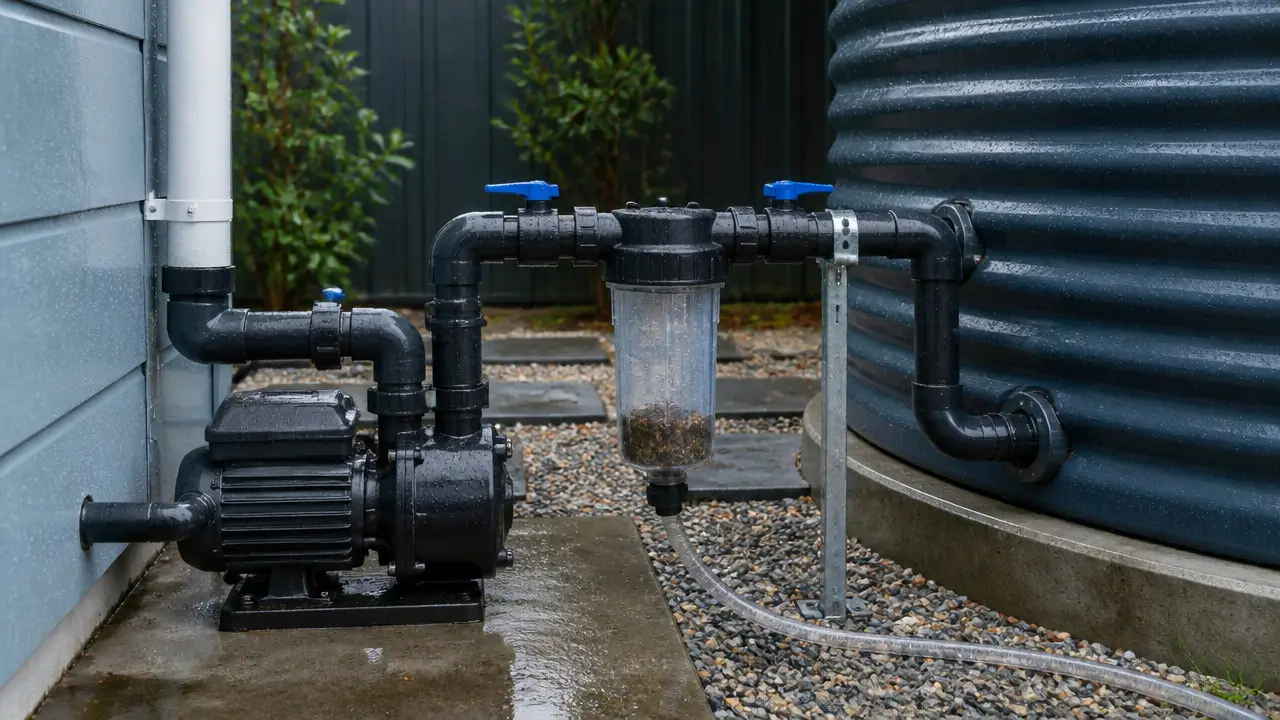
For larger rainwater systems, filtration and water movement often need to be treated as separate problems. You may need a filter for water quality and a properly sized pump for pressure.
They Need Enough Height to Work
Gravity filtration requires the source water to sit above the outlet.
That sounds simple, but it can create practical problems.
A container may need to be placed on a stand, shelf, platform, or elevated tank base. The higher the container, the more attention you need to give its stability.
Water is heavy. A large storage container should not be placed on an improvised elevated structure simply to gain more pressure.
For larger tanks, the supporting surface and structure must be suitable for the full weight of the stored water.
Sometimes using a pump at ground level is safer and more practical than raising a large amount of water.
A Gravity Filter Does Not Remove Every Contaminant
"Gravity filter" describes how water moves through a filter. It does not tell you exactly what the filter removes.
Treatment depends on what is inside the filter.
For example, different systems may contain:
- Sediment media
- Ceramic elements
- Activated carbon
- Membranes
- Several treatment materials combined
Each has different capabilities.
A sediment filter may remove visible particles but do little about dissolved contaminants. Activated carbon can reduce certain chemicals, tastes, and odors, but it does not automatically address every microorganism or chemical. EPA guidance also stresses that drinking-water filters should be selected for the specific contaminants they are intended and certified to reduce.
This matters especially with rainwater. Roof runoff can pick up material from roofing, gutters, animals, dust, nearby pollution, and stored-water systems.
A gravity filter should therefore be matched to the actual water-quality problem rather than chosen simply because it produces clear-looking water.
Micron Ratings Can Be Misleading When Used Alone
Some gravity filters are described by a micron rating.
A micron is one-thousandth of a millimeter. The rating gives information about the size of particles a filter may capture.
A smaller micron rating generally means finer filtration.
But micron size alone does not tell you whether treated water is safe to drink.
It does not automatically establish removal of:
- Viruses
- Dissolved metals
- Salts
- Many dissolved chemicals
- All bacteria
- All other health-related contaminants
Filter design, testing, certification, and operating conditions also matter.
This is why comparing gravity filters only by micron number can lead to the wrong system choice.
They Require Regular Cleaning and Replacement
Gravity filters are simple, but they are not maintenance-free.
Depending on the design, maintenance can include:
- Cleaning the upper water chamber
- Washing removable screens
- Cleaning reusable filter surfaces
- Replacing filter cartridges or media
- Cleaning taps and outlets
- Inspecting seals
- Removing sediment
- Sanitizing components as appropriate
Filter media has a limited capacity. Once it becomes loaded with contaminants, its performance can drop.
Look closely at the performance of gravity water filters actually to verify service work supported by the confirmed contaminant pattern.
EPA specifically advises maintaining drinking-water filters according to the manufacturer's instructions because overdue filter replacement can reduce treatment effectiveness.
Rainwater with a heavy sediment load can increase maintenance needs considerably.
Stored Water Can Be Recontaminated
Filtering the water is only part of the job.
A gravity system commonly has an upper container for untreated water and a lower container for filtered water. Poor handling can allow contaminants from the untreated side to reach the clean side.
Possible contamination routes include:
- Dirty hands
- Unclean scoops or containers
- Splashes
- Dirty taps
- Insects
- Dust
- Unwashed filter housings
- Contact between untreated and treated water
This means good hygiene is still important even when the filter itself is working correctly.
Covered containers and clean dispensing methods help reduce this risk.
Gravity Filters Can Be Inconvenient for Large Water Volumes
A small gravity unit may work well when you only need a limited amount of filtered water.
Scaling the same approach to hundreds of gallons can become awkward.
For example, repeatedly filling a small upper chamber from an IBC tote or cistern can require a lot of manual work. The filtration rate may also be much lower than the rate at which the household or garden uses water.
For larger systems, a better arrangement may involve staged filtration connected to the tank and pump system rather than relying on a small batch-style gravity filter.
Cold Weather Can Create Problems
Gravity filters and their containers can be vulnerable to freezing when installed outdoors or in unheated buildings.
Freezing water expands. Depending on the equipment, this may damage:
- Filter housings
- Ceramic elements
- Valves
- Fittings
- Taps
- Containers
Ice can also stop water movement completely.
If you live in a freezing climate, check the manufacturer's temperature and storage requirements. Do not assume that draining the visible container removes all trapped water from the filter.
Outdoor rainwater systems may need seasonal shutdown, drainage, relocation, insulation, or another freeze-protection strategy appropriate for the installation.
They Are Not Usually a Complete Whole-House Treatment System
Gravity filters work best when the water demand is modest.
A household water system may need enough flow and pressure to supply showers, toilets, sinks, appliances, and outdoor uses at the same time. A small gravity filter normally cannot provide that kind of performance.
Whole-house rainwater treatment may also require several stages, such as:
- Roof and gutter debris control
- First-flush management
- Tank screening and sediment control
- Prefiltration
- Treatment selected for the intended use
- Suitable pumps and pressure controls
- Ongoing testing and maintenance
Not every system needs all of these stages. The design depends heavily on whether the water is being used for irrigation, toilet flushing, washing, or drinking.
Gravity Filters Are More Limited for Drinking Water
Extra caution is needed if collected rainwater will be used for drinking, cooking, or brushing teeth.
Potable water means water suitable for human consumption. Non-potable water is water that is not intended to be consumed.
Clear water from a gravity filter is not proof that the water is potable.
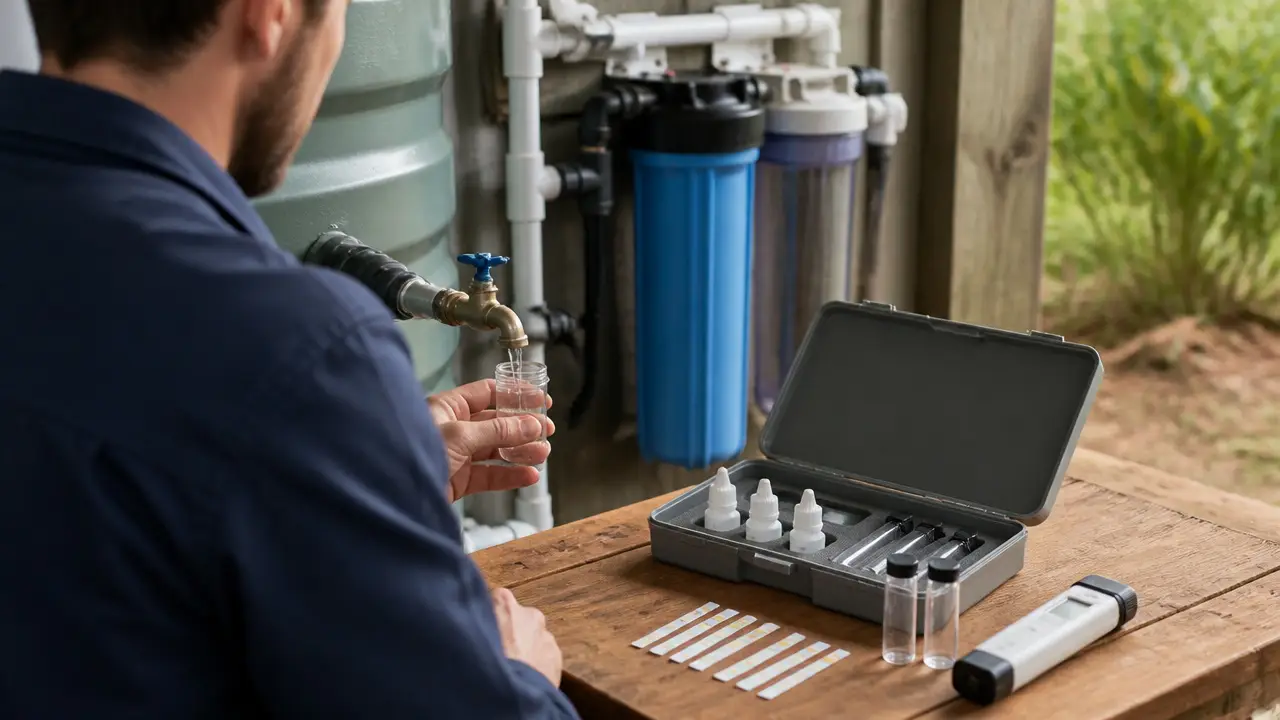
For drinking-water use, treatment should be based on the source water, likely contaminants, appropriate treatment methods, current laboratory testing, proper maintenance, and applicable local health or plumbing requirements.
EPA recommends identifying the contaminants that need treatment and choosing filters with appropriate independent certifications rather than assuming one type of filter treats every problem. EPA also recommends certified laboratory testing when evaluating drinking-water quality.
Roof-collected rainwater may require more than filtration alone. If you plan to supply drinking water from a cistern or rainwater tank, your local health authority or a qualified water-treatment professional can help determine suitable treatment and testing.
When a Gravity Filter Makes Sense
Despite these disadvantages, gravity filtration can still be useful.
It tends to work best when:
- Water use is fairly low.
- High pressure is not needed.
- Electricity is unavailable or undesirable.
- The incoming water is already reasonably well prefiltered.
- You can clean and maintain the system regularly.
- The filter's treatment capability matches the intended water use.
For example, a gravity sediment filter may be useful before a low-flow garden line. A suitable countertop gravity system may also be practical for treating limited amounts of water when its treatment claims match the contaminants being addressed.
The key is not expecting a small gravity filter to do the job of an entire rainwater collection and treatment system.
Frequently Asked Questions
What is the biggest disadvantage of a gravity water filter?
Slow flow is usually the most noticeable disadvantage. Gravity provides only a small amount of pressure, and flow can become even slower as sediment collects in the filter.
Does a gravity filter need electricity?
Usually no. Water moves through the filter because of gravity. However, other parts of a rainwater system, such as pumps or additional treatment equipment, may still require electricity.
Can a gravity filter remove bacteria from rainwater?
Some filter technologies may reduce certain microorganisms, while others cannot. Performance depends on the specific filter and its tested treatment claims. Do not assume that any gravity filter makes rainwater microbiologically safe.
Does a smaller micron rating make a gravity filter better?
Not necessarily. A smaller micron rating generally means finer particle filtration, but it can also reduce flow and increase clogging. Micron size alone does not show how well a filter handles dissolved chemicals, viruses, or every other contaminant.
Can I connect a gravity filter directly to a rain barrel?
Sometimes, but the filter must be compatible with the barrel outlet, available head height, expected flow, and intended water use. A coarse prefilter may be helpful if the barrel contains significant sediment.
Can a gravity filter supply a whole house?
Small gravity filters generally cannot provide the flow and pressure expected from normal household plumbing. Larger gravity-fed systems are possible, but tank height, plumbing size, treatment requirements, structural support, and water demand all need proper planning.
How often should a gravity filter be cleaned?
There is no single cleaning interval that applies to every filter. Follow the manufacturer's instructions and watch for reduced flow, sediment buildup, or other signs that maintenance is needed. Dirty rainwater may require more frequent attention.
Is gravity-filtered rainwater safe to drink?
Not automatically. Drinking-water safety depends on the collection surface, contamination risks, treatment system, filter performance, maintenance, current laboratory testing, and local requirements. A gravity filter by itself should not be treated as proof that roof-collected rainwater is potable.