As an affiliate, we may earn a commission from qualifying purchases. We get commissions for purchases made through links on this website from Amazon and other third parties.
Sediment at the bottom of a water tank can usually be removed by draining or pumping the dirty bottom layer out while leaving the tank itself in place. The easiest method is a low-level drain or washout outlet. If the tank does not have one, a siphon, suitable transfer pump, or wet vacuum may work for a small accessible tank.
The main goal is to remove settled material without stirring it through the whole tank. You should also fix the reason so much debris is reaching the tank in the first place.
What Causes Sediment in a Water Tank?
Sediment is the layer of fine material that settles on the tank floor over time. In a rainwater system, it may include:
- Roof dust and dirt
- Fine sand or soil
- Plant material
- Pollen
- Small pieces of roofing material
- Organic debris that passed through inlet screens
Even a system with good screening will usually collect some fine material.
Keeping the roof, gutters, inlet screens, and other prefiltration parts clean reduces how much reaches storage. EPA rainwater-harvesting guidance also includes periodic inspection for sediment buildup as part of tank maintenance.
A first-flush diverter can help as well. It sends the first portion of runoff away from the tank because that early runoff often carries more dirt from the roof.
Should You Completely Empty the Tank?
Not always.
If the tank has only a thin sediment layer, you may be able to remove the dirty water from the bottom without draining all the stored water.
A complete drain makes more sense when:
- The sediment layer is heavy.
- The water has persistent odor or discoloration.
- You need access to clean reachable tank surfaces.
- The tank needs repairs.
- Contamination is suspected.
- The tank has not been maintained for a long time.
Avoid opening and draining a tank unnecessarily if a simple bottom flush will remove the problem.
If the water is used for drinking or other potable purposes, treat tank cleaning as part of a larger water-safety system. Removing visible sediment does not prove that the remaining water is safe to drink. EPA notes that sediment and biofilm in drinking-water storage facilities can create water-quality concerns.
How to Flush Sediment Through a Bottom Drain
A bottom drain is usually the simplest setup because gravity does most of the work.
1. Stop New Water From Entering the Tank
Choose a dry period if possible.
Temporarily redirect incoming rainwater so a storm does not refill the tank while you are working.
Shut off pumps or automatic equipment that could operate while the water level is low.
2. Let the Sediment Settle
If the water has recently been disturbed, give the suspended material time to settle.
You want the dirt sitting on the floor rather than floating throughout the water.
Avoid stirring the tank before opening the drain.
3. Connect a Drain Hose
If the tank has a dedicated washout or drain fitting near the bottom, connect a hose that fits the outlet securely.
A bulkhead fitting is a sealed fitting installed through the tank wall. Many tank outlets use this type of connection.
Make sure the discharged water has somewhere suitable to go. A large cistern can release a great deal of water quickly.
Do not direct the flow toward:
- Building foundations
- Septic systems
- Areas where erosion could occur
- Neighboring property
- Electrical equipment
Local rules may also control where stored water can be discharged.
4. Open the Drain Slowly
Open the outlet gradually.
The first water may contain a large amount of settled dirt. Let it discharge until the flow becomes noticeably clearer.
For a light sediment layer, this may remove enough material without emptying the tank.
5. Use a Small Amount of Water to Move Remaining Sediment
Once the water level is low enough, sediment may remain in areas that do not naturally slope toward the drain.
If the tank design allows you to reach these areas safely from outside, a controlled stream of clean water can move loose material toward the outlet.
Do not climb inside a cistern or enclosed tank to hose it down.
Large water tanks can be confined spaces with serious hazards, including difficult exits and unsafe atmospheres. Internal inspection or cleaning that requires tank entry should be handled by qualified professionals.
6. Close the Drain and Inspect the System
After the discharge becomes reasonably clear, close the drain and check:
- Drain fitting
- Valve
- Gaskets
- Tank wall around the fitting
- Hose connections
- Tank foundation
Watch for leaks once the tank begins filling again.
How to Remove Sediment Without a Bottom Drain
Some rain barrels, IBC-tote systems, and older cisterns do not have a true low-point drain. The normal outlet may sit several inches above the bottom, leaving sediment below it.
You still have several options.
Use a Siphon
A hose can sometimes siphon dirty water from near the tank floor to a lower discharge point.
The outlet end of the hose must be lower than the water level in the tank for gravity siphoning to continue.
Move the intake end slowly along the bottom. Fast movement can stir the sediment into the water instead of removing it.
A siphon works best when:
- The tank opening is safely accessible from outside.
- The discharge location is lower than the tank.
- The amount of sediment is modest.
Never siphon by sucking on the hose with your mouth.
Use a Transfer Pump
A suitable water-transfer pump can pull sediment-laden water from near the bottom.
Check the pump's instructions first. Pumps designed only for relatively clean water can clog or be damaged by heavy solids.
Keep electrical connections dry. Outdoor electrical equipment should be used with appropriate electrical protection, and electrical work around wet areas deserves extra care.
Also protect the pump from running dry. A pump that continues running after the water level falls below its intake can be damaged unless it has dry-run protection.
Use a Wet Vacuum for Small Tanks
A wet vacuum may be useful for an empty rain barrel or another small tank where the floor can be reached safely from outside.
It is less practical for large cisterns.
Do not use a household dry-only vacuum for water.
How to Clean a Tank After Draining It
Flushing removes loose sediment, but a badly neglected tank may need more cleaning.
Once the tank is empty, first inspect what you can safely see from outside.
Remove loose debris from accessible surfaces using methods appropriate for the tank material. Avoid tools that could scratch, crack, or damage liners and plastic tank walls.
The amount of cleaning required depends partly on the intended use of the water.
For Garden and Irrigation Water
A thorough removal of accumulated dirt may be all that is needed if the system is used only for suitable non-potable irrigation.
With practical steps for emptying a water tank without a pump, you can compare pressure loss caused by an unreliable inlet seal.
Non-potable means water that is not intended for drinking.
You should still correct contamination sources and keep the tank covered and screened.
For Drinking-Water Systems
Cleaning becomes more important when stored water is part of a potable system.
Potable means suitable for drinking.
Do not assume that a visually clean tank or clear-looking water is safe. Roof runoff can contain microbial and chemical contaminants that are invisible.
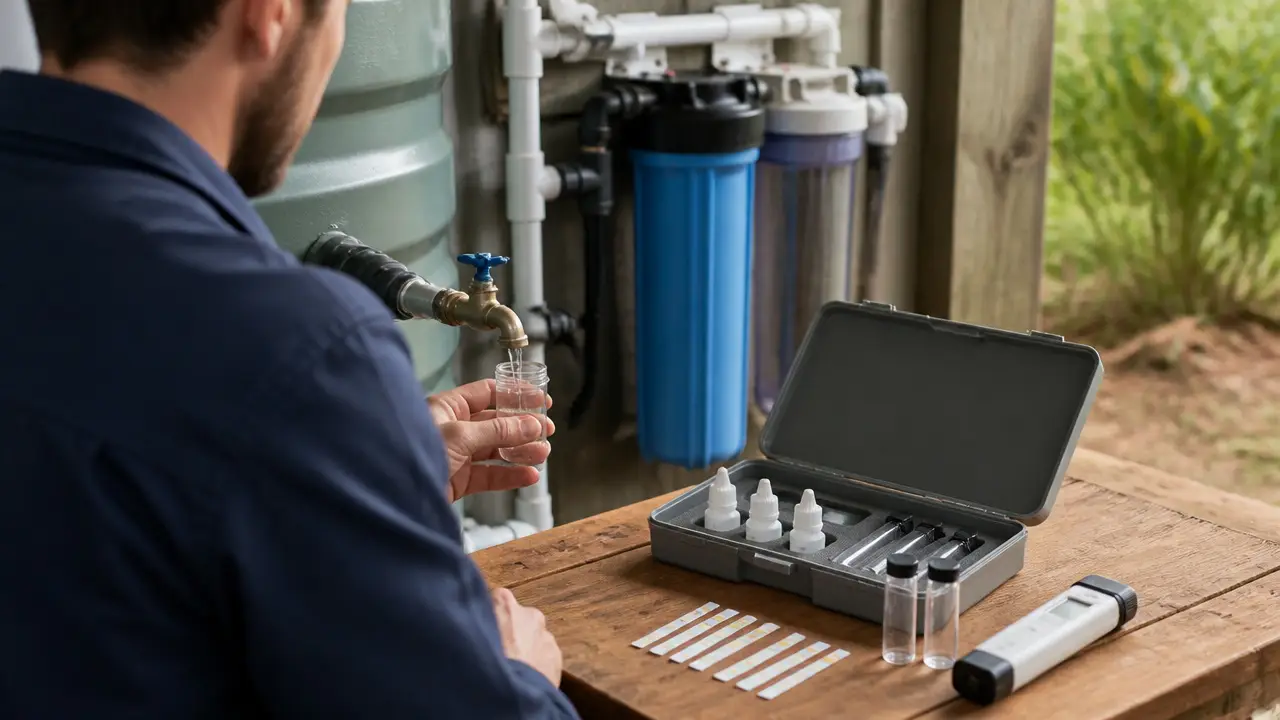
Drinking-water use should involve suitable collection materials, debris control, appropriate treatment, ongoing maintenance, and current laboratory testing based on the contaminants that may be present. Applicable local requirements also matter.
Cleaning and flushing one storage tank does not replace those safeguards.
Never Enter a Large Water Tank for Routine Cleaning
A little sediment on the floor is not worth the risk of climbing into an enclosed cistern.
Tank interiors can create hazards that are not obvious from the opening. Entry may also require specialized equipment and procedures.
Use methods that allow you to work from outside whenever possible.
Call a qualified tank-cleaning professional when sediment cannot be reached without entry or when the tank contains:
- Heavy sludge
- Significant biological growth
- Unknown contamination
- Damaged internal components
- Difficult-to-reach deposits
The same caution applies to structural repairs inside a large tank.
What If Sediment Comes Back Quickly?
Fast sediment buildup usually means the problem starts before the water reaches storage.
Check the whole collection path.
Clean the Roof and Gutters
Leaves, dirt, animal debris, and loose roof material can wash toward the tank.
You do not need a perfectly clean roof, but large amounts of debris should not regularly enter the collection system.
Check the Inlet Screen
A coarse inlet screen stops leaves and larger material before it enters storage.
Clean it whenever debris begins restricting flow.
A screen will not catch very fine particles, so some sediment can still reach the tank.
Maintain the First-Flush Diverter
A first-flush diverter sends the dirtiest early roof runoff away from storage.
A clogged or poorly maintained diverter may stop working as intended.
The World Health Organization's drinking-water guidance notes that roof surfaces can collect dust, leaves, organic matter, and animal droppings and that stored rainwater systems still require periodic sediment removal even with preventive measures.
Look at the Tank Inlet
Water dropping directly into the bottom of a tank can disturb settled sediment every time it rains.
Some cistern systems use calmer inlet arrangements that reduce disturbance at the tank floor.
Do not assume a particular inlet modification will fit every tank. The design must match the tank, fittings, overflow arrangement, and collection flow.
Should You Install a Bottom Drain?
If you frequently need to maintain the tank, a low drain or dedicated washout connection can make future sediment removal much easier.
However, drilling a new hole into an existing tank is not always a simple upgrade.
Before modifying a tank, consider:
- Tank material
- Wall thickness
- Manufacturer requirements
- Fitting type
- Hole size
- Gasket compatibility
- Access to both sides of the wall
- Location of the existing outlet
- Structural stresses near the tank base
An incorrectly installed fitting can create a permanent leak or damage the tank.
For IBC totes and manufactured water tanks, using existing approved connection points is often preferable to cutting additional openings unless the tank manufacturer supports the modification.
How Often Should You Flush Sediment?
There is no single schedule that fits every tank.
Check the tank periodically and clean it based on actual buildup.
A tank collecting water from a clean roof with effective debris controls may accumulate sediment slowly. A system surrounded by trees, dust, pollen, or frequent organic debris may need attention much sooner.
EPA maintenance guidance for rainwater-harvesting systems includes regular cleaning of gutters, pre-screening equipment, first-flush components, lids, screens, and periodic inspection for tank sediment.
The better approach is to prevent excessive buildup rather than waiting for a thick sludge layer.
What to Check After Flushing the Tank
Sediment removal is a good opportunity to inspect the rest of the system.
Check the:
- Roof collection path
- Gutters and downspouts
- Leaf screens
- First-flush diverter
- Tank inlet
- Lid
- Vent screens
- Overflow
- Outlet fittings
- Pump intake
- Filters
- Tank base
Make sure tank openings remain covered and screened against insects and debris.
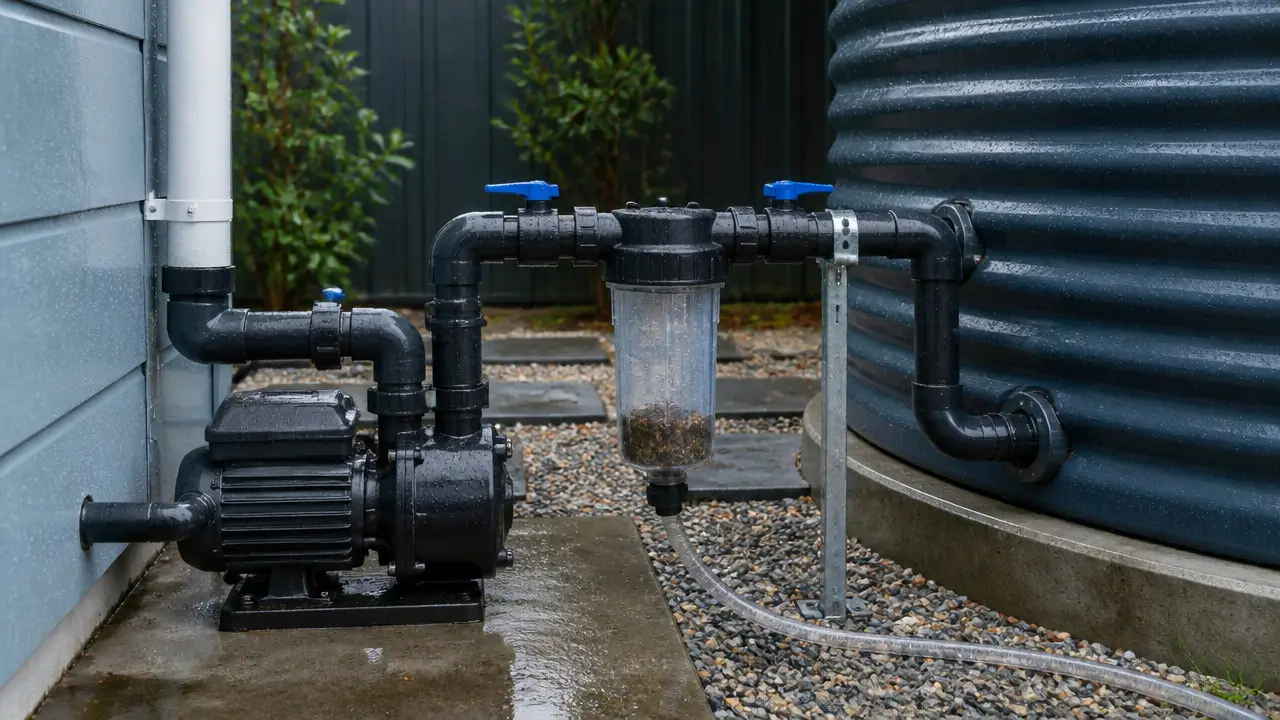
If you have a pump, check whether its intake is positioned above the tank floor. Drawing directly from the bottom can continually pull settled material into filters, irrigation equipment, or household plumbing.
Frequently Asked Questions
Can I flush sediment without emptying the whole water tank?
Yes. If the tank has a low drain, you can often discharge only the dirty bottom water. Stop when the flow becomes substantially clearer. This works best when the sediment layer is light.
Can I use a pressure washer inside a water tank?
A pressure washer is usually unnecessary for routine sediment removal and can damage some plastic tanks, coatings, liners, seals, or fittings. Large enclosed tanks should not be entered for DIY pressure washing. Follow the tank manufacturer's cleaning guidance.
Will a filter stop sediment from forming in the tank?
Prefiltration can reduce sediment, but it may not eliminate it. Fine dust and organic particles can pass through coarse screens and eventually settle. Roof and gutter maintenance, inlet screening, first-flush management, and tank maintenance work together.
Is sediment in a rainwater tank dangerous?
Sediment is not one specific substance. It can contain harmless mineral particles as well as organic material or contaminants washed from the collection surface. Its appearance alone cannot establish whether the water is safe. This is especially important when the water may be consumed.
Can I pump sediment out with my regular water pump?
Only if the pump is designed to handle the water and solids involved. Some clean-water pumps can clog or suffer damage from sediment. Check the pump's operating limits before using it for tank cleaning.
Why does my water become cloudy after I clean the tank?
Cleaning may stir fine particles that were resting on the tank floor. Allowing the water to settle may improve clarity, but clear water does not by itself prove that the water is safe for drinking.
Should the pump intake sit at the bottom of the tank?
Usually, drawing directly from the sediment layer is undesirable. Many systems take water from above the tank floor so settled particles stay behind. The correct intake arrangement depends on the tank, pump, intended use, and plumbing design.
Does flushing sediment make rainwater safe to drink?
No. Flushing removes settled material but does not establish microbiological or chemical safety. Drinking-water use requires a suitable whole system that may include collection controls, prefiltration, treatment, maintenance, and current laboratory testing, along with applicable local requirements.