As an affiliate, we may earn a commission from qualifying purchases. We get commissions for purchases made through links on this website from Amazon and other third parties.
A sediment filter should usually go before a water softener. The filter catches sand, silt, rust, and other solid particles before they can enter the softener tank, control valve, or resin bed.
A typical order is:
Water source → sediment filter → water softener → other treatment or fixtures
Putting the sediment filter first can reduce clogging, protect the softener’s moving parts, and keep sediment from collecting in the resin tank.
There are exceptions. A second filter may sometimes be installed after the softener as a polishing stage, but it normally does not replace the sediment filter ahead of the softener.
Why the Sediment Filter Usually Goes Before the Softener
A water softener is designed mainly to remove hardness minerals such as calcium and magnesium. It is not meant to be the first line of defense against visible dirt and suspended particles.
Sediment can come from:
- Well water
- Aging pipes
- Storage tanks
- Rainwater cisterns
- Municipal pipe work
- Sand or soil entering a water supply
If those particles reach the softener first, they can foul the system over time.
A sediment filter installed upstream helps protect several parts of the softener.
It protects the control valve
Most water softeners use a valve assembly to direct water during normal use and regeneration. Fine grit can wear or jam small passages and moving parts.
Catching sediment before it reaches the valve reduces that risk.
It helps keep the resin bed cleaner
Inside most softeners are small resin beads that exchange hardness minerals for sodium or potassium ions.
Heavy sediment can settle among the beads or coat surfaces inside the tank. That can interfere with normal water movement and make the unit harder to maintain.
It reduces avoidable pressure problems
Sediment can restrict passages inside plumbing and treatment equipment.
A properly sized sediment filter moves this restriction to a component that is designed to be cleaned or replaced. That makes maintenance easier than allowing debris to collect inside the softener.
Where Each Component Fits
For a simple household setup, the treatment path often looks like this:
- Water enters from the well, utility line, tank, or other source.
- A sediment filter removes suspended solids.
- The water softener removes hardness minerals.
- Additional treatment is added if the water quality or intended use requires it.
- Water moves to the fixtures.
The exact order can change when the system also includes iron treatment, activated carbon, disinfection, pH correction, or other equipment.
The important rule is that each treatment stage should receive water that is suitable for it.
Can a Sediment Filter Go After a Water Softener?
Yes, but usually only as an additional filter.
A filter after the softener can act as a polishing stage. For example, it may catch small particles released from older plumbing or treatment equipment downstream of the main sediment filter.
However, placing the only sediment filter after the softener leaves the softener exposed to whatever sediment enters from the water source.
For most systems, that defeats one of the main reasons for installing a sediment filter.
Should You Use Sediment Filters Both Before and After the Softener?
Some systems benefit from both.
A common arrangement is:
Coarse sediment filtration → water softener → optional fine polishing filtration
The first filter protects the softener. The second handles particles that appear farther downstream.
This arrangement is more common when water quality is difficult, plumbing is old, or several treatment stages are installed.
Adding filters without a clear reason can also create problems. Every filter adds some resistance to water flow and requires maintenance. More filtration is not automatically better.
Choosing the Right Sediment Filter
A sediment filter should match both the water and the required flow rate.
Flow rate means how much water moves through the system over a set time, usually measured in gallons per minute or liters per minute.
If a filter is too small for the household demand, pressure may drop when several fixtures run at once.
Micron rating
A sediment filter's micron rating describes the approximate size of particles it is intended to capture. A micron is one-thousandth of a millimeter.
A smaller micron number generally means finer filtration, but finer filters can also clog sooner.
The best rating depends on the type and amount of sediment present. Water with visible sand may benefit from a coarse prefilter or separator before a finer cartridge. Water with mainly fine silt may need different filtration.
Avoid choosing the finest cartridge available simply because it sounds better.
What About Well Water?
Well systems are one of the most common places to install sediment filtration before a softener.
Understanding effectiveness of whole-house sediment filtration helps compare what the available water-quality readings can reliably show.
A typical arrangement may be:
Well → pressure tank → sediment filtration → water treatment → softener → house
The correct location can depend on the pump system and other treatment equipment.
If the well produces large amounts of sand, a standard cartridge filter may clog quickly. A larger sediment separator or other pretreatment may be more suitable.
Iron, manganese, sulfur odors, bacteria, and other water-quality problems also require separate evaluation. A water softener should not automatically be treated as the solution for every well-water problem.
What About Rainwater Systems?
Stored rainwater can contain fine roof debris, tank sediment, and other suspended material.
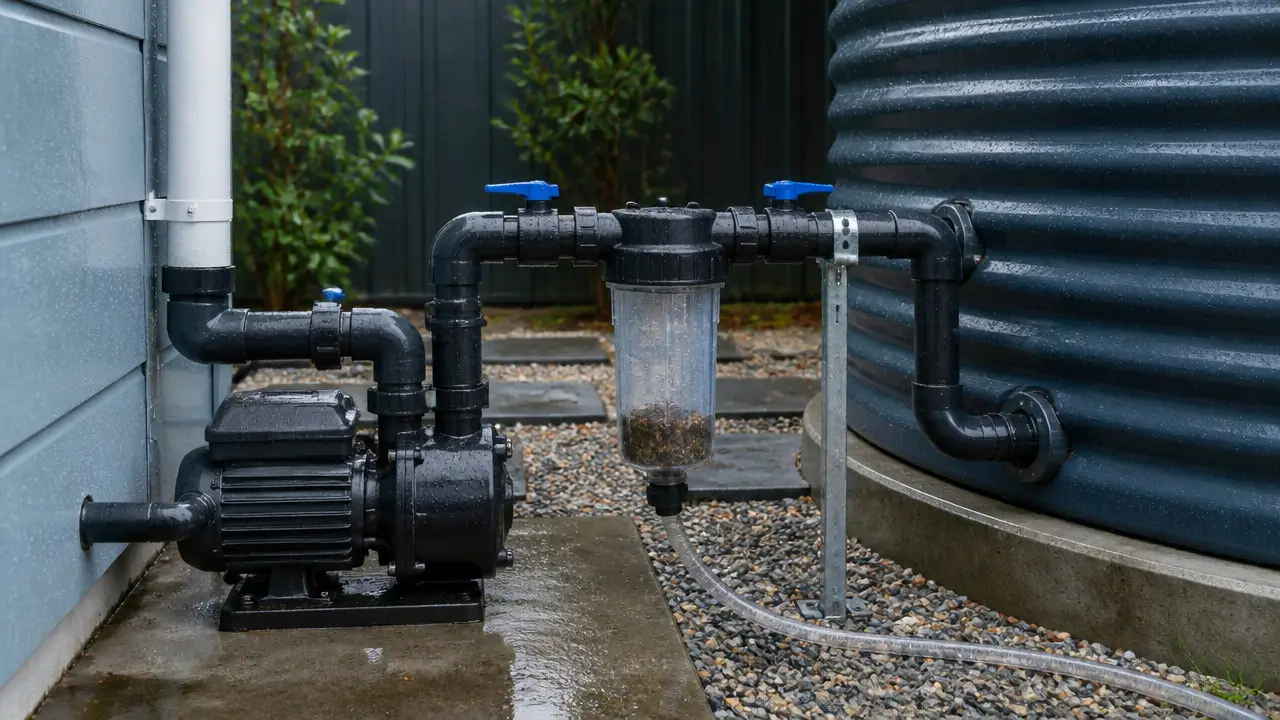
If rainwater is supplied through a softener, effective pretreatment should happen before the softener. That may include collection screens, first-flush management, tank settling, and sediment filtration depending on the system.
A first flush device diverts the first portion of roof runoff, which often carries more dust and debris than later rainfall.
A water softener does not disinfect rainwater and does not make collected rainwater safe to drink.
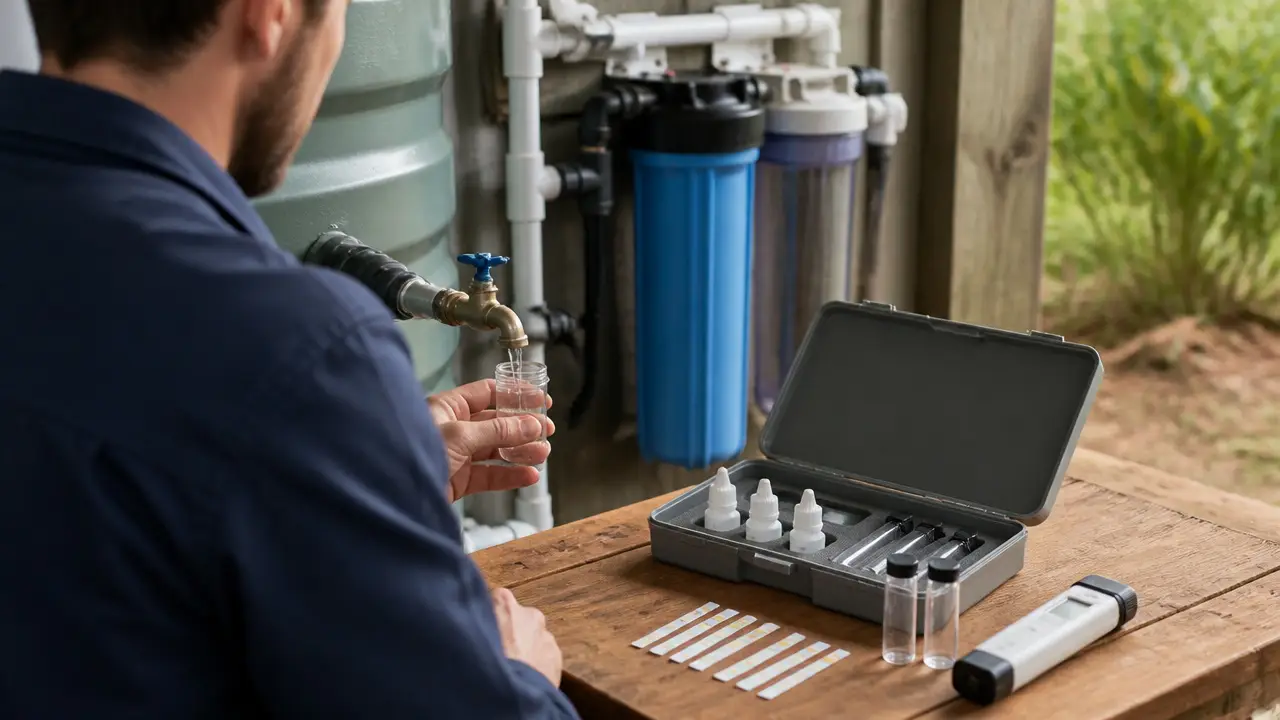
For drinking-water use, treatment needs to be planned as a complete system based on the source water, collection surfaces, pretreatment, treatment equipment, maintenance, current laboratory testing, and applicable local requirements.
Where Should the Filter Go Relative to the Pressure Tank?
In many private well systems, the pressure tank comes before cartridge-style treatment equipment.
That arrangement allows the pump and pressure controls to operate without forcing all pump output through a restrictive cartridge before reaching the pressure tank.
The treatment train may therefore look like:
Well pump → pressure tank → sediment filter → softener → house
Pump layouts vary, so follow the equipment manufacturer's plumbing requirements.
How Much Pressure Drop Is Acceptable?
Every filter creates some resistance.
A clean, correctly sized sediment filter should allow enough flow for the household's normal demand. As the filter loads with dirt, resistance increases and downstream pressure may fall.
A noticeable drop in pressure is often a sign that a cartridge needs attention.
Do not solve repeated pressure loss by simply removing sediment filtration. Frequent clogging may mean the system needs:
- A larger filter housing
- More filter surface area
- A coarser first stage
- A washable or spin-down prefilter
- Better source-water sediment control
The correct fix depends on what is actually entering the water line.
Does the Softener Need a Bypass?
A bypass is useful for both installation and maintenance.
It allows water to reach the house while the softener is being serviced. Filters should also be installed so cartridges or screens can be cleaned without turning a simple maintenance job into a major plumbing project.
Shutoff valves and pressure-relief procedures should follow the filter and softener manufacturers' instructions.
A Simple Rule for Most Homes
If you have one sediment filter and one conventional water softener, put the sediment filter first:
Source → sediment filter → softener
That protects the softener from particles it was not designed to handle.
If water still contains sediment after the softener, investigate where that material is coming from before adding more equipment. The source may be plumbing corrosion, degraded treatment media, a storage tank, or another part of the system.
Frequently Asked Questions
Does a water softener remove sediment?
A water softener is mainly designed to remove hardness minerals such as calcium and magnesium. It may trap some particles by accident, but it should not be used as a sediment filter.
Can sediment damage a water softener?
Large amounts of sand, silt, rust, or other debris can foul the resin bed, restrict water movement, or interfere with the control valve. Upstream sediment filtration reduces those problems.
Should a whole-house filter go before or after the softener?
It depends on what the filter does. A sediment filter normally goes before the softener. Other filters, such as activated carbon systems, may be placed before or after it depending on their purpose and the manufacturer's requirements.
How often should I change the sediment filter before my softener?
There is no universal schedule. Replacement depends on sediment load, filter size, water use, and cartridge type. Check the filter regularly and follow the manufacturer's service guidance. Falling downstream pressure can also indicate that the filter is becoming clogged.
Will a finer sediment filter protect the softener better?
Not necessarily. A finer filter catches smaller particles but can clog faster and reduce flow. The filter should be fine enough for the actual sediment problem while still supporting the required household flow.
Can I install a sediment filter after the softener instead?
You can install one there as a polishing filter, but the softener would remain unprotected from incoming sediment. In most systems, the main sediment filter belongs upstream.
Does a sediment filter make water safe to drink?
No. A sediment filter removes suspended particles within its design limits. It does not provide a complete assessment or treatment of microorganisms, dissolved chemicals, metals, or other possible contaminants. Drinking-water safety requires treatment and testing appropriate to the water source.