As an affiliate, we may earn a commission from qualifying purchases. We get commissions for purchases made through links on this website from Amazon and other third parties.
A UV light used for water treatment typically lasts about 8,000 to 12,000 operating hours. For a residential system that runs all day, that works out to roughly one year of service. EPA guidance lists 8,000 to 12,000 hours as a common range for low-pressure UV lamps, while some lamp types have shorter rated lives.
That does not mean the lamp suddenly burns out after one year. A UV lamp can still look bright while producing less of the germicidal UV light needed for treatment. For that reason, many water-treatment systems call for lamp replacement based on operating hours rather than waiting for the lamp to stop glowing.
For a rainwater system, lamp age is only one part of the job. The water also needs to be clear enough for UV light to reach microorganisms, the quartz sleeve needs to stay clean, and water must pass through the UV chamber at the correct flow rate.
Typical UV Lamp Life
Most small water-treatment systems use a low-pressure mercury UV lamp. Typical service life looks like this:
| UV lamp type | Typical operating life |
|---|---|
| Low-pressure UV | About 8,000-10,000 hours |
| Low-pressure high-output UV | About 8,000-12,000 hours |
| Medium-pressure UV | About 4,000-8,000 hours |
EPA guidance gives these general ranges but notes that actual replacement schedules depend on the specific equipment.
For a household UV system running continuously:
24 hours × 365 days = 8,760 hours per year
That is why a yearly lamp change is common for residential systems.
Always follow the replacement interval for your specific UV unit. Some lamps are designed for longer or shorter service.
Why Replace a UV Lamp If It Still Lights Up?
A UV treatment lamp does not have to look burned out to be worn out.
The useful part of the lamp is its ability to produce ultraviolet energy at wavelengths that can inactivate microorganisms. That UV output slowly falls as the lamp ages.
EPA guidance notes that lamp output decreases over time and that replacement should be based on the lamp's rated life or the system's UV monitoring.
A lamp may therefore:
- turn on normally,
- look bright through a viewing window,
- produce visible light,
- but no longer provide the UV output the system was designed around.
Do not use visible brightness as your replacement test.
If the controller has a lamp-life counter, replace the lamp when the manufacturer tells you to, even if it appears to work.
Does Turning the UV Light Off Make It Last Longer?
Not always.
Frequent starting and stopping can shorten the useful life of some traditional UV lamps. EPA guidance notes that repeated on/off cycles can reduce lamp effectiveness and service life.
Many household UV treatment systems are therefore designed to stay on continuously.
Keeping the system on also means treatment is available whenever water starts flowing. Turning the lamp on only when you open a faucet may not give every system enough time to reach its proper operating condition.
Follow the operating instructions for your particular unit rather than adding a timer or switch simply to save lamp hours.
The Quartz Sleeve Matters Almost as Much as the Lamp
The lamp normally sits inside a clear quartz sleeve. Water flows around this sleeve rather than touching the lamp itself.
The sleeve lets UV light pass into the water.
Over time, it can collect:
- calcium scale,
- iron deposits,
- sediment,
- organic material,
- or other buildup.
This coating blocks UV light.
EPA guidance specifically identifies quartz-sleeve fouling as a cause of reduced UV transmission.
A new lamp behind a badly fouled sleeve may therefore perform poorly.
How often should the sleeve be cleaned?
There is no single schedule that works for every water supply.
Check it at each lamp replacement at minimum, and follow the UV system manufacturer's maintenance schedule. Water with high mineral, iron, or sediment levels may require more frequent cleaning.
Inspect the sleeve carefully while servicing the unit. A chipped or cracked sleeve should be replaced rather than reused.
Rainwater Usually Needs Treatment Before UV
UV works best on clear water.
CDC recommends filtering water before UV treatment because particles can block microorganisms from the UV light.
That is especially important with harvested rainwater. Roof runoff can contain sediment, pollen, organic debris, insects, bird or animal waste, and material washed from roofing surfaces.
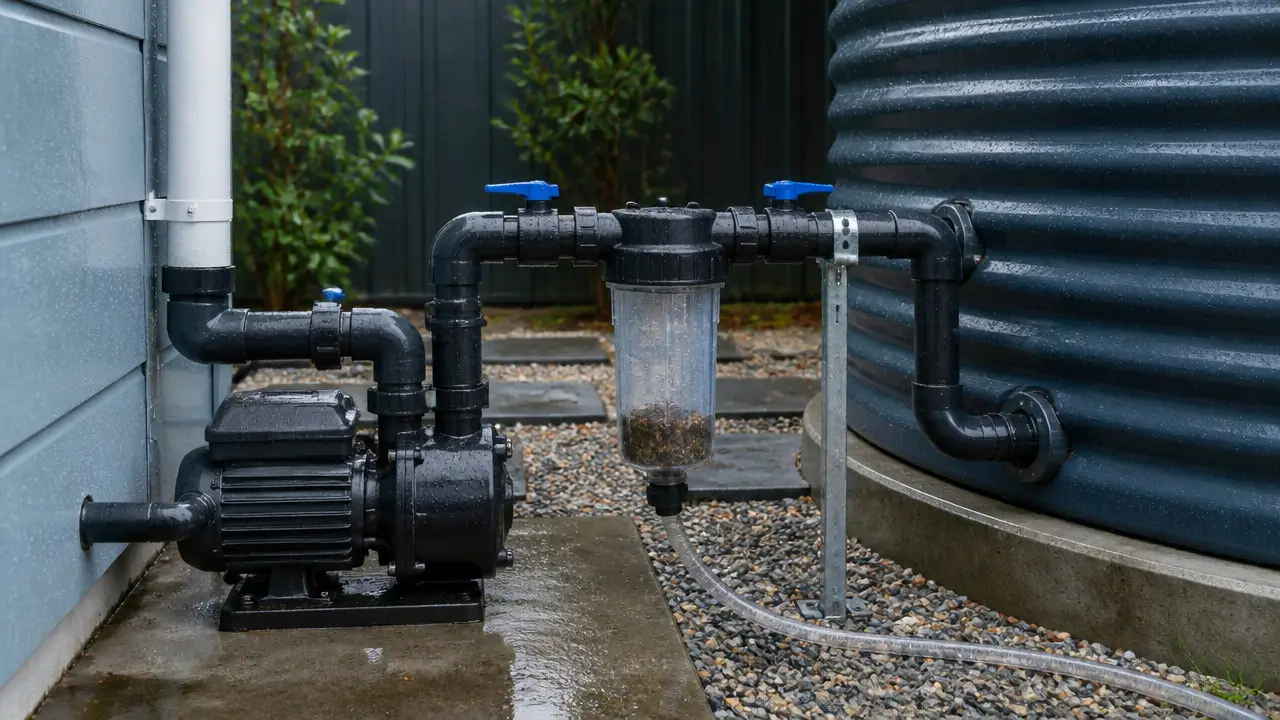
A typical system may therefore place several steps before the UV unit, such as:
roof collection → debris screening → first-flush control → storage → sediment filtration → additional treatment as needed → UV
A first flush device diverts some of the early roof runoff, which often carries a heavier load of dirt and debris.
The exact treatment train depends on the water source and intended use.
Do not simply connect a UV unit directly to a rain barrel and assume that the water is now suitable for drinking.
Flow Rate Affects UV Treatment
Every UV chamber is designed around a maximum flow.
The water needs enough exposure to UV energy as it travels through the chamber. If water moves through faster than the system was designed to handle, treatment performance can fall.
For example, suppose a UV unit is sized for a particular household flow. Adding a larger pump later could change the conditions inside the chamber even though the UV lamp itself has not changed.
When choosing or changing a pump, check:
- maximum UV-system flow,
- available pump flow,
- operating pressure,
- pipe and fitting sizes,
- required pretreatment,
- and any flow restrictor specified by the UV manufacturer.
Do not judge UV capacity by connection size alone. Two units with the same pipe size can have different treatment limits.
What Shortens UV Lamp Performance?
Several conditions can reduce useful performance or cause trouble before the normal replacement date.
Frequent switching
Reviewing recommended whole-house UV systems for rainwater helps compare the relevant trade-offs before the project advances.
Repeated starts can increase lamp wear on many traditional UV systems.
Dirty quartz sleeves
Scale and sediment reduce the amount of UV energy reaching the water.
Poor water clarity
Cloudy water can shield microorganisms from UV exposure. CDC recommends prefiltration for UV treatment for this reason.
Excessive water flow
Flow above the unit's rated capacity may reduce the UV exposure received by the water.
Electrical problems
A failing ballast, power supply, sensor, or controller can prevent the lamp from operating correctly.
A ballast is the electrical component that controls the power supplied to many UV lamps.
Incorrect replacement lamps
A lamp that physically fits is not automatically a correct replacement. Electrical requirements and UV output must match the reactor and ballast.
Use the lamp type specified for the treatment system.
UV LEDs Are Different
Some newer water-treatment systems use UV-C light-emitting diodes instead of conventional mercury lamps.
Their operating pattern and rated life can be very different. Some are designed to switch on only while water is flowing rather than remaining on continuously.
Because UV-LED systems vary widely, the common "replace the lamp every year" rule should not automatically be applied to them.
Use the manufacturer's rated operating hours, monitoring system, and replacement instructions for that specific unit.
Does the Whole UV System Need Replacing Every Year?
No.
The yearly replacement interval generally applies to the lamp, not the complete treatment system.
Other parts can last much longer when they remain in good condition. These include:
- the stainless-steel reactor chamber,
- quartz sleeve,
- ballast or controller,
- UV sensor,
- wiring,
- seals and O-rings.
EPA's UV guidance shows much longer design lives for many reactor components than for the lamp itself.
However, age alone does not determine whether those parts are usable. Leaks, corrosion, heat damage, electrical faults, cracked sleeves, and failed sensors may require earlier service.
A Simple UV Maintenance Routine
A practical residential routine is:
- Watch the controller. Do not ignore lamp, sensor, or low-UV alarms.
- Keep sediment filters maintained. A badly clogged or bypassed filter can affect water quality entering the UV chamber.
- Inspect and clean the quartz sleeve. Mineral or iron deposits can block UV light.
- Replace the UV lamp at its rated interval. For many conventional residential lamps, that is around one year.
- Inspect seals during service. Replace damaged seals with the correct parts.
- Record the replacement date. Do not rely on memory.
- Follow restart and sanitation instructions from the equipment maker. Changing a lamp does not clean contaminated downstream plumbing.
Turn off electrical power and isolate water pressure before opening equipment. If servicing the unit involves unfamiliar electrical wiring, pressurized plumbing, or a damaged quartz sleeve, use a qualified service professional.
UV Does Not Remove Every Water Contaminant
UV is primarily a disinfection treatment.
CDC says properly used UV treatment with prefiltration can address parasites, bacteria, and viruses, but it does not remove chemical contaminants. EPA's current home water-treatment guide gives the same basic limitation.
UV therefore does not by itself remove things such as:
- dissolved metals,
- salts,
- many organic chemicals,
- or other dissolved contaminants.
It also leaves no continuing disinfectant in the water after treatment. CDC notes that UV can disinfect water at the treatment point but does not continue killing microorganisms later in the plumbing.
This matters if treated rainwater is stored again after the UV chamber.
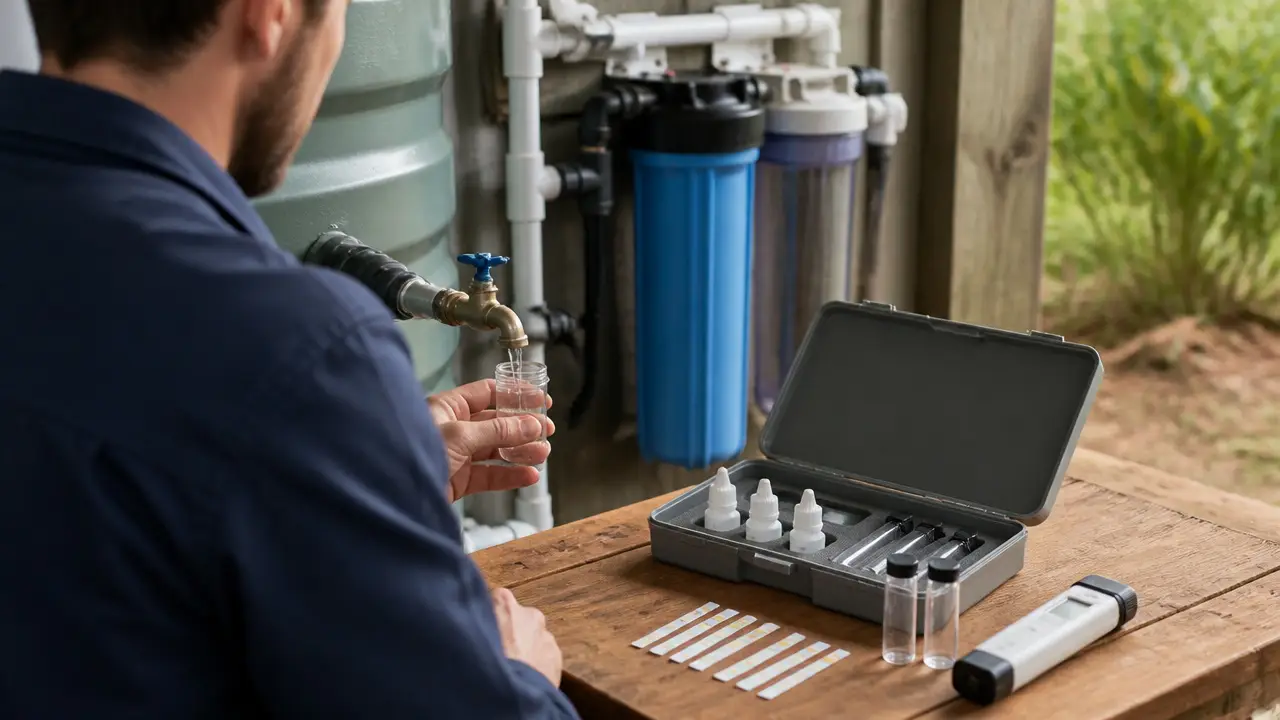
For drinking-water use, UV should be considered one part of a complete system. Suitable collection surfaces, debris control, prefiltration, appropriate treatment stages, current laboratory testing, proper maintenance, and applicable local requirements all matter.
A UV lamp being new does not by itself establish that rainwater is potable, meaning suitable for drinking.
When Should You Replace the UV Lamp?
Replace it when the first of these occurs:
- the manufacturer's rated operating hours are reached,
- the scheduled replacement date arrives,
- the controller gives an end-of-lamp-life warning,
- a UV intensity monitor shows unacceptable performance after other causes are checked,
- or the lamp fails.
For many conventional residential UV systems, planning on one new lamp every 12 months is a sensible maintenance starting point.
Do not extend the interval simply because the lamp still glows.
Frequently Asked Questions
Can a UV water-treatment lamp last more than one year?
Some can. EPA guidance lists about 8,000 to 12,000 hours for many low-pressure UV lamps. Specific lamps may have different rated lives. Follow the replacement interval supplied with your UV system rather than assuming every lamp lasts exactly one year.
Should a water-treatment UV light stay on all the time?
Many conventional residential UV systems are designed for continuous operation. Frequent switching can shorten the life of some lamps. Do not add timers or automatic switching unless the system manufacturer says the unit is designed for it.
How do I know when my UV lamp needs replacing?
Use the manufacturer's operating-hour limit, lamp timer, controller warning, or UV-monitor reading. Do not rely on whether the lamp still produces visible light.
Does a new UV lamp make rainwater safe to drink?
No. UV only addresses certain microorganisms under suitable operating conditions and does not remove chemical contaminants. Drinking-water use requires a complete treatment and monitoring approach, including suitable collection, prefiltration, treatment, current laboratory testing, maintenance, and local requirements.
Can dirty water damage UV treatment performance?
Yes. Suspended particles and deposits on the quartz sleeve can prevent UV light from reaching microorganisms effectively. CDC recommends filtering water before UV treatment.
Do I need to replace the quartz sleeve every time I replace the lamp?
Usually not. The sleeve normally lasts longer than the lamp, but it should be inspected and cleaned as required. Replace it if it is cracked, chipped, badly etched, or otherwise no longer suitable for the system.
Does UV-treated water stay disinfected in a storage tank?
UV provides no lasting disinfectant residual. If treated water enters another tank or contaminated plumbing, microorganisms can be introduced or grow afterward. Place the UV stage and downstream plumbing according to the treatment-system design and intended water use.