As an affiliate, we may earn a commission from qualifying purchases. We get commissions for purchases made through links on this website from Amazon and other third parties.
A rain barrel can be useful without looking like a big plastic container stuck beside your house. The easiest way to make a rain barrel look pretty is to help it blend with the yard instead of trying to hide every part of it.
You can paint the barrel, screen it with plants or lattice, place it inside a simple enclosure, or make the area around it look intentional. Just keep the inlet, overflow, spigot, and lid easy to reach for cleaning and repairs.
Start With Function Before Decoration
Before changing the look of a rain barrel, make sure the basic setup works.
A typical barrel needs:
- A secure lid or screened opening
- An inlet from the downspout
- An overflow outlet
- A spigot or other water outlet
- A stable base
- Access for inspection and cleaning
Do not cover these parts permanently.
The overflow is especially important. When the barrel fills, extra rainwater needs somewhere safe to go. Decorative panels, plants, or furniture should not block the overflow hose or redirect water toward the foundation.
Your barrel should also sit on a strong, level base. Water is heavy. A full 55-gallon barrel holds roughly 460 pounds of water, not including the barrel itself. Decorative stands should be built for the actual load rather than appearance alone.
Paint the Rain Barrel
Painting is one of the simplest ways to change how a plastic rain barrel looks.
You might match it to:
- Your siding
- A fence
- Garden structures
- Outdoor furniture
- Natural stone or wood tones
Dark green, brown, gray, and other muted colors often help barrels blend into landscaping.
Check the Barrel Material First
Not every paint sticks well to every plastic.
Many barrels are made from polyethylene, which can be difficult to paint. Look for coatings that are specifically suitable for the type of plastic you have. Follow the coating manufacturer's surface-preparation directions.
Do not paint areas where paint could interfere with:
- Threaded fittings
- Seals
- Screens
- Moving lids
- Connection surfaces
Painting the outside does not change the quality of the stored water inside, provided the coating stays outside the barrel and is used as directed.
Try a Simple Design
The barrel does not have to be one solid color.
You could paint:
- Leaves
- Flowers
- Vines
- Geometric patterns
- A simple landscape
- A garden-themed mural
For a cleaner look, paint the barrel one background color and add only a small pattern or stencil.
Build a Decorative Screen Around It
A screen can hide much of the barrel while leaving the system usable.
Common materials include:
- Wood slats
- Outdoor lattice
- Fence panels
- Trellis panels
- Weather-resistant composite boards
Leave enough space around the barrel to reach the spigot, lid, overflow connection, and downspout.
A removable front panel can make maintenance much easier than a permanent enclosure.
Allow Airflow
Do not build a tight box around the barrel.
Some airflow helps the outside of the barrel and surrounding area dry after rain. It also lets you see leaks before they cause damage.
If you use wood, avoid leaving it constantly pressed against wet soil or against fittings that may occasionally drip.
Use a Trellis and Climbing Plants
A trellis can turn the rain barrel area into part of the garden.
Place the trellis beside or slightly in front of the barrel rather than attaching it directly to plumbing components.
Depending on your climate and garden, climbing plants may include ornamental vines or edible plants.
Keep plants away from:
- The barrel lid
- Downspout connections
- Overflow outlets
- Screens
- Valves
- Pump equipment, if present
You should still be able to inspect the barrel without cutting through a wall of vines.
Also consider mature plant size. A small vine in spring can become a large mass later in the season.
Surround the Barrel With Container Plants
Potted plants are one of the easiest options because they can be moved whenever the barrel needs service.
Try placing several containers around the barrel at different heights.
For example:
- Tall grasses can soften the sides.
- Medium plants can cover the lower half.
- Small pots can fill gaps near the base.
Keep the spigot clear enough to fit a watering can or hose.
Avoid placing heavy pots on top of the barrel unless the barrel manufacturer specifically allows that load.
Make the Base Look Intentional
Sometimes the barrel itself is not the problem. An unfinished stack of concrete blocks underneath it makes the whole installation look temporary.
The base has an important job: keeping the barrel stable and, when needed, raising the spigot high enough to fill a watering can.
You can improve its appearance while keeping it strong.
Options include:
- A properly built wood platform
- Masonry blocks arranged neatly
- A level paver base
- A load-rated stand with decorative trim
Do not sacrifice stability for appearance.
A barrel that holds dozens of gallons should not sit on loose stones, lightweight furniture, overturned pots, or an improvised stand that can shift.
Use Gravel or Pavers Around the Barrel
Creating a small finished area around the rain barrel can make even a basic barrel look deliberate.
You might use:
- Gravel
- Pavers
- Brick edging
- Mulch nearby, but not against vulnerable wood
- Stepping stones
This can also reduce mud around a frequently used spigot.
Make sure the finished surface does not slope overflow water toward the house.
Hide the Downspout Connection Carefully
A long, awkward section of pipe can draw more attention than the barrel.
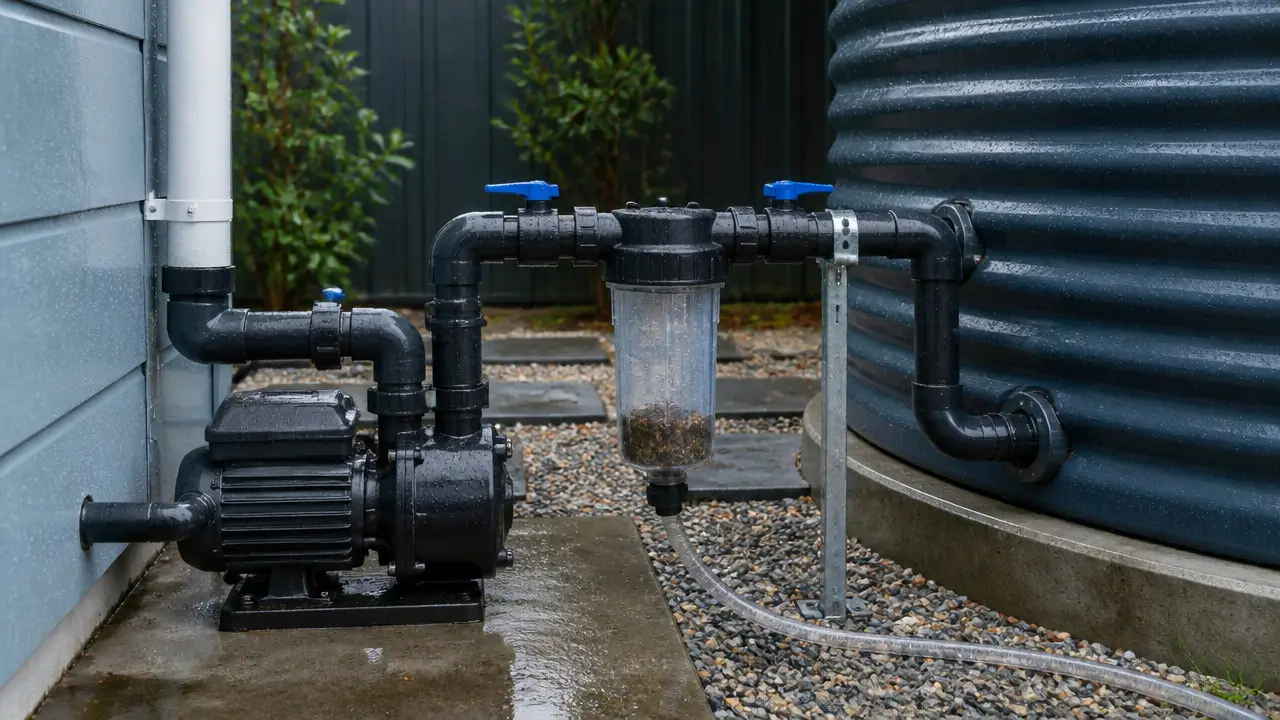
Keep the water path simple and secure. Depending on your collection setup, the downspout may enter the barrel directly or use a diverter.
You can often make the installation neater by:
- Keeping pipe runs short
- Using straight, properly supported sections
- Matching visible components where practical
- Positioning the barrel close to the downspout
Look closely at rain barrel plumbing connections to compare capacity needed to cover demand until the next refill.
Do not make the system harder to clean just to hide the plumbing.
A connection that can be opened and inspected is usually better than one buried behind permanent trim.
Consider a Barrel Enclosure
If you want the barrel almost completely hidden, a small enclosure can work well.
Think of it as a ventilated cabinet built around the rainwater system.
It can have:
- Slatted sides
- A removable front
- An opening for the downspout
- An opening for the overflow
- Easy access to the spigot
The enclosure should not support the barrel unless it was specifically designed to carry that weight. The barrel itself still needs a strong, level base.
Avoid enclosing the system so tightly that leaks, insects, damaged screens, or loose fittings become difficult to notice.
Make Several Barrels Look Like One Garden Feature
Multiple barrels can be harder to disguise because they take up more space.
Instead of decorating each barrel differently, use one repeated design.
For example, you could place two or three barrels behind:
- One continuous slatted screen
- A long trellis
- A row of container plants
This often looks cleaner than trying to turn every barrel into a separate decorative object.
Remember that connected barrels need suitable plumbing between them. Decorative materials should not put pressure on connecting hoses, bulkhead fittings, or valves.
A bulkhead fitting is a fitting that passes through the wall of a tank or barrel and creates a sealed connection for a pipe, hose, or valve.
Add a Small Garden Feature Nearby
Another approach is to draw attention toward something attractive rather than covering the barrel completely.
You might add:
- A birdbath
- A bench
- A trellis
- A small garden bed
- Decorative stones
- A pathway
- A grouping of pots
Keep structures and deep-rooted plants far enough away that they do not interfere with the barrel foundation, house foundation, drainage, or underground utilities.
Keep Mosquito Protection Functional
Decorating a barrel should never mean leaving collected water open.
Openings should be securely covered or screened so mosquitoes and debris cannot easily enter. Inspect screens because leaves, algae, or damage can reduce their effectiveness.
If your design includes a decorative lid, it still needs to work with the barrel's actual mosquito-control and debris-screening setup.
Do not replace a secure functional cover with an open decorative planter or loose board.
Keep the Overflow Visible and Accessible
The overflow can be easy to forget when decorating.
Once the barrel is full, incoming rain needs to leave the system. An overflow outlet normally carries that water to an appropriate drainage location.
Do not:
- Cover the overflow opening with trim
- Pinch an overflow hose behind a screen
- Let vines wrap tightly around it
- Route overflow against the foundation
- Assume the barrel will simply hold every storm
If you build an enclosure, include an opening large enough for the overflow connection and future maintenance.
Do Not Permanently Hide the Lid
Rain barrels eventually need inspection and cleaning.
Sediment, leaves, roof debris, and organic material can collect inside even when the system includes screens or other prefiltration.
Make sure you can reach the top of the barrel without dismantling the entire landscaping project.
A removable trellis or lightweight screen is often more practical than a permanent structure.
Decorating a Rain Barrel Used for More Than Garden Water
Most simple rain barrels are used for non-potable water. Non-potable means water that is not intended for drinking.
If the stored rainwater is part of a more complex system for indoor reuse or possible drinking-water treatment, appearance should come after system design.
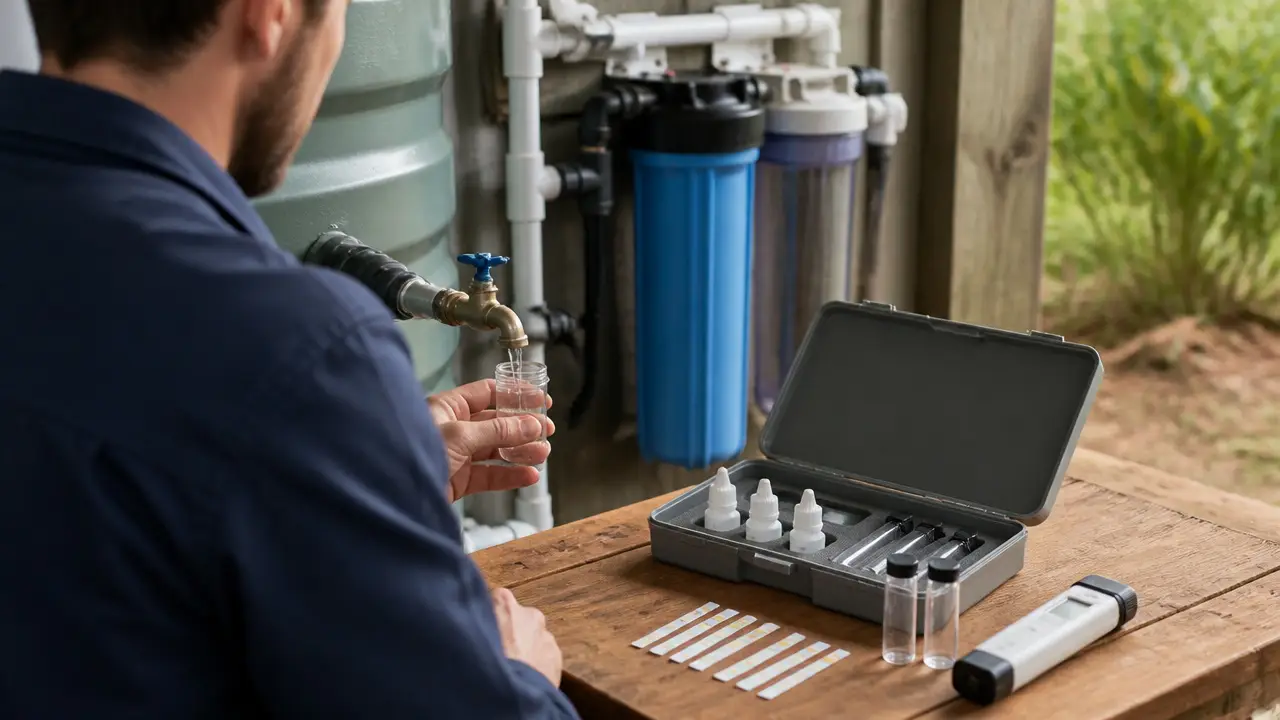
Roof runoff can contain microbes, animal waste, roofing-related contaminants, dust, and other pollutants. A decorative enclosure, screen, or painted exterior does not make the water safer.
Drinking-water use requires suitable collection materials, appropriate prefiltration and treatment, current laboratory testing, ongoing maintenance, and compliance with applicable local requirements.
Also avoid making modifications that interfere with treatment equipment, inspection points, vents, pumps, electrical components, or tank access.
Easy Rain Barrel Makeover Ideas
If you want a simple project without rebuilding the system, try combining two or three improvements:
| Existing Problem | Simple Improvement |
|---|---|
| Bright plastic barrel stands out | Paint the exterior a suitable muted color |
| Concrete-block base looks unfinished | Create a neat, load-bearing platform or surround |
| Barrel dominates a garden corner | Add movable container plants |
| Plumbing looks messy | Shorten and organize visible pipe runs where the system allows |
| Several barrels look cluttered | Use one continuous screen or trellis |
| Barrel needs to stay accessible | Use removable panels instead of a permanent enclosure |
Often, the best-looking rain barrel is not the most decorated one. It is simply a clean installation with neat connections, a finished base, healthy plants nearby, and no unnecessary clutter.
Frequently Asked Questions
Can I paint a plastic rain barrel?
Usually, but you need a coating that is suitable for the barrel's plastic. Some common barrel plastics are difficult for paint to bond to. Follow the coating manufacturer's preparation instructions and keep paint away from seals, threads, screens, and connection surfaces.
Can I put plants on top of my rain barrel?
It is better to place plants beside the barrel unless the barrel or its enclosure is designed to support additional weight. A heavy planter can place stress on a lid that was not made to carry it.
Can I completely box in my rain barrel?
You can screen much of it, but avoid sealing it inside a permanent box. Leave ventilation and access to the lid, spigot, inlet, overflow, and other fittings. You should also be able to spot leaks.
How can I hide a rain barrel without building anything?
Use movable container plants, tall ornamental grasses, or a freestanding trellis. These can soften the appearance while still allowing access for cleaning and repairs.
How can I make the rain barrel stand look better?
Use a neat, level, load-bearing platform or properly installed masonry or pavers. Remember that a full barrel is very heavy. Decorative furniture, loose blocks, and lightweight stands are not suitable substitutes for a stable base.
Can vines grow directly on a rain barrel?
It is safer to give vines their own trellis. Plants growing directly over the barrel can block the lid, screens, overflow, or fittings and make maintenance harder.
Will painting the barrel keep algae from growing inside?
An opaque barrel that limits sunlight can help discourage algae growth, but paint alone does not eliminate water-quality or maintenance issues. Keep the barrel covered, limit debris entering the tank, and inspect and clean it as needed.
What should I never cover when decorating a rain barrel?
Keep the inlet, overflow, lid or inspection opening, spigot, screens, and important plumbing connections accessible. If the system has a pump or other equipment, keep that accessible according to its installation requirements too.